Support

Royal Palace of Brussels

About

The Royal Palace is one of the most iconic and majestic landmarks in the capital of Belgium, the city of Brussels. Located in the heart of the city, opposite the picturesque Brussels Park, it is the official residence of the Belgian monarch and an important symbol of statehood.

Interestingly, despite its status, the palace does not serve as the permanent residence of the royal family—the Palace of Laeken is used for that purpose. Instead, its magnificent halls host official delegations, state receptions, and important ceremonies, which only emphasizes its special role in the life of the country.

The architectural ensemble of the building is designed in a strict Neoclassical style, and its modern monumental facade was created in the early 20th century at the initiative of King Leopold II. The elegance and scale of the palace make an indelible impression, making it one of the most photographed objects in the city.
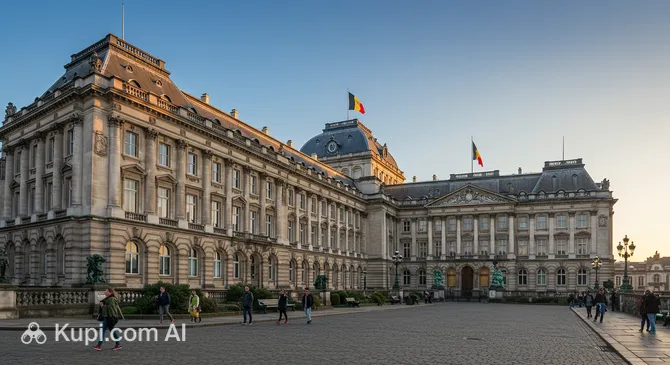
Royal Palace of Brussels. Illustration.
Source: Kupi.com AI

Traveler photos:

The interior decor of the palace is striking in its luxury and historical heritage. Visitors who are lucky enough to get inside (the palace is usually open to the public in the summer) can see the Throne Room, the Mirror Room, and other magnificent spaces that hold memories of key events in Belgian history.

Contacts

The Royal Palace of Brussels is the official working residence of the monarch, so it does not have public contact details for tourist inquiries, such as a phone number or email address. All up-to-date information regarding visiting days and hours, which are typically limited to the summer period, is recommended to be checked on the official website of the Belgian monarchy (www.monarchie.be). Occasionally, the palace may be closed to the public due to renovation work or official events.

For more information about your visit and possible guided tours, it is also helpful to consult the Brussels tourism portal.

How to contactContact
AddressRue Brederode 16, 1000 Bruxelles, Belgium
Phone number+32 2 551 20 20
Websitewww.monarchie.be

What to Do

Visiting the Royal Palace is a unique opportunity to peek into the world of the official life of the Belgian monarchy. Every year, during the summer months, the palace opens its doors to everyone. During your visit, you can freely walk through its magnificent state rooms, which are decorated with priceless works of art, antique furniture, and dazzling crystal chandeliers. This allows you to fully experience the atmosphere of solemnity and historical significance of this place.

Iconic rooms such as the Throne Room attract special attention. However, the true gem is considered to be the Mirror Room, whose ceiling and chandelier are decorated with the wing cases of more than a million Thai jewel beetles. This installation, titled "Heaven of Delight" and created by artist Jan Fabre, shimmers with all shades of green and blue, creating an unforgettable impression. In addition to the permanent display, temporary exhibitions are often held in the palace, so every visit can offer new discoveries.

For tourists, a pleasant bonus is that photography of the interiors is permitted, so you can capture all this beauty as a souvenir. After exploring the luxurious halls, it’s nice to relax in the fresh air. The adjacent park in Brussels is perfect for a leisurely stroll and finishing a day filled with impressions of royal splendor.

Getting There

The Royal Palace is located in the heart of Brussels, making it easily accessible for tourists. It is situated directly across from the picturesque Brussels Park. If you are already exploring the historic center, reaching the palace on foot is quite easy. A walk from the famous central square, Grand-Place, will take you only about 10–15 minutes and allows you to enjoy the city's architecture along the way.

Public transport is one of the most convenient ways to get to the palace. The nearest metro stations are Parc/Park (served by lines 1 and 5) and Trône/Troon (lines 2 and 6). From either of these stations, the attraction is just a few minutes' walk away. Additionally, numerous city buses and trams stop in the immediate vicinity of the palace, making it easy to reach from almost anywhere in the city.

If you are traveling by car, there are paid parking lots in the palace area. However, keep in mind that during the peak tourist season, the number of available spaces can be very limited. Therefore, to avoid the hassle of finding parking, it is recommended to use public transport. Alternatively, you can always order a taxi, which will take you quickly and comfortably right to the palace entrance.

Nearest city: Brussels

History & Facts

The history of the Royal Palace of Brussels dates back centuries and is much more complex than it might seem at first glance. Since the 11th century, Coudenberg Castle stood on the site of the current majestic building, serving as the residence of the powerful Dukes of Brabant. For centuries, it was the center of the region's political and social life, but its history came to a tragic end in 1731 when a devastating fire completely destroyed the medieval fortress. This event was a turning point, paving the way for the creation of a new architectural ensemble.

After the fire, two separate classical-style mansions were built on the ruins of the castle. In the early 19th century, when these lands were part of the United Kingdom of the Netherlands, the decision was made to combine them into a single complex. Reconstruction was carried out specifically for King William I, and by 1829, work on creating the new palace was largely completed. Thus, an elegant palace ensemble emerged on the site of the medieval ruins, becoming the forerunner of the modern royal residence.

The palace acquired its modern and well-recognized appearance in the early 20th century. It was then, at the initiative of King Leopold II, that its monumental and austere Neoclassical facade was built, which today is one of the hallmarks of Brussels. Throughout its history, the building has been expanded and renovated several times, reflecting important stages in the development of Belgium and its monarchy. Each era has left its mark on its architecture and interiors, turning the palace into a living monument of the country's history.

Time Needed

When planning a visit to the Royal Palace of Brussels, you should allow 1-2 hours for a full tour. This time is generally enough to leisurely walk through the main halls open to the public, admire the luxurious interiors, and take photos. During this period, you will have time to appreciate the grandeur of the Throne Room, the unique decor of the Mirror Room, and other historic chambers.

If you want a more complete experience and don't want to limit yourself only to the interiors, it is recommended to set aside 1.5 to 2.5 hours. This will allow you not only to see the palace itself but also to take a pleasant walk through the adjacent picturesque Brussels Park. Of course, the duration of the visit largely depends on your personal interest in history, art, and architecture—you could easily spend more time here if you wish, especially if there are temporary exhibitions in the palace.

Working Hours

One of the main features of the Royal Palace of Brussels is its limited public access. Unlike many other attractions, it opens its doors to visitors only during the summer period. Typically, this occurs between late July and early September, following Belgium's National Day (21 July). Since the exact dates and opening hours can change every year, it is highly recommended to check the current information on the official website of the Belgian monarchy before planning your visit.

Entry to the palace during its summer opening is usually free, and advance booking for individual visitors is generally not required. However, for group tours or in the case of special events, the rules may differ, and online booking might sometimes be required. Given the short visiting season, if a visit to the palace is one of the main goals of your trip to Belgium, it is worth planning your travel dates carefully.

Nearby

The location of the Royal Palace in the heart of Brussels makes it an ideal starting point for exploring other iconic landmarks of the capital of Belgium. After admiring the grandeur of the monarch's official residence, do not rush to leave the area. A walk around the neighborhood will allow you to dive deeper into the city's rich culture and history, as many interesting sites are literally just a few steps away.

Exploring nearby attractions will enrich your experience and help you get a more complete picture of Brussels. In just 10-15 minutes, you can reach world-famous museums, picturesque parks, and architectural masterpieces. Below is a list of places that are convenient to visit after your palace tour.

NameDistance
Royal Museums of Fine Arts of Belgium0.3 km
Mont des Arts0.5 km
Church of Our Lady of the Sablon0.5 km
Léopold Café Royal0.6 km
Place Poelaert Ferris Wheel0.8 km
Royal Galleries of Saint Hubert0.8 km
Delirium Café0.9 km

Have you reached the end of the page?

So the route has been studied inside and out