Support

Basilica of the Sacred Heart of Montmartre

About

The Sacré-Cœur Basilica (Basilique du Sacré-Cœur), which translates to "Basilica of the Sacred Heart," is a famous Catholic church in Paris and one of the most iconic landmarks in France. The church rises majestically at the summit of Montmartre hill—the highest point in the city, situated 130 meters above sea level. Thanks to its dazzling white facade in the Romano-Byzantine style, the basilica is clearly visible from many parts of the capital and is one of its most recognizable symbols.
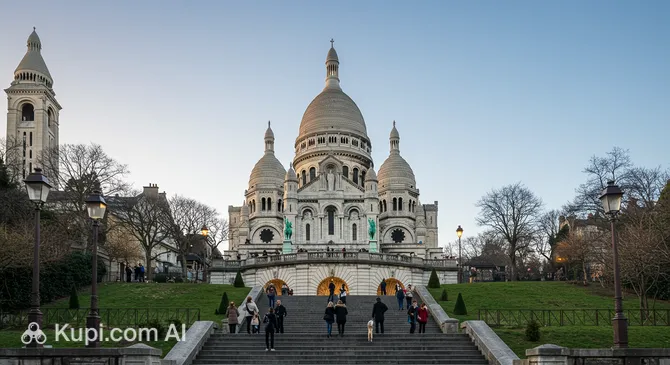
Basilica of the Sacred Heart of Montmartre. Illustration.
Source: Kupi.com AI

Traveler photos:

Sacré-Cœur is not only an important active religious site but also an outstanding architectural monument that attracts millions of tourists from around the world every year. The building is topped by several domes, the main one reaching a height of 83 meters. Next to the basilica stands a bell tower about 100 meters high, which houses one of the largest and heaviest bells in the world.

This famous bell is named "La Savoyarde," and it weighs an impressive 19 tons. A visit to the basilica offers the opportunity not only to admire its unique interior and monumental mosaics but also to enjoy one of the best panoramic views of Paris from the observation deck at the base and from the top of the dome.

Contacts

For the most up-to-date information on visiting hours, service schedules, and special events, it is recommended to consult official sources. You can contact the basilica administration using the details provided below.

How to contactContact
Address35 Rue du Chevalier de la Barre, 75018 Paris, France
Phone number+33 1 53 41 89 00
Websitewww.sacre-coeur-montmartre.com

What to Do

Visiting the Sacré-Cœur Basilica offers guests a wealth of experiences. One of the highlights is undoubtedly the magnificent panorama of Paris from Montmartre hill. You can admire the views from both the observation deck at the church entrance and from the height of its main dome. To reach the dome, you'll need to climb about 300 steps, but the breathtaking 360-degree view of the city is well worth it. Entrance to the basilica itself is free, but there is a separate charge for climbing the dome and descending into the crypt.

Inside the church, visitors will find a rich interior in the Romano-Byzantine style. The monumental ceiling mosaic "The Veneration of the Sacred Heart of Jesus by France", which is one of the largest in the world, is particularly striking. Its radiant colors and majestic image of Christ leave a lasting impression. In addition to the mosaic, the interior is decorated with numerous sculptures, colorful stained glass, and a large organ. The crypt houses various relics and the tombs of cardinals.

Touring the basilica is only part of the experience. The Montmartre district where it is located is an attraction in its own right. After visiting the church, it's worth strolling through its picturesque streets and stopping by cozy cafes and art galleries. It's a great spot for a romantic walk and a chance to experience the unique bohemian atmosphere that once drew artists from all over the world.

Getting There

Getting to the Sacré-Cœur Basilica, which crowns the Montmartre hill, is quite easy thanks to Paris's well-developed public transport system. The most popular way is by metro. The nearest station is Anvers on Line 2. After leaving the metro, you'll find yourself at the foot of the hill, where scenic staircases and the famous Montmartre Funicular lead up to the church. This small cable car is part of the city's transport system, so the same tickets used for the metro are valid here. The ride takes just a minute and a half and allows you to comfortably overcome the steep climb. You can also take the metro to Abbesses (Line 12) or Pigalle (Lines 2 and 12), which are also within easy walking distance of the basilica.

In addition to the metro, Sacré-Cœur can be reached by bus. A special bus route No. 40 (formerly known as the Montmartrobus) winds through the streets of Montmartre and stops right at the basilica. Walking to the church is a pleasure in itself, allowing you to soak up the unique atmosphere of the neighborhood, its narrow streets, and creative spirit. However, it's better to avoid driving: finding parking in this area is extremely difficult, making public transport the most convenient and recommended option.

Nearest city: Paris

History & Facts

The history of the Sacré-Cœur Basilica is closely intertwined with dramatic events in the history of France. The idea for its construction arose as a response to the country's defeat in the Franco-Prussian War and the upheavals of the Paris Commune. The church was conceived as a symbol of national penance and reconciliation, a vision solidified by a National Assembly law in 1873. Notably, funds for the construction were raised across the country through public subscription, making it a truly grassroots project and a "national vow."

The first stone was laid in 1875, based on a design by architect Paul Abadie, who won the architectural competition. Construction lasted nearly forty years and was largely completed by 1914. However, due to the outbreak of the First World War, the official consecration of the basilica did not take place until October 16, 1919. Interior decoration and final completion continued until 1923, highlighting the grandeur and complexity of the project.

The uniqueness of Sacré-Cœur is also reflected in its architectural appearance. Paul Abadie created a design that harmoniously combines elements of Romano-Byzantine, Romanesque, Gothic, and Renaissance styles. This eclectic approach was intentional, symbolizing ideas of national harmony and tolerance. Thanks to this stylistic diversity, the basilica stands out against the backdrop of traditional architecture in Paris, representing a distinct and memorable work of art.

Time Needed

When planning a visit to the Sacré-Cœur Basilica in Paris, you should allow for 1.5 to 3 hours. This is generally enough time to thoroughly explore the church and its surroundings. However, the exact duration depends on how deeply you wish to see everything. A quick look at the basilica itself and the view from the observation deck at the entrance might only take an hour, but to truly soak in the atmosphere of this place, it's best not to rush.

A more detailed visit includes several stages. Viewing the majestic interior of the basilica with its famous mosaic usually takes about 30–45 minutes. If you decide to climb the dome to enjoy one of the best panoramas of Paris, budget another 45–60 minutes, including the climb and time to take in the views. You can also visit the crypt, which adds another 15–20 minutes to your visit. And, of course, don't forget a walk through the Montmartre district itself, which can take anywhere from one to several hours.

Working Hours

The Sacré-Cœur Basilica is open to visitors year-round, making it accessible at any time during your trip to Paris. Entrance to the church itself is free. The doors of the basilica are open daily from 6:30 AM to 10:30 PM, allowing guests to enjoy its peaceful atmosphere during both daylight and evening hours. No advance booking is required to enter the main part of the church.

It's important to keep in mind that access to certain parts of the complex, such as the dome and the crypt, is paid and follows a separate schedule. The opening hours for these areas may vary depending on the season—for example, they are shorter in winter. Therefore, before your visit, it is strongly recommended to check the official basilica website for the latest information on opening times and ticket prices to plan your climb to the dome's observation deck or descent into the crypt without any surprises.

6:30 – 22:30

Nearby

Visiting the Sacré-Cœur Basilica is just the starting point for exploring one of the most colorful and atmospheric districts of Paris. Montmartre hill, where the church is situated, and its surroundings are full of charm; to fully experience their spirit, it's worth taking time to stroll through the picturesque streets. Every corner here holds its own history, and near the majestic basilica, you'll find many other interesting spots—from cozy restaurants to famous cultural landmarks.

Exploring the nearby attractions will give you a more complete picture of the many facets of Paris. Within walking distance of the basilica are both world-famous monuments and hidden gems that will add vibrant colors to your journey through France.

NameDistance
Galerie Vivienne2.3 km
Hôtel de Crillon2.7 km
Louvre Museum2.9 km
Petit Palais3.1 km
Musée d'Orsay3.2 km
The People Belleville3.2 km
Dior Gallery3.5 km

Have you reached the end of the page?

So the route has been studied inside and out