Support

Montmorency Forest

About

The Montmorency Forest is a vast woodland area located just 15 kilometers from bustling Paris, in the department of Val-d'Oise, France. This magnificent piece of nature is a true sanctuary for those seeking peace and fresh air near the French capital. Being essentially a national forest, it offers a unique opportunity to enjoy nature.
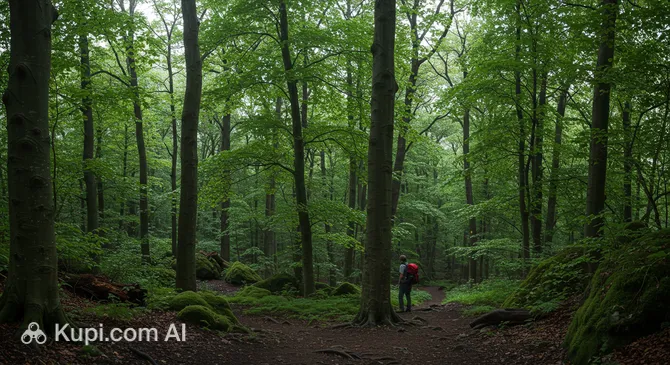
Montmorency Forest. Illustration.
Source: Kupi.com AI

Traveler photos:

Occupying an impressive area of 2,200 hectares, the Montmorency Forest is characterized by hilly terrain, which adds to the picturesque quality of its landscapes. It covers the territories of several communes in Val-d'Oise and serves as an important green oasis for the region, offering a respite from the urban hustle and bustle.

The Montmorency Forest is famous for its rich flora and fauna. Here, walking along numerous trails, with a bit of luck, you can encounter roe deer, wild boars, foxes, and badgers. In the heart of the forest lies a large picturesque pond, adding charm to the place. High ratings among visitors confirm that the Montmorency Forest is a favorite place for relaxation and connecting with nature, offering many routes for hiking and cycling.

Contacts

To obtain the most up-to-date information on visiting the Montmorency Forest, including possible routes, access conditions, and scheduled events, it is recommended to contact local tourist information centers. According to available data, detailed consultations and useful materials can be obtained from the Val-d'Oise departmental tourist information center or directly from the town of Montmorency.

How to contactContact
AddressFrance
Phone number+33 1 34 27 54 34
Websitewww.onf.fr

What to Do

The Montmorency Forest offers visitors many opportunities for outdoor activities and connecting with nature. The main activity here, without a doubt, is hiking along numerous trails and paths laid through the picturesque woodland. It is an ideal place to escape the city bustle and enjoy the fresh air. For cyclists, there are also suitable routes that allow you to explore the forest on two wheels.

One of the forest's unique features is the "Philosopher's Trail". This specially designed 2.5-kilometer route invites visitors not just to walk, but to immerse themselves in reflection. Along the path, there are 11 special points, some marked with plaques containing texts and quotes from famous philosophers, encouraging meditation and contemplation of the connection between man, nature, and the history of these places.

In addition to the trails, other interesting objects can be found in the Montmorency Forest. For example, there is a sundial that shows the time by a person's shadow – for this, you need to stand on the mark of the corresponding month. History buffs will appreciate ancient monuments such as the Château de la Chasse – a medieval hunting lodge picturesquely surrounded by two ponds. It is also worth noting the mysterious Pont du Diable (Devil's Bridge) and the 19th-century Plumet Tower, which add a touch of mystery to the forest.

Directly in the commune of Montmorency, where the forest is partially located, you can go for a walk on one of the seven marked hills. These routes will take you along winding staircases, through forest sections, and up steep paths, revealing new views and allowing you to get to know this charming corner of France better.

Getting There

The Montmorency Forest is located just 15 kilometers north of Paris, in the picturesque department of Val-d'Oise, making it easily accessible for a day trip from the capital of France. You can reach this natural oasis in several ways, depending on your preferences and budget.

While exact public transport routes directly to the Montmorency Forest may require confirmation, its proximity to Paris suggests the availability of convenient options. You will likely be able to use suburban trains (such as RER or Transilien) or intercity buses heading towards the Val-d'Oise department and the towns adjacent to the forest. Before traveling, it is strongly recommended to check current schedules and routes on the official websites of transport companies or using popular navigation apps.

One of the most comfortable ways to get to the Montmorency Forest, especially if you plan to explore its various corners or are traveling with family, is by private car. This will give you freedom of movement and allow you to bring everything you need for a picnic or a long walk. A nice bonus is the availability of visitor parking within the forest area. Alternatively, you can consider a taxi ride from Paris or nearby towns, although this option will be more expensive.

Nearest city: Paris

History & Facts

The history of the Montmorency Forest is closely intertwined with the French aristocracy and royalty. In the heart of the forest stands the Château de la Chasse (Hunting Lodge), established in the 12th century by Constable Mathieu II de Montmorency. For centuries, these lands served as a favorite hunting ground for many French monarchs. Notably, among the castle's distinguished guests was the Russian Tsar Alexander I. In 1728, the castle's four towers underwent changes: they were cut at an angle and covered with tiles. Although the castle is most often closed to the general public today, temporary exhibitions are sometimes held within its walls, allowing visitors to touch its rich past.

The forest owes its name to the famous French Montmorency family, whose history can be traced back to the 10th century. This influential family gave France twelve marshals and six constables, leaving a significant mark on the country's history. The Montmorency Forest has always been a privileged place, attracting not only the nobility but also prominent cultural figures. Among those who lived and worked in its vicinity were Charles Le Brun, court painter to King Louis XIV, and the great philosopher Jean-Jacques Rousseau. Rousseau's former residence in the town of Montmorency is carefully preserved and turned into a museum known as the "House of Illustrious People" (Maison des Illustres), where you can learn more about the life and ideas of the thinker.

Until the mid-19th century, the Montmorency Forest retained its almost pristine appearance, being a wild and dense woodland. However, in the early 1850s, its landscape underwent significant transformations in the then-fashionable English style. Wide walking alleys were laid out, and the course of the river flowing here was skillfully altered, resulting in two picturesque lakes – the Upper and Lower lakes. These lakes were connected by a small waterfall, and two charming islands were created on the Lower Lake, giving the forest a new, more romantic and landscaped look that has been preserved to this day.

Time Needed

When planning a visit to the Montmorency Forest, it is worth considering its impressive size. A full exploration of this vast 2,200-hectare woodland can take several days if you want to see all its corners and paths. This is an ideal option for those who want to fully immerse themselves in nature and leisurely enjoy all its beauty.

However, for most visitors wishing to see the main attractions and feel the atmosphere of the forest, allocating one full day will be sufficient. During this time, you can walk along the most popular routes, visit iconic sites such as the Château de la Chasse, and perhaps have a small picnic in nature.

If you only have a few hours at your disposal, for example, 2-4 hours, you can still get a pleasant experience. During this time, you can explore a specific part of the forest, such as walking around the hunting lodge or taking one of the short marked trails, enjoying the fresh air and silence away from the city noise of Paris.

Working Hours

As a rule, the Montmorency Forest, being a vast natural space, is accessible for visiting year-round during daylight hours. Specific opening hours for the forest area itself are usually not set, allowing you to enjoy its beauty at your convenience. However, it should be noted that access to some sites within its territory, such as the Château de la Chasse hunting lodge, may be limited. These attractions are often closed to the general public and only open during special events or temporary exhibitions.

Since the exact information about the opening hours of individual sites in the forest may change, it is strongly recommended to check current data on official websites or contact local tourist information centers in Paris or the Val-d'Oise department before your visit. This will help you plan your trip in the best possible way and avoid potential inconveniences. Advance booking or registration may be required to participate in excursions or attend events, if any are being held.

Nearby

A visit to the Montmorency Forest is a great experience in itself, but exploring nearby attractions can make your trip even more fulfilling and interesting. By expanding your itinerary, you will discover new facets of Paris and its surroundings, complementing the impressions of the forest's natural beauty with cultural or sports facilities.

Exploring nearby places will allow you to better understand the region, its history, and its diversity. This is an excellent opportunity to combine outdoor recreation with visits to iconic sites that are within easy reach of the Montmorency Forest.

NameDistance
Maison de la Pêche et de la Nature14.8 km
Pink Mamma17.1 km
Louis Vuitton Foundation17.2 km
Arc de Triomphe17.5 km
Dior Gallery18.4 km
Hôtel de Crillon18.5 km
Petit Palais18.5 km

Have you reached the end of the page?

So the route has been studied inside and out