Support

Marmottan Monet Museum

About

The Musée Marmottan Monet is a true gem for art lovers, located in the 16th arrondissement of Paris on the city's western edge, next to the picturesque Bois de Boulogne. This fine arts museum is known worldwide for housing one of the most important collections of Impressionist works and, most notably, the world's largest collection of pieces by the great Claude Monet, one of the founders of this movement in painting.
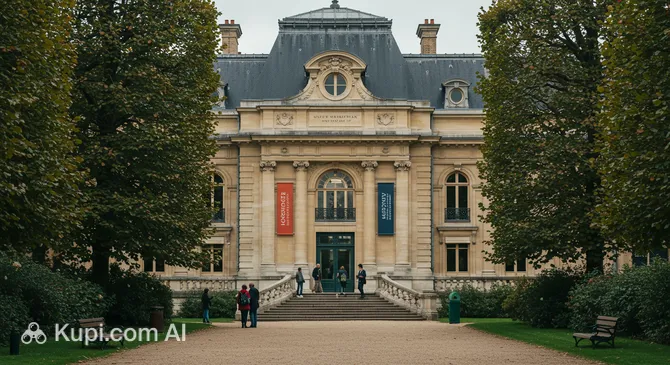
Marmottan Monet Museum. Illustration.
Source: Kupi.com AI

Traveler photos:

Originally an elegant mansion belonging to the Marmottan family, it was carefully renovated and adapted over time to house priceless art collections. Here, visitors can not only enjoy the masterpieces but also feel the atmosphere of a bygone era. The Musée Marmottan Monet allows you to trace Claude Monet's creative journey and see his famous canvases, including those that inspired the very name "Impressionism."

In addition to Monet's impressive legacy, the Musée Marmottan Monet offers visitors a chance to see works by other renowned Impressionists, such as Berthe Morisot, Edgar Degas, and Auguste Renoir. Furthermore, the museum features interesting collections dedicated to the Napoleonic era, rare medieval manuscripts, and examples of European painting from various periods. This location attracts both sophisticated art connoisseurs and tourists interested in the history of art and the culture of France.

Contacts

For the most up-to-date information regarding Musée Marmottan Monet, including visiting hours, ticket prices, and details on current exhibitions, it is recommended to contact them directly. Below are the museum's primary contact details.

How to contactContact
Address2 Rue Louis Boilly, 75016 Paris, France
Websitewww.marmottan.fr

What to Do

Visiting the Musée Marmottan Monet allows you, first and foremost, to immerse yourself in the world of Claude Monet. It features the most extensive collection of his works, including the famous canvas "Impression, Sunrise," which is not only stunningly beautiful but also historically significant for giving the Impressionist movement its name. You can trace the artist's creative path, see his famous water lilies and other masterpieces, and experience the magic of light and color characteristic of his work.

Beyond Monet's legacy, the museum's exhibition introduces visitors to the work of other prominent Impressionist masters. You will see paintings by Camille Pissarro, Alfred Sisley, Pierre-Auguste Renoir, Edgar Degas, Édouard Manet, Gustave Caillebotte, and Paul Cézanne. The unique collection of works by Berthe Morisot deserves special attention—she was one of the few, yet highly significant, female artists in the Impressionist circle, whose canvases convey a particular tenderness and intimacy.

But the Musée Marmottan Monet is not just about Impressionism. Guests can explore an interesting exhibition dedicated to art from the Napoleonic era, admire an exquisite collection of illuminated medieval manuscripts, and see paintings by Italian and Flemish masters. Additionally, the museum regularly hosts temporary exhibitions, lectures, and various cultural events, making every visit potentially unique and enriching the overall experience.

Getting There

Musée Marmottan Monet is conveniently located in the 16th arrondissement of Paris, at 2 Rue Louis-Boilly, making it easily accessible for visitors. The simplest and fastest way to reach the museum is by using the Paris Metro. The nearest station, "La Muette", served by Line 9, is just a leisurely 5–7 minute walk away. This route allows you to enjoy a short stroll through one of the most prestigious neighborhoods in the capital of France.

For those who prefer surface transport, several bus routes stop near the Musée Marmottan Monet. You can take bus numbers 22, 32, 52, 63, 70, or 82, which will drop you off almost at the museum's doorstep or a short distance away. This is also a great way to see more of city life in Paris on your way to your destination.

If you plan to travel by car, please note that while there are paid parking lots nearby, space may be limited, especially on busy days, given the proximity to the Bois de Boulogne. Therefore, to avoid potential difficulties in finding a parking spot, it is recommended to consider public transport. The museum is located in a quiet and charming residential area, so the walk from the nearest public transport stop or metro station will be a pleasant and peaceful start to your visit.

Nearest city: Paris

History & Facts

The history of the Musée Marmottan Monet begins not with the Impressionists, but with an elegant mansion that originally served as a hunting lodge for the Duke of Valmy. Later, the building became the property of the Marmottan family, who were passionate collectors. Jules Marmottan enthusiastically collected art from the Middle Ages and the Renaissance, while his son, Paul Marmottan, focused on treasures from the First Empire period, creating an impressive collection that reflects this significant stage of French history.

Following Paul Marmottan's death in 1932, his will dictated that the mansion and all its accumulated riches be bequeathed to the Académie des Beaux-Arts of France. This generous donation allowed the museum to open its doors to the public as early as 1934. Initially, the exhibition was primarily dedicated to the Napoleonic era, showcasing the extensive collection gathered by Paul Marmottan, and the museum began its operations in this capacity, offering visitors a unique perspective on the period.

Two landmark gifts became key moments that radically changed the museum's profile. In 1957, the museum was enriched by a significant collection of Impressionist works donated by Dr. Georges de Bellio, one of the first patrons and admirers of the movement. However, the true transformation occurred in 1966 when Michel Monet, son of the great Claude Monet, donated over a hundred of his father's works to the museum. This priceless donation turned the Musée Marmottan Monet into the world's leading center for studying and showcasing Monet's work, as well as Impressionism as a whole.

Since then, the museum's collection has continued to grow thanks to the generosity of other patrons and collectors, adding new masterpieces and strengthening its reputation. Today, the Musée Marmottan Monet not only houses the world's largest collection of Claude Monet's paintings, including the famous "Impression, Sunrise," which gave the movement its name, but also presents works by other prominent Impressionists, as well as valuable collections of medieval and First Empire art, making it a unique destination for immersing oneself in various periods of art history.

Time Needed

To fully enjoy the Musée Marmottan Monet collection, it is recommended to set aside 2 to 3 hours for your visit. This is generally enough time to explore the main galleries, discover Claude Monet's masterpieces—including his famous "Water Lilies" and the painting "Impression, Sunrise"—and appreciate the works of other Impressionists and exhibitions dedicated to other eras.

If you plan a deeper immersion—for example, if you wish to study the temporary exhibitions often held at the museum in detail, or use an audio guide for additional information about the works on display—then your visit may take a bit longer. In such cases, you should expect to spend about 3-4 hours to leisurely explore all the aspects of the exhibition that interest you and get the most out of your visit to this unique spot in Paris.

Working Hours

The Musée Marmottan Monet is usually happy to welcome visitors from Tuesday to Sunday. Standard opening hours are 10:00 AM to 6:00 PM. Please note that on Thursdays, the museum stays open longer, until 9:00 PM, offering a wonderful opportunity for evening cultural leisure. The museum is closed on Mondays.

The museum is generally open year-round, except for the weekly closing day and possible changes on public holidays. To ensure your visit goes smoothly, it is highly recommended to check the current schedule and information regarding the need for advance ticket booking on the official Musée Marmottan Monet website before you go. This will help you avoid any surprises and plan your visit in the best possible way.

DayOpening hours
MondayClosed
Tuesday10:00 – 18:00
Wednesday10:00 – 18:00
Thursday10:00 – 21:00
Friday10:00 – 18:00
Saturday10:00 – 18:00
Sunday10:00 – 18:00

Nearby

A visit to the Musée Marmottan Monet is undoubtedly a highlight for any art lover. However, to make your trip to this part of Paris even more rewarding, it is worth paying attention to its surroundings. Exploring nearby attractions will allow you to deeper experience the atmosphere of this unique district and discover new facets of the French capital.

The area around the museum, the 16th arrondissement, is itself an embodiment of Parisian charm, with its elegant architecture, green squares, and cozy streets. Several iconic sites are located near the Musée Marmottan Monet, which can be an excellent addition to your cultural itinerary. Here are a few of them:

NameDistance
Trocadéro Square1.5 km
Louis Vuitton Foundation1.9 km
Eiffel Tower2 km
Quai Branly Museum – Jacques Chirac2.2 km
Arc de Triomphe2.6 km
Dior Gallery3 km
Les Invalides3.3 km

Have you reached the end of the page?

So the route has been studied inside and out