Support

Musée d'Orsay

About

The Musée d'Orsay is one of the most iconic cultural landmarks in Paris, situated in a picturesque location on the Left Bank of the Seine. The uniqueness of this museum begins with its architecture: it is housed in the former Gare d'Orsay railway station, built for the 1900 Universal Exhibition. This monumental structure, with its famous clocks and spacious central hall, is a work of art in itself and creates an unforgettable atmosphere for discovering masterpieces.
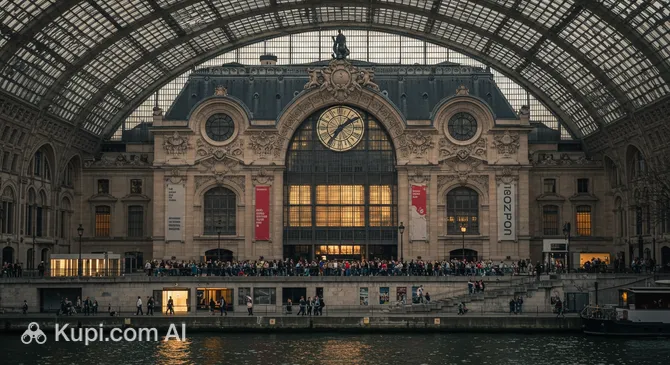
Musée d'Orsay. Illustration.
Source: Kupi.com AI

Traveler photos:

The core of the museum's collection consists of artworks created between 1848 and 1914. The Musée d'Orsay is world-renowned for its unparalleled collection of Impressionist and Post-Impressionist works. Here, you can see famous paintings by Claude Monet, Édouard Manet, Auguste Renoir, Edgar Degas, Paul Gauguin, and Vincent van Gogh in person. Visiting the museum is an opportunity to trace the birth and development of movements that forever changed the history of painting.

The museum's collection is not limited to painting alone. It also includes outstanding examples of sculpture, photography, graphic arts, and Art Nouveau decorative arts. This variety of exhibits provides a complete picture of artistic life in France and Europe during the second half of the 19th and early 20th centuries. Thanks to its vast collection and unique atmosphere, the Musée d'Orsay attracts millions of art lovers from around the world every year.

Contacts

To plan your visit, check current opening hours, or get more information about exhibitions, you can contact the Musée d'Orsay administration. All essential contact information is available for visitors.

How to contactContact
AddressEsplanade Valéry Giscard d'Estaing, 75007 Paris, France
Phone number+33 1 40 49 48 14
Websitewww.musee-orsay.fr

What to Do

A visit to the Musée d'Orsay is an immersion into the world of art, organized with incredible logic. The exhibition is spread across five levels in chronological order, allowing guests to trace the development of European art from Realism to Art Nouveau. You can see masterpieces by great masters such as Claude Monet, Vincent van Gogh, Paul Cézanne, and Auguste Renoir, and witness firsthand how entire artistic movements were born and evolved.

In addition to the world-famous painting collection, the museum has many other interesting exhibits. Be sure to visit the specific rooms dedicated to architecture, photography, and decorative arts. The impressive large-scale model of the Paris Opera deserves special attention, as it allows you to see this famous building in minute detail. This makes a visit to Orsay multifaceted and interesting for fans of many different art forms.

The Musée d'Orsay is not a static collection but a living cultural space where temporary exhibitions are regularly held, making every visit a chance for new discoveries. Don't forget to enjoy the building of the former station itself: head to the top floor to admire the panorama of Paris through the famous clocks that have become symbols of the museum. This is a wonderful opportunity to take unique photos and relax while contemplating the city from an unusual perspective.

Getting There

The Musée d'Orsay is conveniently located in the heart of Paris at 62 Rue de Lille, making it easily accessible for tourists. The simplest way to get here is by using public transport. You can take the metro line 12 to the Solférino station or RER trains line C, getting off at the Musée d'Orsay station, which is right next to the museum.

Additionally, several bus routes serve the museum. Lines 63, 83, 84, and 94 stop at the Lille stop, while 68, 69, and 87 stop at Henry de Montherlant. For those who prefer walking, the stroll from the Louvre and other central landmarks takes only 10–15 minutes. This pleasant walk along the Seine embankment allows you to fully enjoy the city views. For drivers, paid parking lots are available in the immediate vicinity of the museum.

Nearest city: Paris

History & Facts

The history of the Musée d'Orsay is a remarkable example of how a functional building can find a second life and become one of the world's leading cultural centers. Its story begins at the end of the 19th century, when it was decided to build a new railway station for the 1900 Universal Exhibition in Paris. The project was entrusted to architect Victor Laloux, who created a magnificent Beaux-Arts building that harmoniously fit into the elegant landscape of the Seine embankment. The Gare d'Orsay, opened on July 14, 1900, was the world's first electrified station and amazed contemporaries with its luxury and technical innovations, such as elevators and luggage ramps.

Despite its initial grandeur, the station's era proved short-lived. By 1939, its platforms had become too short for newer, longer trains, and it stopped serving long-distance routes, maintaining only suburban traffic. In the following decades, the building was used for various purposes: it served as a parcel distribution center, a film set, and there was even talk of its demolition. However, the historic building was destined to survive.

A fateful decision was made in the 1970s at the initiative of French President Valéry Giscard d'Estaing—to transform the former station into a museum dedicated to the art of the second half of the 19th and early 20th centuries. This idea filled the chronological gap between the collections of the Louvre and the Centre Pompidou. After a large-scale renovation that lasted nearly ten years, President François Mitterrand officially inaugurated the Musée d'Orsay on December 1, 1986. Today, it is not just a museum but a true symbol of how respect for history and bold architectural solutions can gift the world a new cultural gem.

Time Needed

To get a full impression of the Musée d'Orsay's rich collection, you should plan at least 3–4 hours for your visit. This time is usually enough to view the major Impressionist and Post-Impressionist masterpieces without rushing, explore the sculpture and decorative art exhibits, and enjoy the unique architecture of the building itself. Such a time frame allows you to do more than just run through the halls; you can truly immerse yourself in the art of the late 19th and early 20th centuries.

For true art lovers and those planning to study temporary exhibitions in detail, significantly more time may be required—up to an entire day. The museum is so vast and filled with exhibits that covering every single detail even in 4 hours will be challenging. If you are very limited on time, you can set aside about 2 hours to see the most famous works by checking the museum map in advance and identifying key rooms. However, be prepared that this will be a fairly brief visit.

Working Hours

The Musée d'Orsay is open to visitors year-round but follows a specific schedule. Standard visiting hours are Tuesday to Sunday from 9:30 AM to 6:00 PM. The museum is closed on Mondays. A special advantage for tourists is the late opening on Thursdays, when the museum stays open until 9:45 PM, allowing you to enjoy the art in an evening atmosphere. The galleries begin to clear 30-45 minutes before closing.

Given the immense popularity of the Musée d'Orsay, it is highly recommended to purchase tickets online in advance. This helps avoid long lines, especially during peak seasons and on weekends. Before your visit, it's always useful to check the current schedule on the official museum website, as changes may occur due to holidays or special events. The museum is closed on May 1st and December 25th.

DayOpening hours
MondayClosed
Tuesday9:30 – 18:00
Wednesday9:30 – 18:00
Thursday9:30 – 21:45
Friday9:30 – 18:00
Saturday9:30 – 18:00
Sunday9:30 – 18:00

Nearby

Visiting the Musée d'Orsay is just one part of what this magnificent district of Paris has to offer. Thanks to its central location on the banks of the Seine, the museum serves as an ideal starting point for further exploration of the city. A walk through its surroundings will allow you to dive deeper into the atmosphere of the French capital and see other world-famous landmarks, many of which are just a few minutes' walk away.

Exploring nearby sites will not only enrich your travel experience but also help you better understand the cultural and historical context in which the masterpieces of the Orsay collection were created. Just one bridge separates you from the Right Bank with its famous gardens and palaces. Below is a list of interesting sites located in the immediate vicinity of the museum.

NameDistance
Louvre Museum0.8 km
Hôtel de Crillon0.9 km
Les Invalides1.1 km
Petit Palais1.1 km
Galerie Vivienne1.2 km
Napoleon's Tomb1.2 km
Le Caveau de la Huchette1.6 km

Have you reached the end of the page?

So the route has been studied inside and out