Support

Palace of Versailles

About

The Palace of Versailles is a magnificent architectural masterpiece and one of the most famous palace and park ensembles in the world, located about 20 kilometers from Paris. It is a prime example of French Classicism and a symbol of absolute monarchy in France, having had a profound influence on the architecture of many European palaces.
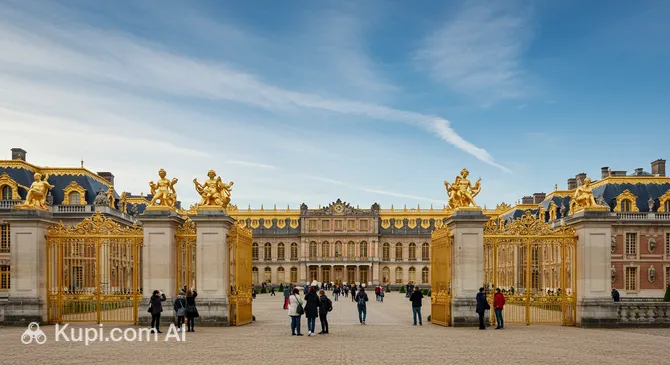
Palace of Versailles. Illustration.
Source: Kupi.com AI

Traveler photos:

Construction of the grand complex began in the 17th century by the will of King Louis XIV, known as the "Sun King." From 1682 to 1789, Versailles served as the official residence of French monarchs and the center of the country's political life. The palace's interiors are striking in their luxury, with the dazzling Hall of Mirrors, the Grand Apartments of the King and Queen, and the Royal Opera being among the most famous rooms.

An integral part of the ensemble is the famous Gardens of Versailles, designed by the outstanding landscape architect André Le Nôtre. This is a vast area with perfectly manicured lawns, labyrinths, numerous fountains, sculptures, and quiet groves, which is a work of art in its own right.

In 1801, the palace was granted museum status and opened to the general public. Today, the Palace of Versailles and its park are listed as a UNESCO World Heritage site and attract millions of visitors from all over the world with their historical significance and unsurpassed beauty.

Contacts

To plan your visit to the Palace of Versailles, confirm current opening hours, or obtain additional information, you can use the official contact details. It is recommended to check the official website before your trip to learn about any potential schedule changes or special events.

How to contactContact
AddressPlace d'Armes, 78000 Versailles, France
Phone number+33 1 30 83 78 00
Websitewww.chateauversailles.fr

What to Do

A visit to the Palace of Versailles is an immersion into the world of luxury and the grandeur of the French monarchy. Inside, magnificent interiors await you, where you can explore halls demonstrating the wealth and power of the kings of France. Be sure to visit the famous Hall of Mirrors, one of the most iconic rooms in the palace, decorated with countless mirrors and gilded elements. You will also have the opportunity to see the private royal apartments, where the destinies of the state were decided and the private lives of monarchs took place.

Beyond the palace walls, the equally impressive Gardens of Versailles await—a true masterpiece of landscape design created by the famous architect André Le Nôtre. Stroll through the extensive grounds, admiring the numerous fountains, sculptures, and perfectly arranged flower beds and alleys. It is a wonderful opportunity to take a break from the hustle and bustle and enjoy the harmony of nature and art.

To make your acquaintance with Versailles complete, explore other corners of this vast complex. Visit the Grand and Petit Trianons—elegant palaces that served as retreats for the royal family. Then head to the picturesque Queen's Hamlet, where the queen sought peace in the atmosphere of simple rural life. These sites provide a deeper understanding of not only the ceremonial but also the private side of the monarchs' lives.

Getting There

Getting to the Palace of Versailles from Paris is quite simple, as the transport links between the capital and its famous suburb are excellent. The most popular and convenient way is to take the RER Line C suburban train. Trains depart from several central stations in Paris, including Saint-Michel and Musée d'Orsay; you should get off at the Versailles Château Rive Gauche station, which is located just a 10-minute walk from the palace entrance. The entire journey takes approximately 30–40 minutes.

Alternatively, you can use SNCF trains departing from other Paris railway stations. For example, from Montparnasse station, you can reach the Versailles Chantiers station, and from Saint-Lazare station, you can go to Versailles Rive Droite. However, keep in mind that the walk from these stations to the palace is slightly longer, or you may need to take a local bus.

For those who prefer to travel by car, the drive from central Paris to Versailles takes about 30–45 minutes, although this time can vary significantly depending on traffic conditions. Paid parking lots are available near the palace complex where you can leave your vehicle during your visit.

Nearest city: Paris

History & Facts

The history of the Palace of Versailles began quite modestly: in 1623, King Louis XIII built a small hunting lodge in the local woods. Although it was rebuilt in 1631, the real transformation only began under his son, Louis XIV, known to history as the "Sun King." In the 1660s, he initiated a massive expansion, deciding to turn the modest château into a grand residence worthy of an absolute monarch.

Construction officially began in 1661 and progressed at a rapid pace. By 1682, the main part of the work was completed, allowing Louis XIV to move the royal court and the government to Versailles. The palace was conceived as a symbol of the monarch's boundless power—Louis XIV himself personified the sun, around which, according to his design, all life in the kingdom revolved. Despite the court's move, construction and decoration work continued for another 50 years, adding new elements to the complex even after the death of the "Sun King."

Versailles served as the official residence of French kings until October 1789. At the height of the French Revolution, the royal family was forced to leave the palace and return to Paris. After these turbulent events, its fate changed forever: in 1801, the complex was granted museum status and opened to the public. Since then, the Palace of Versailles has maintained its immense historical and cultural significance, remaining one of the world's greatest heritage sites.

Time Needed

To fully enjoy the grandeur of the Palace of Versailles and its vast grounds, it is highly recommended to dedicate a full day to your visit. This will allow you to immerse yourself in the atmosphere of royal luxury and see all the key parts of this grand complex without rushing. Trying to fit everything into just a few hours will only leave a superficial impression of this unique place.

When planning your visit, keep the following timeframe in mind: touring the main halls of the palace itself, including the famous Hall of Mirrors and the King's Apartments, will take about 2–3 hours. Afterward, you should set aside at least another 3–4 hours for a walk through the famous gardens, as well as a visit to the more secluded but equally interesting sites—the Grand and Petit Trianons and the picturesque Queen's Hamlet. Keep in mind that if you want to see the fountain shows, which run on specific days, or visit temporary exhibitions, you will need additional time.

Working Hours

The Palace of Versailles is open to visitors from Tuesday to Sunday; Monday is a day off for the palace itself and the Trianon Estate. Opening hours depend on the season: in high season (April to October), the palace is open from 9:00 AM to 6:30 PM, and in low season (November to March) from 9:00 AM to 5:30 PM. Given the immense popularity of this site, it is highly recommended to book tickets online in advance to avoid long queues at the entrance.

Other parts of the complex have their own schedules. The Gardens of Versailles are open daily and stay open longer: from 8:00 AM to 8:30 PM in high season and from 8:00 AM to 6:00 PM in low season. The Trianon Estate and the Queen's Hamlet open later, at 12:00 PM, and close at 6:30 PM (summer) or 5:30 PM (winter). It is important to remember that the schedule may change due to special events or public holidays, so be sure to check the latest information on the palace's official website before your visit.

DayOpening hours
MondayClosed
Tuesday9:00 – 18:30
Wednesday9:00 – 18:30
Thursday9:00 – 18:30
Friday9:00 – 18:30
Saturday9:00 – 18:30
Sunday9:00 – 18:30

Nearby

A visit to the Palace of Versailles is undoubtedly the main event, but exploring its surroundings can make your trip even more fulfilling and diverse. The area around the palace and the more distant parts of Paris hold their own treasures—from picturesque parks to unique museums and modern cultural sites.

By setting aside time to explore nearby locations, you can immerse yourself deeper into the atmosphere of France and see how multifaceted this region is. Below is a list of interesting attractions located near Versailles that could be an excellent addition to your cultural itinerary.

NameDistance
Malmaison Forest6.3 km
Domaine National de Saint-Cloud7.9 km
Verrières State Forest10.3 km
Marmottan Monet Museum12.3 km
Louis Vuitton Foundation13.2 km
Trocadéro Square13.8 km
Eiffel Tower14 km

Have you reached the end of the page?

So the route has been studied inside and out