Support

Château de Vincennes

About

The Château de Vincennes is a majestic medieval castle located on the eastern outskirts of Paris. This monumental complex, situated in France, is one of the largest and best-preserved royal fortifications in Europe. Its history began as a 12th-century hunting estate, on the site of which this grand fortress for French monarchs was built between the 14th and 17th centuries.

At the heart of the architectural ensemble stands an impressive 52-meter-tall keep (donjon)—the tallest in Europe. The castle is surrounded by massive walls with towers and a deep moat, emphasizing its defensive significance. However, the Château de Vincennes is famous not only for its military strength but also for its elegance: the site features the exquisite Sainte-Chapelle and elegant royal pavilions, creating a unique blend of a fortress and a palace.
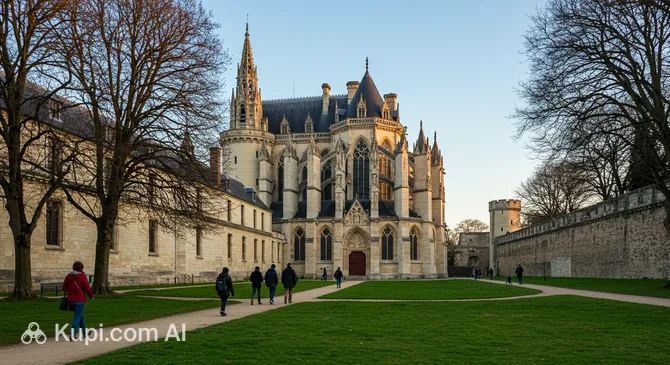
Château de Vincennes. Illustration.
Source: Kupi.com AI

Traveler photos:

Throughout its centuries-long history, the Château de Vincennes has served not only as a royal residence but also as a military fortress, a state prison, and an arsenal. This versatility is reflected in its architecture and atmosphere, allowing visitors to trace the key stages of French history. Today, it is a popular attraction open to everyone who wants to touch the past and experience the medieval spirit.

Contacts

To plan your visit to the Château de Vincennes or to clarify any details, you can use the official contact information. It is recommended to check the official website for the most up-to-date information on opening hours, ticket prices, and special events.

How to contactContact
AddressAv. de Paris, 94300 Vincennes, France
Phone number+33 1 48 08 31 20
Websitewww.chateau-de-vincennes.fr

What to Do

Visiting the Château de Vincennes is an opportunity to dive deep into the history of France. The main highlight to explore is the majestic keep—the tallest medieval defensive tower in Europe. Tourists can climb to its upper levels to enjoy breathtaking panoramic views of Paris and its surroundings. Additionally, the former royal apartments are open to visitors, where you can see partially restored interiors and imagine the daily lives of monarchs.

The Sainte-Chapelle deserves special attention—a gem of Gothic architecture. Visitors can admire its exquisite stained-glass windows, examine the sculptural details, and experience a sense of peace that contrasts with the rugged look of the fortress walls. A walk through the courtyard and along the castle's massive walls allows you to appreciate the scale of this structure and take impressive photos.

The castle often hosts various cultural events, including temporary exhibitions, historical reenactments, and themed tours that allow guests to immerse themselves deeper into the Middle Ages. During your visit, you can learn about the fates of famous prisoners of the Vincennes prison, including the Marquis de Sade, Diderot, and Mirabeau, and browse exhibitions dedicated to the long history of the castle and the French monarchy.

Getting There

Getting to the Château de Vincennes is easy thanks to its convenient location on the eastern outskirts of Paris, in the commune of Vincennes. The fastest and most popular way is by metro: the Château de Vincennes station, the terminus of Line 1, is located right at the main entrance to the fortress. You can also take the RER Line A to Vincennes station, which is just a few minutes' walk from the castle.

The journey from central Paris by public transport takes an average of 20–30 minutes. In addition to the metro and RER, many city buses stop near the castle, making it accessible from different parts of the city. For those who prefer to travel by car, there is public parking nearby; however, keep in mind that finding a free spot can be difficult due to the castle's popularity.

Thanks to its location next to the famous Bois de Vincennes, the castle serves as an excellent starting point for walks in the fresh air. After immersing yourself in history, you can continue your day by exploring the picturesque paths and alleys of one of the capital's largest parks.

Nearest city: Paris

History & Facts

The history of the Château de Vincennes dates back to the 12th century, when King Louis VII decided to build a modest hunting lodge in the dense Vincennes forest. This location was so beloved by monarchs that by the 13th century, it had evolved into a full-fledged royal estate. However, radical changes began in 1337, when Philip VI of Valois initiated the construction of a powerful fortress on this site, laying the foundations for the castle we see today.

The centerpiece of the new fortress was the grand keep (donjon), completed in 1369. At the time, it was the tallest medieval fortified tower in all of Europe, emphasizing the power of the French crown. From the 14th century onwards, Vincennes served as one of the primary residences for the kings of France, witnessing major events in the life of the state. Royal councils were held here, and heirs to the throne were born and married within its walls.

Over time, the castle's role changed. As early as the 16th century, it began to be used as a state prison, housing many prominent historical figures. In the 17th century, under the orders of Louis XIV, the architect Louis Le Vau added elegant classical-style pavilions to the austere medieval structure, and during the reign of Napoleon I, the castle was repurposed as barracks and an arsenal. This multi-layered history has turned the Château de Vincennes into a unique monument where every era has left its mark.

Time Needed

To fully experience the Château de Vincennes, it is recommended to set aside 2 to 3 hours. This is enough time to explore all the key sites of the castle complex at a leisurely pace, soak in its majestic atmosphere, and take memorable photos. This time frame allows you to get a complete overview of this unique historical monument.

A standard 2–3 hour visit typically includes exploring the massive keep, visiting the Gothic Sainte-Chapelle, walking through the royal pavilions, and viewing the exhibitions. This time is also sufficient to walk through the fortress's inner courtyard and appreciate the scale of its fortifications. If you plan a more in-depth study or wish to attend special events, your stay may be longer.

Working Hours

The Château de Vincennes is open to visitors almost year-round, making it convenient to visit at any time. The castle is closed only on January 1st, May 1st, and December 25th. Opening hours may vary by season: typically, in the summer (roughly from late May to late September), the castle is open from 10:00 AM to 6:00 PM, and in the winter, from 10:00 AM to 5:00 PM. Note that certain parts of the complex, such as the Sainte-Chapelle, may have their own schedules with a lunch break. Last entry is usually permitted 45 minutes before closing.

While advance booking is not always mandatory, it is highly recommended to buy tickets online, especially during the peak tourist season. This will help you avoid lines and save time. Before your visit, be sure to check the current schedule and any possible changes on the attraction's official website, as opening hours may be adjusted due to events or other reasons.

10:00 – 18:00

Nearby

A visit to the Château de Vincennes is a fascinating journey into history in its own right, but exploring the surrounding area can make your day even more fulfilling. Located on the edge of the vast Bois de Vincennes, the castle serves as a perfect starting point for further discoveries. Exploring nearby attractions will allow you to see different sides of Paris—from cultural centers to cozy culinary spots.

Just a few kilometers from the majestic walls of the Château de Vincennes are other interesting sites easily accessible by foot, public transport, or taxi. This is a great opportunity to create a combined itinerary and get the most out of a single day, complementing the castle's medieval atmosphere with modern or other historical landmarks of the capital of France.

NameDistance
Palais de la Porte Dorée2.2 km
La Felicità4.9 km
Supersonic4.9 km
The People Belleville5.1 km
Le Caveau de la Huchette6.6 km
Louvre Museum7.4 km
Galerie Vivienne7.5 km

Have you reached the end of the page?

So the route has been studied inside and out