Support

Eiffel Tower

About

The Eiffel Tower is, without a doubt, the most recognizable architectural symbol of Paris and all of France. This majestic metal structure, located on the Champ de Mars, draws the eye and delights travelers from all over the world. It is considered the most visited paid monument and one of the most photographed attractions on the planet, making it a must-see on any itinerary through the French capital.
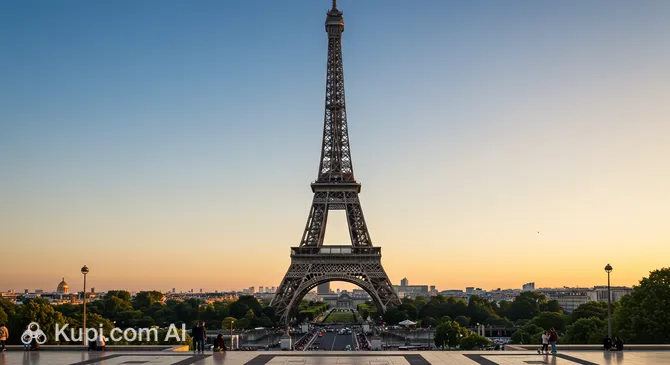
Eiffel Tower. Illustration.
Source: Kupi.com AI

Traveler photos:

Named after its creator, engineer Gustave Eiffel, the tower originally had a more modest name — the "300-meter tower." Its construction was the pinnacle of 19th-century engineering and coincided with the 1889 World's Fair. Created as a temporary structure, it was so unique for its time that it was preserved, becoming a valuable site for scientific research and radio broadcasting.

Today, the height of the Eiffel Tower, including its antennas, reaches 330 meters, and for over 40 years, it remained the tallest structure on the planet. A visit to the tower is a unique opportunity not only to touch history but also to enjoy breathtaking panoramic views of Paris from its observation decks. Every year, millions of tourists climb to the top to see the city from a bird's-eye view.

Contacts

For the most up-to-date information on opening hours, ticket prices, and special events, it is recommended to visit the official website of the attraction. You can also purchase tickets online there to avoid queues. The main contact details for planning your visit are provided below.

How to contactContact
AddressAv. Gustave Eiffel, 75007 Paris, France
Websitewww.toureiffel.paris

What to Do

A visit to the Eiffel Tower is, first and foremost, an opportunity to see Paris from a bird's-eye view. Three observation decks are open to guests, and each offers increasingly breathtaking panoramas of the city. By ascending to the highest level, you will find yourself on an observation deck that offers perhaps the best view of the city skyline.

In addition to the magnificent views, the first and second levels of the tower house souvenir shops where you can buy commemorative gifts, as well as restaurants and bistros. These levels also feature exhibition spaces and interactive displays that introduce you to the history of this engineering marvel and its technical features. This makes a walk through the tower not only spectacular but also educational.

A special experience awaits visitors in the evening. As darkness falls, the tower is transformed by dramatic lighting, and every hour it begins to sparkle with thousands of twinkling lights — a sight not to be missed. Furthermore, temporary exhibitions and cultural events are regularly held on and around the tower, making every visit uniquely its own.

Getting There

The Eiffel Tower is located in the very heart of Paris, on the Champ de Mars, making it easily accessible from anywhere in the city. The most convenient and popular way to reach the attraction is by public transport. You can use the Parisian Metro: the nearest stations are Bir-Hakeim (Line 6), Trocadéro (Line 9), and École Militaire (Line 8). In addition, many city bus routes stop within walking distance of the tower.

For those who prefer more comfort, you can always find a taxi near the tower or use hop-on-hop-off tour buses, which have a dedicated stop here. If the weather is nice, a walk is a wonderful alternative. A particularly scenic route runs along the banks of the Seine, offering magnificent views of the tower and allowing for beautiful photos even as you approach.

In addition to land transport, you can reach the base of the tower by water — on river shuttles or sightseeing boats that cruise the Seine and have a pier nearby. Regardless of the method chosen, keep in mind the incredible popularity of this site. To avoid wasting time in lines, it is strongly recommended to purchase your tickets to the tower online in advance.

Nearest city: Paris

History & Facts

The history of the Eiffel Tower is inextricably linked to the 1889 World's Fair, which was held in Paris and dedicated to the centenary of the French Revolution. To showcase the engineering and technological achievements of France, the city administration organized an architectural competition, resulting in the selection of Gustave Eiffel's bold design. Although the idea initially met with resistance from many artists, it was destined to become a symbol of the new industrial era.

The construction of the tower was a true marvel of engineering for its time. It was built in record time — from 1887 to 1889, just over two years. Around 300 workers labored to create this iron lace, assembling the structure with incredible precision from approximately 18,000 individual parts held together by 2.5 million rivets. Such speed and accuracy were achieved thanks to highly detailed drawings and the pre-assembly of many elements at the factory.

Interestingly, the tower was originally intended to be a temporary structure, planned for dismantling 20 years after the exhibition. However, the structure quickly gained incredible popularity with the public and began generating income. Its fate was finally sealed by technological progress: the tower proved to be an ideal platform for radio antennas, which saved it from demolition and forever secured its status as an iconic symbol of the city, known today worldwide.

Time Needed

When planning a visit to the Eiffel Tower, it is worth setting aside 2 to 3 hours for a full experience. This time is generally enough to leisurely climb to the observation decks, enjoy the panoramic views, visit small exhibitions, and browse the souvenir shops. This duration will allow you to get the most out of your visit without feeling rushed.

The length of your visit may vary depending on which level you want to visit and what you plan to do. For example, if you want to go to the very top (the third level), you should allow about 2.5–3 hours, as this includes waiting for elevators on different levels. If your plan is limited to the second level, 1.5–2 hours may suffice. For those wishing to have lunch at one of the tower's restaurants or slowly enjoy a glass of champagne at the summit, the stay will naturally be longer.

Working Hours

The Eiffel Tower is open to visitors year-round, allowing travelers to plan a visit at any convenient time. Generally, the attraction operates daily from morning until late at night. Standard opening hours are from 9:00 AM to 12:45 AM; however, please note that during the summer period and holidays, the schedule may be extended. It is important to remember that the operating hours of individual levels, elevators, and stairs may vary, so it is highly recommended to check for current information on the official website before your visit.

Given the tower's immense popularity, entry lines can be very long, especially during the peak tourist season. To save time and guarantee your spot at the top, it is highly recommended to book tickets online in advance. This will allow you not only to avoid a tedious wait but also to plan your day in Paris more efficiently. Buying a ticket online is particularly relevant if you want to visit the top level, as access to it may be limited.

9:30 – 23:00

Nearby

After visiting the Eiffel Tower, don't be in a hurry to leave the area. A stroll through the neighborhood will allow you to discover other iconic spots in Paris and dive deeper into its unique atmosphere. Within walking distance of France's main attraction are numerous gardens, museums, and squares, each deserving of its own attention.

Exploring nearby sights will enrich your experience and help you form a more complete picture of the French capital's cultural and historical heritage. Below is a list of interesting places located near the Eiffel Tower, including the distance to them.

NameDistance
Quai Branly Museum – Jacques Chirac0.4 km
Trocadéro Square0.7 km
Les Invalides1.3 km
Dior Gallery1.3 km
Napoleon's Tomb1.4 km
Arc de Triomphe1.7 km
Petit Palais1.7 km

Have you reached the end of the page?

So the route has been studied inside and out