Support

Nnamdi Azikiwe International Airport

About the Airport

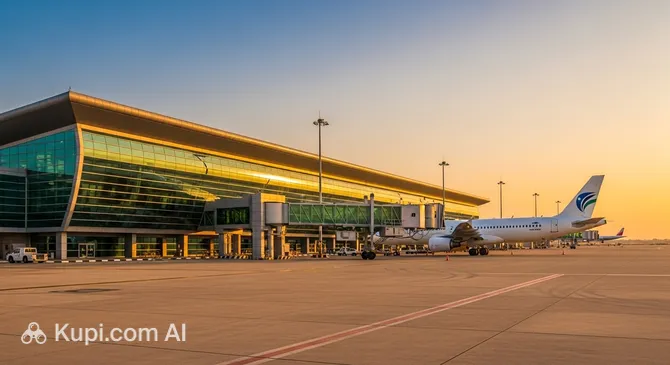
Nnamdi Azikiwe International Airport. Source: Kupi.com Binoculars

Nnamdi Azikiwe International Airport is the main air gateway to the capital of Nigeria, Abuja. Named after the country's first president, this modern aviation hub serves as the first impression for guests visiting the political centre of Africa. The airport is situated in a scenic area where urban structures harmonize with the vast savannah and the outlines of distant hills, creating a unique atmosphere from the moment you step off the plane. Thanks to large-scale modernization in recent years, the complex offers travellers a high level of comfort and convenient logistics.

IATA Code ABV
ICAO Code DNAA
City Abuja
Distance to Centre approx. 40 km
Status International
Annual Passengers over 5 million
Schedule Online Flight Board

Features and Advantages of the Airport

The airport infrastructure is clearly divided to avoid congestion: domestic flights are handled in Terminals B and D, while international flights are served in the new Terminal E. This modern terminal, opened in 2018, has become the pride of the aviation hub: it is equipped with advanced security systems, aerobridges, and spacious waiting lounges with panoramic glazing.

For the convenience of travellers, the airport is integrated into the city's transport network. Light rail trains (Abuja Light Rail) depart directly from the terminal, allowing you to reach the centre of Abuja and the Idu railway station, bypassing traffic jams. In the departure zones, passengers can visit business lounges, as well as purchase souvenirs, local SIM cards, and goods in duty-free shops.

Contact Information

Below are the contact details for Nnamdi Azikiwe International Airport (ABV). Please note that information may change, and it is recommended to verify it on official resources before your trip.

  • Official Website: The airport is managed by the Federal Airports Authority of Nigeria (FAAN). Up-to-date information can be found on their official website: www.faan.gov.ng.
  • Information Desk Phone: For general information, you can try contacting one of the numbers associated with the airport management. It is recommended to verify the validity of the numbers before calling.
  • Address: Umaru Musa Yar'Adua Road, Abuja, Nigeria.
  • Email: For general inquiries, you can use the contact email of the Federal Airports Authority: info@faan.gov.ng.
  • Social Media: FAAN's official accounts can be found on popular social networks, which is a good way to receive prompt news updates.
  • Lost Luggage Information: If your query relates to lost or damaged checked baggage, you should primarily contact your airline's baggage tracing service. Contact details are usually found on your boarding pass or the carrier's website.
  • Passenger Support Contacts: For general questions unrelated to baggage, you may use the phone and email provided above.

How to Get to the Airport

You can get to Nnamdi Azikiwe International Airport from the centre of Abuja in several ways. The airport is located approximately 40 kilometres west of the city's business district, and the choice of transport depends on your budget, time, and comfort preferences. On average, the trip takes between 40 to 60 minutes, but travel time can increase significantly during peak hours.

Taxis and Ride-Hailing Services are the most popular and convenient way to reach the airport. International apps such as Uber and Bolt operate in the city, offering rides at fixed or pre-calculated rates. This is a reliable and relatively safe option, especially for tourists with luggage. The cost of the trip is moderate. You can also use official airport taxi services or negotiate a price with local drivers, but it is recommended to do this in advance and agree on the fare before starting the trip.

Hotel Transfers and Private Carriers are often the best choice for those who value comfort and predictability. Many major hotels in Abuja organize shuttles to the airport for their guests. This service usually needs to be booked in advance. Additionally, you can book a private transfer online through specialized companies, guaranteeing a meeting at the required time and a fixed price.

Public Transport represents the most budget-friendly option, but it may be less comfortable and predictable. There are no specialized express buses or trains from the city centre to the airport. However, you can use city buses that run in the direction of the airport, but this will require transfers and good knowledge of local routes. This method is suitable for experienced travellers without a large amount of luggage.

For those who prefer maximum freedom of movement around Nigeria, car rental is available. There are offices of several rental companies at Abuja Airport. The terminal area provides parking for both short-term and long-term stays, which is convenient if you are arriving in your own or a rented vehicle.

Terminals and Map

Nnamdi Azikiwe International Airport in Abuja has a modern and clear structure consisting of several terminals. The main passenger flow is handled by two main complexes: the new international terminal and the terminals for domestic airlines. Such clear separation helps travellers orient themselves easily and quickly find the necessary zone.

The New International Terminal (Terminal E) is a modern and spacious building that serves all flights outside Nigeria. Its layout is standard for major airports: check-in counters and the departure zone are on the upper floor, while the arrival zone with baggage claim is on the lower floor. Thanks to clear signage, a large number of passport control counters, and modern equipment, formalities here are organized efficiently.

Terminals for Domestic Flights (Terminals B, C, D) are located in older buildings and serve flights to other cities in Nigeria. Although they may seem less spacious compared to the international one, they fully cope with their task. Representation offices of all local air carriers are located here.

Moving between terminals causes no difficulties. The international and domestic terminals are within walking distance of each other, and the transfer between them takes no more than 5-10 minutes on foot. Despite this, always carefully check the information on your flight ticket to know in advance from which terminal your departure takes place.

To comfortably complete all procedures, it is recommended to arrive at the airport with time to spare. For international flights, it is better to arrive 3 hours before departure. This time is sufficient for check-in, baggage drop-off, passport control, and security screening. For domestic flights, 1.5-2 hours is generally sufficient.

Overall, navigation through Abuja airport is intuitive. All signs are in English. If you have any questions, you can always contact the information desk or any airport staff member. The main thing is to arrive early and follow the signs carefully, and then your journey will begin easily and pleasantly.

Airport History

The history of Nnamdi Azikiwe International Airport is inextricably linked with the establishment of the new capital of Nigeria. Its construction was a key part of the ambitious plan to move the administrative centre from Lagos to Abuja. Construction of the airfield began in the early 1980s. Initially, it was created for domestic flights, but the designers envisaged the possibility of its expansion to an international level from the very beginning.

A crucial milestone in the airport's development was 1991, when Abuja officially received capital status. This event gave a powerful impetus to transforming the airport into a major international transport hub. The growing importance of the city and the need to receive foreign delegations led to the construction of an international terminal. Its opening in 2002 significantly expanded the flight geography and capabilities of the airport.

In the 21st century, the airport entered a phase of radical modernization. One of the most significant projects was the complete reconstruction of the runway in 2017. To carry out the work, the airport was completely closed for six weeks — a bold and unprecedented decision that allowed for the implementation of the highest safety standards. Following this, in 2018, a new, modern international terminal was opened, which significantly increased throughput capacity and raised the level of comfort for travellers.

Interesting fact: the airport is named after Dr Nnamdi Azikiwe, the first president of Nigeria and one of the key figures in the country's independence movement. Today, Abuja Airport is one of the busiest in West Africa and continues to develop actively, symbolizing the growth and ambitions of modern Nigeria.

Services and Amenities

Nnamdi Azikiwe International Airport in Abuja offers passengers all necessary services for a comfortable wait for their flight. The airport infrastructure is designed to satisfy the basic needs of travellers, whether it is a short transfer or a long wait for departure.

Various dining outlets operate within the terminals: from small cafes where you can have a quick snack and coffee, to restaurants offering local and international cuisine. For shopping enthusiasts, stores are open, including Duty-Free, where you can purchase souvenirs, perfumes, and other goods at competitive prices.

For those who prefer to wait for their flight in a quieter atmosphere, premium lounges and VIP lounges are available. Here, passengers are offered snacks, beverages, fresh newspapers, and comfortable places to rest or work. Access to free Wi-Fi is provided throughout the airport, and numerous charging stations allow you to stay connected at all times.

Financial matters can be resolved directly at the airport: currency exchange points, ATMs, and bank branches are at passengers' disposal. In case of feeling unwell, you can seek help at the medical centre operating within the terminal.

The airport cares for all categories of passengers. Mother and child rooms are equipped for travellers with small children. Passengers with reduced mobility are provided with special assistance, including accompaniment and the provision of wheelchairs upon request.

If you have a long layover or an early departure, several hotels are located in the immediate vicinity of the airport. For business travellers who need to hold a meeting or work in silence, conference rooms and business centres may be available, making this airport an important transport hub for all of Nigeria.

Where to Eat

At Nnamdi Azikiwe International Airport in Abuja, travellers will find diverse dining options capable of satisfying both rushing passengers and those with time for a full meal. Establishments are located in both international and domestic terminals, as well as in the public zone (landside) and the departure zone after security control (airside).

For those wanting a substantial meal, restaurants offering local and continental cuisine operate at the airport. This is an excellent opportunity to taste the authentic flavours of Nigeria without leaving the terminal. Look out for dishes such as Jollof rice, Suya (spicy meat skewers), or hearty soups. Most restaurants where you can dine leisurely are located in the departure zone of the international terminal. Prices here are generally higher than the city average, but the food quality is quite decent.

If time is limited, several cafes and fast-food outlets are at your service. Here you can grab coffee, pastries, sandwiches, or other light snacks. Such establishments exist in both zones of the airport, which is convenient for those meeting and seeing off passengers. The opening hours of most cafes and restaurants are oriented towards flight schedules, especially international ones, so even with a night departure, you will likely find an open establishment.

Regarding special dietary needs, finding Halal dishes is effortless. Vegetarian options are also generally available — these can be rice dishes, vegetables, or legumes. Options for vegan or gluten-free diets might be more challenging to find, so it is recommended to check the ingredients of dishes in advance with the staff. Overall, the airport offers a sufficient selection so that every passenger can have a comfortable snack before their flight.

Travel Tips

To ensure your journey through Nnamdi Azikiwe International Airport goes as smoothly as possible, familiarize yourself with our tips. Proper preparation will help avoid stress and save time at one of the busiest airports in Nigeria.

Arrival Time: We recommend arriving at the airport at least 3-4 hours before international flights and 2-3 hours before domestic ones. This will give you enough time to complete all formalities without rushing, especially during peak hours.

Check-in and Security: If possible, complete online check-in for your flight in advance — this will save you time in queues. When passing through security, be prepared to present all electronic devices separately, and liquids up to 100 ml must be packed in a transparent bag. Keep your boarding pass and passport handy.

Seat Selection: Want to admire the views? Choose a window seat. Prefer to stand up freely and stretch your legs? Your choice is an aisle seat. Seats in the front part of the cabin usually allow you to leave the plane faster upon arrival, while seats by emergency exits offer more legroom (but may have restrictions).

Hand Luggage: Always check your airline's hand luggage allowance. Standard rules prohibit carrying sharp objects and liquids in containers larger than 100 ml. Make sure to put all valuables, documents, necessary medication, and portable chargers in your hand luggage.

Transfer Passengers: If you have a connecting flight in Abuja, clarify in advance whether you need to collect and re-check your luggage. If the layover is long, explore the opportunities for rest and dining in the airport's transit zone.

Customs Control: Fill out the customs declaration honestly and in advance. Have your passport, visa (if required), and other travel documents ready. Be prepared to answer standard questions from the customs officer about the purpose of your visit and the duration of your stay in the country.

Saving Time and Money: Book a transfer from the airport in advance to avoid inflated prices on arrival. Bring an empty reusable water bottle with you, which can be filled after passing security. Light snacks brought from home will also help you save money.

If the Flight is Delayed: First of all, contact your airline representative for information. Depending on the duration of the delay, you may be provided with drinks, meals, or even hotel accommodation. Stay calm and monitor updates on the departure boards.

Reached the end of the page?

That means the route is fully explored