Support

Third Mainland Bridge

About

The Third Mainland Bridge is not just an engineering feat; it is one of the most vital transport arteries in Lagos, Nigeria's largest city. This impressive road bridge majestically spans the Lagos Lagoon, connecting the city's mainland to the bustling business hub of Lagos Island.
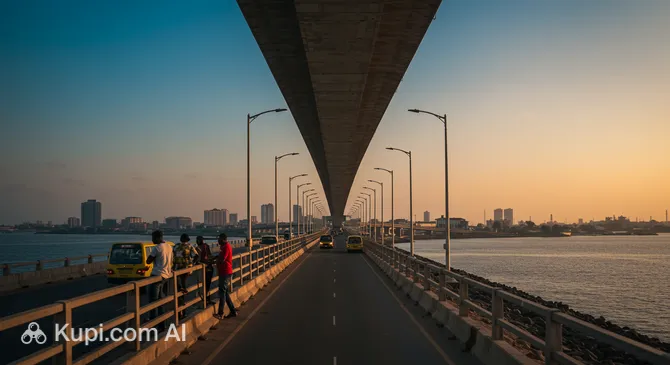
Third Mainland Bridge. Illustration.
Source: Kupi.com AI

Traveller photos:

As one of the longest bridges in Africa, the Third Mainland Bridge stretches for approximately 12 kilometers. Its design features eight lanes—four in each direction—allowing it to handle a massive flow of vehicles daily and providing a vital link between different parts of the city.

The importance of the Third Mainland Bridge to Lagos cannot be overstated. It plays a key role in the daily lives of millions of residents, providing quick access from densely populated residential areas to central business districts and back. This structure has become an integral part of the skyline and a symbol of the dynamic development of this African megacity.

Contacts

Since the Third Mainland Bridge is a key transport artery in Lagos, the easiest way to see or cross it is by car or taxi. It connects the mainland to Lagos Island, with access available from both sides. For the latest updates on bridge status, temporary traffic restrictions, or scheduled maintenance, we recommend checking with official Lagos transport authorities or following local news.

How to contactContact
AddressIjeh Powa Market, 156 Corporation Dr, Ikoyi, Lagos 101245, Lagos, Nigeria

What to Do

Visiting the Third Mainland Bridge is, first and foremost, a unique opportunity to appreciate the scale of this impressive engineering feat and enjoy breathtaking panoramic views of the Lagos Lagoon and the Lagos skyline. The bridge consistently attracts photographers and travelers looking to capture the grand urban infrastructure and feel the energy of Nigeria's largest city. It is the ideal place for those who want to see the modern metropolis from an unusual perspective.

Driving across the Third Mainland Bridge allows you to feel the true pulse of Lagos life. From the bridge, you can see the city's central business district as well as numerous residential and industrial areas sprawling along its route. The views are particularly picturesque in the morning and evening hours when the soft light paints the city and lagoon in unique colors. The drive across the bridge itself can be an exciting part of a sightseeing tour of the heart of the Nigerian economy.

Getting There

You can reach the Third Mainland Bridge from any part of Lagos by car or taxi. As a major transport link, numerous roads lead to it. It starts in the Oworonshoki area on the mainland and extends to Lagos Island, passing through the Ebute Metta and Yaba districts. If you are in central Lagos on Lagos Island, getting onto the bridge takes just a few minutes.

In addition to private cars and taxis, the bridge is accessible via public transport. Many bus routes traveling along the city's main highways cross the Third Mainland Bridge. Check with locals or drivers to find the right route from your starting point. On the mainland side, large transport interchanges make access easy.

When planning a trip across the Third Mainland Bridge, consider the time of day. During morning and evening rush hours, the bridge often experiences significant traffic congestion due to the high volume of vehicles. Therefore, if your goal is not just to cross but to enjoy the views, it's best to travel during off-peak hours to avoid long waits in traffic.

Nearest city: Lagos

History & Facts

The history of the Third Mainland Bridge is closely tied to the rapid growth of Lagos in the 1970s. At that time, an economic boom and a fast-growing population meant that existing transport links connecting the mainland to the business center on Lagos Island were overwhelmed. There was an urgent need for a new, larger-scale infrastructure solution to handle the increasing traffic and support the metropolis's further development.

The decision to build the massive structure, which later became known as the Third Mainland Bridge, was made in the mid-1970s. The construction contract was signed in 1976, and work proceeded in stages. The first significant section, about 5 kilometers long, opened in 1980. However, the bridge was not fully completed and opened to traffic until a decade later, in 1990, becoming a symbol of Nigeria's engineering prowess and ambition.

Since its opening, the Third Mainland Bridge has become a vital component of the Lagos transport system. It not only significantly reduced the load on other bridges and shortened travel times for millions of residents but also encouraged the development of new residential areas on the mainland, making them more accessible. From an engineering standpoint, the bridge is a prestressed concrete structure with powerful pillars reaching depths of up to 54 meters. The overall roadway width is an impressive 33.1 meters, providing smooth traffic flow across multiple lanes.

Time Needed

When planning your visit to the Third Mainland Bridge, it depends on how you want to experience it. If your goal is simply to drive across, enjoy the views of the Lagos Lagoon and the skyline, and perhaps take a few photos during brief stops (if safe and possible), 30 minutes to 1 hour should be plenty. This is enough time to cross the bridge in one direction and get a general impression of its scale and importance to Lagos.

However, if you want to explore the surrounding areas in more detail, perhaps cross the bridge both ways at different times of day to compare views, or if your trip coincides with rush hour, you might need more time. Keep in mind that the Third Mainland Bridge is a busy transport artery, and road conditions can significantly affect the duration of your "visit." Overall, about an hour is usually sufficient for a simple introduction to this iconic Lagos structure.

Working Hours

The Third Mainland Bridge in Lagos is a major transport link and, according to available information, is open to traffic 24/7, with no specific visiting hours or time restrictions for passage. This means you can cross or drive along the bridge at any time of day or night, year-round.

Since it is a public bridge and not a tourist site with controlled entry, no advance booking or registration is required. Access to the bridge is free for vehicles. However, it is always a good idea to monitor local news or official Lagos transport authority updates for any temporary traffic restrictions due to maintenance work or special events.

Open 24/7

Nearby

After taking in the scale and views from the Third Mainland Bridge, don't be in a rush to leave this lively part of Lagos. Exploring the surrounding areas can greatly enrich your experience and reveal new facets of this dynamic metropolis. Numerous interesting spots are located near the bridge, from cultural centers to parks and entertainment venues, each offering unforgettable moments.

By spending a little time exploring nearby attractions, you can dive deeper into the atmosphere of Lagos and get a fuller picture of its diversity. This is a great opportunity to complement your trip with vivid emotions and new discoveries, making your journey even more fulfilling.

NameDistance
Fantasy Land5.9 km
Freedom Park Lagos6 km
Dimplediva Scent Experience6.3 km
W Bar Lounge7.2 km
The Wheatbaker7.2 km
Apapa Amusement Park7.6 km
Muri Okunola Park7.6 km

Reached the bottom of the page?

Looks like you know this route inside out