Support

Cajamarca Airport

About the Airport

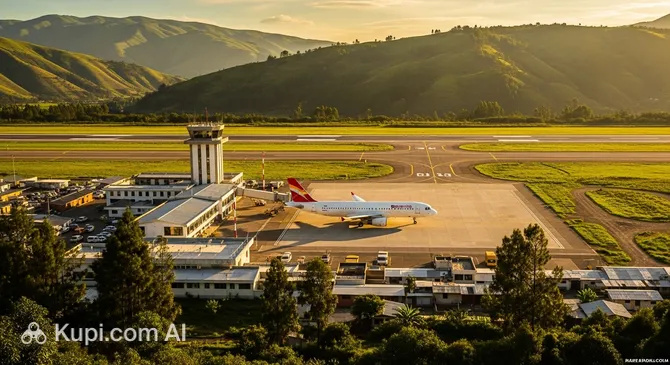
Cajamarca Airport. Source: Kupi.com Binoculars

Aeropuerto Mayor General FAP Armando Revoredo Iglesias is the main gateway to the region, opening the path to the historic heart of Peru, where the meeting of the Incas and Conquistadors took place. Located in a picturesque Andean valley, this compact yet modern airport offers travellers breathtaking views of the mountain landscapes even during the approach. It serves as the starting point for those seeking to see the famous Inca Thermal Baths, the Cuarto del Rescate, and the city's colonial architecture.

IATA Code CJA
ICAO Code SPJR
City Cajamarca
Distance to Centre ~4 km
Status Domestic
Passengers per Year Over 460,000 (2023 data)
Schedule Daily flights (mainly to Lima)

Airport Features and Amenities:

Despite its small size, the terminal has undergone modernization under the management of the operator AdP and ensures comfortable service for passengers. In the terminal building, travellers can find cosy cafes for a snack, souvenir shops with local handicrafts, and ATMs. For those who value enhanced comfort, the Caral VIP Lounge is available. It is important to remember that the airport is located at an altitude of approximately 2,750 metres above sea level, so tourists are advised to move at a leisurely pace upon arrival.

Contact Information

For the most accurate and up-to-date information on flights, services, and regulations at Cajamarca Airport (CJA), it is recommended to contact the official sources of the management company Aeropuertos del Perú (AdP) directly. Below are verified contact details for travellers.

  • Official Website: The most complete information can be found on the official AdP operator website in the section dedicated to the airport: www.adp.com.pe/es/nuestros-aeropuertos/aeropuerto-de-cajamarca.
  • Help Desk Phone: For prompt consultation regarding airport operations, you can call: (076) 364446.
  • Airport Address: Aeropuerto Mayor General FAP Armando Revoredo Iglesias, Av. Aeropuerto Km. 3.5, Baños del Inca, Cajamarca, Peru.
  • Email: For written inquiries and feedback, use the official customer support e-mail: atencionalcliente@adp.com.pe.
  • Social Media: News and important announcements can be followed on the official Aeropuertos del Perú Facebook page: facebook.com/AeropuertosdelPeru.AdP.
  • Lost Luggage Information: If your luggage has been lost or damaged, you should first contact the representative counter of your airline, located in the arrivals hall. It is the air carrier that is responsible for tracing luggage.
  • Passenger Support Contacts: For general questions related to your stay at the airport, you can contact via phone at (076) 364446 or via email at atencionalcliente@adp.com.pe.

How to Get to the Airport

Getting to Cajamarca Airport (Aeropuerto Mayor General FAP Armando Revoredo Iglesias), located just a few kilometres from the city centre, is quite simple. The main methods are taxi, mototaxi, and car rental. The trip from the central Plaza de Armas usually takes no more than 15–20 minutes depending on traffic conditions.

The most popular and convenient option is a taxi. You can call a car via an app, order by phone, or simply hail one on the street. The cost of a trip from the city centre to the airport is usually around 15–25 Peruvian Soles. For a more budget-friendly but no less authentic Peruvian experience, you can use a mototaxi (a small three-wheeled vehicle). This will cost significantly less, approximately 5–10 Soles, but is only suitable for travellers with light luggage. It is critically important to agree on the price with the driver before starting the trip to avoid misunderstandings.

There are no direct public transport routes, such as city buses, to the airport terminal. However, some minibuses (`combis`) follow the highway past the airport, but this is the least convenient method, as you will have to walk from the road to the entrance with luggage. This option is suitable only for the most budget-conscious and experienced travellers.

If you plan to explore the surroundings of Cajamarca on your own, a good solution would be car rental. Several rental companies have counters both at the airport itself and in the city. It is recommended to book a car in advance, especially during the high tourist season. The airport has parking where you can leave a vehicle for a short or long term, which is convenient if you have arrived in your own or rented transport.

Terminals and Map

Cajamarca Airport (CJA), officially known as Major General FAP Armando Revoredo Iglesias Airport, is a small regional airport distinguished by a simple and clear structure. It consists of one passenger terminal serving all domestic flights — both arrivals and departures. Thanks to this, navigating the airport is intuitive even for those visiting for the first time.

The terminal layout is very compact. The building is functionally divided into two main zones: the departures hall and the arrivals hall. The departures hall houses airline check-in counters and the sole security checkpoint. The arrivals hall includes the baggage claim belt and the exit to the city. All key areas are within walking distance of each other, so transfers between them take just a few minutes. There are no separate terminals or complex passageways here.

Check-in and security procedures at Cajamarca Airport usually proceed quite quickly. Outside of peak hours, this takes no more than 20–30 minutes. However, to avoid rushing, especially if you are flying during the high tourist season or on morning flights, it is recommended to arrive at the airport 1.5 hours before the departure time indicated on your ticket.

For convenient navigation, follow the signs, which are primarily in Spanish. However, due to the small size of the building, it is practically impossible to get lost here. Immediately after entering the terminal, you will see the check-in counters, and after passing security, you will enter a small waiting area with the boarding gate. This makes Cajamarca Airport a convenient and functional transit point for travelling through northern Peru.

Airport History

The history of the airport in the city of Cajamarca is closely linked to the development of the entire region. Officially known as Aeropuerto Mayor General FAP Armando Revoredo Iglesias, it was named after one of the most renowned pilots in the history of Peru, a hero of national aviation. Initially created as a modest airfield to serve the needs of the growing city and its surroundings, the airport eventually transformed into a key transport hub for the country's Northern Highlands.

The main stages of the airport's development began in the second half of the 20th century. Its growth was directly driven by economic activity in the region, particularly the development of the mining industry and agriculture. However, the real impetus for modernization occurred in 2006, when airport management was transferred to the concessionaire company Aeropuertos del Perú (AdP). From that moment, an era of significant infrastructure improvements began.

Under AdP management, important renovations were carried out at Cajamarca Airport. The runway was updated, allowing for the reception of more modern types of aircraft. The passenger terminal was also modernized to increase traveller comfort and safety. These changes contributed to an increase in passenger traffic and attracted new airlines, strengthening air connections with the capital, Lima, and other cities.

Among interesting facts, it is worth noting that Cajamarca Airport is one of the highest in Peru — it is located at an altitude of approximately 2,660 metres above sea level. Although the airport cannot boast world records, its main achievement is stable and reliable operation in complex geographical conditions, providing a vital link for tourism and business in this historically rich region.

Services and Amenities

Cajamarca Airport (CJA), officially known as Major General FAP Armando Revoredo Iglesias Airport, is a compact regional air hub serving mainly domestic flights. Despite its modest size, it provides passengers with all the basic amenities necessary for a comfortable wait before departure.

In the terminal, you will find several small cafes and snack bars where you can have coffee, grab a sandwich, or try local pastries. Souvenir shops are also open, offering handmade crafts, textiles, and other memorable goods from the region. The selection of shops is limited but allows you to purchase essentials before your flight.

A general waiting lounge is available for all passengers. Information regarding the availability of a separate VIP lounge may change, and its services are usually provided for an additional fee or for business class passengers of certain airlines. The airport generally has access to Wi-Fi, and charging stations for electronic devices can be found in the waiting hall, though their number may be limited.

ATMs are installed within the terminal premises where you can withdraw cash. Currency exchange points in small regional airports may be absent or offer unfavourable rates, so it is recommended to exchange money in advance. For emergencies, a medical post is available to provide first aid.

The airport is equipped to receive passengers with special needs. There are ramps and toilets for people with disabilities, and staff are ready to assist with boarding and disembarking. For travellers with small children, diaper changing tables are usually available in the restrooms.

There are no specialized business centres or conference rooms at the airport. Hotels are also not available on the premises of the air hub itself; however, many accommodation options can easily be found in the city of Cajamarca, which is located just a few kilometres from the airport.

Where to Eat

Cajamarca Airport (CJA) is a small regional air terminal, so the choice of dining establishments here is quite limited. Most options are concentrated in the main hall of the terminal, in the public landside area (before passing security control). When planning your trip, it is worth considering that after security (airside), the selection will be minimal or may be absent altogether.

The basis of gastronomic offerings at the airport consists of small cafes. Here, passengers can have a quick snack before departure by ordering sandwiches, pastries, local snacks, and, of course, excellent Peruvian coffee. Full-service restaurants with extensive menus are generally not found here, but a small cafeteria-style establishment offering a few simple hot dishes may be operating.

Despite the modest selection, this is a great opportunity to try something local. Look out for traditional regional snacks if they are on the menu, such as humitas — steamed corn cakes — or sandwiches with local cheese. This will allow you to form a final gastronomic impression of Cajamarca.

For travellers with specific dietary needs (vegetarian, vegan, gluten-free, or halal dishes), finding suitable options at the airport will be extremely difficult. It is recommended to bring your own snacks. If you need a full lunch or dinner, the best solution would be to eat at one of the numerous restaurants in the city before heading to the airport.

Prices in airport establishments are usually higher than in the city, which is standard practice. The opening hours of cafes and kiosks depend directly on the flight schedule — they open a few hours before the first departure and close after the last plane leaves. This ensures that you can always drink a cup of coffee or buy water before your flight.

Travel Tips

To ensure your journey from the city of Cajamarca is as comfortable as possible, use these tips for your stay at the local airport. Planning ahead will help avoid unnecessary stress and make your flight more pleasant.

Arrival time at the airport. Cajamarca Airport serves predominantly domestic flights within Peru. It is recommended to arrive approximately 2 hours before departure. This time is quite sufficient to check in for the flight, drop off luggage, and pass security control without rushing.

Check-in and control. To save time, use online check-in, which is offered by almost all airlines. If you are travelling only with hand luggage, this will allow you to head straight to security. The control lines here are usually not very long, but it is better to have your passport and boarding pass ready.

Seat selection on the plane. Cajamarca is located in a picturesque mountainous area. If you want to enjoy stunning views of the Andes during takeoff or landing, choose a window seat. For those who prefer more legroom and quick access to the aisle, an aisle seat would be the ideal option.

Hand luggage. Standard security rules apply here as well: liquids are allowed in containers of no more than 100 ml, packed in a single transparent bag. Ensure that there are no prohibited items in your hand luggage, such as knives, scissors, or flammable substances. Always check the current requirements of your airline.

Passengers with transfers. There are practically no direct international flights from Cajamarca, so most connections take place in major airports, for example, in Lima. When checking luggage, be sure to clarify whether it will be automatically transferred to the next flight or if you will need to collect and re-check it at the transit airport.

Customs control. Since most flights from Cajamarca are domestic, there is no strict customs inspection upon departure. It is conducted only when entering the country from abroad. You will only have to pass a standard security check.

Saving time and money. To avoid overpaying for a taxi to the city, book it online in advance or use the services of official carriers at counters in the arrivals hall. By taking an empty reusable bottle with you, you can fill it with drinking water after the security zone and save on beverages.

In case of flight delay. If your flight is delayed, contact an airline representative for information on the flight status and possible options (for example, provision of meals or rebooking). There is little entertainment in the small airport of Cajamarca, so download movies or take a book with you in advance to pass the waiting time.
Reached the end of the page?

That means the route is fully explored