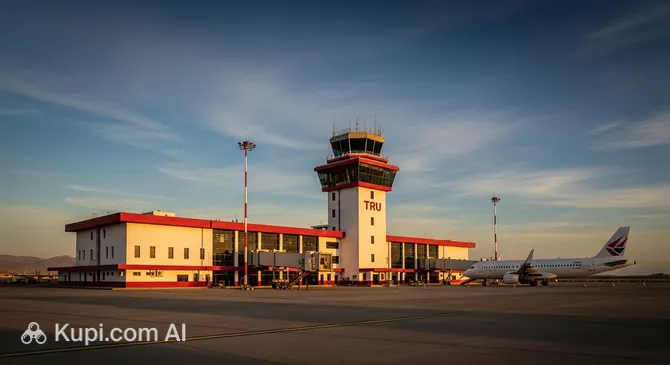
To ensure your journey through Trujillo city airport goes as smoothly as possible, take advantage of our tips. Although Captain FAP Carlos Martínez de Pinillos Airport (IATA: TRU) is not as large as the capital's airport, proper preparation will help avoid stress. We recommend arriving 2-3 hours before international flights and 1.5-2 hours before domestic flights within Peru. This time is sufficient to calmly go through all formalities, even during peak hours.
To save time, use online check-in for your flight if your airline provides this option. This will allow you to head straight to baggage drop-off or, if you are travelling light, to the security screening zone. Security procedures here are standard: be prepared to remove electronics from your carry-on luggage, as well as liquids up to 100 ml packed in a transparent bag.
When choosing a seat on the plane, consider your priorities. Window seats will offer you incredible views of the coast or the Andes during takeoff and landing. Aisle seats provide more legroom and the ability to stand up freely without disturbing neighbours. If comfort is important to you, consider paying extra for a seat in the emergency exit row.
Pay close attention to packing your carry-on luggage. Standard restrictions prohibit carrying liquids in containers larger than 100 ml, sharp objects, and flammable substances. Always check the current rules on your airline's website, especially if you are carrying specific souvenirs, such as items made from coca leaves, the trade of which is strictly regulated.
If you have a connecting flight, clarify in advance whether your luggage will be automatically checked through to the final destination. In most cases for domestic flights, this happens without your involvement, but when transferring from an international flight to a domestic one (or vice versa), baggage claim and re-check may be required. Leave enough time between flights — a minimum of 2-3 hours.
Customs control upon entering the country follows a standard scheme. You will need to fill out a declaration indicating goods subject to declaration. If you have no such goods, feel free to go through the "green channel". Honesty is the best policy, as fines for undeclared goods can be significant.
To save money, try not to exchange currency at the airport — the rate here is usually less favourable. It is better to withdraw some cash from an ATM or exchange a small amount needed for the initial period. Also, book a taxi or transfer in advance through online services to avoid inflated prices from private drivers at the terminal exit.
In case of a flight delay or cancellation, first contact your airline representative. Depending on the length of the delay, you may be provided with vouchers for food, drinks, and sometimes hotel accommodation. Keep all receipts and boarding passes — they may be needed to receive compensation from the airline or through your travel insurance.