Support

Bayombong

About

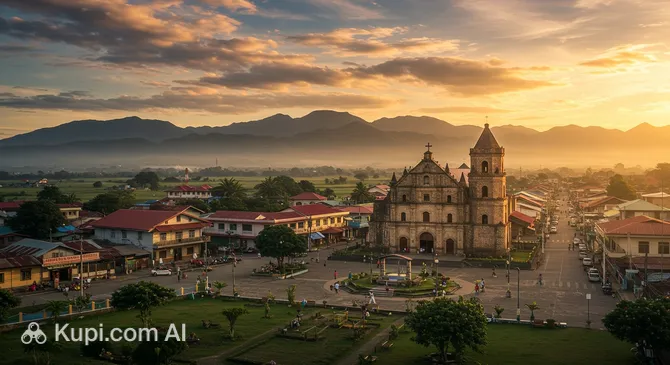
Bayombong is the true soul of Northern Luzon, nestled cozily in the picturesque province of Nueva Vizcaya. Situated in a fertile valley among green hills and endless rice fields, this city offers travelers a unique opportunity to see the non-touristy, authentic Philippines. Along its outskirts, the Magat River slowly carries its waters, creating ideal conditions for peaceful walks and enjoying nature.

Bayombong. Illustration.
Source: Kupi.com AI

With a population of about 67,700 people, Bayombong successfully combines the coziness of a compact settlement with the dynamics of the region's administrative center. A special atmosphere reigns here, permeated with the harmony of traditions and a leisurely provincial pace. The history of Bayombong itself is reflected in its appearance: from the majestic Provincial Capitol building to the ancient St. Dominic Cathedral, which serve as reminders of the city's rich heritage.

The city serves as a gateway of sorts to the natural wonders of Northern Luzon. Travelers can expect colorful markets with fresh local produce and a unique mix of cultural influences. This place is a real find for gourmands wishing to try traditional Filipino cuisine in its original form, and for those seeking sincere hospitality far from the noisy metropolises.

Visit Bayombong to feel the real spirit of provincial life, enjoy pastoral landscapes, and rest your soul in one of the friendliest corners of the country.

Weather Overview

The climate in this region is characterized by its mildness and the absence of exhausting heat, making travel comfortable at any time of year. The current weather in Bayombong usually pleases tourists with moderate temperatures that rarely rise above 28°C even in the warmest months, such as May and June. In winter, especially in January and February, the air becomes noticeably fresher, with average readings around 19–20°C and nighttime coolness down to 16°C.

Travelers should be prepared for high humidity and frequent precipitation. Rain here is a regular occurrence: even in relatively dry months (February-April), 17 to 20 rainy days are recorded, although the intensity of the precipitation remains low. The peak of humidity occurs in July and August, when it can rain almost daily (up to 30 days per month). Expect moderately warm summers with frequent rainfall and cooler, refreshing winter months.

Average monthly temperature

Average monthly precipitation

Interesting Facts

In addition to its main architectural monuments, Bayombong holds amazing stories connecting the past and the present. The city is full of non-obvious details and legends that make a visit a truly memorable experience for the curious tourist.
  • The legend of the city's name is linked to a curious misunderstanding. According to local lore, when Spanish colonizers first arrived in these lands and asked a local resident for the name of the place, he thought they were asking about the bamboo water container he was holding. He replied "Bayongyong," which over time transformed into the modern name Bayombong.

  • Mystical harvest rituals here are not just folklore, but a living tradition. Due to the proximity to the lands of the Ifugao people, one can still hear legends about the guardian spirits of the rice fields in Bayombong. Local farmers believe that special rites of gratitude to the earth, performed without the use of modern technology, are the key to fertility and the protection of the unique terraces from natural disasters.

  • A crossroads of trade routes in the past determined the city's unique ethnic composition. Bayombong historically served as a link between the mountain tribes of the Cordilleras and the coastal residents. Today, many indigenous families in the city proudly trace their ancestry back to ancient dynasties of merchants and craftsmen who centuries ago exchanged mountain gold and forest gifts for salt and fish here.

  • "The Luneta of the North" — this is how the vast park complex of the Nueva Vizcaya Provincial Capitol located in the city is often called. It is one of the widest and most picturesque government complexes in the Philippines, which in its layout and atmosphere resembles the famous Rizal Park in Manila, becoming a center of social life and a venue for colorful festivals.

How to Get There

A journey to the province of Nueva Vizcaya is an immersion into the heart of Luzon island, and the trip here usually involves a land transfer, as there is no airport in the city of Bayombong itself. Nevertheless, reaching this picturesque place is easy thanks to a developed network of bus connections with major transport hubs. If you are planning your route, we recommend studying all the ways to get to the city on our detailed page; below we will tell you about the nearest and most convenient airports.

Most international travelers arrive in the country via Ninoy Aquino International Airport (IATA: MNL). This is the main air gateway to the Philippines, located in the capital, Manila, about 219 km from Bayombong. Despite the distance, this option is popular due to the huge number of flights. The journey from the airport by comfortable bus or taxi will take about 5–6 hours, depending on traffic in the capital region.

An excellent alternative is Clark International Airport (IATA: CRK), located in Angeles City, 156.5 km from the destination. This airport is often chosen to avoid the capital's traffic jams. From here, the road to Bayombong via expressways and national roads will take approximately 4 hours. It is a major hub receiving many flights and offering convenient connections.

The nearest regional hub is Tuguegarao Airport (IATA: TUG), located in Tuguegarao City, just 143.5 km from Bayombong. Although it serves fewer flights compared to the capital giants, flying here can reduce land transfer time to 3–3.5 hours. This is a convenient option for those already in the Philippines taking a domestic flight.

For clarity, here is summary information on the main airports:

AirportPassenger trafficDistance
Cauayan Airport66 41581 km
Tuguegarao Airport225 961143 km
Vigan Mindoro Airport146 km
Clark International Airport2.4 mln156 km
Lal-lo (Cagayan North International)20 000199 km

Main Attractions

Bayombong is a city where history and nature intertwine in a cozy provincial atmosphere. While there are no loud entertainment centers here, the city charms visitors with its cultural monuments and green zones that tell the story of Nueva Vizcaya's rich heritage.

The Nueva Vizcaya Provincial Capitol Complex is perhaps the city's most famous landmark, which locals proudly call the "Luneta of the North." It is not just an administrative building, but a vast park complex covering about 8 hectares. Tourists come here to stroll along the picturesque man-made lagoon, go boating, and relax in the shade of exotic trees. The architecture of the Capitol itself is impressively majestic, and the well-maintained grounds serve as the main spot for photo shoots and peaceful outdoor relaxation.

St. Dominic Cathedral is the spiritual heart of the city and a magnificent example of colonial architecture. Originally built in 1780, this temple has survived fires and earthquakes, rising from the ashes each time while preserving its historical appearance. The red-brick facade and unique octagonal bell tower invariably attract the attention of history buffs. Inside, an atmosphere of tranquility prevails, allowing visitors to touch centuries of Catholic history in this region.

For those who want to dive deeper into the region's culture, the People's Museum and Library is a must-visit. Housed in the historic Old Capitol building, the museum holds a unique collection of artifacts telling the story of indigenous tribes such as the Gaddang and Isinai. Here you can see traditional costumes, agricultural tools, and everyday items that clearly demonstrate how the ethnographic mosaic of Nueva Vizcaya was formed over the centuries.

Local Cuisine

The cuisine of Bayombong is a gastronomic reflection of the fertility of Nueva Vizcaya province, which is often called one of the country's rice granaries. The basis of the local diet is, of course, rice, but it is prepared here with special ingenuity. The region's true signature dish is considered to be "innatil" — rice steamed inside bamboo tubes. This dish, which has a subtle woody aroma, is usually served with spicy sauces and fresh vegetables, making it a must-try for any traveler.

For a hearty lunch or dinner, locals often choose "Sinigang" — a traditional Filipino soup with a sour broth. In Bayombong, it is prepared with an abundance of local vegetables and meat, creating the perfect dish for a warm family gathering. Dessert lovers should look out for "tupig." This sweet treat made of glutinous rice and coconut milk is wrapped in banana leaves and grilled over charcoal, giving it a unique smoky flavor.

Street food plays an important role in the city's food culture. Strolling through the local markets, it's impossible to resist the aromas of fried bananas and fresh chicken or pork skewers being grilled right on the street. Here you can also find an abundance of tropical fruits: local farmers are rightfully proud of their harvest of the sweetest mangoes, papayas, and pineapples. These fruits are used to make magnificent refreshing shakes and juices, which are the most popular non-alcoholic drinks on a hot day.

Dining in Bayombong is often a social event. Tourists are encouraged to visit not only classic restaurants but also noisy markets or street stalls where the townspeople themselves eat. The gastronomic scene is particularly vibrant during city festivals, when the streets fill with music and residents hold mass outdoor feasts, treating guests to the best dishes of Northern Luzon.

Travel Tips

Traveling to Bayombong is an immersion into the measured pace of the Filipino province, where life flows much more calmly than in bustling Manila. To make your trip to the capital of Nueva Vizcaya as comfortable as possible and leave only pleasant impressions, we have prepared a list of practical recommendations tailored to local specifics.

  1. Clothing and Gear. Given the tropical climate and frequent rains, opt for light, breathable clothing made of natural fabrics. Be sure to bring a high-quality raincoat or a sturdy umbrella — these are essential items here. For evening walks, especially in the winter months (January-February), bring a light sweater or windbreaker, as nights can be cool. If you plan to visit St. Dominic Cathedral, remember to dress modestly: shoulders and knees should be covered.
  2. Transport. The main way to get around the city is by tricycles (motorcycles with a sidecar). Apps like Grab or Uber are not available here. It is important to agree on the fare in advance or clarify if the trip is "shared" (with other passengers, cheaper) or "special" (individual, more expensive). For trips to neighboring cities, use colorful jeepneys or buses that run along the main highway.
  3. Finance. Bayombong is a city of cash. Although large hotels and some supermarkets may accept cards, in most cafes, markets, and on transport, only Philippine pesos are used. ATMs are available in the city center and the Capitol area, but they may occasionally be out of service or not accept certain foreign cards, so it is better to always have a supply of cash, preferably in small bills.
  4. Health and Safety. The city is considered safe for tourists; however, you should observe standard precautions and avoid walking alone in unlit outskirts at night. Drink only bottled water. Pharmacies, including well-known chains (e.g., Mercury Drug), are located in the center and operate on standard schedules, but there are few 24-hour locations. The city has major medical facilities, including the Veterans Regional Hospital.
  5. Communication and Internet. English is widely spoken and is an official language, so there will be no communication problems. Locals also speak Ilocano, Gaddang, and Tagalog. It is better to buy a SIM card upon arrival in Manila, but you can top up your balance at local "sari-sari" stores. Wi-Fi is available in hotels and some cafes, but the speed may be lower than what you are used to.
  6. Local Etiquette. Filipinos are very friendly and hospitable. When communicating with locals, a smile works wonders. It is customary to address older people or service staff with respect, adding "Ate" (for women) or "Kuya" (for men) before their name. This will show your politeness and knowledge of the culture.
  7. What to Avoid. Never raise your voice or show anger publicly. In Filipino culture, saving "face" is very important, and aggressive behavior is considered extremely rude and counterproductive. Also, avoid sharply refusing offered food when visiting someone — it is better to try at least a small piece so as not to offend the hosts.
  8. Early Shut-off. Keep in mind that life in Bayombong quiets down quite early. Most shops and cafes close by 8:00–9:00 PM. Plan your dinner in advance, as finding an open establishment late at night can be problematic, except for a couple of 24-hour fast-food joints.

Bayombong is a place where people's sincerity is valued above material goods. By following these simple tips and showing respect for local traditions, you will not just visit a new city but will feel like a welcome guest in this cozy corner of the Philippines.

Entertainment & Nightlife

Nightlife in Bayombong is not about noisy nightclubs with world-famous DJs or endless raves until dawn. It is a story of comfort, authenticity, and famous Filipino hospitality. Evening entertainment here is relaxed and centered around socializing, delicious food, and, of course, music. The city goes to sleep quite early, so the main peak of activity occurs between 7:00 PM and 11:00 PM.

The center of evening attraction for both locals and tourists remains the area around the Nueva Vizcaya Provincial Capitol. As darkness falls, this huge park is transformed: lights come on, illuminating the fountains and the man-made lagoon, and the air fills with coolness. This is an ideal place for safe night walks. Open-air concerts and cultural performances often take place here, gathering hundreds of spectators. Spontaneous night markets unfold around the park, where you can try street food ranging from sweet taho to hearty barbecue skewers.

If you are looking for a more lively atmosphere, head to the city's main transport artery — the National Highway (Maharlika Highway). Most establishments are concentrated along this highway and its adjacent streets. The main entertainment here is videoke bars. For Filipinos, karaoke is a national sport, and Bayombong is no exception. These bars have a casual atmosphere: plastic furniture, buckets of ice-cold San Miguel beer, and songs blaring from speakers until midnight. There is no dress code in such places; the crowd is very friendly and always welcomes foreign guests who decide to perform a few hits.

Among popular establishment formats, "restobars" stand out — a hybrid of a cafe and a bar where you can have a full dinner and a drink to the live music of local acoustic groups. For example, establishments at large hotels like Governor's Garden often offer a quieter and more respectable setting suitable for a family evening or a romantic dinner. They serve local and European cuisine, and the service meets high standards.

Practical tips for evening leisure:

  • Transport: It is difficult to catch a jeepney at night, so tricycles remain the main mode of transport. Keep in mind that after 9:00 PM, drivers may ask for a double fare as passengers become scarce. Be sure to agree on the price before boarding.
  • Safety: The city center and the Capitol area are well-lit and patrolled, making it safe to walk even late in the evening. However, avoid unlit alleys on the outskirts.
  • Opening hours: Most restaurant kitchens close by 9:00 PM; bars operate until 12:00 AM or 1:00 AM. Plan your dinner in advance.

As for daytime entertainment, Bayombong offers a relaxed cultural experience. You can visit the People's Museum to learn more about the region's tribes or take a walk in Bangan Hill National Park, which offers panoramic views of the city and the valley. This is a great way to spend time before the city dips into soft twilight and the lights of evening establishments turn on.

Parks & Museums

Despite its modest size, Bayombong surprises guests with well-maintained green spaces and a careful attitude toward history. The city is not overloaded with museums, but the existing cultural and natural sites allow for a deep immersion into the atmosphere of Nueva Vizcaya province, combining educational leisure with relaxed outdoor walks.

The Nueva Vizcaya Provincial Capitol Park is the main attraction for nature lovers within the city limits. This vast complex is often called the "Luneta of the North" for its resemblance to the capital's park. Tourists find it interesting not only as an administrative center but also as a full-fledged recreation zone: it features a picturesque garden, an artificial pond where you can go boating, and many shaded alleys. It is an ideal location for morning jogs or evening picnics, where you can observe the leisurely life of the locals.

For those who prefer wilder nature and panoramic views, Bangan Hill National Park is a must-visit. This historical and ecological sanctuary is located on the outskirts of the city. The hill is famous for being the site of the first Catholic mass served in the province in 1739. Today, this place attracts tourists with the opportunity for a simple trek among lush vegetation and a chance to enjoy spectacular views of the Magat Valley and the Cordillera mountain ranges. Silence reigns here, broken only by birdsong, making the park an excellent spot for meditation and photography.

The region's primary repository of history is the People’s Museum and Library. It is housed in the Old Capitol building — an elegant two-story mansion that is an architectural monument in itself. The museum's exhibition is dedicated to the province's rich ethnographic heritage. It features traditional costumes, jewelry, weapons, and everyday items of the indigenous Gaddang, Isinai, and Ilocano peoples. A visit to the museum allows you to understand how the unique cultural mosaic of this part of the country was formed and to see rare artifacts preserved from pre-colonial and colonial times.

Another interesting site worth noting is Rizal Plaza with its monument to the national hero. Although it is more of a square than a large park, it plays an important role in the urban environment, serving as a venue for commemorative ceremonies. Near it, you can often see small temporary exhibitions of local artists or craftsmen demonstrating their talents in the open air.

Insider Tip: If you find yourself in the Capitol Park on weekends, look out for the small stalls with local delicacies that open towards evening. This is the best way to combine a stroll with a tasting of authentic snacks while enjoying the cool breeze by the water.

Getting Around

The public transport system in Bayombong differs significantly from the usual European one: you won't find a metro, trams, or large municipal bus networks plying the city streets. The city lives in the rhythm of the province, and the main means of transportation are colorful and maneuverable vehicles perfectly adapted to local conditions. For a tourist, this is not just a way to get from point A to point B, but a real cultural experience.

The most popular and affordable mode of transport is tricycles (motorcycles with a covered sidecar for passengers). They function like taxis and can take you almost anywhere in the city, including the narrow streets of residential neighborhoods. There are two types of trips: "regular," where the driver picks up other passengers along the way and the cost is split, and "special" (individual), where you hire the whole tricycle for yourself. The second option is more expensive but faster and more comfortable.

For trips along the main streets, especially the Maharlika Highway, the legendary Filipino jeepneys are used. These are elongated, brightly painted vehicles that run on fixed routes. Stops are often not marked with signs: to board, you just need to wave your hand at the approaching vehicle, and to get off, tap a coin on the handrail or say "Para po" loudly to the driver (please stop). This is the most budget-friendly way to get around.

The payment system in Bayombong is exclusively cash-based. Transport cards, contactless payments, or mobile apps do not work here. Payment is made personally to the driver. In jeepneys, money is passed down the line through other passengers. It is extremely important to have small bills (20, 50, 100 pesos) and coins with you, as drivers often do not have change for large banknotes. The fare is fixed for short distances and increases depending on the mileage.

An alternative to jeepneys for trips to neighboring cities (for example, to Solano) is white minibuses called UV Express or simply "vans." They are more comfortable, equipped with air conditioning, and depart from small terminals as the cabin fills up. Prices here are slightly higher than in jeepneys, but the speed of travel is significantly greater.

Conventional taxi or car-sharing services (Uber, Grab) are practically non-existent in Bayombong. Car rental is possible, but most often offered with a driver, which removes navigation and liability issues on the roads. For short distances in the city center, especially around the Capitol and the Cathedral, the best option remains a walk, allowing you to enjoy the city's atmosphere.

Transport starts running early in the morning, with sunrise, and its activity noticeably decreases after 8:00 PM. If you are planning a late trip, it is better to arrange a ride with a tricycle driver in advance or be prepared for a long wait on the street and a night fare that may be double the usual price.
Accommodation

Accommodation options in Bayombong reflect its status as the administrative center and transit hub of Nueva Vizcaya province. You won't find luxury five-star resorts or giant chains here; however, the city offers a decent choice of housing characterized by cleanliness, comfort, and, importantly, very reasonable prices. The bulk of the hotel stock consists of small family-run guesthouses (inns), lodges, and mid-range hotels focused on providing a comfortable night's sleep.

When choosing a place to stay, you should focus on two main areas. The first and most popular is the zone along the Maharlika Highway. Staying here puts you within walking distance of bus terminals, 24-hour convenience stores, and fast food, which is ideal for transit travelers. The second option is the city center (Poblacion), closer to the Capitol and St. Dominic Cathedral. This area is suitable for those seeking quiet and wanting to be closer to historical sights and park zones.

Most hotels in the city offer a standard set of amenities: air conditioning, hot showers, and Wi-Fi (although internet speeds can vary). In the "mid-range" category, you often find establishments with their own restaurants and even swimming pools, which is a nice bonus in a tropical climate. Budget options, such as guesthouses or backpacker hostels, offer basic conditions with a fan instead of air conditioning, allowing for significant savings.

Booking tip: Bayombong is rarely overcrowded with tourists, so you can find a free room even upon arrival. However, if your trip coincides with major regional holidays (for example, the "Ammungan" festival in May) or public holidays, it is strongly recommended to book accommodation in advance. The best rooms in popular hotels are snapped up quickly.

The pricing policy in the city is very favorable. Budget accommodation will cost a traveler about 800–1200 pesos per night. Comfortable rooms in mid-range hotels range from 1500–3000 pesos. Regarding booking methods, major aggregators only work with a few of the city's top hotels. For most small inns, the best way to contact them remains direct messaging through official social media pages or a phone call. Keep in mind that payment is most often accepted in cash only, so take care of exchanging money in advance.

Nearby Cities

For those who want to explore the surroundings, Bayombong serves as an excellent starting point for day trips to several interesting nearby places:

Solano is the bustling commercial center of Nueva Vizcaya province, located just a few kilometers to the north. It is worth coming here for shopping and gastronomy: the city is famous for its noisy markets where you can buy fresh local products, and many restaurants offering both traditional dishes and modern fast food. This is the perfect place to feel the rhythm of the region's business life.

Bambang, located south of the provincial capital, attracts travelers interested in agrotourism and natural attractions. The town is known for its agricultural potential and serves as the gateway to the famous Salinas Natural Monument (salt springs). Although the springs themselves were damaged by earthquakes, the surrounding area remains picturesque and suitable for eco-walks.

Aritao will be of interest to history buffs. This town played an important role during World War II, and there are commemorative markers here recalling those events. Additionally, Aritao is an important transport hub on the way to mountain regions, offering beautiful views of the Cordillera foothills.

CityPopulationDistance
Solano65 2876 km
Bambang55 78910 km
Villa Verde20 11814 km
Ambaguio15 47215 km
Bagabag37 98519 km

These nearby destinations allow you to get a sense of the region's diverse culture and landscapes, complementing the experience of visiting Bayombong.

Shopping & Souvenirs

Shopping in Bayombong is not a hunt for global brands in giant glass skyscrapers, but a cozy immersion into local culture and daily life. Here you won't find endless rows of luxury boutiques, but you can purchase unique goods made with soul and the freshest products for which Nueva Vizcaya province is famous. The city's shopping scene is oriented toward the everyday needs of residents and supporting local producers, making the shopping process here a truly authentic experience.

Main shopping areas are concentrated along the city's main transport artery — the National Highway. This is where most electronics stores, pharmacies, small clothing boutiques, and hardware shops are located. A walk down this street will allow you to find everything necessary for your trip. Another important zone is the city center (Poblacion) around the municipal square, where life bustles from early morning. Here you can find small family-run shops offering goods at very reasonable prices.

Regarding shopping centers, Bayombong still retains its provincial charm and is not built up with giant malls. The main point of attraction for fans of modern shopping is Savemore Market. It is not just a supermarket but a compact shopping complex where, in addition to groceries, you can find clothing departments, household goods, and small food stalls. For larger-scale shopping, locals usually go to the neighboring city of Solano, which is considered the commercial hub of the province, but for basic needs, Bayombong's infrastructure is quite sufficient.

The true heart of the city's trade is the Bayombong Public Market. Recently renovated, it has become more convenient and clean while retaining its local color. It's worth coming here early in the morning to see mountains of fresh vegetables and fruits brought by farmers from surrounding fields. This is the ideal place to buy local delicacies, fresh fish, or simply observe the brisk trade and chat with smiling vendors.

If you are looking for souvenirs, be sure to visit the Pasalubong Center (Souvenir and Local Products Center), often located in the Capitol area. Nueva Vizcaya province is known as the "Citrus Capital of the Philippines," so the best gift from here would be fresh pomelos, Perante oranges, or satsumas. Also, look out for:

  • Tupig — a sweet treat made from glutinous rice and coconut, baked in banana leaves.
  • Locally produced fruit jams and preserves.
  • Rattan and bamboo products — baskets, hats, and interior items made by local craftsmen.
  • Traditional brooms (Walis Tambo), which are made with especially high quality here.

Operating hours of shops in Bayombong follow the early rhythm of provincial life. The Public Market opens at dawn, around 5:00–6:00 AM, and works until sunset. Most shops on the main streets are open from 8:00–9:00 AM until 6:00–7:00 PM. Only some minimarts like 7-Eleven operate 24 hours. As for payment, cash is king here. Credit cards are only accepted in large supermarkets (like Savemore) and some hotels. At the market, in souvenir shops, and on transport, you can only pay in Philippine pesos, so always carry a supply of small bills.

The Tax Free system (VAT refund) is practically non-applicable in Bayombong. This service is geared toward large international malls in Manila or Cebu. In the small towns of Nueva Vizcaya province, shops do not participate in the tax refund program for tourists, so expect to pay the price shown on the tag.

Have you reached the end of the page?

So the route has been studied inside and out