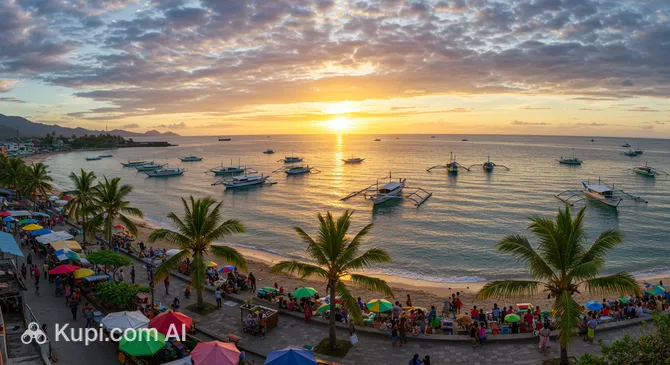
Located on the picturesque island of Negros in the heart of the Philippines, Valencia is an oasis of tranquility and fresh mountain air. This charming municipality in the province of Negros Oriental stands out from bustling metropolises with its peaceful atmosphere and impeccable ecology. In 2007, the town was officially recognized as the "greenest and cleanest" in the province, a status it proudly maintains to this day.
Valencia's geographical position on an upland area determines its mild and cooler climate compared to coastal regions. The municipality has a population of about 40,000 people, which helps preserve its cozy provincial feel. The town thrives on agricultural work and the development of geothermal energy, while carefully managing its surrounding natural riches.
Valencia. Illustration.
Source: Kupi.com AI
Tourists come here for the unique landscapes: Mount Talinis rises majestically over the town, and impressive waterfalls are hidden in the surrounding forests. The eventful history of Valencia is closely intertwined with Spanish heritage, reflected in the architecture of the old church and local traditions.
If you are looking for a place to take a break from the hustle and bustle, enjoy the freshness of mountain air, and see the real life of the Philippine countryside, Valencia is the perfect choice. We invite you to discover this "green heart" of Negros Island and experience its hospitality.
Weather Overview
The climate in Valencia differs significantly from the coastal cities of Negros Island. Thanks to the municipality being situated at an altitude of 200 to 500 meters above sea level, a pleasant coolness prevails here. The average annual temperature stays around 25–26°C, while in mountain areas, especially at the foot of Mount Talinis, evenings can even be quite chilly.
Precipitation is unevenly distributed throughout the year. The wettest months are considered to be July, September, and October, when rainfall can exceed 300 mm per month. Tropical downpours are frequent during this period, though they usually give way to sun. The dry season lasts from February to April—this is the ideal time for trekking and visiting waterfalls, as humidity decreases and roads remain dry.
If you want to know more about how the weather in Valencia changes by month, keep in mind that due to the mountain terrain, local showers are possible even on clear days. Expect comfortable warmth during the day and refreshing coolness at night, making this place a true escape from the Philippine heat.
Average monthly temperature
Average monthly precipitation
Interesting Facts
The town was originally named "Ermita", which means "secluded place" in Spanish. This name was no accident: the settlement served as a reliable refuge for locals from pirate raids coming from the sea.
The town received its modern name in 1856. Spanish authorities renamed it "Nueva Valencia" in honor of a respected priest, Mathias Villamayor, who was originally from Valencia, Spain.
Every year on October 12th, the entire town immerses itself in celebrating its patroness — Our Lady of the Abandoned. This is the largest and most colorful event in the municipality's calendar.
Valencia covers an area of about 147 square kilometers, which is less than 3% of the entire Negros Oriental province, yet it is one of the region's most ecologically significant areas.
Over the last hundred-plus years, the town's population has more than quadrupled: from 8,000 people at the beginning of the 20th century to nearly 40,000 today.
How to Get There
A journey to Valencia is an opportunity to see the central part of the Philippines in all its beauty. The town is located in a mountainous area on Negros Island, making the road there particularly scenic. To get detailed information about routes, you can explore the section on how to get to the city.
Since Valencia itself does not have its own airport, the primary way to arrive is by flying into nearby major cities. Most tourists prefer to fly into the airports of Dumaguete or Bacolod, from where they can reach Valencia by car or public transport. The drive from Dumaguete is very short, though keep in mind the path is uphill and can be quite steep.
There is no railway service on the island, so you should rely on road transport after your flight. A taxi or rental car trip from the nearest transport hubs usually takes anywhere from 20 minutes to several hours, depending on your starting point and road conditions. The mountain landscapes outside your window will make this journey a part of your unforgettable adventure.
Main Attractions
The main treasures of Valencia are created by nature itself. One of the region's most impressive attractions is Casaroro Falls. Its uniqueness lies in its extraordinary height and the narrow, powerful stream that plunges from a sheer cliff into a deep pool surrounded by lush tropical vegetation. This spot attracts photographers and hikers willing to brave the steep descent for the sake of breathtaking views.
Majestic Mount Talinis, also known as "Cuernos de Negros" (Horns of Negros), dominates the town. At 1,903 meters, its peak is the second-highest point on the island and a popular destination for climbing and trekking. The ascent requires good physical fitness but rewards travelers with panoramic views of the archipelago and encounters with endemic flora and fauna.
The Church of Our Lady of the Abandoned serves as the community's cultural and spiritual core. Dedicated to the town's patron saint, this temple is a focal point for locals, especially during annual religious festivals. The church embodies the serenity and loyalty to tradition that are so characteristic of this Philippine municipality.
For those interested in modern industry in harmony with nature, the geothermal energy facilities are noteworthy. Valencia is an important center for clean energy production in the Philippines. While primarily an industrial site, the scale of the structures against the backdrop of forested mountains makes a strong impression on visitors.
Local Cuisine
The gastronomic identity of Valencia is defined by the freshness and simplicity of its agricultural heritage. Thanks to well-developed farming, local markets are always brimming with fresh vegetables and fruits that serve as the foundation for traditional Philippine dishes. The cuisine here does not strive for the refinements of haute gastronomy but wins you over with its honesty and the rich flavor of natural products.
Be sure to try the fresh seafood dishes delivered from the coast, as well as classic rice in various styles. Small family eateries (carinderias) serve aromatic soups and stews with local spices. A characteristic feature is the use of produce grown directly on the slopes of Mount Talinis, which gives the food a special "mountain" flair.
As for drinks, it's worth opting for refreshing tropical fruit juices or local coffee. The food culture in Valencia is very accessible: most residents eat at small establishments or buy ready-made food at the markets. If you want a snack after visiting Casaroro Falls, stop by one of the roadside cafes—they often serve the most delicious homemade snacks.
Travel Tips
A trip to Valencia promises to be peaceful and inspiring, but a little preparation will help make your vacation as comfortable as possible.
Clothing and Gear: Due to the mountain terrain, it is cooler here than on the coast, so bring a light windbreaker. For hikes to waterfalls, comfortable shoes with non-slip soles are essential. When visiting the church, observe the dress code: shoulders and knees should be covered.
Transport: The main way to get around is by tricycle. If you decide to rent a bike, be extremely careful on steep mountain roads, especially when it rains.
Finances: There are few ATMs in town, and they don't always work with foreign cards. Be sure to carry a supply of cash in pesos. Tipping is not mandatory, but a small gratuity (20-50 pesos) is always appreciated.
Safety: Valencia is considered one of the safest places in the region with a low crime rate. However, when hiking in the forests, it's better to use the services of local guides so you don't lose the trail.
Connectivity: Mobile internet can be unstable in mountain areas. Buy a SIM card from a local operator (Globe or Smart) in advance at the airport. Almost everyone understands English here.
Etiquette: Filipinos are very friendly. Don't forget to smile and use polite forms of address. The greeting "Mano po" (a respectful gesture to elders) will earn you genuine warmth from the locals.
What to Avoid: Do not leave trash at natural sites—the town is very proud of its cleanliness, and fines may be imposed for violating eco-rules.
Seasonality: Plan your visit for the dry season (November to May). At this time, the roads are safest, and the chance of catching sunny weather for mountain walks is at its highest.
May your discovery of this green corner of the Philippines bring you only joy and harmony with nature!
Entertainment & Nightlife
Entertainment in Valencia is primarily contemplative and nature-oriented, making it ideal for those seeking solitude. You won't find noisy nightclubs or neon disco signs here. Evenings in the town are quiet: locals and the few tourists prefer to spend time in cozy family cafes or stroll through the central square, enjoying the cool mountain air.
Most activity is centered on daytime adventures. Outdoor enthusiasts can go on a hike to Casaroro Falls or plan a major ascent of Mount Talinis. Natural trails, exotic birdsong, and the sound of rushing water replace standard city attractions here, creating a unique atmosphere of unity with the environment.
The town's cultural life peaks on October 12th, when Valencia celebrates the feast of its patron saint. On this day, the streets are transformed with religious processions, local fairs, and traditional performances. If you crave a more typical urban vibe with bars and cinemas, you can take a short trip to neighboring Dumaguete, where life buzzes late into the night.
Parks & Museums
Its status as the "greenest" city in the province speaks for itself—Valencia is a vast natural park in its own right. There is no need to look for specially fenced gardens here, as the town is surrounded by forests and well-maintained agricultural lands. A walk down any peripheral street turns into a botanical tour where you can see exotic plants in their natural habitat.
Mount Talinis serves as the region's main nature reserve. Its slopes are not just a place for hiking, but a complex ecosystem with unique flora. For those who appreciate the aesthetics of water, the area around Casaroro Falls is a must-see, where the natural landscape has been preserved in its pristine state.
While there are few classic historical museums within the municipality, Valencia's cultural heritage is clearly presented in its architecture and way of life. The local church and old agricultural buildings act as living museums. Every festival here is an opportunity to see ancient rituals and dances that are carefully passed down from generation to generation, preserving the history of this secluded place.
Getting Around
The transportation system in Valencia reflects its calm and provincial character. The primary means of travel for locals and tourists are traditional Philippine jeepneys and tricycles. These colorful minibuses and sidecar motorcycles ply the main roads, connecting the municipality center with its remote areas and neighboring towns.
Fares are paid in cash directly to the driver. Prices for trips within the town are very low, making public transport highly affordable. Tricycles are convenient because they can take you almost to your doorstep or the entrance of an attraction; however, it's best to agree on the price for long-distance trips in advance.
For travelers planning trips into the mountains or to remote waterfalls, it is recommended to rent a motorcycle or hire a driver with a car. The roads in Valencia feature steep inclines and switchbacks, so driving requires some experience. In the very center of town, it is pleasant to get around on foot—its compact size and abundance of greenery make such walks exceptionally comfortable.
Accommodation
The hotel sector in Valencia is geared toward travelers who appreciate home comfort and proximity to nature. You are unlikely to find massive chain complexes with hundreds of rooms here. Instead, the town offers charming family pensions, guesthouses, and eco-lodges that are harmoniously integrated into the municipality's green landscape.
For those planning to visit natural sites like Casaroro Falls, it is most convenient to choose accommodation closer to the mountain areas. There, you can find small cottages offering stunning views of the peaks and tropical forests. In the town center, the choice is limited to budget options, which are perfect for cost-conscious tourists.
As Valencia is not a center for mass tourism, booking infrastructure is moderately developed. We recommend looking for accommodation options in advance, especially if your trip falls during the dry season or the dates of local festivals. For longer stays, renting a house from locals is an excellent option, allowing you to dive deeper into authentic Philippine life.
Nearby Cities
Thanks to its location in Negros Oriental province, Valencia serves as an excellent starting point for exploring the surroundings. Just a few kilometers away are several interesting settlements, each with its own unique character and attractions.
The most important neighbor is Dumaguete—the provincial capital and its main cultural hub. This coastal city is known for Silliman University and the picturesque Rizal Boulevard, where many restaurants and shops can be found. It is also worth visiting Sibulan, from where ferries depart for the neighboring island of Cebu, and the coastal Dauin, which is a true paradise for diving and snorkeling enthusiasts.
The region surrounding the town offers many options for day trips: from relaxing on the beaches of Bacong to exploring wildlife in the Zamboanguita area. Each of these destinations is easily accessible and will provide you with plenty of new impressions of the diversity of Philippine culture and nature.
Shopping & Souvenirs
Shopping in Valencia is primarily an introduction to the bounty of Negros Island. You won't find massive shopping malls with global brands here, but you will fully enjoy the atmosphere of traditional Philippine markets. Most trade is centered at the public market, where farmers display fresh vegetables, fruits, and other agricultural products for sale daily.
If you're looking for something special, keep an eye out for local crafts and homemade products. Valencia is famous for its eco-friendly approach, so goods here are often as natural as possible. It is a great place to buy local coffee, honey, or woven bamboo and rattan items, which make for heartfelt souvenirs of your trip.
For more extensive shopping, clothing, or electronics, residents and visitors usually head to neighboring Dumaguete. Nevertheless, Valencia is the best place to stock up on picnic supplies before a hike to Casaroro Falls. Most shops are open from early morning until sunset, and it's best to always carry Philippine pesos in cash, as credit cards are not accepted everywhere.