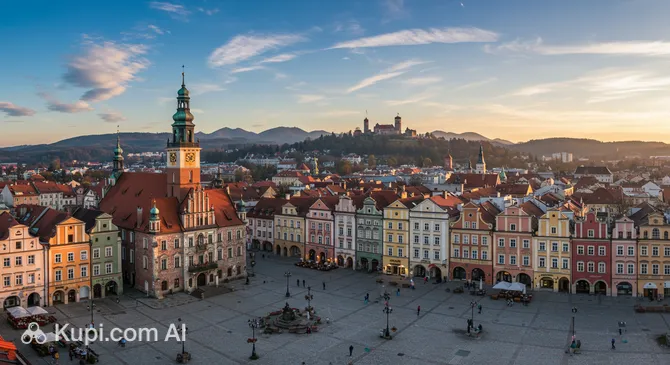
Jelenia Góra is a charming city, a true corner of a fairy tale, nestled in the southwest of Poland, at the very foot of the majestic Karkonosze Mountains. It is located in the picturesque valley of the Bóbr River, in the Lower Silesian Voivodeship, just a few kilometers from the border with the Czech Republic. With a population of about 78,000, Jelenia Góra harmoniously combines the measured pace of provincial life with a vibrant cultural atmosphere, making it attractive for both relaxing getaways and active tourism.
Jelenia Gora. Illustration.
Source: Kupi.com AI
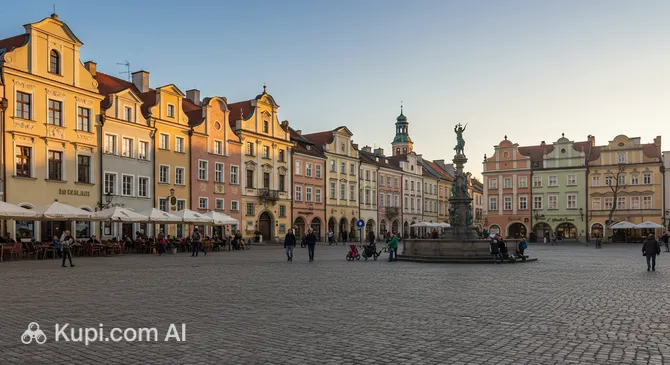
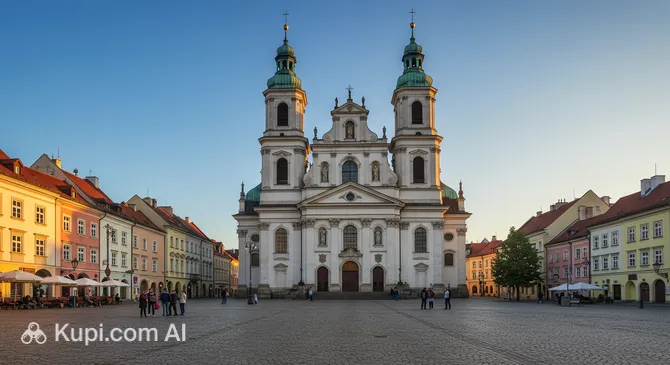
The heart of Jelenia Góra is the old Market Square (Rynek), surrounded by colorful historical houses and cozy cafes, where it is so pleasant to spend time over a cup of coffee. The city is rich in architectural monuments: here you can see ancient churches, such as the impressive Basilica of Saints Erasmus and Pancras, and explore interesting corners that recall the rich past of these lands.
The surrounding natural beauty gives Jelenia Góra a special charm. The proximity of the Karkonosze National Park opens up endless possibilities for hiking enthusiasts, offering scenic trails and breathtaking views of mountain peaks. This city, with its calm, peaceful atmosphere, is an ideal place for those seeking inspiration and wishing to take a break from the hustle and bustle of the city. Jelenia Góra is waiting for you to share its secrets and give you unforgettable impressions!
The weather in Jelenia Góra is characterized by a moderate climate with four distinct seasons. Travelers should expect warm summers with periodic rains and cool winters with precipitation that often falls as snow.
The summer months, especially July and August, are the warmest. In August, the average maximum temperature reaches 22.4°C, while the minimum night temperature stays around 13.4°C. In summer, an average of 3-4 mm of precipitation falls, distributed over about 14-16 days per month. Winter brings colder weather, with the peak of frosts in January, when the average temperature is about -0.4°C. In this month, minimum temperatures can drop to -2.8°C, and daytime maximums rarely rise above 2.0°C. Winter also sees precipitation (2-3 mm), and there can be up to 18 days with precipitation in January.
For a more detailed study of weather conditions in different seasons and months, you can view the information on the Jelenia Góra Climate page.
Average monthly temperature
Average monthly precipitation
Interesting Facts
In addition to its famous landmarks, Jelenia Góra hides many curious stories and details that make getting to know the city even more fascinating. Here are just a few of them:
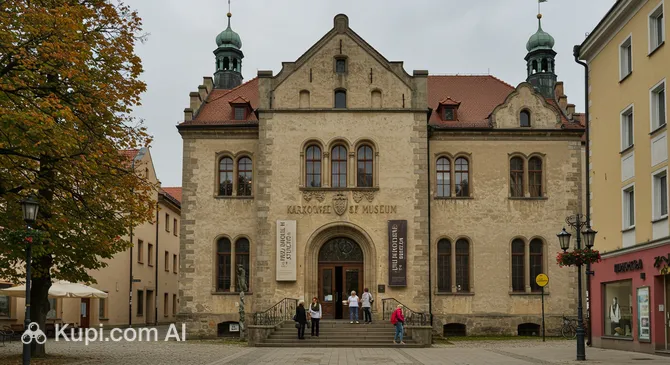
Karkonosze Museum in Jelenia Góra. Illustration.
Source: Kupi.com AI
Traveler photos:
The name of the city, Jelenia Góra, literally translates from Polish as "Deer Mountain." This noble animal is more than just a symbol—its image adorns the city's coat of arms, and legends about encounters with deer and their role in the city's founding are passed down from generation to generation.
For a long time, Jelenia Góra was known by its German name, Hirschberg. The city bore this name for several centuries while serving as an important center of trade and crafts in Silesia, which left a noticeable mark on its architecture and cultural traditions.
Not all tourists know that Gerhart Hauptmann—a prominent German playwright and writer who won the Nobel Prize in Literature in 1912—spent a significant part of his life in Jelenia Góra (then Hirschberg). His former home is now a museum open to visitors.
One of the city's cultural gems is the Karkonosze Museum in Jelenia Góra. In addition to exhibitions dedicated to the region's history and the life of local mountain dwellers, you can see impressive examples of artistic glass here, as the Karkonosze region is famous for its centuries-old traditions of glassmaking.
Thanks to its picturesque old buildings, the charming Market Square, and beautiful surrounding landscapes, Jelenia Góra has repeatedly served as a natural backdrop for filming various Polish and even foreign movies, adding authenticity and historical flair to them.
How to Get There
When planning a trip to this picturesque corner of Lower Silesia, it is important to think about your route in advance. Jelenia Góra has good transport accessibility, although the city does not have its own airport. Tourists usually arrive in large neighboring cities and then reach their destination by land transport. You can find all ways to get to the city on our detailed page.
The nearest and most convenient air hub is Wrocław Airport (IATA: WRO), located in the city of Wrocław. It is about 84 km from Jelenia Góra. This is a modern international airport receiving flights from all over Europe. The journey from here by taxi or bus takes about 2 hours and 30 minutes. This is the most popular choice for travelers heading to the Polish Karkonosze.
Another significant option is Václav Havel Airport Prague (IATA: PRG), located in the capital of the Czech Republic, Prague. Even though it is in another country, the distance to Jelenia Góra is about 137 km, making it a viable option for international tourists. The travel time by car is approximately 3 hours and 45 minutes. You can also consider Dresden International Airport (IATA: DRS) in Germany (Dresden), located 140 km from the resort; the trip from there will take about 3 hours and 50 minutes.
For clarity, here is a summary of the main airports:
Regarding rail connections, Jelenia Góra is integrated into the Polish railway network; however, large international expresses often arrive in neighboring metropolises. For example, many tourists use the Main Station in Prague (Czech Republic) as a transit point. It is located approximately 129.5 km from Jelenia Góra. From there, you can continue the journey by regional trains or buses, which takes about 3 hours and 35 minutes by car.
Another important hub is Dresden Main Station in Dresden (Germany), located 140 km away. This is a convenient transfer point for those traveling from Western Europe. The transfer time by road transport is just under 4 hours. It is worth considering that direct trains to Jelenia Góra from these cities may not run frequently, so a transfer is often required.
Below is information about major railway stations within accessible range:
Jelenia Góra, a charming city in Poland's Lower Silesian Voivodeship, offers tourists many interesting places to visit. Here, everyone will find something to their liking, from historical monuments to picturesque viewpoints.
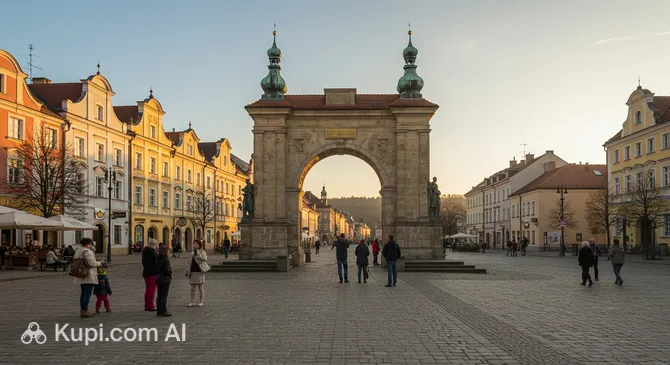
The heart of the city is undoubtedly the Market Square in Jelenia Góra. This is the historical center, surrounded by colorful old houses with arcades, housing numerous cafes and restaurants. The square attracts visitors with its atmosphere, the Neptune Fountain, and the Town Hall, making it an ideal place for walking and getting to know the city's architecture.
Jelenia Góra Market Square. Illustration.
Source: Kupi.com AI
Traveler photos:
For those interested in the history and culture of the region, the Karkonosze Museum in Jelenia Góra is a must-visit. The museum offers a rich collection of exhibits telling the story of the nature, art, and traditions of the Karkonosze region. Especially interesting are the exhibitions dedicated to glass production, for which this region was famous.
Karkonosze Museum in Jelenia Góra. Illustration.
Source: Kupi.com AI
Traveler photos:
A majestic architectural monument is the Basilica of Saints Erasmus and Pancras. This 14th-century Gothic church impresses with its size, interior decoration, and rich history. Tourists come here to admire ancient frescoes and sculptures and to feel the spirit of the Middle Ages.
Basilica of St. Erasmus and St. Pancras. Illustration.
Source: Kupi.com AI
Traveler photos:
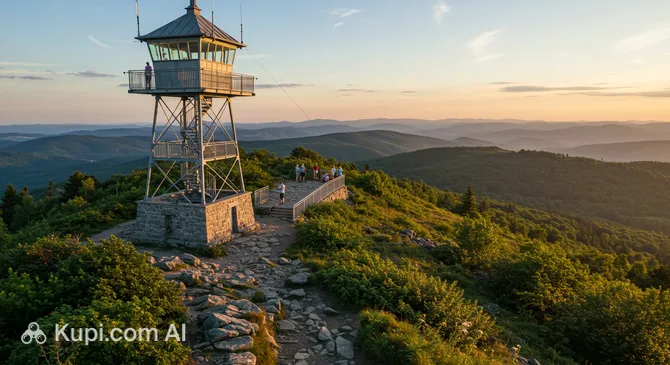
To enjoy a panoramic view of Jelenia Góra and the surrounding Karkonosze Mountains, it is worth climbing the View Tower on Krzywousty Hill. The tower, also known as "Grzybek" (The Mushroom) because of its shape, offers breathtaking landscapes, especially beautiful at sunset. It is a popular spot for both tourists and locals.
Lookout Tower on Krzywousty Hill. Illustration.
Source: Kupi.com AI
Traveler photos:
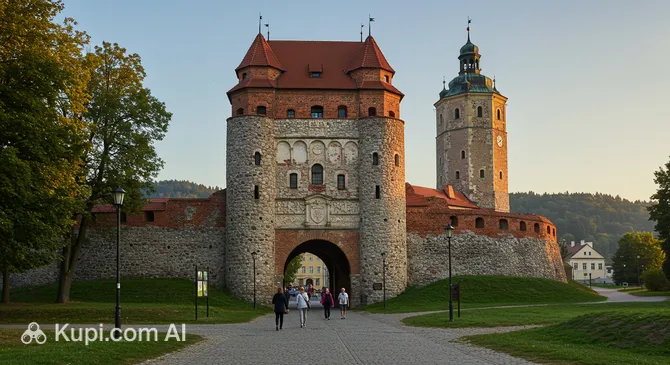
Another significant historical attraction is the Wojanowska Tower and Gate. This is a preserved part of the medieval city fortifications, reminding us of Jelenia Góra's rich past. A walk here allows you to touch history and imagine what the city looked like many centuries ago.
Local Cuisine
The gastronomic scene of Jelenia Góra is a fascinating blend of Polish, German, and Czech culinary traditions, offering tourists a rich variety of flavors. Here, every dish tells the story of the region. Be sure to try the hearty bigos—a fragrant stew of sauerkraut with various types of meat, and, of course, the famous Polish pierogi with a wide variety of fillings, from classic meat and potato to sweet berry versions.
A special place in local cuisine is occupied by dishes made from venison and forest mushrooms gathered in the surrounding Karkonosze Mountains. Cheese lovers will appreciate the local smoked varieties that perfectly complement a meal. As for drinks, it's worth paying attention to traditional śliwowica (strong plum brandy) and local beer, often brewed according to old recipes in small breweries. Non-alcoholic options include fresh berry compotes and herbal teas.
The dining culture in Jelenia Góra is diverse. Locals and tourists love to visit cozy restaurants offering both traditional and modern dishes. Small cafes where you can enjoy fresh pastries and desserts are also popular. For a quick and tasty snack, street food is excellent: fragrant zapiekanki, grilled sausages (kiełbaski), and waffles (gofry) with all sorts of toppings. You should definitely visit the local farmers' markets, such as the one at Market Square in Jelenia Góra, where you can buy fresh seasonal products, homemade cheeses, honey, and sausages directly from the farmers.
Pierogarnia with Guitar and Quill. Illustration.
Source: Kupi.com AI
Traveler photos:
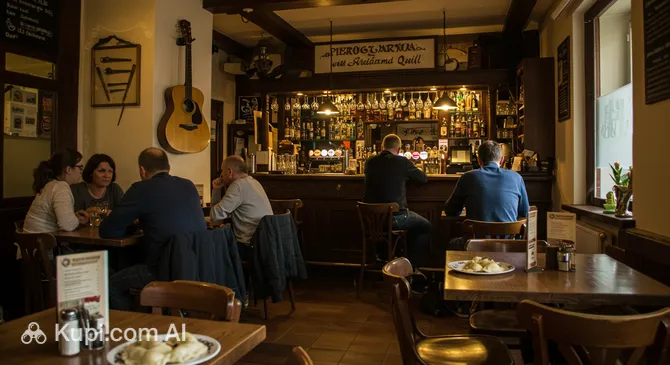
If you want to get to know one of the symbols of Polish cuisine—pierogi—more deeply, stop by the Pierogarnia with a Guitar and a Pen. This place specializes in preparing a variety of pierogi, offering both classic and original fillings. Overall, the gastronomic scene of Jelenia Góra is characterized by the use of fresh, high-quality products and a hospitable atmosphere, making every visit to a restaurant or cafe a pleasant event.
Travel Tips
Welcome to Jelenia Góra! To make your journey to this charming city at the foot of the Karkonosze Mountains as comfortable and memorable as possible, we have prepared some practical tips. They will help you better navigate and enjoy every moment of your stay.
Clothing and Equipment: The climate in Jelenia Góra is moderate, but the proximity of the Karkonosze Mountains means the weather can be changeable. In summer, take light clothing, but don't forget a jacket or sweater for the evenings. In winter, warm clothes, a hat, gloves, and waterproof shoes are necessary. At any time of year, comfortable shoes for walking on the cobblestones of the old city and possibly for mountain trips will come in handy. Don't forget a plug adapter (type E/F) and a raincoat just in case. When visiting churches, maintain modesty in your attire (covered shoulders and knees).
Getting Around the City: The main form of public transport in Jelenia Góra is buses (MZK Jelenia Góra). Schedules can be found at bus stops or online. Taxis are available, and you can also use apps like Bolt or Uber if they are active in the region, or local taxi services. Renting a car would be a great idea if you plan to explore the surroundings, including the Karkonosze National Park and neighboring resort towns.
Financial Matters: The official currency in Poland is the Polish zloty (PLN). It's best to change money in banks or exchange offices ("kantor"), avoiding exchangers at airports or hotels due to less favorable rates. Bank cards (Visa, Mastercard) are accepted almost everywhere in shops, restaurants, and hotels. ATMs (bankomat) are also widely available. An approximate daily budget per person (excluding accommodation) can be 150-250 PLN. Tips in restaurants are usually 10-15% of the bill if service is not included; in taxis, you can round up the amount.
Health and Safety: Pharmacies (apteka) are easy to find in the city; information about duty pharmacies is usually posted on the doors. In case you need medical assistance, EU citizens should carry a European Health Insurance Card (EHIC). Tourists from other countries are strongly recommended to have travel insurance. The emergency number is 112. Jelenia Góra is considered a safe city, but standard precautions against pickpockets in tourist areas won't hurt.
Language and Communication: The official language is Polish. In the tourism sector (hotels, restaurants, museums) and among young people, many speak English. However, knowing a few basic phrases in Polish, such as "Dzień dobry" (Good day), "Dziękuję" (Thank you), "Proszę" (Please), "Przepraszam" (Excuse me), will be very helpful and appreciated by the locals. A SIM card with internet access can be purchased in mobile operators' stores or kiosks (a passport will be required for registration). Wi-Fi is available in most hotels, cafes, and restaurants.
Local Etiquette and Communication: Poles value politeness. When entering a shop or a small cafe, it is customary to say hello ("Dzień dobry"). When meeting, handshakes are usually exchanged. Addressing someone as "ty" (you/informal) without prior agreement is considered impolite, especially to elders or strangers; use the polite forms "Pan" (Mr./Sir) or "Pani" (Ms./Madam). Try not to be loud in public places.
What to Avoid: Try not to start discussions on complex historical or political topics if you are not sure of your awareness and context. Also, avoid photographing people without their permission, especially in informal settings.
Special Tip for Jelenia Góra: Jelenia Góra is a wonderful starting point for exploring the Karkonosze Mountains. Be sure to plan at least a day trip to the mountains or visit nearby resorts such as Karpacz or Szklarska Poręba. Also, pay attention to local markets where you can find fresh products and handmade items, especially on weekends.
We hope these tips help you plan an unforgettable trip to Jelenia Góra. This city with its rich history and picturesque surroundings awaits you with open arms! We wish you pleasant discoveries and bright impressions!
Entertainment & Nightlife
Evening Jelenia Góra offers its guests various opportunities for relaxation and entertainment. Although the city is not famous for wild 24-hour parties, you can find cozy places to have a good time after a busy day.
The main concentration of evening life is found in the city center, especially around the Market Square and its adjacent streets. Numerous bars, pubs, and restaurants are located here, where you can enjoy local cuisine and drinks. The atmosphere in most establishments is quite relaxed and friendly, attracting both locals and tourists. Many bars are open until late at night, especially on weekends. No special dress code is usually required; the style of clothing is predominantly casual.
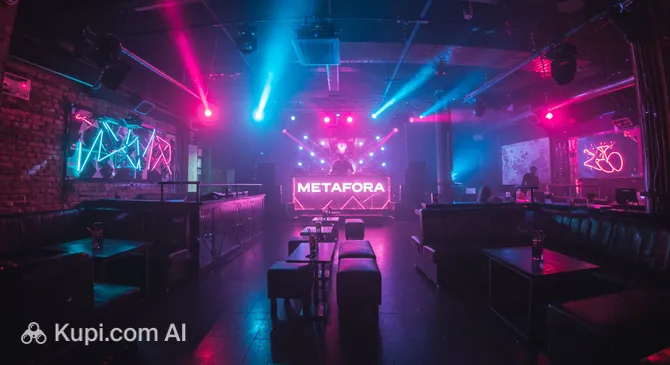
Among the popular places for evening relaxation, several establishments stand out. If you are looking for a place with music and the opportunity to dance, pay attention to the Metafora Night Club. For a quieter evening with original dishes and drinks, the Pierogarnia with a Guitar and a Pen is suitable, offering a cozy atmosphere. Another interesting spot is Sofa Beer & Burger, where you can combine dinner with pleasant conversation.
Metafora Night Club. Illustration.
Source: Kupi.com AI
Traveler photos:
Practical tips for nightlife:
The best time to visit bars and clubs is Friday and Saturday evenings, when the establishments are most lively. Prices in most places are moderate but can vary depending on the venue. You can get around the city at night by taxi, which can be called by phone or found at special ranks, especially in the center. In general, Jelenia Góra is considered a safe city for night walks, but you should always observe standard precautions, especially in less illuminated areas.
During the day, Jelenia Góra also offers many interesting activities. Guests can visit theaters, explore historical landmarks like the Wojanowska Tower and Gate, or wander through museums, such as the Karkonosze Museum in Jelenia Góra or the Museum of History and Military Affairs. For shopping enthusiasts, there are shopping centers like the Galeria Nowy Rynek.
Parks & Museums
Jelenia Góra, picturesquely spread at the foot of the mighty Karkonosze Mountains, offers its guests not only an immersion into rich history but also wonderful opportunities for outdoor relaxation and acquaintance with unique cultural heritage. The city skillfully combines urban amenities with close proximity to breathtaking natural landscapes, creating ideal conditions for an educational and pleasant journey.
Jelenia Góra, being the gateway to the Karkonosze National Park, is also rich in green zones. One of the popular spots is Bolesław Krzywousty Hill (Wzgórze Krzywoustego), from the top of which you can visit the View Tower on Krzywousty Hill, offering spectacular panoramic views of the city and mountains. For a more peaceful holiday, the Spa Park (Park Zdrojowy) in the Cieplice district is perfect. This historical resort park, with its well-kept alleys, old trees, and elegant architecture, invites you to leisurely strolls and peaceful enjoyment. No less interesting is the Norwegian Park (Park Norweski), also located in Cieplice, which charms with its unique atmosphere, Scandinavian-style wooden buildings, and a picturesque pond. In addition, the banks of the Bóbr River, which flows through the city, provide excellent opportunities for relaxing by the water.
The cultural life of Jelenia Góra is vividly represented in its museums, which carefully preserve the region's historical artifacts and artworks. Among them, the following stand out:
Karkonosze Museum in Jelenia Góra — the main museum of the region, offering visitors an extensive and multifaceted exhibition dedicated to the history, ethnography, art, and unique nature of the Karkonosze. Here you can see rare collections of artistic glass, ancient maps, and household items and crafts of the local people. A visit to the museum will be interesting for everyone who seeks a deeper understanding of this amazing and distinctive region.
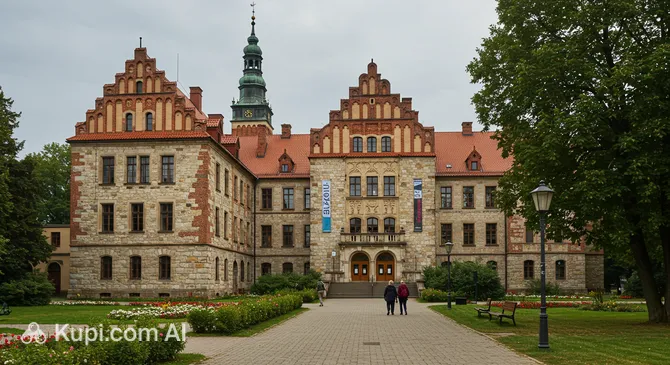
Museum of History and Military Affairs, located in a historical building, presents collections related to the military history of the region. The exposition includes samples of weapons, military uniforms, documents, and photographs telling about various periods and events. This museum will be especially interesting for military history enthusiasts and anyone who wants to learn more about Jelenia Góra's past and its role in historical events.
Museum of History and Military. Illustration.
Source: Kupi.com AI
Traveler photos:
Strolling through Jelenia Góra, it is impossible not to notice its rich architectural heritage. The heart of the city is undoubtedly the Market Square, surrounded by colorful historical buildings and dominated by the city hall. This place literally breathes history and is a popular meeting spot. Near the square rises the majestic Basilica of Saints Erasmus and Pancras, impressive with its austere Gothic architecture and interior decoration. It is also worth paying attention to the preserved fragments of medieval city fortifications, such as the Wojanowska Tower and Gate, reminding us of the city's ancient history.
Wojanowska Tower and Gate. Illustration.
Source: Kupi.com AI
Traveler photos:
For a more authentic experience of Jelenia Góra, turn off the main tourist routes and walk along the less busy streets leading away from the Market Square. There you can discover charming old courtyards, interesting architectural details, and feel the slow pace of local life. Also, if you have time, visit the Cieplice Śląskie-Zdrój district, known for its thermal springs and old resort atmosphere, to see another, calmer and more wellness-oriented side of Jelenia Góra.
Getting Around
Public transport in Jelenia Góra is mainly represented by a bus network, which covers both the city itself and its immediate surroundings. This is the most convenient and economical way of travel for tourists. The bus routes are quite extensive and allow you to reach most interesting places.
The fare system in Jelenia Góra, as in many Polish cities, includes several options. You can purchase single tickets, which are valid for one trip or for a certain period of time (for example, 60 or 90 minutes). The cost of such a ticket is usually around 3-5 Polish zlotys. There are also daily or multi-day passes, which can be advantageous if you use transport frequently; a daily pass might cost around 15-20 Polish zlotys. Tickets can be bought in special machines at bus stops, at newsstands, or directly from the driver (usually slightly more expensive and for cash only). Options for paying through mobile applications or with a bank card in modern buses are increasingly appearing.
It is important for tourists to remember that a purchased ticket must be validated immediately upon entering the bus in a special device—a validator. An unvalidated ticket is considered invalid, and there is a fine for this. Buses usually run from early morning until late evening, but the schedule can vary depending on the day of the week (weekdays, weekends, holidays) and the specific route. It is recommended to check the schedule at the stops or on the local transport operator's website in advance.
As an alternative to public transport in Jelenia Góra, taxi services are always available. They can be called by phone, through mobile applications, or found at specialized ranks. In the warmer months, you can also consider bicycle rental, especially for rides through the picturesque surroundings of the city. Car sharing is less common in Jelenia Góra than in major metropolises.
Accommodation
When planning a trip to Jelenia Góra, you will find a variety of accommodation options suitable for any budget and preference. The city offers a wide range from cozy guesthouses and budget hostels to comfortable mid-range hotels and private apartments available for short-term rent. This allows every traveler to find the optimal choice for their stay.
Most tourists prefer to stay in the central part of the city or in its immediate vicinity. This provides easy access to major attractions, such as the Market Square in Jelenia Góra, as well as to numerous cafes, restaurants, and shops. Districts with good transport accessibility are also popular, allowing for convenient exploration of both the city and its picturesque surroundings.
Time Gates. Illustration.
Source: Kupi.com AI
Traveler photos:
Regarding prices, you can find very budget-friendly options as well as mid-range housing in Jelenia Góra. Luxury hotels are less common here, but high-quality and comfortable options at reasonable prices are quite available. It is recommended to book accommodation in advance, especially if your trip coincides with the peak tourist season or large city events. For searching and booking, it is convenient to use popular online platforms or contact the chosen hotels and apartments directly.
While specific hotels have not been highlighted, rest assured that the choice of places to stay in Jelenia Góra is quite broad. Consider options in the historical center for full immersion in the city's atmosphere, or choose a place slightly further away for a more peaceful stay. In any case, planning ahead will help you find the best place for your unforgettable journey to this charming corner of Poland.
Nearby Cities
For those who want to explore the surroundings, Jelenia Góra serves as an excellent starting point for day trips to several interesting nearby locations:
City
Population
Distance
Kowary
10 650
14 km
Kamienna Gora
17 998
24 km
Lwowek Slaski
9 500
25 km
Zlotoryja
16 479
28 km
Vrchlabí
12 289
33 km
Wałbrzych attracts travelers with its majestic Książ Castle, one of the largest in Poland, as well as its coal mining history. This is a great destination for lovers of ancient architecture and industrial heritage.
Legnica will interest history buffs with its rich past, reflected in attractions such as the Piast Castle and the Cathedral. The city offers an immersion into the atmosphere of medieval Silesia.
A trip to Lubin allows you to get acquainted with an important center of the Polish copper industry and its modern history. The city also offers green areas for relaxation and showcases the region's industrial heritage.
Świdnica is famous for its unique Church of Peace (a UNESCO site), the largest wooden Baroque church in Europe, and its charming Old Town. This place is a must-visit for lovers of sacred architecture.
Bolesławiec is the world capital of unique ceramics, known for its characteristic blue and white patterns. Here, you can not only purchase authentic products but also learn about the creation process in local manufactories.
These nearby destinations provide an insight into the diverse culture and landscapes of the Lower Silesia region.
Shopping & Souvenirs
Shopping in Jelenia Góra offers a pleasant combination of modern retail opportunities and the charm of local shops. The city is not a major fashion center, but you can find high-quality goods, regional delicacies, and souvenirs to remember your trip to Poland.
The main area for shopping in the historical part of the city is the Market Square in Jelenia Góra and its adjacent streets, especially the pedestrian 1 Maja (May 1st) street. Small boutiques, shops with local craftsmen's products, bookstores, and cozy cafes where you can rest between purchases are concentrated here. A walk along these streets is a pleasure in itself, allowing you to immerse yourself in the atmosphere of the old city.
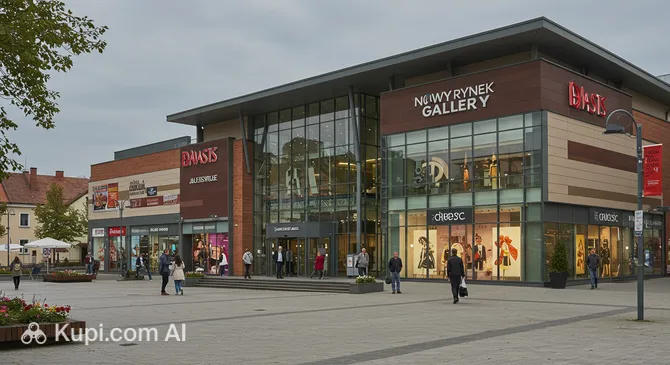
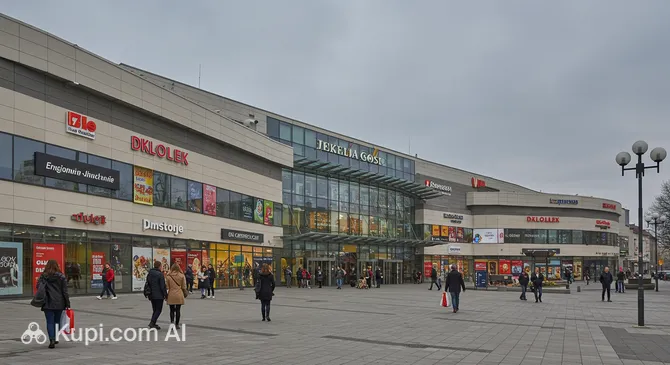
For those who prefer more concentrated shopping under one roof, Jelenia Góra has several shopping centers. The most famous are Galeria Nowy Rynek and Galeria Sudecka. These complexes feature both Polish and international brands of clothing, shoes, cosmetics, and electronics, and they also have supermarkets, food courts, and entertainment zones.
Nowy Rynek Gallery. Illustration.
Source: Kupi.com AI
Traveler photos:
Galeria Sudecka. Illustration.
Source: Kupi.com AI
Traveler photos:
Fairs and markets are periodically organized in the Market Square of Jelenia Góra, especially on pre-holiday days or during city festivals. Here you can find fresh farm products, handmade items, antiques, and traditional Polish treats. This is a great place to feel the local flavor and purchase something authentic.
As souvenirs from Jelenia Góra, it is worth bringing items that reflect the culture and nature of the Karkonosze region. Popular items include ceramics, glassware (Lower Silesia is famous for its glassmaking traditions), wooden crafts, local honey, jams, and traditional Polish sweets such as gingerbread (pierniki) or fudge (krówki). You can also find souvenirs featuring the city's landmarks.
Most shops in Jelenia Góra are open Monday through Friday from approximately 10:00 AM to 6:00-7:00 PM; on Saturdays, working hours are usually shorter. Large shopping centers may stay open longer, including some hours on Sundays (though shopping Sundays in Poland are limited by law). Bank cards (Visa, Mastercard) are accepted almost everywhere, but it is always useful to have some cash in Polish zlotys, especially for purchases at markets or in small souvenir shops.
Tourists from countries outside the European Union can use the Tax Free refund system when making purchases for a certain amount in stores participating in this program. To do this, you must ask the seller for a special Tax Free form and present it along with receipts and goods at customs when leaving the EU.