Support

Gorlitz

About

Görlitz is a true architectural gem, comfortably nestled in the east of the federal state of Saxony. This city, located in Germany, is often called one of the most beautiful in the region due to its incredible concentration of historical buildings and a special, almost cinematic atmosphere. There is no hustle and bustle of major metropolises here, and every corner breathes tranquility and comfort, inviting travelers to take leisurely walks.
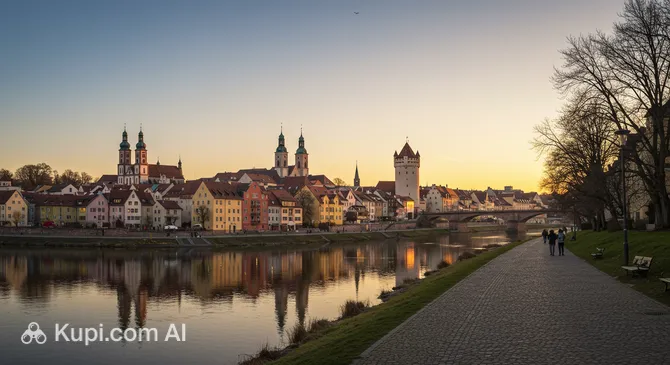
Görlitz. Illustration.
Source: Kupi.com AI

Its unique geographical position makes Görlitz a kind of bridge between cultures. The city stands on the banks of the Lusatian Neisse River, right on the border with Poland. It is enough to simply cross the pedestrian bridge to find yourself in the Polish city of Zgorzelec—once they formed a single urban community. Today, it is a meeting place for German, Polish, and Czech traditions, where the proximity of two states is felt as a harmonious union.

The city's main pride is its magnificently preserved old center. More than 3,500 buildings here are recognized as architectural monuments representing various eras: from Gothic and Renaissance to Baroque and Art Nouveau. The rich history of Görlitz can be read in every facade, as the city was practically undamaged during wars and has retained its authentic appearance. It is no wonder that Hollywood directors have fallen in love with these streets: Görlitz is often called "Görliwood," as it has served as the backdrop for many famous films, including Oscar-winning pictures.

With a population of about 56,000, Görlitz offers tourists an ideal balance between cultural richness and relaxed recreation. It is an open-air museum city that you fall in love with at first sight. Come here to enjoy medieval romance, stroll along the picturesque embankment, and feel like a character in a historical film.
Weather Overview

The climate of Görlitz can be described as moderate, with clearly defined seasons, making the city accessible to tourists all year round. Summer here usually pleases with comfortable warmth: in the hottest months, July and August, the average temperature is about 19-20°C, and daily maximums reach a pleasant 24°C. This is an excellent time for walking; however, it's worth noting that rainy days are possible even in summer.

Winter brings coolness, but extreme frosts occur rarely. In January, the average temperature stays around 1.4°C, and night minimums rarely drop below -1°C. However, humidity increases during this period: January is considered the "wettest" month with 17 days of precipitation. To plan your trip taking into account all the whims of nature, we recommend checking in advance what the expected weather in Görlitz will be for the dates of your visit.

Spring and autumn are transitional periods with fairly mild conditions. Already in May, the air warms up to an average of 13°C, and September retains the remnants of summer heat with figures around 15°C. Expect a warm summer with occasional rain and cool, damp winters.

Average monthly temperature

Average monthly precipitation

Interesting Facts

Beyond the main attractions, Görlitz holds many fascinating secrets and unique features that make it an exceptional place on the map of Europe. Here are a few facts that will help you look at this city from a new perspective:

  • Capital of European cinema. Thanks to the incredible preservation of its historical center, the city has become a favorite site for world-renowned directors, earning the official nickname "Görliwood." This is where the Oscar-winning "The Grand Budapest Hotel" was filmed, as well as scenes for "Inglourious Basterds," "The Reader," and "Around the World in 80 Days."

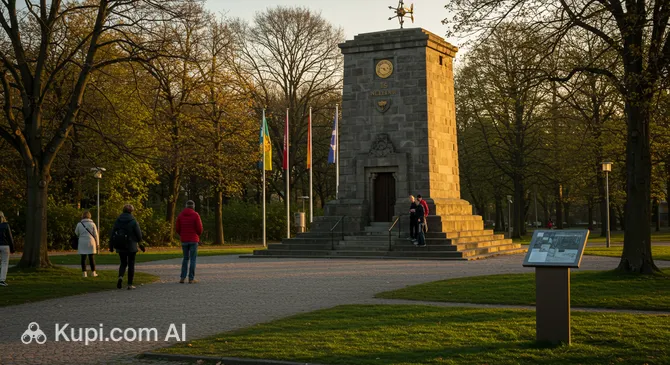
  • City of precise time. The 15th meridian east longitude passes through Görlitz, which determines Central European Time (CET). This means that local clocks show the most "correct" time in Germany. In honor of this geographical phenomenon, the Monument to the 15th Meridian East was installed here, symbolizing the city's importance for world chronology.

  • Two countries — one city. Görlitz and the Polish town of Zgorzelec on the other bank of the Neisse River were once a single entity. Today, they are connected by friendship bridges, and it is one of the few places where you can have breakfast in Germany and, after a few minutes' walk, have lunch in Poland, enjoying the absence of visible borders.

  • Tibet in Saxony. The local Görlitz Nature Zoo is known far beyond the region not only for its animals but also for its unique Tibetan village. This authentic cultural space was created with great attention to detail to convey the atmosphere of the Himalayas in the center of Europe.

  • An encyclopedia of architecture. The city is called a "stone skansen" or an open-air architecture textbook. There are more than 3,500 architectural monuments covering 500 years of history—from Gothic and Renaissance to the Wilhelminian era and Art Nouveau, with most of them being authentic rather than reconstructed.

15th Meridian East Monument. Illustration.
Source: Kupi.com AI

Traveler photos:

How to Get There

When planning a trip, it is important to think through the logistics in advance, as Görlitz is located on the border with Poland, away from the largest metropolises. To choose the optimal route, we recommend studying all the ways to get to the city, taking into account both air and land transport.

Görlitz itself does not have an active passenger airport, so tourists usually fly into neighboring large cities. The closest transport hub is Dresden International Airport (IATA: DRS), located about 84 km away. A trip from there by car or train usually takes between 1 and 1.5 hours. For those looking for more international flight options, Berlin Brandenburg Airport (IATA: BER) is an excellent choice. It is located at a distance of about 168 km, and the road to Görlitz will take approximately 2–2.5 hours. It is also convenient to travel via Prague: Václav Havel Airport Prague (IATA: PRG) is located 127 km away, which is about 2 hours of travel.

For clarity, here is a summary of the main airports:

AirportPassenger trafficDistance
Dresden International Airport929 92884 km
Zielona Gora-Babimost Airport82 887124 km
Vaclav Havel Airport Prague16.4 mln127 km
Wroclaw Airport4.5 mln134 km
Pardubice Airport200 205138 km

Railway connections in the region are well-developed; however, direct long-distance high-speed trains rarely stop in Görlitz. Most often, travelers reach large hub stations in neighboring cities. One of the key points is Dresden Main Station, which is 84 km from Görlitz. From there, you can continue your journey on a regional train (travel time is about 1–1.5 hours). You can also consider arriving at the Main Station in Prague (125 km) or Berlin Ostbahnhof (184 km), from where connections to other cities in the region are established.

Below is a table with the nearest major railway stations:

StationPassenger trafficDistance
Dresden Hauptbahnhof21.9 mln84 km
Holesovice Railway Station122 km
Prague Main Railway Station53 mln125 km
Pardubice Main Railway Station137 km
Berlin Ostbahnhof Station36.5 mln184 km

Main Attractions

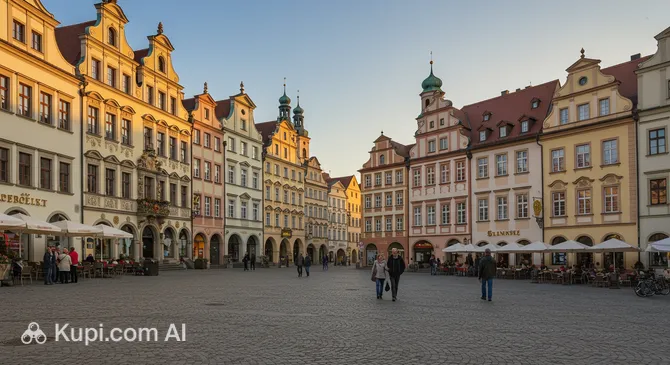
Görlitz is a city where history comes alive at every step, offering tourists a unique combination of architectural masterpieces and cozy corners for relaxation. It's worth starting your acquaintance with its rich heritage from the very heart of the old town, where the Upper Market Square is located. This is one of the most impressive and well-preserved historical squares in the region, surrounded by magnificent merchant houses from different eras. A stroll here allows you to feel the spirit of a prosperous trading city of the past and enjoy the beauty of the facades, which often become settings for historical films.

Upper Market Square. Illustration.
Source: Kupi.com AI

Traveler photos:

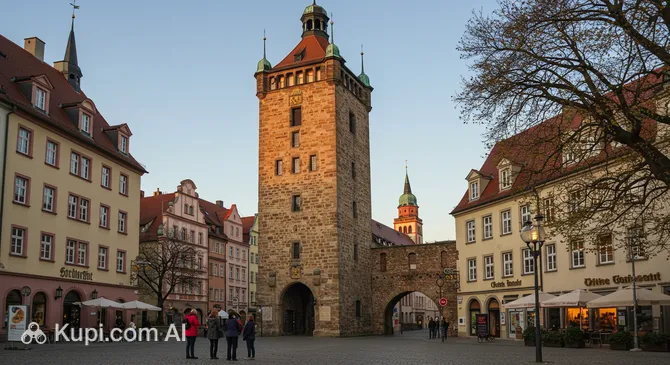
Among the city fortifications, the Fat Tower, also known as the Women's Tower, attracts special attention. This massive structure with walls over five meters thick was once part of the city's reliable defense system. Today, the tower is a recognizable symbol of Görlitz and a popular tourist attraction, telling of the medieval power and engineering skill of that time.

For those traveling with family or simply wanting a break from urban architecture, the Görlitz Nature Zoo will be a real discovery. This is not a classic zoo, but a space where special attention is paid to nature conservation and the creation of natural habitats. Here you can not only observe animals but also visit a unique Tibetan village, which transports visitors to the atmosphere of the Himalayas right in the middle of Saxony.

Fans of unusual transport and nostalgia should take a ride on the Vintage Park Railway. This miniature railway, passing through a picturesque park, is an exact copy of the historic "Adler" train. A ride on it gives a lot of positive emotions and allows you to see the city's green zones from an unusual perspective, making it excellent entertainment for both children and adults.

Local Cuisine

The gastronomy of Görlitz is a fascinating journey of flavors, where German reliability is harmoniously intertwined with Silesian traditions and Polish accents. The local cuisine is hearty, homemade, and incredibly comforting. The main dish that every traveler must try is considered to be the famous Silesian dumplings. These potato dumplings with a characteristic indentation in the middle perfectly hold thick meat sauce and are traditionally served with braised red or white cabbage. Also, on the menus of local establishments, you can always find juicy fried sausages and fresh bread baked according to ancient recipes.

The city's brewing is a special source of pride. The local Landskron Braumanufaktur brewery has been brewing beer for over 150 years, remaining faithful to traditional open fermentation technologies. It is worth tasting the classic lager, rich ales, or special seasonal varieties here. For those who prefer non-alcoholic drinks, local cafes offer excellent coffee and homemade lemonades.

The dining culture in Görlitz encourages unhurried relaxation. Locals like to spend time in cozy bakeries and coffee shops, enjoying the aroma of fresh pastries: gingerbread, apple strudels, and pretzels. If you are looking for a place with a soulful atmosphere for a sweet break, stop by Herzstück Cafe, where you can rest after a walk through the historical center.

Street food and markets also play an important role in the city's life. At farmers' fairs, stalls are bursting with regional cheeses, smoked meats, and vegetables. This is a great opportunity to feel the real taste of Saxony. For a quick snack, both traditional German snacks and international dishes are popular; for example, the Zgorzelec Kebab Factory offers hearty portions, reminding you of the proximity of the Polish border. Gastronomic life flourishes especially brightly during festivals and Christmas markets, when the streets are filled with the aromas of mulled wine and festive treats.

Travel Tips

Görlitz is a unique city where one foot can stand in Germany and the other almost in Poland, so preparing for a trip here has its nuances. To make your journey to this cinematic corner of Saxony flawless and comfortable, we have collected several important practical recommendations for you.

  1. Clothing and Footwear: The historical center of the city is paved with ancient cobblestones, which look magnificent on camera but can be a challenge for the feet. Be sure to bring comfortable shoes with flat, stable soles. The weather here is changeable, so dress in layers to easily adapt to temperature fluctuations, and don't forget an umbrella or raincoat even in summer.
  2. Transport: Görlitz is very compact, and its main beauties are best explored on foot. For trips to remote areas (for example, to Lake Berzdorfer), it is convenient to use the trams and buses of the local GVB network. Tickets can be bought at machines at stops or inside the transport; don't forget to validate them. Taxis are easy to find at stands or called by phone, but apps like Uber are not as common here as in metropolises.
  3. Finance: The official currency is the Euro (€). Although Germany is becoming increasingly card-friendly, the cash culture is still strong here (the phrase "Nur Bares ist Wahres" remains relevant). Small cafes, bakeries, and kiosks may not accept cards, so always have small bills and coins with you. Tipping is usually 5–10% of the bill, and it's customary to add it to the total when paying, rounding up the check.
  4. Health and Safety: This is one of the safest cities in the country, where you can safely walk even in the evening. Pharmacies are easily recognizable by the sign with a red letter "A" (Apotheke). If you need medicine at night or on Sunday, look on the doors of any pharmacy for the address of the duty point (Notdienst). The emergency services number is 112.
  5. Communication and Language: The main language is German. In the tourism sector, many speak English, but knowing basic phrases ("Guten Tag" — good day, "Danke" — thank you) will evoke sincere sympathy from the locals. Free Wi-Fi is available in many cafes and on central squares, but for reliability, it's better to buy a prepaid SIM card at supermarkets or communication stores.
  6. Local Etiquette and Rules: Sunday in Germany is a holy day of rest (Ruhetag). Almost all shops, supermarkets, and pharmacies (except duty ones) are closed; only cafes and museums are open. Plan your grocery shopping and retail therapy for Saturday. When entering small shops, it's customary to greet the seller.
  7. What to Avoid: It is strictly recommended not to walk on bike paths (they are usually highlighted by color or markings on the sidewalk). Cyclists are full participants in traffic; they ride fast and expect their lane to be clear. Also, avoid crossing the street on a red light, even if there are no cars—it is considered bad manners and can lead to a fine.
  8. Bonus — Two Countries in One Walk: Görlitz borders the Polish town of Zgorzelec. You can simply cross the pedestrian bridge over the Neisse River without any border control. This is a great chance to compare the cuisine and prices: on the Polish side, many services and restaurants may be cheaper. They use Zlotys there, but cards are accepted everywhere.

Görlitz charms with its tranquility and beauty, and by following these simple tips, you can fully immerse yourself in the atmosphere of "Görliwood" without being distracted by everyday trifles. We wish you pleasant discoveries and unforgettable walks along the banks of the Neisse!

Entertainment & Nightlife

The nightlife in Görlitz differs from that of noisy metropolises: you won't find endless raves until morning here, but instead, you will immerse yourself in an atmosphere of comfort, live music, and historical charm. Evening entertainment in the city is focused on the culture of socializing, enjoying local drinks, and intimate events. The epicenter of evening life is rightfully considered the Old Town (Altstadt), especially the areas around the Lower Market (Untermarkt) and Obermarkt. It is here, in ancient buildings with centuries of history, that the most colorful bars, pubs, and small clubs are hidden.

The style of establishments in Görlitz can be described as "relaxed and democratic." There is practically no dress code anywhere: casual style will be appropriate in both a beer restaurant and a cocktail bar. The crowd here is diverse: from local university students adding youthful drive to the city, to tourists and locals who appreciate a quiet rest. Most bars are open until one or two in the morning, and on weekends the fun can last a little longer.

If you are looking for large-scale spectacles, concerts, or sports events, it is worth paying attention to the facilities serving the entire twin-city agglomeration. One of the main venues for major events is the Turow Arena. Basketball matches, music concerts, and show programs are regularly held here, gathering spectators from both sides of the border. It's a great place to feel the energy of a big event.

Safety is another advantage of Görlitz. The city is considered one of the calmest in Germany, and night walks through the illuminated streets of the historical center generally do not cause concern. Nevertheless, as everywhere, it is worth sticking to common sense. You can get home at night on foot (the center is very compact) or by taxi. It is better to call a car by phone or find one at special stands, as "hailing" them on the street is not common here. Taxi prices are moderate by German standards.

In addition to nocturnal adventures, Görlitz offers a rich program during daylight hours. Shopping enthusiasts and those seeking leisurely leisure will enjoy the Strasbourg Arcade—a shopping arcade with interesting architecture where you can not only shop but also have a coffee. And if you are traveling with children and looking for active recreation, be sure to stop by Kinder-Spiel-Land. This indoor amusement park will be a real lifesaver in rainy weather, offering many attractions for young tourists.

Parks & Museums

Görlitz is a city where the stone chronicle of architecture is harmoniously intertwined with picturesque green oases, offering tourists a rich cultural program and opportunities for quiet relaxation in nature. A stroll through the local parks and museums will allow you to deeper understand the soul of this unique place, standing at the junction of German and Slavic cultures.

One of the main green zones of the city is the City Park (Stadtpark). This landscape, created back in the 19th century, invites leisurely walks among century-old trees, flower beds, and romantic monuments. The park gently descends to the Neisse River, opening up beautiful views of the Polish side. For fans of more large-scale natural landscapes, a real discovery will be Lake Berzdorfer (Berzdorfer See), located at the southern borders of the city. A former coal mine has turned into a magnificent recreation area with beaches, bike paths, and a marina, becoming a favorite spot for summer relaxation.

The cultural life of Görlitz is concentrated in its unique museums. It is definitely worth visiting the Silesian Museum (Schlesisches Museum), located in the magnificent Schönhof building—one of the oldest Renaissance houses in Germany. The museum's exhibition fascinatingly tells the rich and complex history of Silesia, its crafts, and art. Another important point of attraction is the Senckenberg Museum of Natural History. It is famous not only for its geological and zoological collections but also for its live vivarium, which makes it particularly interesting to visit with children.

The historical center itself resembles an open-air museum. Here you will find iconic architectural landmarks, such as the Upper Market Square, surrounded by merchant mansions, and the powerful Fat Tower, which holds the memory of the city's defensive past. These objects form the unique silhouette of Görlitz and serve as excellent landmarks during excursions.

Thick Tower. Illustration.
Source: Kupi.com AI

Traveler photos:

Among other cultural and entertainment facilities, the Görlitz Nature Zoo is worth highlighting. This is an intimate and cozy space where the focus is on direct contact with animals and the conservation of biodiversity. Next to it is the Vintage Park Railway—a charming attraction that allows you to ride a mini-train through the greenery, which invariably delights young travelers.

For those looking for hidden gems, we suggest looking into the ancient St. Nicholas Cemetery (Nikolaifriedhof). This is not just a place of memory, but a quiet, ivy-grown park with Baroque gravestones, where a mystical and peaceful atmosphere reigns, ideal for reflection away from the tourist crowds.

Getting Around

The public transport system in Görlitz, managed by the GVB (Görlitzer Verkehrsbetriebe), is compact, efficient, and intuitive. Movement around the city is primarily based on trams and buses. The tram network, which is one of the oldest in the region, consists of two main lines (1 and 2) that connect the northern residential areas with the southern parts of the city, passing through the historical center and key transport hubs such as Demianiplatz and the railway station.

The bus network complements the tram routes, providing access to more remote areas and suburbs. A special feature of the transport system is its close connection with the Polish twin city of Zgorzelec. There are cross-border bus routes that allow for easy movement between the two parts of the "Europe-City," although many tourists prefer to simply cross the border on foot via the bridge over the Neisse River.

Görlitz is part of the ZVON transport association, so a unified tariff system applies here. For tourists, the most convenient options are a single ticket (Einzelfahrt) for one trip or a day pass (Tageskarte), which allows unlimited use of any transport within the city throughout the day (usually until 4 AM the following day). For small groups or families, there are advantageous group day tickets.

Tickets can be purchased at machines located at major stops or directly inside trams and buses. Most modern machines inside transport accept both coins and contactless cards, but having small change with you is always useful. It is also convenient to use mobile apps such as ZVON-Ticket or DB Navigator. Important: a purchased paper ticket must be validated immediately upon entering the vehicle if it does not already have a time stamp. Riding without validation is equated to fare evasion and can result in a fine.

Transport runs strictly according to the schedule. On weekdays, intervals are comfortable (usually 15–20 minutes), but in the evenings and on weekends, they increase. Night routes exist, but their number is limited, so for late returns, it's worth checking the schedule in advance or considering alternatives.

Among alternative ways to get around, taxis and bicycles are popular. Taxis in Görlitz are reliable and accessible; it's better to order cars by phone or take them at special stands (for example, at the station), as hailing them on the street is not common. A bicycle is an excellent choice for trips to Lake Berzdorfer or through the parks, but in the historical center (Altstadt), be prepared for a bumpy ride due to the old cobblestones. However, the old town itself is so compact that it is most pleasant and convenient to explore on foot.

Accommodation

Görlitz offers travelers an amazing variety of accommodation options that blend seamlessly into the city's historical appearance. It is hard to find faceless chain giants made of glass and concrete here; instead, guests will find cozy family hotels, atmospheric guesthouses (Gasthäuser), and stylish apartments located in renovated Renaissance or Baroque buildings. The choice ranges from budget hostels for young people to high-class boutique hotels where you can feel like an aristocrat of past centuries.

When choosing an area to stay, most tourists prefer the Old Town (Altstadt). Staying here means living in the scenery of a historical film: cobbled streets, views of ancient towers, and proximity to the main attractions create a unique atmosphere. However, it's worth noting that parking can be difficult in this zone, and the noise from the cobblestones can be heard in rooms facing the street.

An alternative is the Innenstadt—the city center, built up with majestic buildings from the late 19th century (the Wilhelminian era). This area is convenient due to its proximity to the railway station and the best shopping spots. For example, the famous Strasbourg Arcade—an architectural monument and shopping arcade in the Art Nouveau style—is located here and serves as an excellent landmark. Staying here provides easy access to shops and cafes while remaining within walking distance of the historical core.

For budget travelers, an interesting option could be staying on the Polish side, in the city of Zgorzelec. Just cross the bridge over the Neisse River, and you will find more affordable prices for hotels and apartments while maintaining the ability to walk around German Görlitz at any time.

Booking Tip: Görlitz is becoming an increasingly popular tourist destination, so during the high season (May to September) and during the Christmas Market period (December), the demand for housing rises sharply. It is recommended to book rooms 2–3 months before your trip to get the best value for money.

The price range in the city can be described as moderate, especially compared to large metropolises like Berlin or Munich. You can easily find a comfortable double room in a mid-range hotel at a reasonable price. Booking is available through all popular international online platforms, but many small pensions and apartments also welcome direct booking through their websites, sometimes offering guests small discounts or welcome bonuses.

Nearby Cities

For those who want to explore the surrounding area, Görlitz serves as an excellent starting point for day trips to several interesting nearby locations:

Just 30 kilometers from the city is Zittau. This place is unique due to its geographical location at the junction of the borders of Germany, Poland, and the Czech Republic. Tourists are drawn here by the magnificent historical center in the Italian Baroque style and the famous Large and Small Lenten cloths (Fastentücher)—rare religious relics. Additionally, Zittau is the gateway to the picturesque Zittau Mountains, where you can enjoy nature and ride a narrow-gauge steam train.

Another essential item on the program is Bautzen, which is often called the "city of towers." Impressive medieval architecture and powerful city fortifications have been preserved here. Bautzen is also known as the cultural capital of the Lusatian Sorbs—a Slavic people of Germany—which gives the city a special national flavor, noticeable in bilingual signs and local traditions.

A little further, at the beginning of the Elbe Sandstone Mountains, lies Pirna. This city is called the "gateway to Saxon Switzerland." Its beautifully restored market square, painted by Canaletto himself, and winding streets create a romantic atmosphere. Pirna is ideal for those who want to combine a tour of urban architecture with a trip to the region's natural wonders.

CityPopulationDistance
Zgorzelec31 3593 km
Niesky9 26718 km
Löbau14 36322 km
Bogatynia16 64727 km
Zittau24 85830 km

These nearby destinations allow you to get an idea of the diverse culture and landscapes of the region.

Shopping & Souvenirs

Shopping in Görlitz is a calm and pleasant activity, devoid of the hustle and bustle of huge metropolises. Here you won't find endless rows of luxury boutiques, but instead, you can enjoy the atmosphere of a historical city, peeking into small private shops, antique stores, and cozy arcades. The city is famous for its craft traditions, so special attention should be paid to locally produced goods and unique items that are hard to find in chain stores.

The city's main shopping artery is Berliner Straße. This pedestrian zone, stretching from the railway station to the historical center, is full of clothing and shoe stores, bookstores, and perfume boutiques. Strolling here, you can easily combine shopping with viewing the architecture of the Wilhelminian era. Interesting shops are also concentrated around Postplatz and Demianiplatz, where life is bustling at any time of day.

If you are interested in large shopping centers, Görlitz offers several excellent options. A true gem is the Strasbourg Arcade—a unique Art Nouveau (Jugendstil) arcade. Here, shopping turns into an aesthetic pleasure: under the elegant glass vaults are fashion boutiques and specialized shops. For more utilitarian purchases, Neisse Park Görlitz is suitable—a modern shopping complex with a wide choice of mass-market brands, a supermarket, and convenient parking.

Market culture occupies an important place in the city's life. The most popular food market (Wochenmarkt) regularly takes place on Elisabethplatz. Here, farmers from surrounding villages offer fresh vegetables, fruits, cheeses, honey, and homemade pastries. This is the best place to try local delicacies and feel the authentic spirit of Saxony. During the pre-Christmas period, the city is transformed by the Silesian Christmas Market (Schlesischer Christkindelmarkt), where you can buy unique handmade products.

When choosing souvenirs, pay attention to traditional Bunzlau ceramics (Bunzlauer Keramik). Although its historical homeland is on the Polish side, Görlitz offers a huge selection of this famous pottery with blue patterns. Also, a great gift would be a bottle of local beer from the Landskron brewery or fabric products with traditional Silesian blueprinting (Blaudruck). Those with a sweet tooth should bring home a Silesian poppy seed cake or local gingerbread.

When planning your shopping trip, remember the German schedule. Most outlets are open from 9:30 or 10:00 to 18:00–20:00 on weekdays and Saturdays. Sunday is a day off, when almost all shops, including supermarkets, are closed (small kiosks at the station may be an exception). Major centers and supermarkets accept Visa and Mastercard, but small private shops, bakeries, and markets often prefer cash, so have small bills with you.

Tourists residing permanently outside the European Union can use the Tax Free system and reclaim part of the VAT on purchases. Look for "Global Blue" or "Tax Free Shopping" stickers in shop windows. To process a refund, you need to make a purchase of a certain minimum amount (usually from 50 euros) and ask the seller to fill out a special check, which you will then need to present to customs when leaving the EU.

Nearby cities

Reached the end of the page?

That means the route is fully explored