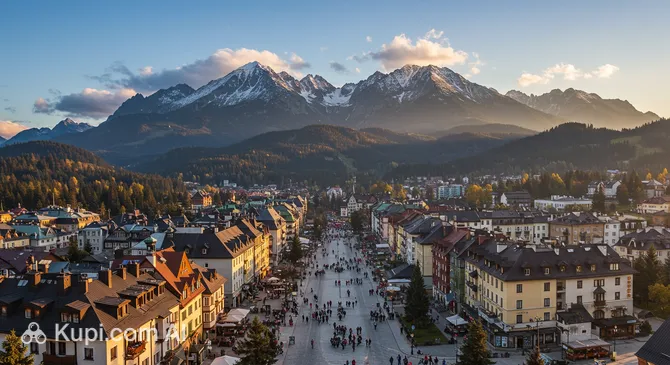
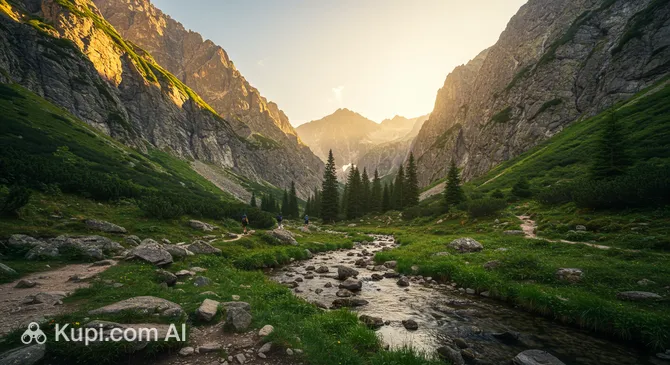
Zakopane is not just a city, but a true jewel in the crown of Poland, known as its "winter capital" and a year-round mountain resort. Located at the foot of the majestic Tatras in the Lesser Poland Voivodeship, this charming town with a population of about 27,000 attracts visitors with its unique atmosphere, combining Goral (Highlander) traditions with modern tourist infrastructure. The climate here is typically mountainous, with snowy winters ideal for skiing and pleasantly cool summers perfect for hiking.
Zakopane. Illustration.
Source: Kupi.com AI
What makes Zakopane so special? First, of course, are the Tatras — the only alpine-style mountains in the country, offering endless opportunities for outdoor activities, from easy walks through valleys to challenging climbs. Second is the famous Krupówki street — the heart of the city, pulsating with life, where you can find souvenir shops, restaurants serving regional cuisine, and experience the unique local flavor. No less attractive is Gubałówka Hill, which can be reached by funicular to enjoy breathtaking panoramic views of the city and the surrounding mountain peaks.
Zakopane is a place where everyone will find something for themselves: whether it's active recreation in nature, getting to know the distinctive culture of the Highlanders, or simply peaceful contemplation of mountain landscapes. Visit Zakopane to feel its unique spirit and take away unforgettable memories!
The weather in Zakopane is typical for a mountain resort with clearly defined seasons. Winters here are frosty and snowy, with an average temperature in January around -3.3°C, while in December and February it stays slightly higher, creating ideal conditions for winter sports. Summer, especially in July and August, is moderately warm, with average temperatures around 16-17°C; however, this is also the rainiest period with the highest number of days with precipitation (up to 20 days in July). Spring and autumn are transitional seasons with milder but changeable weather. Overall, Zakopane is characterized by cold, snowy winters and warm summers with periodic rains. You can find more detailed information on the Zakopane Climate page.
Average monthly temperature
Average monthly precipitation
Interesting Facts
In addition to its famous ski slopes and the bustling Krupówki street, Zakopane hides many amazing stories and unique features. Here are just a few interesting facts that will help you look at this city in a new way:
Wielka Krokiew. Illustration.
Source: Kupi.com AI
Traveler photos:
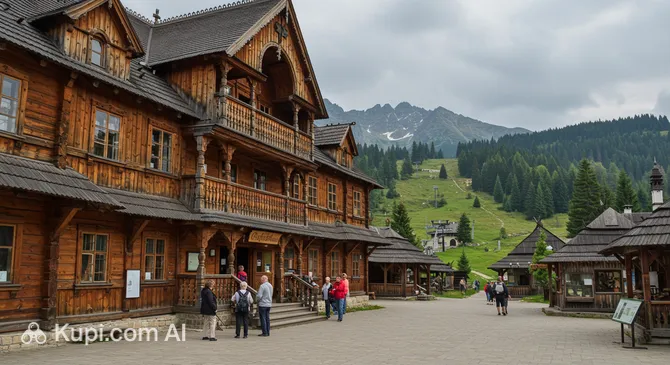
Unique Architectural Style: The city is famous for its distinct architectural style known as the "Zakopane Style" or "Witkiewicz Style." Created by artist Stanisław Witkiewicz in the late 19th century, it is a harmonious blend of local Goral wooden architecture and Art Nouveau elements. Many historical villas and pensions in Zakopane are brilliant examples of this style.
A Cheese Symbol with its Own Museum: The famous local smoked sheep cheese, oscypek, is not just a gastronomic specialty but a true cultural symbol of the region. There is even a dedicated Oscypek Museum where you can learn all the secrets of its traditional production and, of course, enjoy a tasting.
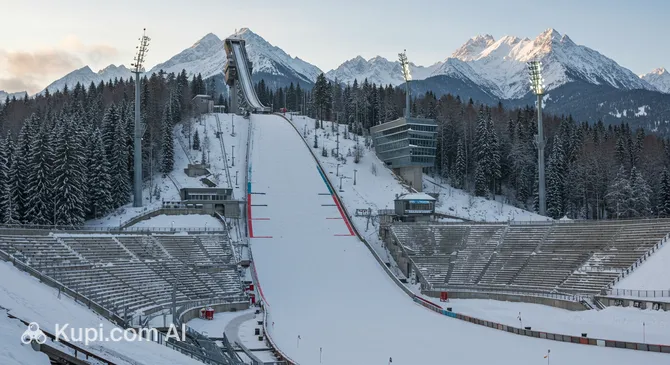
A Ski Jumping Legend: Zakopane is home to one of the most famous and oldest active ski jumps in the world — Wielka Krokiew. Opened in 1925, it has hosted numerous FIS Ski Jumping World Cup events and is a true mecca for winter sports fans.
A Cemetery with History: The Old Cemetery at Pęksowy Brzyzek (Cmentarz Zasłużonych na Pęksowym Brzyzku) is not just a burial ground, but a true pantheon. Many outstanding figures of Polish culture, science, and sport, whose lives were closely linked with the Tatras and Zakopane, rest here, including the creator of the Zakopane style, Stanisław Witkiewicz.
How to Get There
You can reach Zakopane, the popular mountain resort of Poland, in several ways, the most common being a flight to the nearest airports followed by a transfer, or a trip by train or bus.
Since Zakopane itself does not have its own airport, travelers usually choose one of several international airports located within a reasonable distance. The closest option is Poprad-Tatry Airport (TAT), located in the city of Poprad (Slovakia), only about 33 km from Zakopane. This is a small but convenient regional airport from which you can reach the resort by taxi or bus in approximately 1 hour and 10 minutes. A larger and more frequently used international hub is John Paul II International Airport Kraków-Balice (KRK) in Krakow. It is located about 87 km from Zakopane, and the journey by bus or taxi takes about 2.5 hours. This major airport offers many international flights. Another option is Katowice International Airport (KTW), located in Katowice, about 145 km away. This is also a significant international airport, from which the journey to Zakopane takes about 4 hours.
For convenience, here is a summary of the main airports from which you can reach Zakopane:
Rail travel is also a popular way to reach Zakopane. Although the city has its own railway station receiving trains from some major Polish cities, for many international travelers or those looking for a wider network of connections, it is more convenient to travel through large railway hubs in neighboring cities. The main such hub is Krakow Main Station, located in Krakow, about 85 km from Zakopane. This is a major station with excellent connections, from which buses and trains (direct or with a change) regularly run to the resort, and a taxi ride takes about 2.5 hours. Another option, though more distant, is the Ostrava Main Railway Station in the Czech Republic, located about 136 km away. A transfer from there to Zakopane by bus or car takes about 3 hours and 45 minutes.
The main railway stations through which you can get to Zakopane are:
In addition, Zakopane can be easily reached by intercity buses from many cities in Poland, with particularly frequent services from Krakow. Traveling by your own or a rented car is also popular, as it allows you to enjoy the scenic roads leading into the Tatras. However, during the peak tourist season, you should consider potential traffic congestion on the roads approaching the resort.
Main Attractions
Zakopane is not only about ski slopes and fresh air, but also many fascinating places that will make your trip unforgettable. The city and its surroundings are rich in both natural and man-made attractions capable of surprising even the most seasoned traveler. Here are just a few that you should definitely include in your itinerary:
Getting to know Zakopane should certainly start from its heart — the famous pedestrian Krupówki street. This is not just the city's main artery, but a true center of attraction where life bustles day and night. Here you will find countless restaurants with traditional Goral cuisine where you can try oscypek and other local delicacies, cozy coffee shops, shops with handmade souvenirs, leather and wool products, as well as modern brands. Krupówki Street is the perfect place for leisurely walks, shopping, and immersing yourself in the unique atmosphere of this mountain resort.
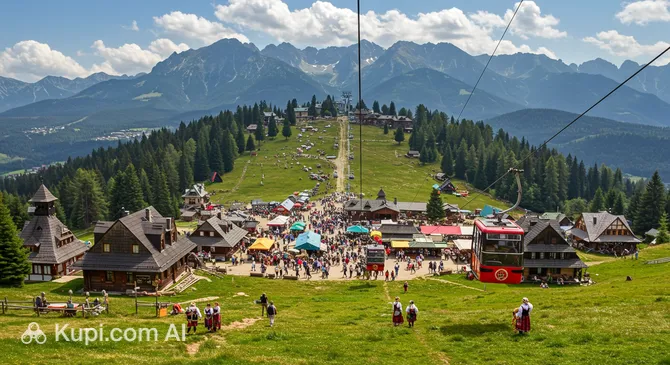
One of the most popular peaks towering over Zakopane is Gubałówka. You can reach its summit (1,126 m) by a modern funicular, a trip that is a small adventure in itself. From the top, breathtaking panoramic views open up over the city, the majestic chain of the Tatras, and the surrounding valleys. On Gubałówka, tourists will find not only observation decks but also plenty of entertainment: a summer toboggan run, rope parks such as Złoty Grań Rope Park Gubałówka or Adventure Park Gubałówka, cafes and restaurants with terraces, as well as a market with local souvenirs. In winter, there are also ski slopes for beginners.
Gubałówka. Illustration.
Source: Kupi.com AI
Traveler photos:
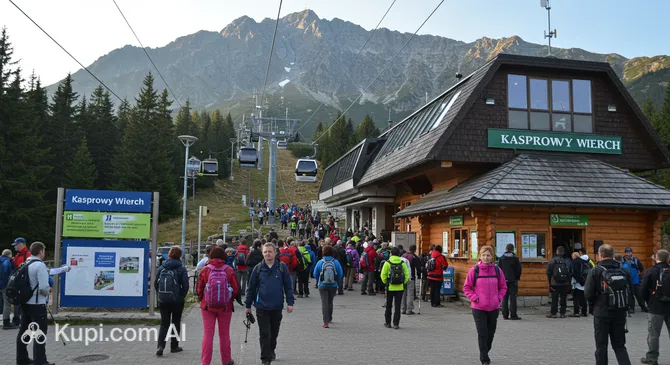
For those who strive to conquer real mountain heights and enjoy alpine landscapes, a mandatory part of the program is the ascent to Kasprowy Wierch (1,987 m) — one of the most famous peaks of the Western Tatras. You can get there by cable car; the Lower station of the Kasprowy Wierch cable car is located in Kuźnice. Traveling in a cabin over forested slopes and rocky gorges will provide unforgettable impressions. At the top, there is a meteorological observatory, a restaurant, and observation decks offering stunning views of the High and Western Tatras, and on a clear day, Slovakia is also visible. Kasprowy Wierch is also the starting point for many hiking trails through the Tatra National Park.
Kasprowy Wierch Cable Car Ground Station. Illustration.
Source: Kupi.com AI
Traveler photos:
Among the many picturesque valleys of the Tatras, the Kościeliska Valley holds a special place. This is one of the most beautiful and easily accessible valleys, ideal for family walks and easy trekking. Its length is about 9 km, and along the way, you will be accompanied by the murmuring of the Kościeliski Potok stream, steep limestone cliffs, lush meadows, and dense forests. The valley is famous for its caves (some of which are open to the public, such as Mroźna, Mylna, Raptawicka), gorges, and rock gates. On the way, you can rest at the Ornak mountain shelter. This is a wonderful place to feel the majesty and tranquility of Tatra nature.
Kościeliska Valley. Illustration.
Source: Kupi.com AI
Traveler photos:
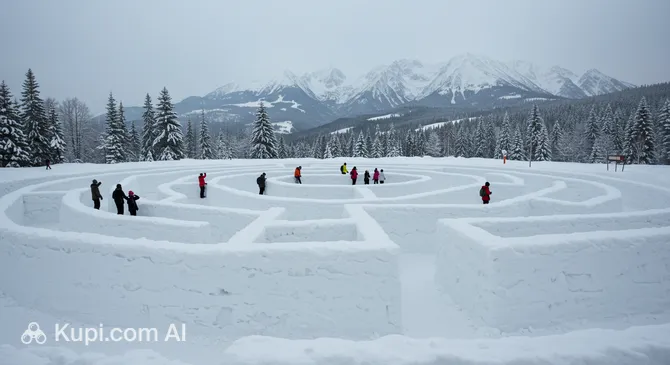
If you visit Zakopane in winter, don't miss the chance to visit a unique place — the Snowlandia Snow Labyrinth. This is the largest snow labyrinth in the world, built annually at the foot of Wielka Krokiew. Walking through its intricate snow corridors will bring plenty of pleasure to both children and adults. In addition to the labyrinth, a snow castle with towers and observation decks, ice sculptures, and sledding hills are usually built on the Snowlandia territory. This is a magical winter activity that will provide vivid emotions and beautiful photos.
Snowlandia Snow Maze. Illustration.
Source: Kupi.com AI
Traveler photos:
Local Cuisine
A gastronomic journey through Zakopane is an essential part of getting to know the culture of this mountain region of Poland. Local cuisine is hearty, aromatic, and based on the centuries-old traditions of the Gorals — the indigenous inhabitants of the Tatras. Dishes here are designed to warm you up and give you strength after an active day in the fresh air, so they are often caloric and very tasty.
The main gastronomic star of Zakopane is undoubtedly oscypek — a traditional smoked sheep cheese in a spindle shape with a characteristic pattern. You can buy it at every turn, especially on Krupówki street, where it is often served grilled with cranberry jam. This is the true taste of the Tatras, which is definitely worth a try! To learn more about this unique product, its history, and the manufacturing process, be sure to visit the Oscypek Museum.
Oscypek Museum. Illustration.
Source: Kupi.com AI
Traveler photos:
Among other dishes that deserve attention is kwaśnica, a thick and rich sauerkraut soup with smoked ribs or other meat. Also popular are moskole — potato pancakes that are fried on a griddle and served with cracklings, sour cream, garlic butter, or goulash. Meat lovers should try mutton in various variations, as well as traditional bigos — stewed cabbage with meat and smoked meats. Don't forget about pierogi — dumplings with a variety of fillings, from potatoes with cottage cheese to meat and berries.
As for drinks, during the cold season, grzaniec — hot beer or wine with spices — is particularly popular. Among alcoholic beverages, local beers and strong tinctures, such as śliwowica (plum brandy), are also noteworthy. Non-alcoholic options include herbal teas, forest berry compotes, and freshly squeezed juices.
Dining culture in Zakopane centers around traditional inns (karczma) — colorful restaurants with wooden interiors, often featuring live Goral music. This is where you can fully feel the atmosphere of the region and try authentic dishes. In addition to inns, you can grab a bite of street food — the same oscypek or grilled sausages. Markets also offer local products, including cheeses, honey, and homemade preserves. The Zakopane gastro scene is a combination of tradition, hospitality, and hearty, warming dishes perfectly suited for a mountain resort.
Travel Tips
Planning a trip to charming Zakopane? To ensure your journey goes smoothly and leaves only pleasant impressions, we have prepared some practical tips. They will help you better navigate the "winter capital" of Poland and enjoy its unique atmosphere.
Clothing and Equipment by Season:
The weather in Zakopane is mountainous and changeable. In winter, warm waterproof clothing, thermal underwear, a hat, gloves, and non-slip shoes are mandatory. In summer, light clothes are useful, but also a raincoat and fleece for cool evenings or mountain hikes. A key element of your wardrobe is comfortable, sturdy walking shoes. Don't forget sunscreen (relevant even in winter due to altitude) and a power adapter (type E).
Getting Around the City and Surroundings:
The center of Zakopane is compact enough for walking. For trips to the start of hiking trails or to neighboring valleys, it is convenient to use local buses and minibuses (busy). Taxis are available, but clarify the cost in advance. Renting a car can be useful for exploring the region, but keep in mind potential parking difficulties in the center, especially in high season.
Financial Matters:
The local currency is the Polish Złoty (PLN). You can exchange money at numerous exchange offices ("kantor") — compare rates. Bank cards (Visa, Mastercard) are accepted in most hotels, restaurants, and shops. ATMs ("bankomat") are easy to find. Tips in restaurants are usually 10% of the bill if you liked the service, and are not automatically included in the bill.
Health and Safety:
Pharmacies ("apteka") are available in the city; some may be open 24/7 (look for the "apteka całodobowa" sign). Arrange travel insurance before your trip. Zakopane is generally a safe city, but observe standard precautions against pickpockets in crowded places like Krupówki Street. In the mountains, always follow marked trails, check the weather forecast, and carry a charged phone. The emergency number is 112.
Language and Communication:
The official language is Polish. In the tourism sector, many speak English, especially the younger generation. However, knowing a few phrases in Polish (e.g., "Dzień dobry" – Good morning, "Dziękuję" – Thank you) will be gratefully received by the locals. Wi-Fi is available in most hotels and cafes. A local SIM card can be purchased at mobile phone shops or kiosks.
Local Etiquette and Traditions:
Poles, and Gorals (local highlanders) in particular, value politeness. It is customary to say hello ("Dzień dobry") when entering a shop or cafe. Try not to be loud in public places. When visiting churches (many of which are wooden and very old), observe silence and respectful behavior; for women, it is advisable to cover shoulders, although a strict dress code is rare.
What to Avoid:
It is strictly recommended not to feed wild animals in the Tatra National Park. Also, avoid going off marked hiking trails without special training and appropriate equipment, especially in winter or when visibility is poor — this can be dangerous.
Useful Life Hack:
To avoid long queues for popular cable cars (e.g., to Kasprowy Wierch or Gubałówka), try to buy tickets online in advance, especially if your trip falls on a weekend or high tourist season. This will save you a lot of time and stress.
We hope these tips make your stay in Zakopane even more comfortable and fulfilling. This hospitable mountain resort awaits you to give you unforgettable moments and bright impressions from your meeting with the Tatras!
Entertainment & Nightlife
When the sun sets behind the majestic Tatras, Zakopane is in no hurry to sleep. The city offers a variety of options for evening and night leisure, capable of satisfying both lovers of quiet gatherings and those looking for a more lively atmosphere. The center of nightlife is undoubtedly the famous Krupówki street and its adjacent alleys, where most bars, restaurants, and clubs are concentrated.
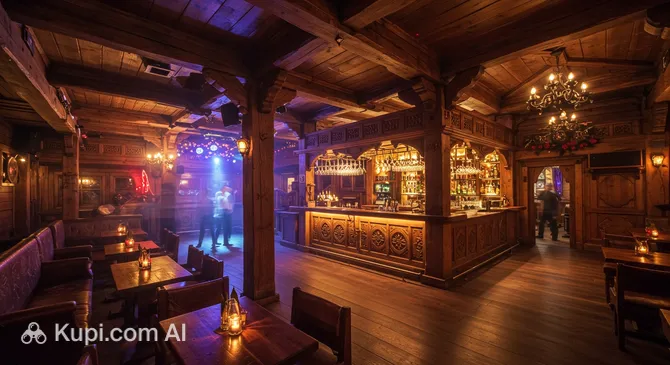
An evening in Zakopane often begins in one of the many traditional inns (karczma), where hearty regional dishes are served during the day, and in the evening the atmosphere becomes more relaxed, sometimes with live Goral music. Many of them stay open until late evening, offering local drinks and snacks. For those who prefer more modern formats, there are stylish bars and pubs. For example, you can stop by LA MANO Specialty Coffee & Wine to enjoy quality coffee or a glass of wine in a cozy setting. As night falls, the doors of clubs open where you can dance to popular music. One such place is Schronisko Krupówki Bistro, offering a club atmosphere right on the main street.
Schronisko Krupówki Bistro. Illustration.
Source: Kupi.com AI
Traveler photos:
The atmosphere in Zakopane's night establishments is usually friendly and relaxed. The crowd is mixed — you can meet tourists from all over the world as well as local residents. Most bars are open until midnight or 1 AM, while clubs can stay open until 3-4 AM, especially on weekends and during the height of the tourist season. The dress code is mostly casual, although some clubs might not let you in if you're wearing overly sporty clothes. Prices in Zakopane's bars and clubs are considered moderate, especially compared to major European capitals; a glass of local beer or a shot will cost a reasonable amount.
Practical tips for nightlife: the best time to visit clubs is after 10:00-11:00 PM, especially on Friday and Saturday. Most establishments are within walking distance in the city center, particularly on Krupówki Street. If you are staying further away, it's convenient to use a taxi at night; it is recommended to order a taxi by phone or through an app to avoid inflated prices. Krupówki Street and the central areas of Zakopane are considered quite safe for night walks, however, as everywhere, you should observe basic precautions and keep an eye on your belongings.
While the main focus of this block is on nightlife, it's worth mentioning that there's plenty to do in Zakopane during the day as well. Besides active mountain recreation, you can visit interesting museums, such as the Oscypek Museum or Kamiland — The History of Kamil Stoch. For families, amusement parks like Park Million of Lights Zakopane or Escape Room Zakopane offer exciting attractions for all ages.
Parks & Museums
Zakopane is not just about ski slopes and the bustling Krupówki street. The city and its surroundings are rich in picturesque natural spots and interesting museums that will help you gain a deeper understanding of the culture and history of this unique region of Poland.
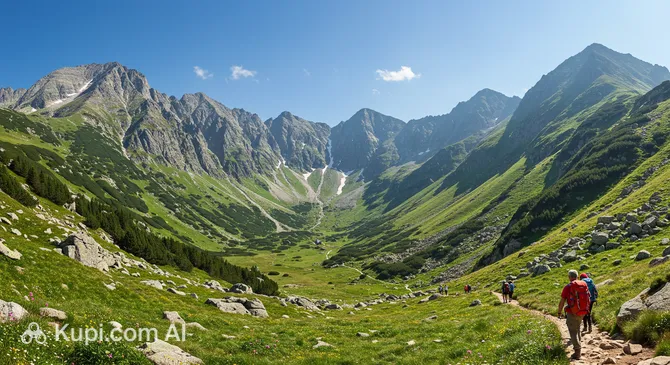
The heart of Zakopane's natural splendor is undoubtedly the Tatra National Park, in whose territory the city is located. Numerous valleys are perfect for walks and communion with nature. Particularly popular are the Kościeliska Valley with its picturesque rock formations and caves, and the Gąsienicowa Valley, which offers breathtaking views of high mountain peaks. Another beautiful place for leisurely walks is Polana Małołączka, offering peaceful landscapes and being part of the national park.
Gąsienicowa Valley. Illustration.
Source: Kupi.com AI
Traveler photos:
To get acquainted with the cultural heritage of Zakopane, it is worth visiting the local museums. A unique experience will be a visit to the Oscypek Museum, where you can not only learn all about the traditional smoked sheep cheese but also see the process of making it. For fans of winter sports, the Kamiland — The History of Kamil Stoch museum, dedicated to the famous Polish ski jumper, will be of interest. Additionally, the city has the Tatra Museum named after Tytus Chałubiński, which tells in detail about the history, ethnography, and nature of the region, as well as numerous villas in the characteristic Zakopane style, many of which, like Villa Koliba, are open to the public as museums.
Oscypek Museum. Illustration.
Source: Kupi.com AI
Traveler photos:
Zakopane's architectural appearance is unique thanks to the so-called Zakopane style, developed by Stanisław Witkiewicz. Examples of this style can be seen everywhere — from wooden villas with elaborate carvings to chapels such as the famous Chapel of the Sacred Heart of Jesus in Jaszczurówka. You should definitely visit the old wooden Church of Our Lady of Częstochowa and the atmospheric Pęksowy Brzyzek Cemetery, where many outstanding figures associated with Zakopane are buried.
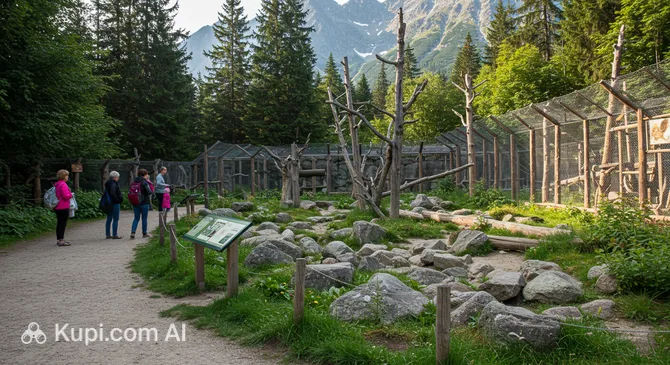
For families with children or simply curious tourists, an interesting place will be the Tatra Educational Park, where you can get to know the flora and fauna of the Tatras in an interactive way.
Tatra Educational Park. Illustration.
Source: Kupi.com AI
Traveler photos:
For a more authentic and secluded experience, head out to explore the less crowded but no less picturesque valleys, such as the Dolina Białego or the Dolina Strążyska. And to feel like a real Highlander, stop by one of the many "bacówka" (shepherd's huts), where you can taste fresh oscypek directly from the producer.
Getting Around
Moving around Zakopane and its surroundings can be done in several ways, although the city center itself is compact enough for walking. The basis of public transport consists of buses and private minibuses (called "busy"). The latter are particularly popular and run on many routes, connecting the center with remote areas, the entrances to the Tatra National Park valleys, and nearby settlements. Schedules may not always be strict, especially for private carriers, which often depart once they are full.
The fare system in Zakopane is quite simple. Bus tickets can usually be purchased from the driver when boarding or at special kiosks (if available at the stop). In minibuses, payment is generally made directly to the driver. The cost of travel depends on the distance and the specific route, but overall it is quite affordable. It is recommended to have small cash on hand for convenience. Long-term passes for tourists are less common, as most use single-trip tickets.
Tourists should note that buses and minibuses run more frequently during the day, especially in the tourist season. In the evening, the number of trips may decrease. Information about routes and approximate schedules can be found at some stops or obtained from local residents. Tickets not purchased from the driver usually need to be validated in special punches inside the bus, if available.
An alternative to public transport is taxis, which can be found at ranks or called by phone. This is a more expensive but also more comfortable way of moving around. Also popular in Zakopane are horse-drawn carriages (dorożki), which offer more of a tourist ride than a fast transfer. During the summer season, in some places, you can rent bicycles to explore the city and the nearest surroundings along less mountainous routes.
A specific feature of Zakopane's transport system, important for tourists, are the funiculars and cable cars. The most famous of these are the funicular to Gubałówka Hill, offering a panoramic view of the Tatras, and the cable car to Kasprowy Wierch, which takes you to one of the main peaks of the Polish Tatras. These are not quite public transport in the traditional sense, but an integral part of the tourist infrastructure, allowing easy access to key viewpoints and the starting points of mountain routes.
Accommodation
In Zakopane, there is a wide range of accommodation options capable of satisfying the needs of any traveler, from budget backpackers to those seeking a luxury vacation. You can find cozy hostels and affordable guesthouses (pensjonaty), which are often decorated in traditional Goral style. There is also a large selection of hotels in various categories — from modest to high-end — and many apartments and villas for rent, which is particularly convenient for families or large groups.
When choosing where to stay in Zakopane, pay attention to its location. The most popular area is undoubtedly the city center, especially around the famous Krupówki street. Shops, restaurants, cafes, and major attractions are concentrated here. For those coming for skiing or hiking, it is convenient to stay in areas closer to the lifts (for example, in the Nosal or Polana Szymoszkowa areas) or to the entrances of the Tatra National Park hiking trails. Many guesthouses and hotels offer beautiful mountain views.
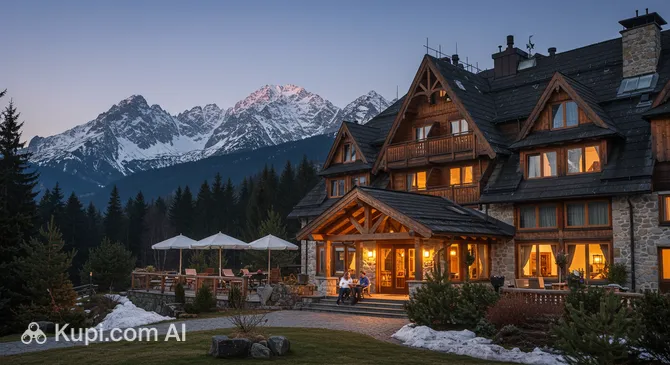
Among the many options, you can find small family-run hotels as well as large hotel complexes with developed infrastructure. For example, those who value comfort and proximity to ski slopes might enjoy Hotel Redyk Ski & Relax. Generally, it is recommended to book accommodation in advance, especially if your trip falls during the peak season — the winter months (December-February) or summer holidays (July-August), as the best options are taken very quickly.
Redyk Ski & Relax Hotel. Illustration.
Source: Kupi.com AI
Traveler photos:
The price range for accommodation in Zakopane varies from very budget-friendly options in hostels and the private sector to luxurious offers in high-end hotels and apartment complexes. You can book accommodation through popular international online booking platforms or directly on hotel websites or by contacting guesthouse owners. Many local travel agencies also offer services for selecting and booking accommodation.
Nearby Cities
For those who want to explore the surroundings, Zakopane serves as an excellent starting point for day trips to several interesting nearby locations:
Among them, Nowy Targ stands out as the closest city to Zakopane (only about 21 km away), known for its lively weekly market and as an important regional center. A trip to majestic Krakow (about 85 km) will allow you to immerse yourself in the atmosphere of one of Europe's most beautiful cities, with its famous Wawel Royal Castle, the huge Main Market Square, and the historical Jewish quarter of Kazimierz. No less interesting is Nowy Sącz (about 66 km), which attracts visitors with its ancient architecture, ruins of a medieval castle, and the picturesque Sącz Ethnographic Park, where you can learn about the traditional lifestyle and culture of this region of Poland.
These nearby destinations provide a more complete picture of the diverse culture, history, and landscapes of the Lesser Poland Voivodeship region.
Shopping & Souvenirs
Shopping in Zakopane is not only an opportunity to buy necessary things but also a fascinating immersion into local culture and traditions. The city is famous for its unique handmade products, Highlander delicacies, and high-quality clothing for outdoor activities. Here you can find both modern retail outlets and colorful markets offering authentic goods.
The main shopping artery of Zakopane is undoubtedly Krupówki street. This lively pedestrian street stretches across the city center and is literally dotted with shops for every taste: from boutiques of famous brands and sports stores to numerous souvenir shops and shops with products from local craftsmen. Walking along Krupówki, you will find everything this region is famous for.
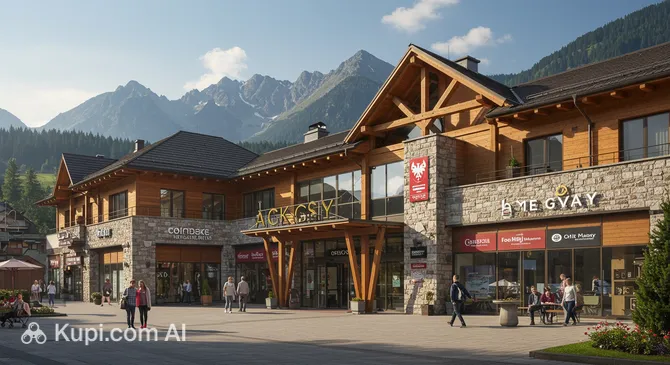
For those who prefer shopping in a more concentrated format, there are several shopping centers in Zakopane. Among them, Krupówki 40 Shopping Center stands out, conveniently located right on the main street and offering a good selection of clothing, footwear, and accessory stores. Another option is the Szymonek Shopping Center, where you can also find a variety of goods.
Krupówki 40 Shopping Center. Illustration.
Source: Kupi.com AI
Traveler photos:
Markets hold a special place in the Zakopane shopping scene. The most famous one is located under Gubałówka hill, near the lower funicular station. This is a true kaleidoscope of local goods: here they sell the famous smoked sheep cheese oscypek, products made from sheepskin and leather, wooden souvenirs, woolen sweaters, socks, and slippers (kierpce), as well as honey, jams, and other local delicacies. It's a great place to feel the atmosphere of a Highlander market and find unique gifts.
What to bring from Zakopane as a souvenir? Of course, oscypek — a traditional smoked cheese made from sheep's milk, which is the gastronomic symbol of the region. Interestingly, the city even has an Oscypek Museum where you can learn about its production. Woodwork handmade products are also popular — from small figurines to traditional Goral hatchets (ciupagi) and carved boxes. Don't forget about warm woolen items — sweaters, hats, mittens, as well as traditional leather slippers called kierpce. Lovers of natural products will appreciate local honey and berry tinctures.
Shops in Zakopane are usually open from 10:00 AM to 6:00-8:00 PM on weekdays and Saturdays. During the tourist season, many shops, especially on Krupówki, may stay open longer. On Sundays and holidays, working hours may be reduced, and some shops may be closed. Regarding payment, most shops, restaurants, and hotels accept bank cards (Visa, Mastercard). However, in markets and small souvenir shops, it's preferable to have cash in Polish Złoty (PLN).
For tourists from countries outside the European Union, there is a possibility of a Value Added Tax (VAT) refund through the Tax Free system. Look for shops with the corresponding logo. To get a refund, you must make a purchase of a certain amount in one store, ask the seller for a special Tax Free receipt, and present it together with the goods at customs when leaving the EU.