Support

Museum of Islamic Art

About

The Museum of Islamic Art is one of the main cultural attractions in Doha, the capital of Qatar. It rises majestically on an artificial island off the Corniche, offering panoramic views of the modern skyline. The museum building itself is a work of art and an architectural gem, designed by the world-renowned architect I. M. Pei, the creator of the Louvre Pyramid.
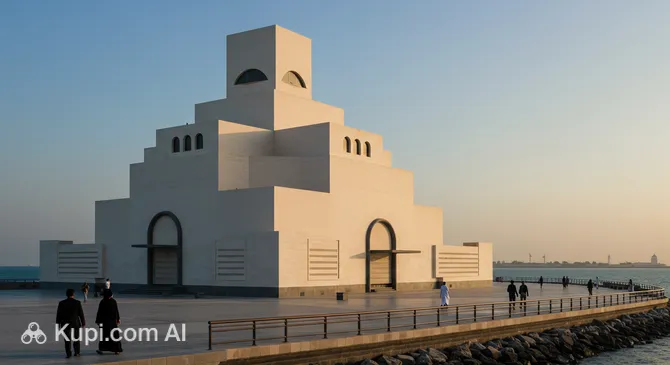
Museum of Islamic Art. Illustration.
Source: Kupi.com AI

Traveler photos:

The architect, who was 91 years old at the start of the project, traveled through Muslim countries in search of inspiration. As a result, the building's appearance combines Islamic architectural traditions with modern style. The interior design of the galleries was developed by a team led by French architect Jean-Michel Wilmotte. The total area of the museum is about 45,000 m², and a picturesque park stretches around it.

Inside, across several floors, is one of the world's most comprehensive collections of Islamic art, spanning 1,400 years of history on three continents. Visitors can see rare manuscripts, ceramics, metalwork, glasswork, jewelry, and textiles collected from various countries—from Spain and Egypt to Iran and India. In addition to the exhibition halls, the museum houses a library, a research institute, and an education center.

Contacts

To plan your visit, check current information about exhibitions, or ask questions, you can contact the Museum of Islamic Art representatives directly. Key contact details are available below, and additional information can be found on the official website.

How to contactContact
AddressDoha, Qatar
Phone number+974 4422 4444
Websitewww.mia.org.qa

What to Do

A visit to the Museum of Islamic Art is a true immersion into history and culture. Its halls house one of the world's largest collections, spanning the period from the 7th to the 19th century. You can see rare manuscripts, exquisite ceramics, luxurious fabrics, as well as unique items made of metal, glass, wood, and precious stones. The exhibition showcases the richness of Islamic art from various parts of the world—from Spain to India and China—allowing you to trace the development of cultural traditions over centuries.

The museum offers more than just a tour of the permanent collection. Regular themed tours and educational programs are held for visitors, helping them to better understand the context and significance of the masterpieces on display. Additionally, temporary exhibitions featuring unique collections from around the world are frequently hosted here. For those wishing to deepen their knowledge, the doors of the modern library and research center are open.

After exploring the art, you can relax and share your impressions at one of the museum's venues. The IDAM restaurant is located on the top floor, serving fine French and Mediterranean cuisine with Arabic influences. If you prefer a more casual setting, there is a cozy café with a beautiful view of the bay, where you can have coffee and enjoy a dessert.

Getting There

Getting to the Museum of Islamic Art is quite simple, as it is located in the heart of Doha. The museum sits on an artificial island connected to the picturesque Corniche promenade by a pedestrian bridge. If you are in the city center, a pleasant walk to the museum will take about 15–20 minutes. You can also use public transport—the nearest bus stops are located right on the promenade. The closest metro station is National Museum (Gold Line), which is within walking distance of the museum.

For those who prefer comfort, taxis or ride-sharing services are an excellent choice. The trip from most central areas of the city will be quick and affordable. If you arrive by private or rental car, there is ample parking near the museum, although it is worth noting that spaces can fill up quickly, especially on weekends. Additionally, many Doha sightseeing tours include the Museum of Islamic Art in their itinerary, making it a convenient option for tourists wanting to cover several attractions in one day.

Nearest city: Doha

History & Facts

The history of the Museum of Islamic Art is a story of grand vision and a painstaking search for inspiration. The idea was born in the early 21st century, and the legendary architect I. M. Pei was invited to bring it to life. To capture the spirit of the future project, he embarked on an extensive journey through Islamic countries, studying centuries-old architectural traditions. This allowed him to create a building that would be not just a repository for artifacts, but a true symbol of cultural heritage.

During his search, the architect found the prototype for the future museum in Cairo. It was the elegant 9th-century sabil (ablution fountain) located in the courtyard of the Mosque of Ibn Tulun. This ancient structure inspired Pei to create a unique cubic composition, combining clean lines and elegant forms. Construction took place from 2004 to 2006, and on December 8, 2008, the museum first opened its doors to the public, instantly becoming an architectural icon.

The museum was conceived not only as an exhibition space but also as a symbol of national pride and an important cultural addition to Doha's skyline. Leading world experts in art, architecture, and museum studies were involved in its creation. Thanks to their joint efforts, the Museum of Islamic Art quickly became one of the world's leading cultural centers and a true landmark of Qatar, attracting art lovers from all corners of the globe.

Time Needed

When planning a visit to the Museum of Islamic Art, you should aim for a duration of 2 to 3 hours. This is generally enough time for a leisurely exploration of the main exhibition, which spans 14 centuries of history and art across three continents. During this time, you will have a chance to see the main galleries featuring rare manuscripts, ceramics, textiles, and jewelry, as well as appreciate the architecture of the building itself.

If you want a deeper immersion, the length of your visit may increase. For example, it is worth setting aside extra time to explore temporary exhibitions, which are often brought in from leading museums around the world. There is also a library with rare books on-site, a cozy café overlooking the bay, and the scenic MIA Park, where a stroll is an excellent addition to your cultural program. Therefore, to fully experience all the museum has to offer, including relaxation and visiting additional facilities, you can easily plan for about half a day.

Working Hours

When planning your visit to the Museum of Islamic Art, it is important to consider its opening hours. The museum is open to visitors daily from 9:00 AM to 7:00 PM, except for Tuesdays, when it is closed. Also, please note that on Fridays the opening hours change: the museum opens its doors to guests from 1:30 PM and remains open until 7:00 PM. It is highly recommended to check the current schedule on the official website before your trip, as it may change during public holidays.

DayOpening hours
Monday9:00 – 19:00
Tuesday9:00 – 19:00
WednesdayClosed
Thursday9:00 – 21:00
Friday1:30 – 19:00
Saturday9:00 – 19:00
Sunday9:00 – 19:00

Nearby

A visit to the Museum of Islamic Art is just one part of a fascinating journey through central Doha. Exploring the surrounding area will allow you to dive deeper into the city's atmosphere and see how modernity intertwines with tradition. Many other interesting sites are located near the museum—from picturesque parks and promenades to iconic monuments and cultural landmarks.

Exploring nearby attractions will enrich your experience and make your trip more fulfilling. Many of them are within walking distance, making it easy to plan a full-day itinerary by combining a museum visit with other iconic locations in the capital of Qatar.

NameDistance
MIA Park0.4 km
Crossroads Club0.7 km
Maharlika Night Club0.7 km
The Pearl Monument0.7 km
Flag Plaza0.7 km
Box Park1.2 km
National Museum of Qatar1.3 km

Have you reached the end of the page?

So the route has been studied inside and out