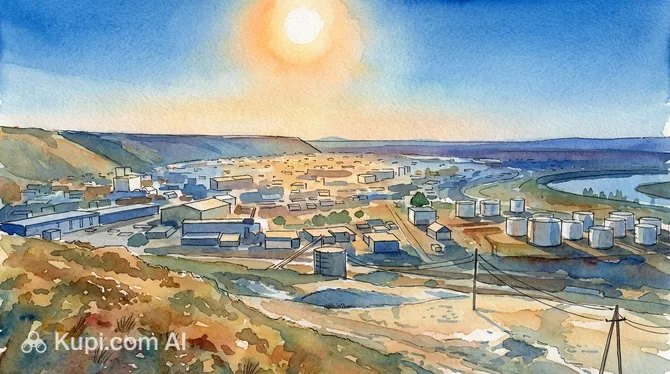
Batagay is a destination where the concept of "parks" transcends manicured lawns and flowerbeds, replaced instead by the raw, majestic expanse of the Siberian taiga. While the town itself is small and functional, its surroundings serve as a vast natural playground for those willing to explore. Culturally, the settlement takes pride in preserving the deep history of the Verkhoyansk district, offering visitors a chance to connect with both the ancient past and the resilient spirit of the North.
Natural Areas and Green Spaces
The most significant natural site is undoubtedly the Batagaika Crater. While technically a geological formation rather than a traditional park, it functions as the area's primary open-air reserve. Visitors can hike along the rim of this massive thermokarst depression, often called the "Gateway to the Underworld." It offers a humbling perspective on the power of nature, with its exposed permafrost walls and a unique microclimate that attracts researchers and eco-tourists alike.
For a more serene experience, the Banks of the Yana River provide a natural setting for relaxation. In the short but warm summer months, the riverbank becomes a popular spot for locals and visitors to enjoy picnics, fishing, or simply watching the water flow against the backdrop of the Verkhoyansk Range. It is an unrefined, authentic riverside area where you can breathe in the crisp, clean air of the subarctic.
Although located further afield, the Kisilyakh Mountains are often accessed via the region's transport networks. Known as the "Stone People" due to their pillar-like rock formations, these mountains are considered sacred by the Yakut people. They act as a spiritual natural park where visitors can trek among the mysterious stone giants that dominate the landscape.
Museums and Galleries
The cultural heart of the town is the Verkhoyansk District Museum of Local Lore. This institution is surprisingly rich for such a remote location, housing collections that span from the prehistoric era to the modern day. The paleontology section is particularly captivating, featuring fossilized remains of woolly mammoths, bison, and ancient horses discovered in the local permafrost. It is a must-visit for anyone interested in the Ice Age history of the Russian Federation.
The museum also dedicates significant space to Ethnography and Local History. Exhibits here showcase the traditional lifestyle of the Sakha (Yakut) people, displaying clothing, hunting tools, and household items that demonstrate centuries of adaptation to the extreme cold. Additionally, the museum provides a sober look at the town's industrial origins in the 20th century, offering context to the development of this northern outpost.
Historical Sites and Monuments
Within the town limits, the Victory Square (Ploshchad' Pobedy) serves as a central gathering place and a site of remembrance. Like many Russian settlements, Batagay honors those who fought in World War II with a modest but well-maintained memorial complex. It is a quiet, contemplative space often adorned with flowers, providing a small urban green zone for a peaceful walk.
Insider Tips
If you visit the museum, ask the guides about the "Batagay foal," a perfectly preserved ancient horse found in the crater; their stories bring the exhibits to life in a way that placards cannot. Also, when exploring the natural areas, keep in mind that the "parks" here are true wilderness—always carry insect repellent in summer and dress warmer than you think necessary, as the weather can change rapidly.