Support

Deputatsky

About

Deputatsky is a remote urban locality situated in the Sakha Republic (Yakutia), a region known for its extreme climate and breathtaking wilderness. Located within the Russian Federation, this settlement offers intrepid travelers a rare opportunity to experience life north of the Arctic Circle. It serves as a fascinating example of human resilience in one of the harshest environments on Earth.

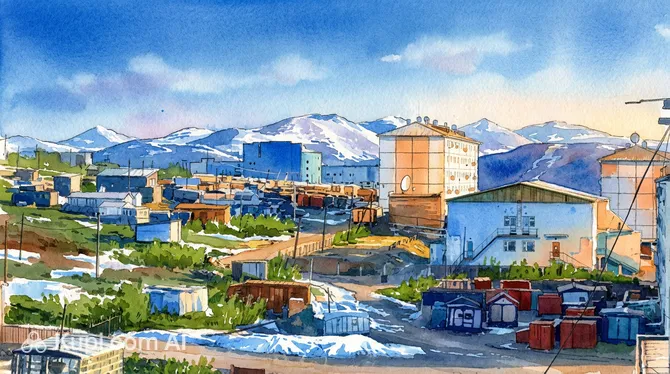
Nestled in the valley of the Deputatka River and surrounded by the rugged peaks of the Selennyakh Range, the town is defined by its dramatic natural setting. With a population of approximately 2,600 residents, it maintains a quiet atmosphere amidst the vast tundra. The local climate is severe, characterized by long, cold winters and short, cool summers, typical of the high latitudes.

Deputatsky. Source: Kupi.Binoculars

The settlement was originally founded as a mining center, and the industrial heritage remains a visible part of its identity. Visitors interested in how this community developed in such a challenging environment can delve into the history of Deputatsky. Beyond its past, the area attracts those looking for Arctic adventures, offering stunning views of the northern lights in winter and the phenomenon of the midnight sun during the summer months.

While it is not a typical tourist resort, Deputatsky serves as a gateway to the wild beauty of Northern Yakutia. It is an ideal destination for travelers seeking off-the-beaten-path experiences and the raw, untouched majesty of the North.

Weather Overview

Travelers planning a trip to this remote settlement must be prepared for an extreme subarctic climate. The weather in Deputatsky is characterized by long, bitterly cold winters and very short, cool summers. January is typically the coldest month, with average temperatures plummeting to -34.4°C and minimums reaching as low as -36.7°C.

The summer season offers a brief respite from the freezing conditions, though it remains cool by most standards. June is generally the warmest month, with an average temperature of 11.6°C and highs peaking around 15.9°C. Precipitation is remarkably low year-round, often recording between 0mm and 2mm per month, resulting in a very dry environment despite the cold.

Interesting Facts

Beyond its reputation as a remote northern outpost, Deputatsky holds a fascinating history of industrial ambition and resilience in the face of nature. This settlement is not just a point on the map but a living "time capsule" of the Soviet era's drive to conquer the Arctic.
  • The "Deputy" Connection: The settlement's unusual name, which translates to "Deputy's," is rooted in Soviet history. It was named in honor of the elections to the Supreme Soviet, as the rich tin deposit that led to the town's founding was reportedly discovered on the eve of this significant political event. This name serves as a permanent reminder of the era in which the town was born.

  • A City on Stilts: Due to the unstable permafrost beneath the ground, traditional foundations are impossible here. Almost all large buildings in Deputatsky are constructed on concrete stilts to prevent the heat of the structures from melting the frozen soil below. Additionally, visitors will notice a complex web of utility pipes running above ground rather than buried, giving the town a distinct, industrial appearance.

  • The Tin Legacy: Deputatsky was established to exploit one of the largest tin deposits in the world. In its heyday, the logistics of transporting the ore were incredibly complex, involving a journey by truck to the river port of Ust-Kuyga on the Yana River, then by barge down the river to the Arctic Ocean. The immense cost of this transport route is a major reason why the industry eventually scaled back.

  • Industrial Landscape: The town's surroundings offer a striking visual narrative of the region's history. As the mining operations reduced in scale, the population decreased, leaving behind vast industrial zones that now encircle the inhabited areas. These silent structures and machinery stand as rugged monuments to the engineering efforts that once powered this isolated community.

  • The "Road of Life": For much of the year, Deputatsky is effectively an island in the tundra. While there is a small airport, heavy supplies often arrive via "zimniks"—temporary winter roads made of compacted snow and ice that are only passable during the coldest months. When the spring thaw arrives, the settlement becomes cut off from ground transport, turning the local airport into the sole lifeline to the outside world.

How to Get There

Reaching this isolated settlement is a true Arctic adventure that requires careful planning. Due to its location north of the Arctic Circle, Deputatsky is not connected to the main federal road network or the railway system. For a comprehensive guide on logistics, you can read more about how to get to Deputatsky.

The most reliable and common way to arrive is by air. There are no direct international flights to the settlement; travelers must first fly to Yakutsk, the capital of the Sakha Republic. From Yakutsk, regional carriers operate regular flights to the local Deputatsky Airport. These flights typically take a few hours, though schedules can be heavily influenced by the unpredictable northern weather.

Overland travel is strictly seasonal and considered an extreme undertaking. There are no railway stations in the vicinity. During the long winter, the settlement is accessible via a "zimnik"—a temporary winter road made of compacted snow and ice—that connects it to the river port of Ust-Kuyga. In the summer, ground access is virtually impossible for standard vehicles, leaving air travel as the primary lifeline for the community.

Main Attractions

While Deputatsky is primarily an industrial settlement rather than a traditional tourist hub, it offers a unique set of attractions for those venturing into the deep Arctic. The town’s appeal lies in its stark, rugged beauty and its history as a mining stronghold. Visitors here are typically those seeking extreme travel experiences, industrial heritage, and the untouched wilderness of the North.

The settlement is spectacularly situated in the foothills of the Selennyakh Range. These mountains provide a dramatic backdrop to the town, creating a landscape that is both harsh and mesmerizing. For nature enthusiasts and photographers, the surrounding hills offer panoramic views of the vast Yakutian tundra. Hiking here is an adventure into the wild, where one can witness the raw beauty of the subarctic environment, though it requires preparation for the unpredictable weather.

The history of Deputatsky is inextricably linked to the Mining and Processing Plant (GOK). Once one of the largest tin mining operations in the region, the industrial zone now stands as a monumental testament to the ambition to conquer the North. For fans of industrial tourism and photography, the massive structures and the open-pit mine offer a striking, if somewhat melancholic, atmosphere. It is a powerful visual reminder of the human effort invested in this remote region.

Located in the "Arktika" microdistrict, the Memorial to the Participants of the Great Patriotic War is the settlement's primary cultural monument. This site serves as a place of remembrance and respect for the local residents who served. It is a well-maintained landmark that reflects the community's pride and resilience, offering visitors a moment of reflection amidst their journey through the settlement.

One of the most compelling reasons to visit this latitude is the sky itself. In winter, Deputatsky is a prime location for viewing the Aurora Borealis (Northern Lights), which dance vividly over the dark mountain silhouettes. Conversely, during the short summer, the phenomenon of the Midnight Sun means daylight persists for 24 hours, allowing for surreal nighttime explorations of the surrounding nature.

Local Cuisine

The culinary landscape of Deputatsky is deeply influenced by its remote location and the harsh subarctic climate. In this part of Yakutia, food is not just about flavor; it is a vital source of energy and warmth. The local diet relies heavily on protein and fat to combat the extreme cold, resulting in a cuisine that is hearty, natural, and unique to the North. Visitors should not expect haute cuisine restaurants but rather simple, authentic dishes prepared with ingredients sourced directly from the surrounding tundra and rivers.

The most iconic dish to try in this region is stroganina. This Northern delicacy consists of long, thin slices of frozen raw fish, typically whitefish such as broad whitefish (chir) or muksun, caught in the pristine Arctic rivers. Served on ice, it is eaten by dipping the frozen curls into a mixture of salt and black pepper. Another popular variation is Indigirka salad, which features diced frozen fish mixed with onions, oil, salt, and pepper. These dishes are not only delicious but are also considered essential for maintaining health during the long, dark winters.

Meat also plays a central role in the local diet, with reindeer meat (venison) being a staple. It is prepared in various ways, from rich stews and soups to fried cutlets. Reindeer meat is lean, tender, and packed with nutrients. In keeping with Yakutian traditions, horse meat is also consumed, often served boiled or as part of traditional sausages. These meats are prized for their high quality and distinct flavor, owing to the animals grazing on natural vegetation in the wild.

When it comes to beverages, locals rely on drinks that provide vitamins and warmth. Mors, a refreshing juice made from local berries like lingonberries (cowberries) or cloudberries, is very common. These berries are gathered from the tundra in late summer and stored for the winter, providing a crucial source of Vitamin C. Hot black tea, often enjoyed with milk, is the standard drink to accompany almost every meal and social gathering, serving as a necessary comfort against the freezing temperatures outside.

The food culture in Deputatsky is centered around hospitality and home cooking. Due to the small size of the settlement, there is no extensive network of restaurants. Instead, dining out is usually limited to a few local canteens or small cafes that serve straightforward, home-style Russian and Yakutian meals. For tourists, the best culinary experiences often come from being invited to a local home or participating in a meal after an outdoor excursion, where the food is shared communally and reflects the genuine warmth of the people living in the North.

Travel Tips

Visiting Deputatsky is an expedition into the true North, where thorough preparation makes the difference between a struggle and an unforgettable adventure. Here are some practical tips to help you navigate the unique challenges and experience the warm hospitality of this remote Yakutian settlement.

  1. Dress for the Arctic. The climate here is unforgiving. In winter, you need professional-grade gear: thermal base layers, fleece mid-layers, a heavy down parka, and insulated boots rated for temperatures below -40°C. In summer, bring a windbreaker and sturdy hiking boots. Most importantly, during the warmer months, pack high-quality insect repellent and a mosquito net hat, as the tundra insects can be intense.
  2. Navigate on foot. Deputatsky is a small settlement without a public transport network like buses or trams. Most places are within walking distance. For travel to the airport or excursions outside the town, you will need to rely on private arrangements with locals or informal taxi services, as standard car rental agencies do not exist here.
  3. Cash is king. While digital payments are spreading, reliance on them in the Arctic is risky due to potential connection issues. Bring a sufficient supply of Russian Rubles (RUB) in cash, preferably obtained in a larger city like Yakutsk before your flight. ATMs may be scarce, unreliable, or unable to process international cards.
  4. Pack a comprehensive medical kit. The local pharmacy may have limited stock and is not open 24/7. Bring a full supply of any prescription medications you need, along with basics for colds, pain relief, and digestion. Be hyper-aware of frostbite symptoms in winter; never leave skin exposed for long periods.
  5. Bridge the language gap. English is rarely spoken in this region. It is essential to learn a few basic phrases in Russian. Since mobile data can be spotty, download an offline translation app and offline maps to your phone before you arrive. A SIM card from a major national operator (purchased in Yakutsk) offers the best chance of coverage.
  6. Respect home etiquette. If you are invited into a local's home—a common occurrence given the region's hospitality—you must remove your shoes at the entrance. Walking inside with outdoor shoes is considered very rude and impractical due to the snow and mud. Bringing a small gift, like tea or sweets, is a appreciated gesture.
  7. Avoid industrial risks. Do not wander into abandoned mining structures or derelict buildings surrounding the town. These sites are unstable and unsafe. Additionally, avoid walking far into the tundra alone without a guide, as the weather can shift instantly and wildlife, including bears, poses a real danger.
  8. Manage the light. If you visit in summer, bring a high-quality sleep mask to help you rest during the Midnight Sun, when daylight persists for 24 hours. Conversely, if visiting in winter, a powerful, reliable flashlight or headlamp is mandatory, as the polar night leaves the town in darkness for much of the day.

With the right gear and a respectful mindset, your trip to Deputatsky will be a safe and rewarding journey into the resilience of the North. Embrace the silence of the tundra and the unique lifestyle of the locals for a travel experience unlike any other.

Entertainment & Nightlife

Entertainment and nightlife in Deputatsky are defined by the settlement's small size and its remote Arctic location. Unlike bustling cities with neon-lit districts and sprawling club scenes, the "nightlife" here is intimate, community-focused, and centered around warmth and hospitality. For travelers, the evening experience is less about hopping between bars and more about enjoying a hearty meal in a cozy atmosphere or witnessing the spectacular natural light shows of the North.

The social hub of the settlement is the Arktika Microdistrict, where most of the local activity is concentrated. In a town of this size, there are no designated "party streets," but this central area serves as the gathering point for residents. The atmosphere in local venues is casual and welcoming; there is no strict dress code, though practical, warm clothing is the standard. Evenings here are a time to escape the biting frost, share news, and enjoy hot food and drinks in good company.

For those looking to spend an evening out, Cafe Prestige is one of the primary spots in town. Located in the Arktika Microdistrict, it functions as a versatile venue—serving as a dining place during the day and a social gathering spot in the evenings. It is a place where you can enjoy substantial Russian and Yakutian dishes while mingling with locals. On weekends or holidays, the atmosphere can become quite lively, often with music and celebrations that reflect the close-knit nature of the community.

Beyond the main venue, the settlement features other small eateries and local canteens that offer a comfortable setting for a relaxed dinner after a day of exploring the tundra. While these spots are primarily places to eat, in small northern settlements, they often double as entertainment venues where birthdays, local events, and casual get-togethers take place. Visitors should expect a modest, home-like vibe rather than a high-energy club environment.

The most breathtaking "nightclub" in Deputatsky, however, is the sky itself. During the long winter nights, the settlement becomes a prime viewing platform for the Aurora Borealis. Stepping just outside the illuminated area of the microdistricts offers a front-row seat to the Northern Lights. The best time to see them is on clear, crisp nights from September to April. Conversely, in summer, the "nightlife" takes place under the Midnight Sun, allowing for surreal evening walks or photography sessions at 2:00 AM in broad daylight.

Regarding daytime entertainment, options are limited but authentic. The local Cultural Center (Dom Kultury) often hosts concerts, exhibitions, and events celebrating national holidays or local talent. For active travelers, the settlement has a sports complex that serves as a center for recreational activities, which are vital for maintaining morale during the polar winter. Exploring the surrounding hills on skis or snowmobiles is the most popular form of "entertainment" for those with an adventurous spirit.

Practical Advice for Night Outs:

  • Timing: Venues in Deputatsky do not stay open until dawn like in major capitals. It is best to head out for dinner and drinks around 7:00 PM, as many places may close by 10:00 PM or 11:00 PM.
  • Safety: The settlement is generally very safe in terms of crime, but the environment poses real risks. Never walk alone outside the town limits at night due to the danger of frostbite and wildlife, including bears (in warmer months) and wolves.
  • Transport: There is no Uber or official taxi service app. Getting around is mostly done on foot within the microdistricts. If you need to go further, you must rely on private arrangements with locals or your host.
  • Payment: Always carry cash (Rubles). While some places might accept cards or transfers, internet connection failures can happen, and cash remains the most reliable method of payment.

Parks & Museums

In Deputatsky, the concept of a "park" expands to encompass the vast, unfenced wilderness that surrounds the settlement, while its cultural venues are intimate spaces dedicated to preserving the memory of life in the High North. Visitors here will not find manicured botanical gardens or sprawling art complexes; instead, the town offers a raw connection to nature and a poignant look at the industrial history that forged this community in the permafrost.

Key Parks and Natural Areas

The true green space of Deputatsky is the Endless Tundra that begins right where the pavement ends. Unlike enclosed city parks, this is a boundless natural reserve characterized by rolling hills, mossy ground, and dwarf shrubs. During the brief summer, the tundra transforms into a vibrant carpet of wildflowers and berries, offering a unique environment for hiking and photography. It is a place of profound silence and fresh air, where one can experience the solitude of the Arctic.

For a scenic walk closer to the settlement, the Banks of the Deputatka River provide a natural escape. In the warmer months, locals often visit the riverside for picnics and fishing. The valley offers protection from the winds and provides stunning views of the surrounding Selennyakh Range. It is a rugged, unmaintained natural area that serves as the community's primary recreational ground for outdoor activities.

Museums and Cultural Venues

The cultural heart of the settlement is the Deputatsky Cultural Center (Dom Kultury). As in many remote Russian towns, this venue serves as the focal point for all artistic and social life. It frequently hosts exhibitions of local handicrafts, photography displays showcasing the beauty of Yakutia, and small historical collections that narrate the story of the town's founding. It is the best place to meet residents and learn about the traditions of the indigenous peoples of the North.

While there is no large formal museum, the settlement itself functions as a living Open-Air Museum of Industrial History. The town was built for the Deputatsky GOK (Mining and Processing Plant), and the massive industrial structures that loom over the landscape tell the story of Soviet geological ambition. For visitors interested in history and engineering, simply walking through the town offers a visceral lesson in the challenges of building a civilization on permafrost.

Historical and Architectural Sites

The most significant historical landmark within the urban area is the Memorial to the Participants of the Great Patriotic War. Located centrally, this monument is meticulously maintained by the locals and serves as the venue for annual commemorations. It stands as a solemn reminder that even in the most remote corners of the country, the memory of historical sacrifices is deeply cherished.

Architecturally, the town is notable for its Stilt Architecture. To prevent the heat of the buildings from melting the frozen ground beneath, large apartment blocks are elevated on concrete piles. This engineering solution gives the streets a distinctive look, with utility pipes running overhead rather than underground, creating a unique "sci-fi" industrial aesthetic that defines the town's character.

Authentic Experiences

For a truly local experience, venture out to the tundra edges in late summer to try Cloudberry Picking. These amber-colored berries are a local treasure, rich in vitamins and flavor. It is a meditative activity that connects you with the land and offers a taste of the subsistence lifestyle that is still relevant in the Arctic today.
Getting Around

Given the compact size and remote nature of Deputatsky, the public transport system differs significantly from what travelers might expect in larger cities. There is no metro, tram, trolleybus, or fixed-route municipal bus network operating within the settlement itself. The urban area is sufficiently small that most daily errands and commutes are accomplished entirely on foot. The infrastructure is designed for pedestrians, though visitors should be mindful of the above-ground utility pipes that occasionally cross pathways.

For distances that are too far to walk, particularly during the extreme cold of winter, the primary alternative is the local taxi service. These are typically not branded vehicles from large international chains but rather private cars operated by locals. There are no ride-hailing apps like Uber or large dispatch centers. Instead, taxis are usually summoned by calling specific local mobile numbers that can be found on notice boards in shops or by asking hotel staff and residents. It is an informal system driven by community connections.

The payment system in Deputatsky is strictly traditional. Travelers should not expect to use travel cards, contactless payments, or mobile apps for transport. Cash is the only reliable method of payment. Prices for rides within the settlement are generally fixed at a flat rate or negotiated before the journey begins. It is essential to carry small denominations of the local currency, as drivers may not always have change for large banknotes.

A specific transport arrangement exists for the connection between the settlement and Deputatsky Airport. While there may not be a scheduled express bus, shuttle services or shared taxis (minivans) often coordinate with flight arrivals and departures. Since flights can be irregular due to weather, these transport options are fluid and responsive to the actual flight schedule. It is highly recommended to arrange your airport transfer in advance through your host or accommodation provider to ensure a seat.

A unique feature of transport in this Arctic region is the seasonal shift in vehicle types. During the long winter months, when the roads and surrounding tundra are covered in deep snow, standard cars may be replaced or supplemented by snowmobiles and specialized all-terrain vehicles (such as "Trekols" with massive low-pressure tires). While not "public transport" in the conventional sense, hiring a local guide with such a vehicle is often the only way to travel outside the immediate settlement limits to explore the surrounding wilderness.

Accommodation

Accommodation options in Deputatsky are quite limited, reflecting its status as a remote industrial settlement rather than a mainstream tourist destination. Visitors should not expect the variety found in larger cities; there are no international chains, luxury resorts, or sprawling hostel networks here. Instead, the hospitality sector consists primarily of a few small, functional hotels and guest houses designed to accommodate workers, business travelers, and the occasional adventurer. The facilities are generally basic but provide the essential warmth and comfort needed in the harsh Arctic climate.

The most convenient area to stay is within the central Arktika Microdistrict. Given the compact nature of the settlement, staying here places you within walking distance of the main shops, the cultural center, and the administrative buildings. This central location is particularly advantageous during the winter months, minimizing the time spent outdoors in extreme temperatures when moving between your accommodation and local amenities.

For those planning a visit, it is crucial to understand that booking in advance is not just a tip but a necessity. Due to the scarcity of rooms, the few available spots can be fully booked by visiting specialists or work crews for weeks at a time. Unlike in other destinations where you might find a last-minute deal, arriving in Deputatsky without a reservation carries the real risk of having nowhere to stay.

In terms of pricing and logistics, accommodation in the North tends to be more expensive than one might expect for the level of comfort provided, due to the high costs of maintaining buildings in the Arctic. Mid-range prices are standard for basic rooms. Booking methods are often traditional; while some information might be found online, reservations are frequently made via direct phone calls. Be prepared to pay in cash upon arrival, as card terminals may be unreliable or unavailable.

Nearby Cities

For those looking to explore the surroundings, Deputatsky serves as an excellent base for day trips to several interesting nearby locations:

City Population Distance (km)
Belaya Gora 10,000 265
Ust-Nera 9,148 547
Khandyga 6,796 767
Tiksi 5,700 488
Susuman 4,760 815

Given the vast scale of Yakutia and the lack of connecting roads, visiting these neighbors often requires careful planning or air travel, but they offer unique insights into life in the Far North. Tiksi is one of the most compelling destinations in the region. Situated on the coast of the Laptev Sea, it is known as the "Sea Gate of Yakutia." Visitors here can experience the true atmosphere of the Arctic Ocean, witness the stark beauty of the tundra meeting the sea, and learn about the history of polar aviation and exploration.

Another notable location is Ust-Nera, located on the banks of the Indigirka River. Surrounded by the majestic mountains of the Chersky Range, it is a historic center for gold mining. The town offers a rugged industrial aesthetic set against a backdrop of breathtaking natural scenery, making it an interesting stop for those fascinated by the geology and human history of the Kolyma region.

These nearby destinations offer a glimpse into the diverse culture and landscapes of the region.

Shopping & Souvenirs

Shopping in Deputatsky is a reflection of its remote, industrial nature. Visitors should not expect sprawling shopping malls, luxury boutiques, or international brand chains. Instead, the retail experience here is purely functional, designed to meet the survival and daily needs of the local population living in the High North. For tourists, "shopping" is less about leisure and more about acquiring essential supplies, warm clothing, or unique local foodstuffs that define the Yakutian diet.

There is no designated "shopping mile" or pedestrian commercial street in the traditional sense. The retail activity is concentrated almost entirely within the central Arktika Microdistrict. This compact urban core houses a collection of small grocery stores, household goods shops, and pharmacies located on the ground floors of residential buildings or in standalone utilitarian structures. Everything is within walking distance, making it easy to find what is available, though the variety of goods is limited by the complex logistics of northern delivery.

Large shopping malls do not exist in Deputatsky. The closest equivalent would be small, multi-purpose trading centers (often called "Torgovyy Tsentr") that gather various counters under one roof. In these establishments, you might find a mix of clothing, electronics, and dry goods sold side-by-side. The selection is heavily seasonal; for example, during winter, the focus shifts almost entirely to heavy insulation, felt boots, and heaters.

While there is no grand central bazaar, the concept of a "market" exists informally and is vital to the town's culinary life. Local fishermen and reindeer herders often sell their produce directly. This is the best place to find the true treasures of the North: fresh or frozen river fish (such as muksun, chir, and nelma) and reindeer meat. In late summer and autumn, locals also sell freshly gathered berries like lingonberries and cloudberries, which are potent sources of vitamins.

For souvenirs, travelers should look for items that are practical and culturally significant to the Sakha Republic. The most prized purchase is often a pair of unty—traditional high boots made of reindeer or horse fur, decorated with intricate beadwork. These are not just souvenirs but essential gear for the extreme cold. Other authentic gifts include carved mammoth bone or reindeer antler crafts, which are traditional art forms in Yakutia, as well as vacuum-packed smoked fish or jars of local berry jam.

Store hours in Deputatsky are generally shorter than in big cities. Most shops open around 9:00 AM or 10:00 AM and close by 7:00 PM or 8:00 PM. On weekends, hours may be reduced further. It is important to note that 24-hour convenience stores are virtually non-existent.

Regarding payment, cash is absolutely essential. While some larger stores may have card terminals, connection failures due to the remote location are common. Many smaller vendors and private sellers at the market will only accept cash or mobile bank transfers (which also require internet). Visitors are strongly advised to withdraw sufficient Russian Rubles in Yakutsk before flying to Deputatsky, as local ATMs can be unreliable or empty.

Tax-free shopping (VAT refund) is not available in Deputatsky. The settlement does not participate in international tax refund schemes, so visitors should plan their budgets accordingly without expecting any rebates at the airport.

Reached the end of the page?

That means the route is fully explored