Support

Tsechenling

About

The Tsechenling Buddhist Center is a majestic temple and a true architectural gem adorning Kyzyl. As a landmark of the region, this complex is a striking example of modern Tuvan architecture with its characteristic multi-tiered roofs and vibrant ornamentation. Russia is rightfully proud of this place as one of the key spiritual strongholds of Buddhism in Siberia.
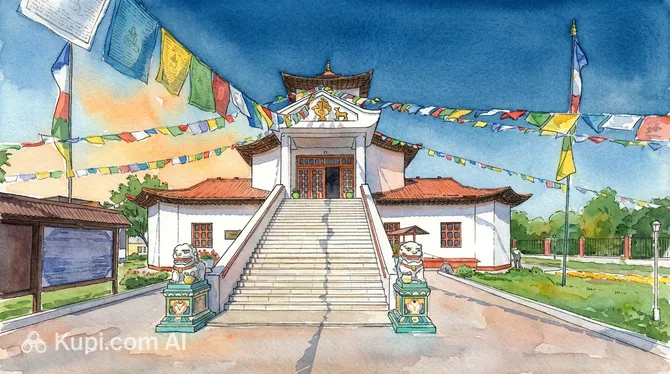
Tsechenling Buddhist Center. Illustration.
Source: Kupi.com AI

Traveler photos:

Built in record time in the late 1990s, the temple quickly became the republic's main religious center. It houses the residence of the representatives of the Dalai Lama XIV, emphasizing the site's high status. Visitors are drawn not only by its spiritual significance but also by its aesthetic perfection: the dazzling white walls of the building combined with golden decorative elements create an atmosphere of peace and purity.

Tsechenling is more than just a place of worship; it is a living symbol of Tuva's cultural revival. The temple is open to all, inviting guests to immerse themselves in the world of Buddhist philosophy, enjoy the silence, and see unique relics carefully preserved within its halls.

Contacts

To clarify information about prayer services and festive events at the Tsechenling Buddhist Center, you can use the contact details provided below.

How to contactContact
Addressул. Щетинкина-Кравченко, 2, Кызыл, Респу́блика Тыва́, Россия, 667000
Phone+7 394 222-23-13

What to Do

A visit to Tsechenling begins with a leisurely tour of its exterior architecture. Be sure to note the elegant carvings and vibrant wall paintings. Inside the temple, an atmosphere of deep tranquility prevails: here you can see a majestic statue of Buddha, sacred texts, and intricately crafted thangkas (Buddhist cloth icons). Visitors are allowed to attend morning prayer services, which are accompanied by the mesmerizing chanting of monks.

In the center, you can not only observe but also interact with the monks. Many tourists come here to ask questions about Buddhist practices or receive a blessing. In the small temple shop, you can purchase authentic souvenirs: prayer beads, incense, amulets, or books on philosophy. We also recommend trying traditional Tuvan tea, which helps you better experience the local flavor.

After exploring the interior halls, it's worth taking a stroll through the complex's well-maintained grounds. Many combine a visit to the center with a trip to the neighboring Museum of Political Repression, which allows for a more complete historical picture of the region. The best way to end your introduction to the site is a walk to the Yenisei, where you can take stunning photos at the "Center of Asia" obelisk against the backdrop of the confluence of two great rivers.

Getting There

The Tsechenling Buddhist Center is located in the very heart of the city, at Ulitsa Shchetinkina-Kravchenko, 2. It is situated in a picturesque spot by the Yenisei embankment, very close to the confluence of the Great and Small Yenisei rivers. The easiest landmark for tourists is the famous "Center of Asia" obelisk, from which the temple is just a 5–10 minute walk.

If you are arriving at Kyzyl Airport, a taxi ride will take about 20–30 minutes (the distance is approximately 10–15 km). From the bus station, it is most convenient to take public transport: buses No. 1 or No. 4 will take you to the "Naberezhnaya" stop, from where the gates of the complex are no more than a five-minute walk.

For those who prefer to travel by private or rental car, free parking is provided near the temple. During the summer, many travelers choose the walking route along the embankment, enjoying views of the mighty river and the surrounding mountain ranges.

Nearest city: Kyzyl

History & Facts

The history of this spiritual center began on February 17, 1998, when the symbolic first stone was laid in the foundation of the future building. The temple project, created by the talented architect Fan Che Ir, was completed in record time, serving as a testament to the immense desire of the region's residents to restore their religious traditions.

Special significance is given to the Tsechenling Buddhist Center by the fact that in October 1999, it was solemnly consecrated by Bogdo-Gegen IX. He is the third most important figure in the Buddhist hierarchy after the Dalai Lama and the Panchen Lama, and his visit was a major event for all of Tuva.

The name "Tsechenling" carries deep meaning and is interpreted in the local tradition as a symbol of purity and enlightenment. The temple has become the embodiment of the revival of the Buddhist faith in the region after a long period of neglect, turning into a major attraction for pilgrims and researchers of Eastern culture.

Interestingly, the architecture of the complex harmoniously echoes other iconic sites in the city. Its proximity to the "Center of Asia" obelisk and shamanic shrines creates a unique cultural landscape where ancient traditions of different teachings coexist in complete harmony.

Time Needed

For a first introduction to the Tsechenling Buddhist Center, 1–2 hours is sufficient for most travelers. This time is enough to leisurely admire the building's architecture, enter the temple, examine the altar, and take commemorative photos against the backdrop of the golden domes.

If you plan to attend a religious service, speak with the lamas, or request an individual consultation, you should allow up to 3 hours for the visit. Additional time may also be needed to visit the neighboring Museum of Political Repression or stroll along the nearby embankment to the "Center of Asia" obelisk.

Working Hours

At present, the exact operating schedule for the Tsechenling Buddhist Center has not been officially published. Generally, the temple doors are open to believers and tourists daily from 09:00 to 18:00. Keep in mind that religious services and prayers are held throughout the day, during which access to some parts of the hall may be limited.

To obtain up-to-date information regarding ceremony and holiday times, it is recommended to check directly on-site or by phone. Visitors are advised to check official sources or contact the city's tourist information centers before planning their visit.

Nearby

Exploring the surroundings of the temple will allow you to deeper experience the atmosphere of Tuva's capital and get acquainted with its rich cultural heritage. Within walking distance of the Tsechenling Buddhist Center are significant monuments and art objects that are definitely worth including in your walking route.

Many of these attractions are located right on the city embankment or in neighboring squares, making the walk as comfortable and full of impressions as possible. Below is a list of interesting objects located nearby:

NameDistance
Obelisk Center of Asia0.5 km
Tyva Republic National Park0.5 km
Arat Square0.9 km
Tuva National Museum1.6 km
Aristokrat2.4 km
Mio Pizza2.6 km

Reached the end of the page?

That means the route is fully explored