Support

Tuva National Museum

About

Located in the heart of the republic, the Aldan-Maadyr National Museum of the Republic of Tuva is the premier cultural treasure of Kyzyl. This leading educational center, a pride of Russia, occupies a modern three-story building and houses unique evidence of the region's history, nature, and archaeology from ancient times to the present day.
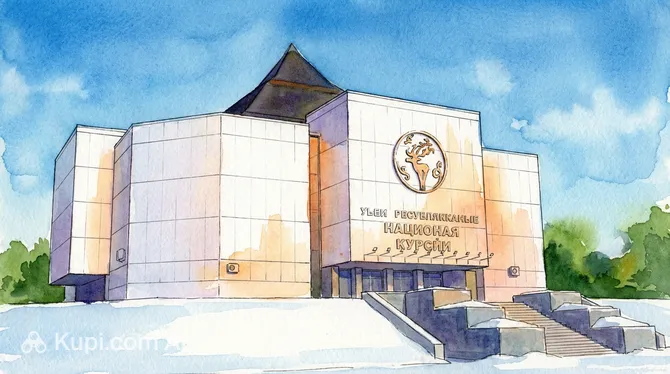
Tuva National Museum. Illustration.
Source: Kupi.com AI

Traveler photos:

The museum's crown jewel and a global sensation is the "gold collection" from the Scythian burial mound Arzhaan-2. Visitors can see unique jewelry from the 9th–7th centuries BC, crafted in the famous Scytho-Siberian animal style. This collection, containing over 20 kilograms of gold, is rightfully considered one of the most significant archaeological discoveries of modern times.

The museum's exhibitions are divided into five key departments covering the full diversity of the Tuvan land: from rare minerals and taxidermy in the nature hall to authentic Shamanic and Buddhist artifacts in the ethnographic block. Here, you will find more than just exhibits—it is the living history of a people, their beliefs, crafts, and their remarkable connection with the wild nature of the Sayan Mountains.

Contacts

To plan your visit and check the latest exhibition information, you can use the following contact details. Museum staff are always ready to help tourists with tour schedules and inquiries.

How to contactContact
Addressул. Титова, 30, Кызыл, Респу́блика Тыва́, Россия, 667000
Phone+7 952 752-09-96

What to Do

Inside the museum, an exciting journey through the archaeology halls awaits, where you can examine the weapons, jewelry, and everyday items of ancient nomads in detail. Be sure to spend time exploring the "gold hall", which displays artifacts from the Arzhaan-1 and Arzhaan-2 burial mounds. The intricate work of past masters amazes even the most seasoned travelers.

Beyond contemplating antiquities, visitors can immerse themselves in the world of Tuvan life in the ethnographic department. Here, traditional dwellings, clothing, and rare utensils of the noyons (local nobility) are presented. For documentary enthusiasts, the photo archive of Vladimir Ermolaev is of particular interest; his early 20th-century photographs allow you to see Tuva as it was before major historical transformations began.

The museum also offers interactive programs and workshops that help visitors better understand local traditions. You can take part in themed tours or listen to lectures about the culture of the Todzha reindeer herders. It is the perfect place for those who want to not just see the sights, but to feel the spirit of Central Asia through its heritage.

Getting There

Reaching this cultural center is easy, as it is conveniently located in the heart of the Tuvan capital, at the intersection of the bustling Titov, Kochetov, and Lenin streets. If you are already in the center of Kyzyl, you can reach the building on foot within minutes. The main city squares, located within walking distance, serve as excellent landmarks.

For those who prefer public transport, any buses or fixed-route taxis heading to the "Tsentr" (Center) or "Ulitsa Lenina" (Lenin Street) stops will work. From Kyzyl Airport, which is about 20 kilometers from the city, the most convenient option is a taxi. The trip takes about 30–40 minutes depending on traffic and the time of day.

If you are traveling by car from the direction of Abakan via the R-257 federal highway, you will arrive directly in the city center. Parking spaces are available near the museum building for the duration of your visit. The museum is hard to miss thanks to its distinctive architecture and bright white facade.

Nearest city: Kyzyl

History & Facts

The founding of the museum in May 1929 was a major milestone for the cultural development of the republic. Its first director was the outstanding photographer Vladimir Ermolaev, who dedicated his life to documenting the lifestyle and nature of this region. Thanks to his efforts, a unique archive of several thousand negatives was collected, becoming an invaluable historical source for researchers of nomadic cultures.

In March 1942, the institution was named Aldan-Maadyr, which translates to the "Sixty Heroes." This name was given in memory of the legendary Tuvan uprising against feudal oppression at the end of the 19th century. Over the years, the museum expanded its collections, adding ethnographic items and materials from excavations of significant sites such as the Por-Bazhyn fortress.

One of the most significant events in the museum's modern history was the return of the "gold collection" in 2008. After careful restoration at the State Hermitage Museum, the priceless treasures of the Arzhaan-2 burial mound returned to their native land. During this period, the museum moved into its current modern three-story building, which today serves as a scientific and tourist magnet for the region.

Today, the museum's holdings include tens of thousands of exhibits, and the institution continues the traditions established in the early 20th century. Under the patronage of Russia's academic circles, ongoing research is conducted here, making the museum not just a repository of antiquities, but a living center for the study of Central Asian history.

Time Needed

When planning a visit to the National Museum of Tuva, it is worth setting aside at least 2–3 hours to explore the main exhibitions. This is enough time to leisurely browse the primary halls and closely examine the details of the famous archaeological finds. If you plan to book an in-depth guided tour, the visit may take even longer.

For those who want to dive as deep as possible into the ethnography and history of the region, we recommend allocating half a day for the museum. In addition to the permanent exhibitions, it often hosts temporary themed displays that are also worth your attention. If your time is limited, be sure to focus on the halls containing the treasures of the Valley of the Kings—this is an absolute must for any visitor.

Working Hours

The museum doors are open to visitors from Wednesday to Sunday. Generally, the exhibitions are available for viewing from 10:00 to 18:00, allowing for a convenient daytime visit.

Please note that Monday and Tuesday are closing days. Since opening hours may change during holiday periods, we recommend that tourists check for the latest information on the museum's official website in advance to ensure a smooth and comfortable visit.

DayWorking hours
MondayЗакрыто
TuesdayЗакрыто
Wednesday10:00–18:00
Thursday10:00–18:00
Friday10:00–18:00
Saturday10:00–18:00
Sunday10:00–18:00

Nearby

Exploring the area surrounding the museum can significantly enrich your trip, as key monuments and interesting capital sites are concentrated within walking distance. A walk through the city center allows you to see how ancient traditions and the modern rhythm of Tuvan life are harmoniously intertwined.

NameDistance
Arat Square0.6 km
Obelisk Center of Asia1.2 km
Mio Pizza1.4 km
Tsechenling Buddhist Center1.6 km
Tyva Republic National Park1.7 km
Aristokrat2.6 km

Reached the end of the page?

That means the route is fully explored