Support

Ust-Tsilma

About

Welcome to Ust-Tsilma, a unique and historic rural locality that offers a fascinating glimpse into the cultural depths of the Russian Federation. Situated in the Komi Republic, this settlement is not just a point on the map but a living museum of traditions that have been carefully preserved for centuries. With a population of approximately 8,000 people, it maintains a close-knit community atmosphere set against the backdrop of the stunning northern wilderness.

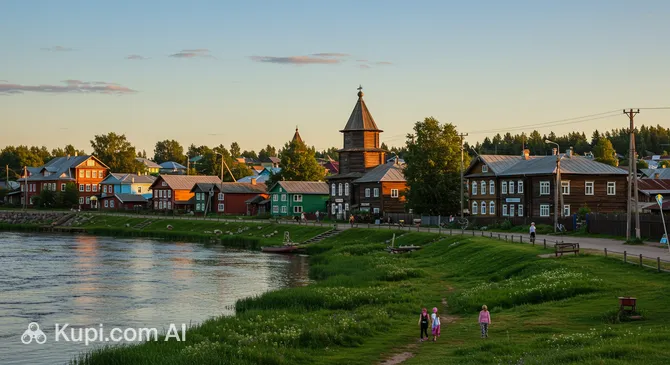
Geographically, Ust-Tsilma is located on the right bank of the majestic Pechora River, one of the major waterways of the European North. The climate here is characteristic of the subarctic region, featuring long, snowy winters and short, moderately warm summers, which is when the area truly comes alive with vibrant colors and festivities.

Ust-Tsilma. Source: Kupi.Binoculars

The settlement was founded in the mid-16th century and became a haven for Old Believers fleeing religious persecution. This isolation allowed the local population to maintain their unique dialect, customs, and colorful traditional clothing. Exploring the history of Ust-Tsilma reveals how these ancient Russian traditions have survived almost unchanged to the present day, making it a significant cultural heritage site.

Travelers are often drawn here by the famous Ust-Tsilma Gorka, a spectacular traditional folk festival held annually in July. During this celebration, hundreds of locals don authentic historical costumes to perform ceremonial round dances and sing ancient songs, creating a mesmerizing spectacle. Beyond the festival, the serene beauty of the Pechora River offers excellent opportunities for fishing and nature observation, providing a peaceful retreat from the hustle and bustle of modern city life.

If you are looking for an authentic travel experience off the beaten path, Ust-Tsilma is a destination that promises to leave a lasting impression. Its blend of breathtaking northern nature and rich, living history makes it a truly special place to visit.

Weather Overview

The climate in this region is marked by distinct seasonal changes, offering travelers a true northern experience. Winters are generally severe, with January seeing average temperatures drop to -14.0°C, while December and February remain similarly cold. Travelers visiting during these months should be prepared for freezing conditions, as minimum temperatures can dip below -16.6°C.

By contrast, the summer season brings a welcome warmth to the area. July is typically the hottest month, with an average temperature of 17.0°C and daily highs reaching a comfortable 21.5°C. This creates an ideal environment for outdoor exploration, although the transitional months of spring and autumn can be quite cool, with October averaging just 1.2°C.

Precipitation is frequent but generally light throughout the year, with wet days ranging from 9 to 16 days per month. Expect pleasant, mild summers with occasional showers and cold winters characterized by consistent freezing temperatures. For the most accurate forecast during your dates, be sure to check the weather in Ust-Tsilma.

Interesting Facts

Beyond the main attractions, Ust-Tsilma holds many fascinating secrets that highlight its unique place in history. This remote settlement is not only a guardian of tradition but also a location with a surprising industrial past and a distinct way of life dictated by nature.
  • The area is considered one of the cradles of non-ferrous metallurgy in the Russian Federation. In the late 15th century, copper and silver ores were discovered on the banks of the nearby Tsilma River, leading to the establishment of some of the state's earliest government-backed mining enterprises.

  • The vibrant costumes worn by locals during the famous Gorka festival are rarely modern replicas. Most are genuine antiques, passed down through families for generations; some of these intricate brocade sundresses are over a century old and are valued as highly as a new car.

  • Due to centuries of relative isolation, the village serves as a unique linguistic reserve. The local population has preserved a specific dialect and a vast collection of ancient "bylinas" (epic songs) and ballads that have largely disappeared from other parts of the country.

  • Modern connectivity here is still strictly ruled by the seasons. There is no permanent bridge across the massive Pechora River, so residents rely on ferries during the summer and a dedicated ice road in the winter, becoming virtually cut off from the mainland during the spring and autumn thaws.

How to Get There

Reaching this remote northern destination requires some planning, as it is situated away from major transport corridors. However, the journey itself offers a chance to see the vast landscapes of the Komi Republic. For a complete guide on logistics, routes, and tips, you can read more about how to get to Ust-Tsilma.

The most convenient and direct way to arrive is by air. The settlement is served by its own local aviation hub, Ust-Tsilma Airport (IATA: UTS). It is a small regional facility located just 2.1 km from the center, meaning a taxi or bus ride to your accommodation will take only about 25 minutes. While flight frequency is limited compared to major cities, landing directly here saves significant travel time.

Alternatively, travelers can fly into Ukhta Airport (IATA: UCT), situated in the city of Ukhta. It is approximately 223 km away from Ust-Tsilma. This airport handles more traffic and may offer better connections from central Russia. However, the subsequent ground transfer is lengthy, taking around 6 hours by road. Another option is Naryan-Mar (IATA: NNM) in Naryan-Mar, located about 250 km away, which serves as another regional gateway.

For clarity, here is a summary of the main airports:

Airport Name City Passenger Traffic Km from City
Naryan-Mar Naryan-Mar Medium 249.7
Usinsk Airport Usinsk Medium 247.5
Ukhta Airport Ukhta Small 222.7
Ust-Tsilma Airport Ust-Tsilma Small 2.1
Pechora Pechora Small 234.9

For those preferring rail travel, it is important to note that the city of Ust-Tsilma does not have its own railway station. The closest major rail hub is Sosnogorsk Railway Station in the city of Sosnogorsk, which is approximately 221 km from Ust-Tsilma. From there, you can get a taxi or bus, a journey that typically takes about 6 hours. This station is a significant transport node with substantial passenger traffic.

Another option is the Pechora Railway Station located in Pechora, roughly 239 km away. Ground transport from this station to Ust-Tsilma will take approximately 6.5 hours. Both stations provide access to the broader Russian railway network, connecting the region to major cities, though the final leg of the trip must be completed by road.

Below is a list of the nearest railway stations:

Station City Passenger Traffic Km to Center
Sosnogorsk Railway Station Sosnogorsk Large 220.9
Usinsk Railway Station Usinsk Medium 256.0
Pechora Railway Station Pechora Medium 238.9
Ukhta Railway Station Ukhta 222.7
Kozhva 1 Station Pechora 228.9

Main Attractions

For a relatively small and remote settlement, Ust-Tsilma offers a surprising depth of history and culture to explore. The village’s attractions are deeply rooted in its identity as a haven for Old Believers and its location on one of the North’s great rivers. While it lacks the flashy entertainment of a metropolis, its sights provide a genuine connection to the past and the enduring spirit of its people.

The A.V. Zhuravsky Historical and Memorial Museum is the cultural heart of the village and a must-visit for anyone wanting to understand the region. Named after the scientist and explorer Andrei Zhuravsky, who dedicated his life to studying the Pechora North, the museum houses a rich collection of artifacts. Visitors can see authentic Old Believer clothing, ancient religious books, and household items that date back centuries. The exhibits also cover Zhuravsky’s fascinating agricultural experiments at the beginning of the 20th century, proving that farming was possible even in these harsh northern latitudes.

Another significant landmark is the Monument to Ivashka Lastka, dedicated to the founder of the settlement. Ivan Dmitriev Lastka, a native of Novgorod, established Ust-Tsilma in 1542 after receiving a royal decree. The monument stands as a tribute to the village's origins and the resilience of its first settlers. It is a popular spot for locals and tourists alike to take photos and pay respects to the man who started the history of this unique community nearly five centuries ago.

Nature lovers will find the banks of the Pechora River to be an attraction in their own right. As the village stretches along the river, the waterfront offers sweeping views of the vast northern landscape. In summer, it is the perfect place for a peaceful walk, boat trips, or fishing, which remains a key part of local life. The river is not just scenery; it is the main artery that has connected Ust-Tsilma to the rest of the world for generations.

Finally, no visit is complete without seeing Narodnaya Polyana (People's Glade), the traditional venue for the famous "Gorka" spring-summer ritual. While the festival itself takes place in July, the site remains a symbol of the village’s living heritage. It is here that the community gathers to perform the complex, centuries-old round dances that have made Ust-Tsilma famous across the country. Standing here, one can easily imagine the colorful procession of locals in their heirloom costumes that transforms the glade into a vibrant living museum once a year.

Local Cuisine

The local cuisine of Ust-Tsilma is a heartwarming reflection of its northern geography and the enduring traditions of the Old Believers. The food here is simple, hearty, and ecologically pure, relying heavily on the gifts of the surrounding wilderness. The mighty Pechora River and the taiga forests serve as the main pantry for the locals, meaning that fish, game, mushrooms, and wild berries form the foundation of the daily diet. For tourists, this offers a unique opportunity to taste authentic dishes that have remained virtually unchanged for centuries.

Fish is undoubtedly the queen of the table in this region. The most famous local specialty is Pechora salted fish, prepared using a specific method that preserves its delicate texture and flavor without making it overly salty. You should also try the traditional rybnik, a closed pie usually baked with a whole fish inside, allowing the juices to soak into the dough. Another culinary staple is shangi, circular open tarts made from yeast dough and topped with mashed potatoes, cottage cheese, or northern berries. These are often served hot with tea and are a symbol of northern hospitality.

When it comes to drinks, the locals make excellent use of the abundant berries found in the Komi Republic. You will frequently be offered mors, a refreshing non-alcoholic fruit drink made from lingonberries, cranberries, or the prized cloudberries ("tsarskaya yagoda"). These drinks are not only delicious but also packed with vitamins essential for the harsh climate. On the stronger side, homemade berry tinctures and herbal infusions are common, often served during festive gatherings or to warm up after a day out in the cold.

The food culture in Ust-Tsilma is intimate and community-oriented rather than commercial. You won't find large restaurant chains or fine dining establishments here. Instead, the dining scene consists of small, cozy cafes and canteens (stolovayas) that serve home-style comfort food. However, the best way to experience the local gastronomy is often through guest houses or homestays, where hosts prepare meals using family recipes passed down through generations. Local markets are also a great place to buy fresh smoked fish or jars of cloudberry jam to take home as edible souvenirs.

Travel Tips

Visiting a remote and culturally unique destination like Ust-Tsilma requires a bit more preparation than a standard city break. To help you navigate the local customs and the challenging northern environment, here are some practical tips to ensure your journey is smooth and enjoyable.

  1. Clothing and Gear: The weather in the Komi Republic dictates your wardrobe. In winter, thermal underwear, a heavy down jacket, insulated boots, and a windproof hat are non-negotiable necessities. Summer can be warm, but the evenings are cool, so bring layers. Crucially, if visiting in summer (especially June and July), you must bring high-quality insect repellent and perhaps a mosquito net hat, as the midges and mosquitoes in the taiga can be intense. Modest clothing is recommended year-round out of respect for the Old Believer traditions.

  2. Transportation: Ust-Tsilma is a rural settlement, so there is no metro or extensive public transport network. Most places within the village are walkable, but for longer distances, you will need to rely on local taxis; ride-hailing apps like Uber do not work here, so ask your host for a local taxi phone number. Be aware that crossing the Pechora River depends on the season: ferries run in summer, and an ice road is used in winter, but travel can be impossible during the spring and autumn thaws.

  3. Finances: The official currency is the Russian Ruble (RUB). While a few major shops might accept cards, cash is absolute king in rural areas. You will need cash for ferries, small grocery stores, local markets, and taxis. There are ATMs in the village (typically Sberbank), but they can occasionally be out of service or run out of cash, so it is wise to withdraw a sufficient amount before arriving.

  4. Health and Safety: There is a local district hospital and pharmacies in the village, but their hours may be limited, and they may not stock specialized prescription medications. Bring a well-stocked personal first-aid kit. The village is generally very safe regarding crime, but nature poses risks; do not wander into the surrounding forests without a guide due to the risk of getting lost or encountering wild animals like bears.

  5. Communication: The primary language is Russian. English is virtually non-existent here, so downloading an offline translation app and offline maps is essential. Mobile coverage is available (operators like MTS and Megafon usually have the best reception), but the signal can be spotty on the outskirts. Buying a local SIM card in a larger city before arrival is recommended.

  6. Local Etiquette: The people of Ust-Tsilma are proud of their heritage as Old Believers. Greetings are standard, but behavior should be respectful and reserved. When visiting religious sites or cemeteries, women should cover their heads, and men should remove hats. It is polite to ask permission before photographing locals, especially those wearing traditional costumes during festivals.

  7. What to Avoid: Avoid wearing overly revealing clothing (shorts, tank tops) in public places, as this may be frowned upon by the conservative local community. Also, never make light of the local traditions or the "Gorka" rituals; these are deeply spiritual and historical events for the residents, not just tourist attractions.

  8. Seasonal Tip: If you plan to buy the famous local fish or cloudberries to take home, ask the locals for the best sellers rather than buying from the first person you see. The community is small, and residents know exactly who has the freshest catch or the best harvest.

By keeping these tips in mind, you will be well-equipped to appreciate the rugged beauty and rich history of Ust-Tsilma without unnecessary stress. A respectful and prepared attitude will go a long way in earning the warmth and hospitality of the locals.

Entertainment & Nightlife

Nightlife in Ust-Tsilma is a reflection of its peaceful, rural character. You will not find sprawling nightclub districts, neon-lit boulevards, or noisy discos here. Instead, the evening entertainment is intimate and community-focused, revolving around warm gatherings, hearty food, and the stunning natural backdrop of the Russian North. The social life of the village is concentrated primarily along the central arteries, such as Sovetskaya Street and Naberezhnaya Street, where the few available venues are located.

For those looking to spend an evening out, the options are limited but welcoming. One of the main spots for locals to unwind is Cafe-Bar Rucheyek, located on Naberezhnaya Street. It serves as a casual venue where you can enjoy a drink, taste local dishes, and experience the unhurried pace of village life. Another popular establishment is Cafe Sever on Sovetskaya Street. While primarily a dining spot, it often becomes a social hub in the evenings, offering a cozy atmosphere for long conversations over tea or stronger local beverages.

The atmosphere in these venues is relaxed and informal. There is no strict dress code; casual, comfortable clothing is the norm, though locals tend to dress neatly for a night out. Opening hours are generally shorter than in big cities, with most places closing by midnight or earlier, even on weekends. The crowd is typically a mix of local residents and occasional visitors, making it a safe and friendly environment to immerse yourself in the local culture.

In the summer months, the concept of "nightlife" takes on a different meaning due to the phenomenon of the White Nights. From late May to July, the sun barely sets, casting a twilight glow over the Pechora River. During this time, the best "night club" is the outdoors. Locals and tourists alike stay up late to stroll along the riverbanks, fish, or enjoy bonfires under the bright midnight sky. In winter, the entertainment shifts to hunting for the Northern Lights, which often dance above the village in spectacular green and purple waves.

For practical advice, always carry cash. While card payments are becoming more common, smaller venues or late-night services may still rely on physical currency. Getting around at night is best done by foot if you are staying centrally, or by calling a local taxi. There are no ride-hailing apps like Uber, so ask your hotel or host for the phone number of a reliable local driver. The village is very safe for night walks, but be mindful of slippery paths in winter and mosquitoes in summer.

Before the sun goes down, visitors can explore the village's daytime offerings. The A.V. Zhuravsky Historical and Memorial Museum provides a deep dive into the region's history, while the surrounding nature offers endless opportunities for hiking and photography. These cultural and natural excursions provide the perfect prelude to a quiet, relaxing evening in this historic settlement.

Parks & Museums

Cultural and natural exploration in Ust-Tsilma differs significantly from the typical city experience. Instead of manicured botanical gardens and modern art galleries, visitors here encounter a "living museum" where centuries-old traditions are woven into the daily life of the community, and "parks" are vast, untouched stretches of northern wilderness. The village itself serves as an open-air gallery of wooden architecture, set against the breathtaking backdrop of the subarctic landscape.

The Pechora River Embankment acts as the village’s primary natural promenade. While it lacks paved paths and landscaped flowerbeds, its raw beauty makes it the most popular place for walking. Stretching along the water's edge, this area offers panoramic views of the endless taiga on the opposite bank and the majestic flow of one of Russia's greatest rivers. It is an ideal spot for birdwatching, photography, or simply enjoying the profound silence of the North. In summer, the sandy stretches serve as informal beaches where locals gather to enjoy the brief but intense warmth.

Another significant natural and cultural space is Narodnaya Polyana (People's Glade). Located on the outskirts of the settlement, this large open field is revered as the traditional venue for the "Gorka" festival. Even when the colorful festivities are not taking place, the glade remains a peaceful green space surrounded by forest. It is a perfect location for a picnic or a quiet afternoon hike, allowing travelers to stand on the very ground where ancient rituals have been performed for nearly five centuries.

The cultural centerpiece of the village is the A.V. Zhuravsky Historical and Memorial Museum. Housed in a historic wooden building that was once part of a scientific research station, the museum offers a comprehensive look into the unique identity of the region. Its collection goes beyond standard local history; it features rare manuscripts of the Old Believers, intricate copper icons, and the distinctive brocade costumes that are still worn today. A separate section is dedicated to Andrei Zhuravsky, a visionary scientist who proved that agriculture was possible in the Arctic Circle, showcasing his original tools and journals.

Since Ust-Tsilma does not have a conventional art gallery, the Historic Village Center itself fills this role. Walking down the main streets, particularly Sovetskaya, is akin to visiting an architectural museum. The area is lined with massive, traditional northern log houses known as "dom-dvor" (house-yard complexes). These imposing structures, often over a century old, were built to house entire extended families and their livestock under one roof to survive the harsh winters. Their sheer scale and the craftsmanship of the woodcarving reflect the resilience and skill of the early settlers.

Among the architectural landmarks, the Church of St. Nicholas the Wonderworker stands out. While the original ancient churches were lost to history and fire, this reconstructed wooden church serves as the spiritual anchor for the community. It represents the deep religious roots of the Old Believers who founded the settlement. Its modest but dignified wooden architecture harmonizes perfectly with the surrounding village, offering a quiet place for reflection and a glimpse into the local spiritual life.

For a truly authentic experience, take a walk to the outskirts where the village meets the forest. Here, you might stumble upon small, family-maintained banyas (saunas) by the river or local fishermen repairing their nets. Engaging with locals in these informal settings often reveals more about the "soul" of Ust-Tsilma than any official guide, as residents are usually eager to share stories about their ancestors and the river that sustains them.

Getting Around

The public transport system in Ust-Tsilma is modest and tailored to the needs of a small rural settlement. Due to its size and remote location, there is no subway, tram, or trolleybus network. The primary mode of public transportation consists of a limited number of bus routes. These buses primarily connect the central part of the village with key locations such as the local airport and the ferry crossing, as well as nearby residential streets. The network is not extensive, but it covers the main artery of the settlement along the riverbank.

Payment for transport services is straightforward and traditional. There are no electronic travel cards, mobile apps, or complex zone systems used here. Fares are paid directly to the driver in cash upon boarding. The cost of a single trip is fixed and very affordable. It is essential for tourists to carry small change, as drivers rarely have the capacity to break large banknotes, and credit card terminals are not installed in the vehicles.

For visitors, the most practical approach to using local buses is to consult the schedule at the bus stops or ask your accommodation host for the current timetable. Buses run at specific intervals rather than continuously, often coordinated with working hours or flight arrivals. Service typically stops in the early evening, so you should not rely on public buses for late-night travel. There is no need to validate tickets; simply paying the driver is sufficient.

A popular and often more convenient alternative is the local taxi service. Unlike in major cities, international ride-hailing apps do not operate in Ust-Tsilma. To get a car, you must call a local dispatch number, which you can easily obtain from any shop, hotel, or local resident. Taxis are inexpensive and offer a reliable way to navigate the village, especially if you are carrying luggage or traveling during the cold winter months. Formal car-sharing and bike rental services are not available, though the village is compact enough that walking is a viable and pleasant option for short distances.

A unique and critical component of the local transport "system" is the crossing of the Pechora River. While not a standard urban transit feature, the ferry service in summer and the ice road in winter are vital links for anyone entering or leaving the village by road. These crossings operate on strict schedules and are subject to weather conditions. Travelers should be aware that during the transitional periods of spring and autumn, when the ice is too thin for cars but too thick for boats, this connection can be suspended entirely.

Accommodation

Accommodation in Ust-Tsilma is reflective of its status as a remote, rural settlement in the Russian North. The options here are modest and functional, designed primarily to serve visiting specialists, relatives of locals, and the adventurous tourists who make the journey. Travelers should not expect luxury resorts, international hotel chains, or extensive amenities like spas and gyms. Instead, the hospitality scene consists mainly of small municipal hotels, private guest houses, and homestays that offer a warm, authentic, albeit basic, experience.

The village is compact, so location is rarely an issue regardless of where you stay. Most accommodation options are concentrated in the central part of the settlement, near main thoroughfares like Sovetskaya Street. Staying in this area is convenient as it places you within walking distance of the A.V. Zhuravsky Museum, local grocery stores, and the few available cafes. Alternatively, some guest houses are located closer to the banks of the Pechora River, offering scenic views of the water and a quieter atmosphere away from the village center.

Since the tourism infrastructure is still developing, booking accommodation requires a different approach than in major cities. Popular international booking platforms often list few, if any, properties in Ust-Tsilma. It is highly recommended to rely on Russian domestic travel resources or, ideally, to contact properties directly by phone. Many local guest houses are family-run businesses that may not have a digital footprint, relying instead on word-of-mouth and direct inquiries.

Booking Tip: If you plan to visit during the famous Ust-Tsilma Gorka festival in July, you must book your accommodation months in advance. During this period, the village's population swells significantly, and every available bed—including those in private homes—is often occupied. Traveling without a reservation during the festival dates is risky.

In terms of cost, accommodation in Ust-Tsilma is generally budget-friendly to mid-range. Prices are significantly lower than in Moscow or St. Petersburg. However, visitors should be prepared for the payment logistics: credit cards are rarely accepted for lodging. You should always carry enough cash to cover your entire stay, as you will likely need to pay upon arrival.

Nearby Cities

For those looking to explore the surroundings, Ust-Tsilma serves as an excellent base for day trips to several interesting nearby locations:

Although distances in the Russian North are vast, the city of Ukhta is considered one of the closest major neighbors and makes for a fascinating visit. Known as the "Pearl of the North," it is an industrial hub with a rich history tied to the development of the oil and gas industry. Visitors can explore local museums that detail the geological and industrial heritage of the Komi Republic, offering a stark contrast to the rural tranquility of Ust-Tsilma.

Another notable destination is Pechora, often referred to as the "Energy Capital" of the republic. Situated on the same mighty river, it is a key transportation hub where the railway meets the waterway. The city offers a glimpse into the Soviet-era development of the region and serves as a gateway for those heading further into the Urals. For a different experience, the oil-producing city of Usinsk provides insight into the modern economic life of the subarctic zone, showcasing how urban life adapts to the harsh northern conditions.

City Population Distance (km)
Syktyvkar 245313 425
Ukhta 97087 221
Pechora 40653 239
Usinsk 38376 256

These nearby destinations offer a glimpse into the diverse culture and landscapes of the region.

Shopping & Souvenirs

Shopping in Ust-Tsilma offers a distinctively rural experience that stands in stark contrast to the commercialized retail therapy of large cities. As a remote village with a population of around 8,000, it does not feature luxury boutiques, sprawling outlets, or international fashion chains. Instead, the local retail scene is focused on essential goods, practical northern gear, and authentic local produce. For tourists, the charm lies in discovering high-quality organic foods and handmade items that reflect the region's deep connection to nature and tradition.

The main commercial activity is concentrated along the central thoroughfare, Sovetskaya Street. This is the village's primary artery where you will find the highest density of grocery stores, pharmacies, and general merchandise shops. Walking down this street allows visitors to observe the slow-paced daily life of the locals. There are no dedicated "shopping districts" in the urban sense; rather, standalone stores are scattered throughout the center, often housed in modest wooden or brick buildings.

Travelers should not expect to find modern shopping malls or entertainment complexes here. The retail infrastructure consists primarily of small, privately-owned shops and local cooperative stores (often referred to as "Raypo"). These establishments function as general stores, selling everything from bread and milk to rubber boots and fishing tackle under one roof. They are practical and utilitarian, designed to sustain the community through the harsh northern winters rather than to provide a leisure experience.

While there is no permanent large-scale market hall, the spirit of trade comes alive during seasonal events and fairs. The most significant opportunity for shopping arises during the annual Ust-Tsilma Gorka festival in July. During this time, a vibrant fair ("yarmarka") is organized where craftsmen from across the Komi Republic and neighboring regions gather. Here, you can browse stalls filled with traditional handicrafts, woodwork, and textiles that are otherwise hard to find.

When it comes to souvenirs, the best gifts from Ust-Tsilma are edible or practical. The region is famous for its Pechora fish, particularly salted or smoked varieties, which are considered a delicacy throughout Russia. Another "must-buy" is the local cloudberry harvest; jars of cloudberry jam or dried berries make for excellent, vitamin-rich gifts. For non-food items, look for hand-knitted wool socks and mittens with traditional northern patterns—essential wear for the local climate and a warm memento of your trip.

Store opening hours are generally standard for rural Russia. Most grocery shops operate from 9:00 AM to 8:00 PM, while specialized stores selling clothes or hardware may close as early as 6:00 PM or 7:00 PM. On weekends, hours are often reduced. Regarding payment, cash is absolutely essential. While some larger grocery chains in the center may accept bank cards, many smaller vendors, market stalls, and souvenir sellers deal exclusively in cash. ATMs are available but can be unreliable, so it is wise to withdraw money before you start shopping.

Visitors should be aware that the Tax-Free shopping refund system is not available in Ust-Tsilma. The village's shops do not participate in international tax refund schemes, so the price you see on the tag is the final price you pay.

Reached the end of the page?

That means the route is fully explored