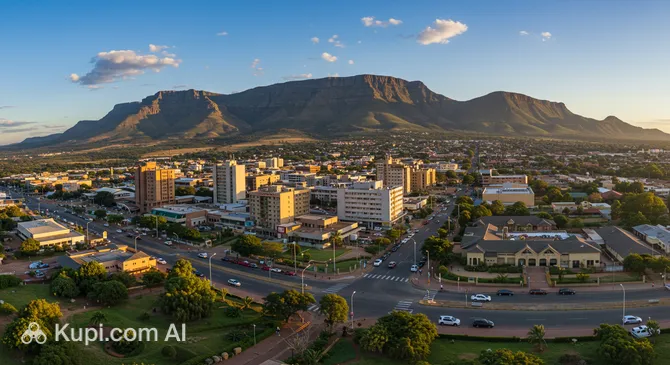
Rustenburg is one of the most rapidly developing cities in South Africa, situated in the picturesque North West Province at the foot of the ancient Magaliesberg mountain range. Its name, which translates to "city of rest," was given in the mid-19th century when Boer settlers found long-awaited peace here after years of wandering. Today, this place harmoniously combines the atmosphere of an old farming settlement with the power of a modern industrial center.
Rustenburg. Illustration.
Source: Kupi.com AI
The city is widely known as the "Platinum Capital", as the lion's share of the world's reserves of this precious metal is mined right here. However, beyond the industrial facades lies remarkable natural beauty: the city sits at an altitude of over 1,200 meters above sea level, providing a pleasant and fresh climate. The streets of Rustenburg are particularly beautiful during the jacaranda blooming season, when they are painted in soft purple hues.
The rich cultural heritage and history of the region are closely linked to the Bafokeng people, whose hospitality and wise resource management have turned this land into a prosperous oasis. Tourists are drawn here by the proximity to famous nature reserves and historic farms dating back to the time of Paul Kruger. Visiting this city is a great opportunity to see modern South Africa in all its diversity, from deep mines to sun-drenched mountain slopes.
Weather Overview
The climate of Rustenburg is defined by its location on the Highveld plateau, which makes the weather here more moderate and pleasant compared to low-lying areas. The city is influenced by a subtropical highland climate characterized by distinct seasons. Before your trip, it's worth checking the current weather in the city to choose the right wardrobe.
The summer months (November to March) bring warmth and moisture, with average daytime temperatures hovering around 28-30°C. Refreshing thunderstorms frequently occur during this time, especially in the afternoon. Winter (June to August) features dry and sunny weather. During the day, the air warms up to a comfortable 20°C, but due to the altitude, nights can be quite cold, with temperatures occasionally dropping to 5°C.
The most favorable times to visit are the transitional periods — spring and autumn. October is notable not only for its mild warmth but also for the start of the tree blooming season, while April-May offers stable clear weather without excessive humidity, ideal for excursions and hiking in the Magaliesberg mountains.
Average monthly temperature
Average monthly precipitation
Interesting Facts
Platinum Giant: The PMR plant in Rustenburg processes about 70% of all the world's platinum, making the city a strategically important site for the global economy.
Sporting Fame: The city was one of the few in Africa to host 2010 FIFA World Cup matches at the specially expanded Royal Bafokeng Stadium.
Historical Age: Founded in 1851, Rustenburg is officially the third oldest city north of the Vaal River.
German Footprint: Nearby is the unique settlement of Kroondal, founded by German missionaries in 1857, where elements of German culture and language are still preserved today.
Cradle of Humankind: Just a couple of hours' drive from the city is a UNESCO World Heritage site where ancient remains of human ancestors were found, including the famous Australopithecus.
How to Get There
Rustenburg is a major transport hub in the North West Province, conveniently located at the intersection of major highways. Despite being a large industrial center, it remains easily accessible for tourists arriving from other regions of South Africa. You can always check all the ways to get there in advance to plan your route as comfortably as possible.
The main air gateway for the city is OR Tambo International Airport (JNB) in Johannesburg, located approximately 150-180 kilometers away. From there, you can reach Rustenburg by rental car or by booking a private transfer, which takes about 2 hours. There are virtually no direct scheduled flights to the city's smaller airfields for mass tourists, so the route through the capital remains the most reliable.
The regional rail link is primarily oriented toward freight transport related to platinum mining, so passenger trains are a rarity. For travel from Pretoria (100 km) or Johannesburg, it is best to use a private vehicle or regular bus services. The journey from neighboring cities via high-quality highways takes between 1 and 1.5 hours, though you should account for potential peak-hour traffic jams when leaving large cities.
Station
Passenger traffic
Distance
Pretoria railway station
7
96 km
Midrand
5
97 km
Centurion
5
98 km
Marlboro
5
99 km
Johannesburg Park Station
7
100 km
Main Attractions
The main attractions of Rustenburg reflect its unique journey from a modest settlement to a sporting and industrial hub. One of the most impressive sites is the Royal Bafokeng Stadium — an ultra-modern stadium that hosted matches during the 2010 FIFA World Cup. Named after the indigenous Bafokeng people, it still serves as the primary venue for large-scale cultural and sporting events in the region.
For history enthusiasts, a visit to Boekenhoutfontein is a must. This restored estate of Paul Kruger, the legendary President of the Transvaal, offers a glimpse into the 19th-century Boer lifestyle and features preserved buildings from that era. In the city center, the architecture of the historic Anglican and Dutch Reformed churches is worth noting, as they preserve the memory of the city's early decades.
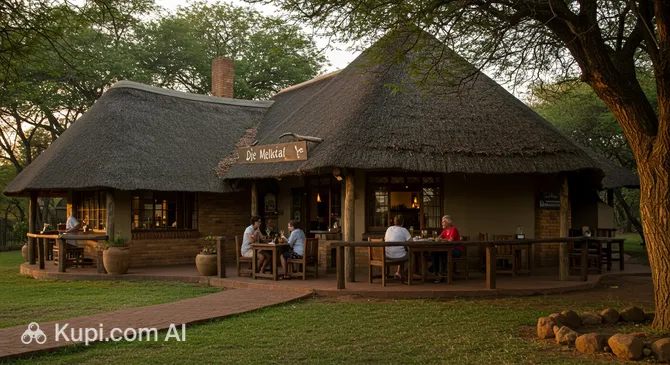
Modern city life is centered in places like Safari Gardens and the multi-functional Lifestyle Square. Here, you can find excellent opportunities for relaxation and shopping. For those who want to experience local flavor in a more informal setting, venues like Die Melkstal open their doors, where regional traditions meet modern service.
Die Melkstal. Illustration.
Source: Kupi.com AI
Traveler photos:
Local Cuisine
The cuisine of Rustenburg is a hearty and aromatic fusion of Boer traditions and indigenous African flavors. The main culinary ritual here is the braai (traditional barbecue). Over an open fire, locals prepare famous boerewors sausages and juicy steaks from premium beef supplied by surrounding farms. A common side dish is pap — a thick maize meal porridge, often topped with spicy vegetable sauces.
The fertile lands around the city are famous for their citrus orchards and sunflower plantations, so there are always plenty of fresh fruits and high-quality oils on the table. To get a real taste of the region, it's worth visiting Die Melkstal, which often serves dishes made from farm-fresh products. Popular drinks include local beers and, of course, the famous wines from the Cape Province, which are represented in any decent restaurant.
Die Melkstal. Illustration.
Source: Kupi.com AI
Traveler photos:
If you're craving more familiar fast food with a local twist, popular chain outlets can be found in the Safari Gardens area. The food culture in the city is quite conservative: portions are usually large, and the emphasis is on meat dishes. Be sure to try biltong (dried cured meat) — it's not only a great snack but also the most popular gastronomic souvenir from these parts.
Travel Tips
A trip to Rustenburg promises to be exciting if you consider a few practical nuances of life in this region of South Africa in advance.
Clothing and Essentials: Pack your wardrobe based on the "layering" principle. It can be hot during the day, but due to the altitude, evenings can be cool. Be sure to bring comfortable walking shoes and a power adapter (Type M).
Transport: The best choice is renting a car. Public transport (minibus taxis) can be inconvenient for newcomers. If you don't drive yourself, use official taxi apps.
Finances: The official currency is the South African Rand (ZAR). Cards are accepted almost everywhere in the city, but keep some cash for markets and tipping. Tipping in restaurants is usually 10-15%.
Health and Safety: Follow standard South African rules — don't walk alone after dark and don't display expensive equipment in crowded places. It is recommended to drink bottled water.
Communication: English is widely spoken; almost everyone speaks it. Knowing a couple of words in Tswana or Afrikaans will be very warmly received by locals.
Local Etiquette: City residents are polite and value friendliness. Always say hello when entering a shop or restaurant — it's the key to a good rapport.
What to Avoid: Do not photograph industrial sites and mines without special permission — this may raise questions with security.
Best Time to Visit: Plan your trip for April-May or September-October, when the weather is most comfortable without sweltering heat or heavy rains.
Following these simple rules will help you focus on the beauty of this region and ensure your journey is filled with positive emotions!
Entertainment & Nightlife
Nightlife in Rustenburg is more relaxed and low-key compared to metropolises like Johannesburg, yet there are still quality spots for evening entertainment. Most activity is centered around sports bars and concept cafes where locals and visitors gather to discuss the latest news or watch a big match. The atmosphere is friendly, and the crowd consists mainly of local professionals and business travelers.
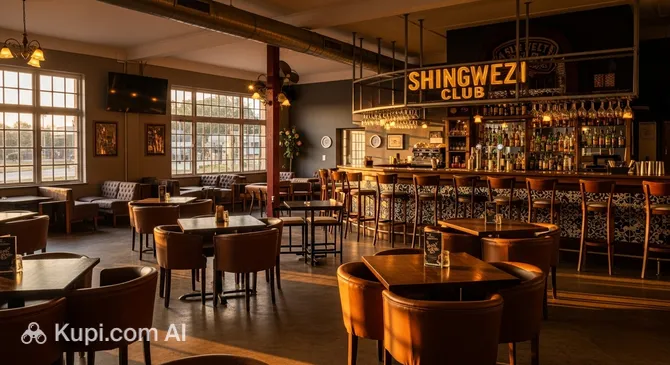
Among the popular locations, the Rump and Draught Café stands out, known for its selection of drinks and cozy setting. If you're looking for a more energetic rhythm and dancing, you can check out the Shingwedzi Club, which is a key point on the city's nightlife map. Most venues stay open until midnight or slightly later, with a more extensive program on weekends.
Shingwezi Club. Illustration.
Source: Kupi.com AI
Traveler photos:
For those who prefer daytime entertainment, the city offers cinemas in large shopping centers or walks in the leafy Olympia Park. Regarding safety for nighttime travel, it is always recommended to call an official taxi via apps and avoid walking through unfamiliar industrial areas after sunset. If you are looking for large-scale clubs and casinos, a trip to nearby Sun City, just an hour's drive away, is worth planning.
Parks & Museums
The natural charm of Rustenburg is best experienced in its surroundings. The primary "green lung" of the region is the Magaliesberg Biosphere Reserve. These ancient mountains, which are a hundred times older than Everest, offer stunning hiking trails and bird-watching opportunities. In the city itself, thousands of jacarandas bloom in spring, turning ordinary streets into real purple avenues that are a delight to stroll through on warm evenings.
For family outings and outdoor walks, Olympia Park is a great fit. It is not just a sports complex but also a recreational area with well-kept lawns. Another notable spot is Safari Gardens, where leisure opportunities and natural aesthetics blend harmoniously. Locals often spend time here, enjoying the quiet away from the industrial noise of the mines.
Safari Gardens. Illustration.
Source: Kupi.com AI
Traveler photos:
The cultural aspect is represented by the local history museum, which houses artifacts from the Anglo-Boer Wars and art objects from the Bafokeng people. Although the museum is small, its exhibits provide a deep understanding of how the region developed. If you're interested in history, also pay attention to the monuments in the city center dedicated to the first settlers and their difficult journey to these lands.
Getting Around
The public transport system in Rustenburg is primarily geared towards the needs of local residents and mining industry workers. The backbone of city transit consists of minibus taxis — white minibuses that run on specific routes. For a tourist, this system can seem complex, as there is no fixed schedule, and payment is made in cash to the driver or via an assistant using specific hand gestures.
During peak hours, from 7 to 9 AM and 4 to 6 PM, minibuses can be very crowded, so it is better to plan your trips during off-peak times. Municipal buses are also present in the city, but their route network does not cover all tourist zones. The central areas of the city are quite suitable for walking, though for safety reasons, it is not recommended to move around on foot after sunset.
The most convenient and reliable way to get around for tourists remains renting a car or calling a taxi through international apps. Private transport provides the freedom to visit outlying attractions like the Magaliesberg mountains or the Kruger estate. Keep in mind that South Africa has left-hand traffic, and traffic jams are possible on the city's main roads during peak hours, especially on exits toward Pretoria.
Accommodation
Accommodation in Rustenburg is primarily geared towards business travelers and specialists visiting the mines, but tourists will also find decent options. The hotel stock includes both cozy colonial-style guest houses and modern hotels from well-known chains. The average price range is quite affordable, and the quality of service meets high South African standards.
The most convenient areas to stay are the city center and the zones adjacent to Safari Gardens. This is where the main restaurants and retail outlets are concentrated. If your goal is sports or attending large-scale events, consider options near the Royal Bafokeng Stadium, where modern apartments are often available.
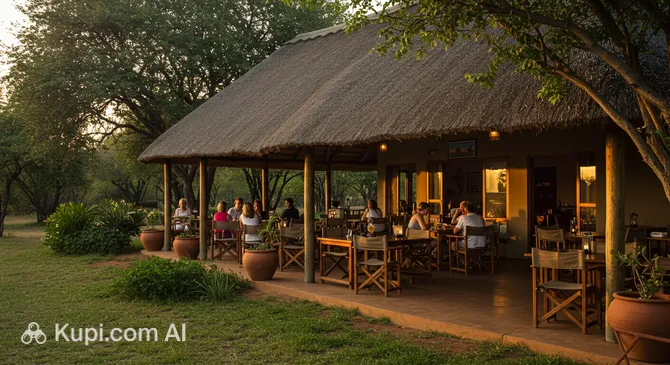
For those looking for a special atmosphere, country lodges and farm stays operate on the outskirts of the city, such as Die Melkstal, where you can enjoy peace and views of the Magaliesberg mountains. It is recommended to book accommodation in advance, especially during major sports matches or conferences when the best options fill up quickly.
Die Melkstal. Illustration.
Source: Kupi.com AI
Traveler photos:
Nearby Cities
Rustenburg serves as an ideal starting point for exploring the North West region of South Africa, offering travelers access to both luxury resorts and World Heritage sites.
Just 39 kilometers away lies the famous Sun City — a true "African Las Vegas." This luxury resort complex offers casinos, water parks, and world-class golf courses, with the Pilanesberg National Park located right next door, where you can see the "Big Five" animals. It is also worth visiting the town of Brits, known for its crocodile farms and proximity to the Hartbeespoort Dam.
For those interested in human history, a trip to Krugersdorp is an excellent option. Nearby is the famous "Cradle of Humankind" — a complex of caves where significant archaeological finds were made, shedding light on the evolution of our ancestors. The drive to these sites takes a little over an hour.
Exploring the city's surroundings will allow you to see the striking contrast between modern industrial landscapes and the wild, untouched nature of South Africa. Don't miss the chance to stop by small towns like Carletonville or Randfontein to experience the authentic spirit of provincial life in the region.
Shopping & Souvenirs
Shopping in Rustenburg is a convenient blend of modern shopping centers and colorful local shops. While the city doesn't claim to be a fashion capital, it provides travelers with everything they need: from quality clothing by global brands to unique African souvenirs.
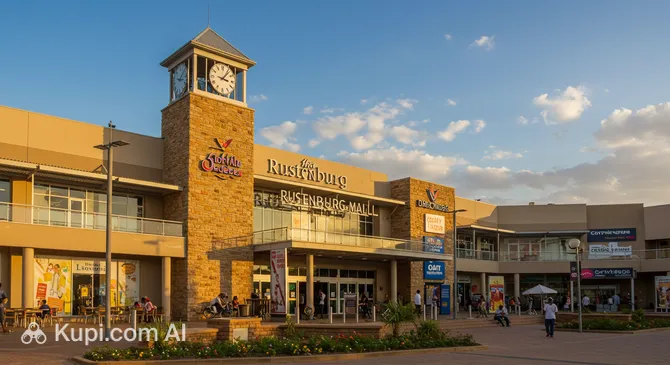
The heart of modern retail is the Rustenburg Mall, where many shops, supermarkets, and food courts are gathered under one roof. It is a comfortable place to shop with a familiar level of service. No less popular is Lifestyle Square, where you can find cozy spots to relax alongside your shopping. Stores here usually operate from 9:00 to 18:00, with major centers staying open later.
Rustenburg Mall. Illustration.
Source: Kupi.com AI
Traveler photos:
As souvenirs from Rustenburg, it's worth bringing back items made by local Bafokeng artisans: woven baskets, wooden animal figurines, or traditional beadwork jewelry. You can also find excellent spices and the famous biltong dried meat at local markets. Bank cards are widely accepted, though it's better to carry some cash in Rands for purchases at small markets.