Support

Sishen

About

Nestled in the vast, arid landscapes of the Northern Cape, Sishen stands as a testament to industrial prowess and resilience. Located in South Africa, this settlement is world-renowned for possessing one of the largest open-cast iron ore mines on the globe. While it is primarily an industrial hub, the area surprises visitors with its unique contrast of red earth and the lush greenery of the surrounding Camel Thorn forest.

The climate here is typical of the Kalahari region, characterized by hot summers and mild, sunny winters, making it an accessible destination year-round. Although the local population is relatively small, hovering around 10,000 residents, the community is vibrant and welcoming. The deep history of Sishen revolves around the discovery of massive iron ore deposits, which transformed a remote landscape into a bustling center of economic activity and development.
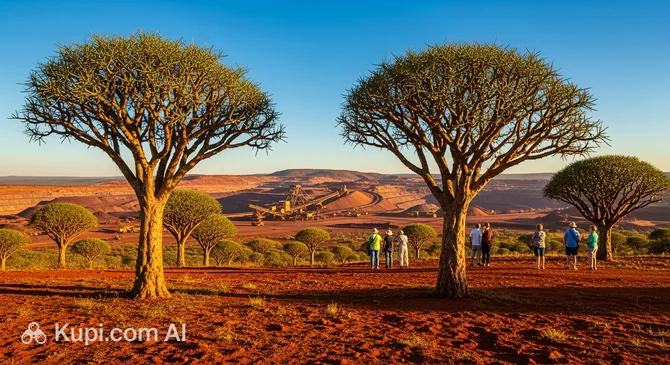
Sishen. Source: Kupi.Binoculars

Travelers venturing to this part of the country will find unexpected gems. The Sishen Golf Club is a major highlight; often described as a spectacular oasis in the desert, this championship course winds through a protected forest of ancient Camel Thorn trees (Vachellia erioloba). For those interested in industrial tourism, the sheer scale of the Sishen Mine offers an awe-inspiring glimpse into modern engineering. The region also serves as a gateway to the wider Kalahari, offering opportunities to explore the distinctive flora and fauna of the semi-desert.

Whether you are a golf enthusiast, a fan of industrial heritage, or simply a traveler looking to explore the road less traveled, Sishen offers a memorable stopover. Its unique combination of heavy industry and striking natural beauty creates an atmosphere unlike any other, inviting you to discover the beating heart of the Northern Cape's mining belt.

Weather Overview

The climate in this region is characterized by significant seasonal contrasts, typical of the Northern Cape's semi-arid environment. Summers are generally hot, particularly in January, when average temperatures hover around 25.4°C and daily highs can soar to 32.7°C. This season also brings the most cloud cover, with December and January seeing approximately 10 wet days each, although the overall precipitation volume remains relatively low.

As the year progresses towards winter, the weather becomes noticeably cooler and drier. By July, the average temperature drops to 11.0°C, with crisp nights seeing lows of around 2.3°C. This period is remarkably dry, often recording zero wet days from July to August, making it ideal for those who prefer sunny, cloudless skies. Spring and autumn offer pleasant transition periods, with October warming up to a comfortable average of 21.2°C.

Travelers planning a trip should expect warm summers with occasional rain and cold, dry winters. For the most up-to-date information and specific forecasts during your stay, be sure to consult the detailed weather in Sishen guide.

Interesting Facts

While often viewed primarily as an industrial powerhouse, Sishen holds several fascinating secrets that surprise even the most seasoned travelers. Beyond the red earth and mining machinery, the area boasts world records and ecological wonders that set it apart from any other mining town.

  • Home to the "Monster" Trains: Sishen is the starting point for the famous Sishen-Saldanha railway line, which hosts some of the longest production trains in the world. These "iron giants" can stretch up to four kilometers in length and are powered by multiple locomotives using advanced radio-distributed power technology. In a historic feat in 1989, a record-breaking train on this line measured an astounding 7.3 kilometers long.

  • Golfing in a Protected Forest: The Sishen Golf Club is a true oasis in the Kalahari, distinguished by its location within a dense forest of protected Camel Thorn trees (Vachellia erioloba). It was the final masterpiece designed by the legendary architect Bob Grimsdell. The contrast of the lush green fairways against the ancient, rugged trees makes it one of the most unique parkland courses in South Africa.

  • The "Town Under the Trees": The immediate area, including the neighboring town of Kathu, is affectionately known as the "Town Under the Trees." Despite the semi-arid climate, the settlement is built within a spectacular Camel Thorn forest that has been declared a Natural Heritage Site, providing a rare and lush canopy that shelters the community from the desert sun.

  • A Man-Made Wonder: The Sishen mine itself is a spectacle of sheer scale, stretching approximately 14 kilometers in length. It is one of the largest open-pit iron ore mines on the planet, creating a landscape often compared to a "man-made Grand Canyon." The excavation is so vast that it offers a humbling perspective on human engineering and is visible from high altitudes.

How to Get There

Reaching the industrial hub of Sishen in the Northern Cape involves a journey through the distinctive semi-arid landscapes of South Africa. The town is accessible via well-maintained road networks that support its mining activities. Visitors can view all ways to reach the city to plan a seamless trip to this unique destination.

For air travel, Upington Airport (IATA: UTN) serves as a convenient regional gateway, located approximately 183 km from Sishen. The drive from Upington typically takes around 2 hours via the N14 highway. Another excellent option is Kimberley Airport (IATA: KIM), situated roughly 208 km away in the historic city of Kimberley. Both airports connect to major South African hubs, and renting a car upon arrival is highly recommended for the final leg of the journey.

For clarity, here is a summary of the main airports serving the region:

Airport Name City Passenger Traffic Km from City
Kimberley Airport Kimberley Medium 208.1
Upington Airport Upington Small 182.8

Main Attractions

While Sishen is primarily recognized for its massive iron ore mine, the surrounding area and the nearby town of Kathu offer a surprising array of attractions. Visitors exploring this part of South Africa will discover a unique blend of leisure, nature, and modern amenities set against the striking backdrop of the Kalahari Desert.

Sishen Golf and Country Club is arguably the most famous attraction in the region. Often referred to as the "Gem of the Kalahari," this 18-hole championship course is consistently rated among the top golf courses in the country. Its setting is truly distinctive, winding through a dense Camel Thorn forest. Golfers play on lush fairways lined with ancient trees, creating a serene and picturesque environment that contrasts sharply with the arid surroundings.

Nature enthusiasts should not miss the Camel Thorn Forest (Kathu Forest), a majestic woodland declared a Natural Heritage Site. This 4,000-hectare reserve boasts an unusually high density of Vachellia erioloba trees, many of which are centuries old. The forest serves as a vital habitat for various bird species and small wildlife, offering a peaceful retreat where visitors can admire the resilient flora of the Northern Cape.

For families and those seeking outdoor recreation, the Khai-Appel Recreation Resort is a popular stop. Located centrally, this facility offers a range of activities including camping, fishing, and swimming. It functions as a community hub where locals and tourists alike can relax, enjoy a traditional braai (barbecue), and cool off from the desert heat in a family-friendly atmosphere.

Kathu Village Mall serves as the modern commercial heartbeat of the region. While a shopping center might not be a conventional tourist landmark, in the remote stretches of the Northern Cape, it acts as a welcome oasis of convenience. It features a variety of retail stores, restaurants, and entertainment options, providing a comfortable place to rest and refuel after a day of touring the mining areas or exploring the rugged landscapes.

Local Cuisine

The culinary landscape of Sishen and the surrounding Northern Cape region is defined by hearty, unpretentious food that reflects the area's farming and hunting heritage. Visitors can expect a dining experience heavily centered around high-quality meat, with the arid Kalahari environment producing some of the country's finest beef and venison. In this part of South Africa, portions are generous, and the flavors are robust, designed to satisfy the appetites of a hardworking community.

A visit to Sishen is incomplete without experiencing a traditional braai (barbecue). This is not just a meal but a social event, where local favorites like boerewors (spiced farmer's sausage), lamb chops, and steaks are grilled over open wood fires. Game meat is particularly popular here due to the abundance of wildlife in the region; adventurous eaters should try kudu, springbok, or gemsbok, which are often served as steaks or in savory pies. Another staple is potjiekos, a slow-cooked stew prepared in a round, three-legged cast-iron pot, usually containing meat, vegetables, and a distinct blend of spices.

To accompany these rich meals, locals often enjoy traditional South African beverages. Brandy and Coke is a cultural icon in the region and a popular choice for evening relaxation. Beer is also a staple, with various lagers enjoyed cold to combat the desert heat. For non-alcoholic options, Rooibos tea is widely available, often served with rusks (hard, dry biscuits) for breakfast or a mid-afternoon snack. Homemade ginger beer is another refreshing local favorite found in some establishments.

The dining scene in the Sishen and Kathu area ranges from casual family eateries to more formal dining at the local clubs. The Sishen Golf and Country Club is a central hub for social dining, offering a relaxed atmosphere where visitors can enjoy a meal overlooking the camel thorn trees. For those seeking variety, the nearby shopping centers host a mix of popular South African steakhouse chains and coffee shops. Whether you are grabbing a quick bite or sitting down for a three-course dinner, the local food culture is characterized by warm hospitality and a love for good, honest cooking.

Travel Tips

Visiting Sishen offers a unique glimpse into the industrial heart of the Northern Cape, set against the stunning backdrop of the Kalahari. To help you navigate this distinctive region comfortably and safely, here are some practical tips designed for travelers exploring the "Town Under the Trees."

  1. Clothing and Gear: The semi-arid climate demands versatility. In summer (October to March), pack lightweight, breathable fabrics, a wide-brimmed hat, and high-SPF sunscreen to protect against the intense sun. However, if you visit during winter (June to August), be prepared for very cold nights and early mornings; a warm jacket, scarf, and layers are essential as temperatures can drop near freezing. Comfortable walking shoes are a must, especially if you plan to golf or explore the Camel Thorn forest.

  2. Transportation: Public transport is virtually non-existent for tourists in this remote area. Renting a car is the most practical and reliable way to get around Sishen and the neighboring town of Kathu. While the main roads are tarred and in good condition, having a high-clearance vehicle or SUV is beneficial if you plan to explore the surrounding gravel roads or game farms. Ride-hailing apps are generally not available here.

  3. Finances: The local currency is the South African Rand (ZAR). Major credit and debit cards (Visa and Mastercard) are widely accepted at hotels, the Sishen Golf Club, and the Kathu Village Mall. However, it is wise to carry some cash for small purchases, tips, or roadside stalls. ATMs are readily available at the shopping centers in Kathu.

  4. Health and Safety: The most significant health risk here is dehydration and heatstroke due to the dry heat. Drink plenty of water throughout the day. Pharmacies are available in the nearby Kathu Village Mall and town center for basic medical needs. In terms of safety, Sishen is generally safe, but standard precautions apply: keep valuables out of sight and lock your car doors. Be cautious of wildlife, such as kudus, wandering onto roads at dawn and dusk.

  5. Communication: English is widely spoken and understood, serving as the common language for business and tourism. However, Afrikaans and Setswana are the primary home languages for many locals. Learning a friendly greeting like "Goeie more" (Good morning in Afrikaans) or "Dumela" (Hello in Setswana) will be warmly received. SIM cards and data bundles can be easily purchased at the local mall; mobile coverage is generally good in town but can be spotty in remote mining areas.

  6. Local Etiquette: The community in the Northern Cape is known for its warm hospitality. It is polite to greet people you meet, even strangers passing on the street. Handshakes are common, and patience is appreciated—life here moves at a slightly more relaxed pace than in big cities like Johannesburg. If you are invited to a braai (barbecue), it is customary to bring your own beverages.

  7. What to Avoid: Strictly avoid trespassing on mining property. The Sishen Mine is an active industrial zone with heavy machinery and restricted access; entering unauthorized areas is dangerous and illegal. Stick to designated viewing points or public roads. Also, avoid driving at high speeds at night, as animals are active and visibility on unlit roads is poor.

  8. Additional Tip: Accommodation can be scarce due to the influx of contractors working at the mine. It is highly recommended to book your stay well in advance. Additionally, take advantage of the Sishen Golf Club restaurant even if you don't play golf; it offers some of the best food and views in the area and is a great place to mingle with locals.

With these tips in hand, you are well-prepared to enjoy the rugged beauty and warm hospitality of Sishen. Whether you are teeing off among ancient trees or marveling at the scale of the iron ore operations, a little preparation ensures a smooth and memorable journey in the Northern Cape.

Entertainment & Nightlife

Entertainment and nightlife in Sishen and its sister town, Kathu, reflect the relaxed, community-focused spirit of the Northern Cape. Unlike the bustling metropolises of South Africa, the nightlife here is not defined by neon-lit districts or high-energy nightclubs. Instead, it revolves around social gatherings, hearty dining, and laid-back pubs where locals unwind after a day in the mining industry. The atmosphere is warm and unpretentious, characterized by the famous "braai" (barbecue) culture and camaraderie under the vast Kalahari sky.

The primary hub for social life in the area is the Sishen Golf and Country Club (often referred to as the Kalahari Country Club). This venue serves as the town's social anchor, offering a sophisticated yet welcoming environment. Visitors can enjoy evening drinks at the clubhouse bar or "The Deck," which provides stunning views of the camel thorn forest as the sun sets. It is the perfect spot to mingle with residents and enjoy a cold beer or a glass of South African wine in a safe, serene setting.

For a more lively experience, the Sesheng Recreational Club is a popular choice among locals. Located approximately 8 kilometers from the main country club, this venue often hosts live music and local DJs, creating a vibrant atmosphere on weekends. It features a dedicated braai area, making it an excellent place to experience authentic local hospitality. Another notable spot is Denny’s Restaurant and Pub in Kathu, known for its friendly service and pub-style menu, making it a reliable option for a casual night out.

Most evening activity is concentrated around the Kathu Village Mall and the main roads leading into town. The mall offers a variety of family-friendly restaurants that stay open into the evening, providing a safe and convenient environment for dinner. The dress code throughout the region is almost exclusively casual; comfortable attire is acceptable even in the country club's dining areas.

Practicality is key when planning a night out in Sishen. There is no reliable public transport or ride-hailing service like Uber available at night, so having a rental car is essential. However, safety on the roads is a major consideration. The region is teeming with wildlife, and kudu or warthogs frequently wander onto the roads after dark. It is strictly advised to drive slowly and carefully. If you plan to drink, ensure you have a designated driver, as police roadblocks are common to ensure road safety.

During the day, entertainment options shift towards the outdoors. The Sishen Golf Club is a world-class attraction, challenging golfers with its unique forest setting. For those interested in the region's industrial heritage, tours of the massive open-cast iron ore mine can sometimes be arranged by appointment, offering a fascinating glimpse into the town's economic engine. For a more relaxed afternoon, the local mall provides modern cinema facilities and shopping opportunities.

Parks & Museums

While Sishen is predominantly known as an industrial powerhouse, its location in the Northern Cape offers a surprising wealth of green spaces and access to profound historical sites. The town and its residential counterpart, Kathu, are often referred to as an "oasis in the Kalahari," thanks to the remarkable woodland that envelops the area. Visitors here will find that the natural environment and regional history provide a fascinating counterpoint to the colossal scale of the local mining operations.

Kathu Forest (Camel Thorn Forest) is the crown jewel of the area's natural heritage. This 4,000-hectare protected woodland is one of only two such forests in the world and was declared a Natural Heritage Site in 1995. The forest features a high density of ancient Camel Thorn trees (Vachellia erioloba), creating a lush, shady canopy that defies the surrounding semi-desert landscape. It is an excellent spot for birdwatching and gentle walks, offering a serene escape where visitors can appreciate the resilience of nature in an arid climate.

For those who enjoy recreational outdoor activities, the Khai-Appel Recreation Resort is a local favorite. Situated in the heart of the region, this facility serves as a communal gathering point, featuring camping sites, swimming pools, and fishing spots. It captures the essence of the local lifestyle, where families gather for braais (barbecues) and outdoor leisure. The resort provides a manicured, safe environment for relaxation, contrasting with the rugged bushveld that dominates the horizon.

Regarding culture and history, Sishen is a relatively young town established in 1953, so traditional museums within the city limits are scarce. However, it serves as a gateway to the Wonderwerk Cave, located approximately 45 kilometers towards Kuruman. This National Heritage Site is an archaeological treasure trove, stretching 140 meters into the base of the Kuruman Hills. It contains records of human habitation stretching back two million years, including ancient rock art and evidence of the controlled use of fire. It acts as a profound "natural museum" reflecting the deep history of humanity in this region.

Another significant cultural site accessible from Sishen is the Moffat Mission in the nearby town of Kuruman. Although a short drive away, it is essential for understanding the colonial history of the Northern Cape. Founded in 1821 by Robert Moffat, the mission is famous for being the site where the Bible was first translated into Setswana and printed on the first printing press in Africa. The complex includes a museum and the historic church, offering a glimpse into the 19th-century missionary era.

In terms of landmarks within Sishen itself, the Sishen Iron Ore Mine is the defining feature. While not a conventional monument, the sheer magnitude of the open-cast pit—one of the largest in the world—is a sight to behold. Viewing points allow tourists to witness the "Grand Canyon" of the Northern Cape, where massive haul trucks, the size of houses, navigate the terraced red earth. It stands as a monument to modern engineering and the economic lifeblood of the province.

For an authentic local experience, keep an eye out for the wildlife on the fairways. Locals often joke that a round of golf here is tantamount to a game drive. It is not uncommon to see springbok, gemsbok, and warthogs wandering freely through the parks and the golf course, particularly in the early morning or late afternoon. This seamless integration of town and bush offers a unique "safari" vibe right in the middle of civilization.

Getting Around

The public transport infrastructure in Sishen is quite limited and differs significantly from what visitors might expect in major metropolitan areas. As a small industrial town focused on mining operations, there is no formal municipal transport network such as a metro, tram, or scheduled bus service for the general public. The transport system is primarily designed to serve the local workforce commuting to and from the mine, rather than to facilitate tourism.

The only form of communal transport available is the informal minibus taxi industry, which is ubiquitous across the region. These are typically 16-seater white vans that operate on specific, albeit often unmarked, routes connecting residential areas in Sishen and the nearby town of Kathu with the commercial centers and the mine entrance. While these taxis are affordable and frequent during peak commuting hours, they do not follow a strict timetable and depart only when full.

Regarding payment, the minibus taxi system operates exclusively on a cash basis. There are no travel cards, digital passes, or mobile apps available for fare payment. Passengers must pay the driver or the conductor in local currency (South African Rand) upon boarding. It is essential to carry small denominations of notes and coins, as drivers often have limited change. Fares are generally low and fixed for specific trips within the town boundaries.

For tourists, relying on minibus taxis is generally not recommended due to the complexity of the routes and the lack of designated stops. If you do choose to use them, operating hours are typically from early morning (around 05:00) to early evening (around 19:00). Service drops off sharply after dark and on weekends. There is no validation system for tickets; you simply pay for a single journey each time you ride.

Given these limitations, the most practical and popular alternative for visitors is car rental. Having a private vehicle is virtually essential for navigating Sishen and its surroundings comfortably. Rental agencies are available at the regional airports or in the neighboring commercial hub of Kathu. This option provides the freedom to travel between the golf course, shopping centers, and accommodation at your own pace, safe from the extreme heat of the Kalahari.

Other alternatives such as ride-hailing apps (e.g., Uber or Bolt) are generally not available in this remote part of the province. Metered taxis do not roam the streets looking for passengers; instead, you must rely on private shuttle services or transfers, which can usually be arranged through your hotel or guesthouse. Walking and cycling are possible within small, concentrated areas like the mall complex, but distances between attractions and the intense daytime temperatures make them impractical for general transport.

Accommodation

Finding accommodation in Sishen typically means looking towards its residential sister town, Kathu, known as the "Town Under the Trees." Due to the area's status as a major industrial hub, the accommodation landscape is heavily geared towards business travelers and contractors. Visitors will largely find a selection of comfortable guesthouses, bed and breakfasts, and lodges, rather than large-scale resort hotels. These establishments often offer a homely atmosphere with amenities designed for long-term stays, such as self-catering facilities and secure parking.

The most desirable area to stay is undoubtedly within the leafy suburbs of Kathu, particularly near the Sishen Golf and Country Club. This neighborhood offers a serene environment under the canopy of the ancient Camel Thorn forest, providing a stark but welcome contrast to the surrounding arid landscape. Staying here places tourists within easy reach of the region's main recreational facilities and the local shopping mall, making it a convenient base for exploring both the town and the wider Kalahari region.

A critical tip for travelers is to book well in advance. Because the town serves a bustling mining community, occupancy rates are consistently high throughout the year due to the influx of engineers, geologists, and contractors. It is not uncommon for guesthouses to be fully booked for weeks at a time. Securing your reservation months ahead of your trip is highly recommended to avoid disappointment, especially if you are visiting during a major local event or golf tournament.

Regarding costs, prices in the area can be somewhat higher than in other rural South African towns, reflecting the strong corporate demand. The range is generally mid-range to upper-mid-range, with fewer budget backpacker options available. Booking is best done through major online travel platforms or by contacting guesthouses directly, as many of the smaller, family-run establishments offer personalized service and may assist with specific travel requirements.

Nearby Cities

For those looking to explore the surroundings, Sishen serves as an excellent base for day trips to several interesting nearby locations:

City Population Distance (km)
Kimberley 500,757 204
Welkom 431,944 372
Bloemfontein 256,185 349
Upington 121,189 186
Mahikeng 104,428 338

One of the most compelling destinations for a visit is Kimberley, the historic capital of the Northern Cape. Known globally as the "Diamond City," it invites travelers to step back in time to the diamond rush of the 1870s. The city is home to the famous Big Hole, the largest hand-dug excavation in the world, and an exceptional open-air museum. It offers a fascinating historical perspective that contrasts with the modern industrial nature of Sishen.

Heading in a different direction, Upington serves as a lush oasis on the banks of the Orange River. This town is the gateway to the "Green Kalahari" and is renowned for its fertile vineyards and fruit orchards. Visitors can enjoy wine tasting at local cellars or take a relaxing boat cruise on the river. The drive itself showcases the dramatic changes in landscape, from the red sands of the Kalahari to the verdant river valley.

These nearby destinations offer a glimpse into the diverse culture and landscapes of the region.

Shopping & Souvenirs

Shopping in Sishen and the neighboring town of Kathu is primarily functional and convenient, catering to the needs of the local mining community and business travelers rather than being a high-end retail destination. While you won't find sprawling luxury avenues, the area offers modern shopping centers that provide everything from daily essentials and outdoor gear to fashion and electronics. The retail experience here is relaxed and uncrowded, reflecting the laid-back pace of life in the Northern Cape.

The main commercial activity is concentrated in the town of Kathu, which serves as the shopping hub for Sishen's residents. The central business district and the areas surrounding the main access roads, particularly Hendrik van Eck Road, are where most independent shops, banks, and service providers are located. This area is easy to navigate by car, offering a mix of hardware stores, pharmacies, and smaller boutiques that stock clothing and home goods suitable for the semi-arid climate.

The standout retail destination in the region is the Kathu Village Mall. As the largest shopping complex in the area, it serves as a modern oasis for shoppers. It features a comprehensive range of major South African chain stores, supermarkets, and banking facilities. For visitors, this is the most convenient one-stop location to restock supplies, purchase camping equipment for trips into the Kalahari, or enjoy a meal at one of the food court restaurants.

For a more authentic local experience, visitors should look out for sporadic community markets that take place on weekends or during festive seasons. These markets are often held at local churches or sports clubs and are excellent places to find homemade goods. You can expect to see stalls selling "boere-troos" (comfort food), home-baked rusks, jams, and handcrafted items. While there isn't a permanent daily tourist market, these pop-up events offer a warm glimpse into the local culture and hospitality.

When it comes to souvenirs, the Northern Cape is famous for its unique regional products. The most popular item to take home is undoubtedly biltong (dried cured meat), which is made to perfection in this farming region. Another excellent gift idea is semi-precious stones; the province is rich in minerals, and you can often find polished Tiger's Eye or jasper. Additionally, look for local beadwork or products made from Rooibos, a plant native to South Africa that is used in teas and skincare products.

Store opening hours in Sishen and Kathu generally follow standard South African business times. Most shops in the malls are open from 09:00 to 18:00 on weekdays and until 15:00 or 17:00 on Saturdays. Sundays and public holidays typically see reduced hours, with many smaller independent shops remaining closed. Payment methods are modern and convenient; major credit and debit cards (Visa and Mastercard) are widely accepted at almost all formal establishments. However, it is advisable to carry some cash (ZAR) for small purchases at street stalls or informal markets.

International tourists visiting South Africa are eligible for a VAT refund on goods purchased for export. The current Value Added Tax rate is 15%. To claim this, you must request a tax invoice for purchases exceeding R250 and present your goods and receipts at the customs counters at your final point of departure from the country, such as O.R. Tambo International Airport or Cape Town International Airport, before flying out.

Nearby cities

Reached the end of the page?

That means the route is fully explored