Support

Juba International Airport

About the Airport

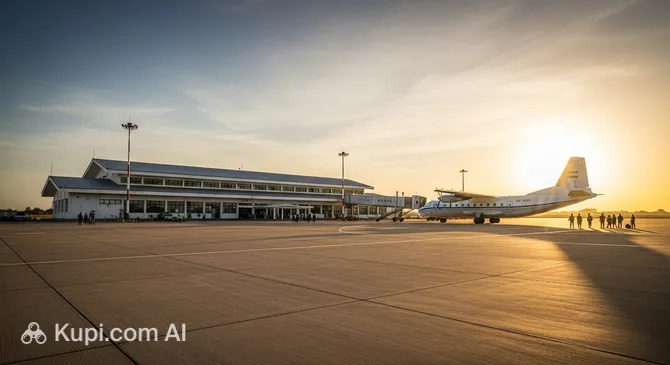
Juba International Airport. Source: Kupi.com Binoculars

Juba International Airport (IATA: JUB, ICAO: HJJJ) is the main air gateway to South Sudan and the country's key transport hub. Located just a few kilometres from the capital's centre, this airport is not only an arrival point for tourists and business travellers but also a crucial base for the United Nations humanitarian missions and other international organisations. As one of the two international airports in the country, it plays a central role in connecting South Sudan with the rest of the world. Its history dates back to 1929 with the establishment of the first airfield on this site.

IATA Code JUB
ICAO Code HJJJ
City Juba
Distance to centre 5 km
Status International
Passengers per year No exact current data available
Popular Airlines Ethiopian Airlines, Kenya Airways, Uganda Airlines.
Schedule Juba International Airport online schedule

Juba Airport has one asphalt runway 3,100 metres long. The infrastructure includes one passenger terminal that serves both domestic and international flights. Despite its modest size, the airport is equipped with everything necessary to accommodate various types of aircraft. In addition to commercial flights, it is actively used for cargo transportation and is a strategically important facility for humanitarian missions delivering aid to different regions of the country.

Contact Information

Obtaining current contact information for Juba International Airport can be challenging. Below are the main available details and recommendations for communication.

  • Official Website: At the moment, the airport does not have a stably functioning official website. It is best to check flight information directly on airline websites.
  • Information Desk Phone: There is no publicly available and reliable phone number for general inquiries. To resolve issues related to your flight, it is recommended to contact your airline directly.
  • Airport Address: Juba International Airport (JUB), Juba, South Sudan.
  • Email: No dedicated email address for general passenger inquiries is published.
  • Social Media: No official social media pages are maintained for the airport.
  • Lost Luggage Information: For all issues related to lost or damaged luggage, please contact the representative of the airline you flew with. Airline counters are located in the airport's arrival area.
  • Passenger Support Contacts: Passenger support regarding tickets, check-in, and special services is provided directly by the air carriers.

How to Get to the Airport

Getting to Juba International Airport (JUB), the main air gateway of South Sudan, from the city centre of Juba is quite quick, as it is located very close by. Depending on traffic conditions, the trip usually takes between 15 to 30 minutes. However, to ensure your journey is smooth and safe, it is worth planning your transport choice in advance.

Taxi and Private Transfer

For tourists, this is the most popular and recommended method. Finding a taxi in the city is not difficult, but it is important to remember that not all cars are equipped with meters. Always agree on the fare before the trip starts to avoid misunderstandings. An even more reliable option is to book a transfer through your hotel or a local travel agency. This ensures a fixed price, comfort, and safety. As a cheaper but less safe alternative, especially if you have luggage, there are motorcycle taxis known as "boda-boda".

Public Transport

A conventional public transport system with regular buses and a metro is absent in Juba. The main means of transport for locals are shared taxis—minibuses that ply specific routes. This is the most budget-friendly way to travel, but it can be extremely inconvenient for travellers with luggage due to overcrowding and the lack of clearly marked stops. Furthermore, their routes do not always go directly to the airport terminal.

Car Rental and Parking

There are several car rental companies operating in the city. However, taking into account the local traffic peculiarities and road conditions, many tourists prefer to rent a car with a local driver. This approach not only eliminates the stress of navigating an unfamiliar city but also increases safety levels. If you still decide to drive yourself, you will likely need an international driving permit. There is parking available on the airport territory for short-term and long-term stays.

Alternative Routes and Nearby Airports

When planning your trip, it is worth considering that neighbouring countries have other airports that can serve as alternative entry points to the region. The largest of these is Entebbe International Airport (EBB) in Uganda, located approximately 540 km from Juba. Other options include Gambela Airport (GMB) in Ethiopia (about 487 km) and Lodwar Airport (LOK) in Kenya (about 485 km). Choosing such a route will require additional planning for the overland portion of the journey and checking visa requirements for crossing borders.

Terminals and Map

Juba International Airport (JUB) is the main air gateway of South Sudan. The airport is relatively small and has one main passenger terminal, which serves both international and domestic flights. The terminal building is modern; it replaced older structures and significantly improved the level of comfort for passengers. Thanks to its compact size and simple layout, navigating the airport is quite easy.

The terminal structure is intuitive. The ground floor houses the general area with check-in counters, the arrivals area with baggage claim belts, and customs control. After checking in, passengers departing on international flights proceed to the first floor for passport control and security screening, after which they enter the departure area. For domestic flights, the procedure is similar but takes place in a separate part of the terminal. Since there is only one terminal, transfers between zones are not required—everything is within a single building.

The departure area is equipped with a waiting lounge featuring sufficient seating, a small duty-free shop, and a café where you can have a snack before your flight. The arrivals area is simpler: after passport control, passengers enter the baggage claim hall and then pass through customs inspection. Upon exiting the terminal, there is a taxi stand and meeting points for passengers.

Despite the airport not being large, it is advisable to allocate enough time for all formalities. It is recommended to arrive at the airport at least 3 hours before an international flight and 2 hours before a domestic one. This is because service speed can vary, and queues at check-in or passport control are sometimes possible. Overall, navigation causes no difficulties, but in case of questions, airport staff are always ready to assist.

Airport History

The history of Juba International Airport (JUB) is closely tied to the history of the formation of South Sudan itself. Its story began in the 1920s when, during the period of Anglo-Egyptian rule, a simple airstrip was created. At that time, it was used mainly for administrative and military needs, serving as a remote outpost of colonial power. This was a modest beginning for a facility destined to become the main air gateway of an entire nation.

Over the decades, the airport in Juba developed slowly, remaining primarily a domestic airfield linking the southern regions of Sudan with Khartoum and other cities. A key turning point was the declaration of South Sudan's independence in 2011. Overnight, the regional airport gained international status and became a symbol of the new country's sovereignty. This new status revealed an acute need for large-scale modernisation, as the existing infrastructure did not meet international standards.

Immediately after gaining independence, work began on expanding and reconstructing the airport. One of the most significant projects was a complete modernisation, culminating in the opening of a new passenger terminal in 2018. The runway was extended, modern navigation equipment was installed, and security systems were improved. These changes allowed the airport to accept a greater number of international flights and various types of aircraft, which is vital for economic development and connections with the outside world.

One interesting fact in the history of Juba Airport is its exceptional role in supporting humanitarian and peacekeeping missions. For many years, it has served and continues to serve as a crucial logistics hub for the United Nations and other international organisations delivering aid to the region. Thus, JUB airport is not just a transport hub, but a true artery ensuring both the country's development and support for its population.

Services and Amenities

Juba International Airport (JUB), the main air harbour of South Sudan, offers passengers all the necessary services for a comfortable wait for their flight. Within the terminal, you will find several small cafés and snack bars where you can drink coffee and have a snack with sandwiches or local pastries. There are also small shops where you can purchase souvenirs, drinks, and travel essentials.

For travellers who value enhanced comfort, a VIP lounge is available. It is recommended to check access conditions and the list of provided services with your airline representative. Access to Wi-Fi at the airport may be limited, so it is better to use mobile data for reliable communication. There are charging points for electronic devices, but their number is small—it is useful to carry a portable power bank.

Currency exchange points and ATMs operate in the airport building, allowing guests of the country to settle financial matters immediately upon arrival. In case of need, a medical post is located in the terminal where basic first aid can be obtained.

Passengers with reduced mobility are provided with the necessary support; however, to organise assistance in a timely manner, you should notify your airline in advance. Specialised services, such as mother and child rooms, may be absent. There are no hotels within the airport itself, but in the immediate vicinity, in the city of Juba, there are many hotels to suit every taste and budget.

Specialised business centres and conference halls are not provided on the territory of Juba Airport. For business meetings and events, travellers can utilise the corresponding infrastructure in major city hotels.

Dining

When planning a departure from Juba International Airport (JUB), it is worth noting that the choice of catering establishments here is quite limited, which is typical for smaller airport terminals. The main cafés and restaurants are concentrated in the main passenger terminal, in the public area before passing passport control and security (landside). This is convenient as it allows you to have a snack without rushing and even spend time with those seeing you off.

For a quick snack, you will find several small cafés where you can order coffee, tea, soft drinks, sandwiches, and pastries. If you have time for a full lunch or dinner, there is a restaurant in the airport offering more substantial meals. The menu usually includes local and African cuisine: grilled chicken or fish with rice, various stews, and soups. This is a good opportunity to try simple but authentic flavours of South Sudan, for example, a bean dish called ful medames or stewed vegetables.

Regarding special dietary needs, finding certified gluten-free or vegan dishes will be difficult. However, simple vegetarian options, such as rice with vegetables or fresh salads, are generally available. Most meat dishes are prepared in accordance with Halal standards. The price range in airport establishments can be described as moderate for international terminals. The opening hours of cafés and restaurants are usually tied to the flight schedule, but it is better not to leave your meal until the last moment.

The main recommendation for travellers is to eat in the main departure hall before proceeding to boarding. In the sterile area (airside), after passing all formalities, the choice of food and drinks may be extremely limited or non-existent.

Travel Tips

To ensure your journey through Juba International Airport goes as smoothly as possible, make use of these tips. The airport serves the capital of South Sudan and, although it is not very large, it is better to be prepared for its specificities. It is recommended to arrive at the airport well in advance—at least 3-4 hours before an international flight and 2 hours before a domestic one. This will give you a sufficient buffer of time in case of queues and unforeseen delays.

Flight check-in and security screening processes may take longer than in major hubs, as some procedures are performed manually. Keep all necessary documents ready: passport, printed e-ticket, visa, and, very importantly, an international certificate of vaccination (especially against Yellow Fever). When passing through customs control, be prepared to answer questions clearly about the purpose of your visit and place of residence.

When choosing a seat on the plane, be guided by your preferences: window seats will give you the opportunity to see African landscapes from above, while aisle seats will allow you to stretch your legs freely and stand up without disturbing your neighbours. Note that on some flights, seat selection may be paid.

Regarding hand luggage, standard international restrictions apply here. Liquids are allowed in containers of no more than 100 ml, packed in a transparent bag. Sharp objects, weapons, and flammable substances are prohibited. Lithium-ion batteries and portable chargers (power banks) must be carried only in hand luggage. Always check the current rules on your airline's website to avoid unpleasant surprises.

If you have a connecting flight, clarify with the airline in advance whether your luggage will be checked through to the final destination or if you will need to collect and re-check it in Juba. To save time, check in for your flight online if possible. To save money, bring an empty water bottle that can be filled after security, and light snacks, as the choice of food and drinks in the airport may be limited and expensive.

In case of a flight delay or cancellation, first contact your airline's counter for information on further actions. Find out about your rights to provision of food, drinks, or hotel accommodation. It is useful to carry a portable charger for gadgets and pre-downloaded films or books to brighten up the wait.

Reached the end of the page?

That means the route is fully explored