Support

Catedral de Ourense

About

Ourense Cathedral, dedicated to Saint Martin of Tours, is a majestic monument of medieval architecture located in the heart of the city of Ourense. Built between the 12th and 13th centuries, this temple is considered one of the most significant Romanesque structures in Spain, although its appearance is harmoniously complemented by later Gothic and Baroque elements.
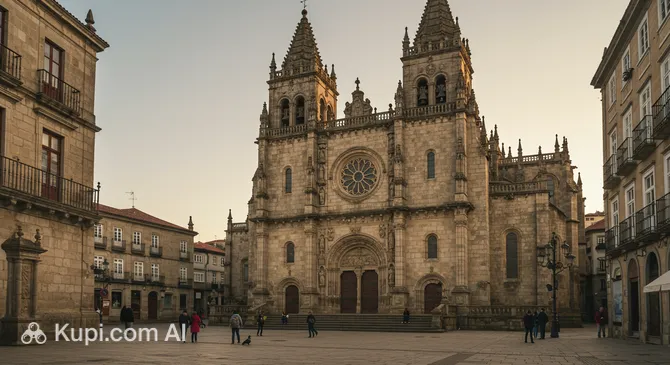
Ourense Cathedral
Ourense Cathedral. Иллюстрация. Источник: Kupi.com AI

The cathedral's crowning glory is the Portico of Paradise (Pórtico del Paraíso), modeled after the famous entrance of the Santiago de Compostela Cathedral. Inside, visitors are met by a solemn atmosphere: gilded statues, a carved choir, and a magnificent 16th-century altar. Special attention should be paid to the Santo Cristo chapel, which houses a revered 14th-century crucifix surrounded by a mystical aura of legends.

The cathedral complex also includes an elegant Gothic cloister, which today houses a museum with a rich collection of sacred art. Holding the status of a basilica and national monument, Ourense Cathedral is not only an important religious center but also a true architectural treasure of Galicia, attracting pilgrims and history buffs from all over the world.

Contacts

To clarify current information about visiting or booking excursions, you can use the cathedral's official contact details.

How to contactContact
AddressAcceso Patín, Rúa Juan de Austria, 32005 Ourense, Spain
Phone+34 608 50 55 31
Websitecatedralourense.com

What to Do

The cathedral's interior offers guests a real journey through the centuries. Be sure to linger at the Portico of Paradise to examine the exquisite sculptures that still bear traces of ancient painting. In the central part of the temple, your attention will be drawn to the monumental altarpiece by Cornielle de Holanda, which is considered a masterpiece of the Renaissance era in Spain.

For lovers of panoramic views, it is worth climbing the 16th-century clock tower. From here, you get a magnificent view of the tiled roofs of the old city and the lively Plaza Mayor. Afterward, you can head to the Gothic cloister to visit the cathedral museum, which houses unique artifacts, medieval scrolls, and precious church utensils.

For those seeking seclusion and spiritual peace, the Santo Cristo chapel is the ideal place. Visitors often come here to see the famous crucifix, which, according to local tradition, possesses miraculous powers. You can conclude your visit with a walk to the nearby Archaeological Museum, located in the former Episcopal Palace, to dive even deeper into the region's history.

Getting There

Ourense Cathedral is located at: Acceso Patín, Rúa Juan de Austria, 32005 Ourense. It is easy to find by following signs to the city's main square, Plaza Mayor. Since the historical center of the city is primarily pedestrian, the best way to reach the temple is a walk, which will allow you to enjoy the atmosphere of the ancient quarters.

If you are arriving from other regions of Spain, take a train or bus to the Estación de Ourense. Trains from Madrid, Santiago de Compostela, and Vigo arrive here. From the railway station, you can reach the cathedral on foot in 15–20 minutes or by local bus or taxi in just a few minutes.

For those traveling by car, it is recommended to leave your vehicle in one of the parking lots outside the historical core of the city, as the narrow medieval streets are not designed for active traffic. From the popular As Burgas thermal springs, the cathedral is only a few minutes' leisurely walk away.

Ближайший город: Ourense

History & Facts

Construction of the cathedral began in the second half of the 12th century and continued until the 13th century. Its solemn consecration by Pope Gregory X took place in 1275 in the presence of Emperor Rudolph I. Over the centuries of its existence, the temple has become a true architectural palimpsest, where Gothic, Renaissance, and Baroque elements were layered onto a Romanesque foundation.

The history of this site goes back even further: Ourense was founded by the Romans in the 1st century AD, thanks to its healing springs. Later, in the 5th and 6th centuries, the city became the capital of the Kingdom of the Suebi, which contributed to the early spread of Christianity in the region. The cathedral is not just a religious building, but a symbol of the era when the city was a powerful religious and commercial hub on the pilgrimage route to Santiago de Compostela.

In the 16th century, the architectural ensemble was enriched with a magnificent altarpiece by Cornielle de Holanda and an elegant clock tower. In 1887, the cathedral received the honorary status of a basilica, and in 1931, it was recognized as a national monument. Today, it remains the main spiritual landmark of Galicia, carefully preserving the memory of many generations of the city's residents.

Time Needed

To leisurely explore the temple interiors, visit the cathedral museum, and climb the clock tower, it usually takes about 1–2 hours. This is enough time to appreciate the fine carvings of the altar and the grandeur of the Portico of Paradise.

If you plan to complement your visit with a walk through the adjacent Plaza Mayor and a visit to nearby attractions such as the thermal springs, it is better to set aside at least 3 hours to get to know the city center. The cathedral invites quiet contemplation, so rushing here would be unnecessary.

Working Hours

The exact opening hours of the cathedral may change depending on the season and religious services, so before visiting this important temple in Spain, it is recommended to check the information on the official website or verify the details on-site.

As a rule, the cathedral is open to tourists in the morning and afternoon. It is worth taking into account the traditional siesta break for the region, during which access inside may be limited. Remember that tourist inspections are not encouraged during services so as not to disturb the parishioners.

Nearby

The cathedral's location in the very heart of Ourense's historical center makes it an ideal starting point for further exploration of the city. Just a few steps from the main entrance, you will find cozy squares, ancient fountains, and unique architectural details that create a distinctive Galician atmosphere.

A stroll through the surroundings will allow you to see the famous hot springs and ancient ruins, rounding out your understanding of the region's rich history. Below is a list of interesting sites within walking distance.

NameDistance
Café Latino0.1 km
Demamáluis - Depapáluis0.1 km
María Tapas0.1 km
Tizar Gourmet Urban Food0.1 km
As Burgas0.3 km
Milongas Parrillada0.3 km
San Lázaro Park0.5 km

Reached the end of the page?

That means the route is fully explored