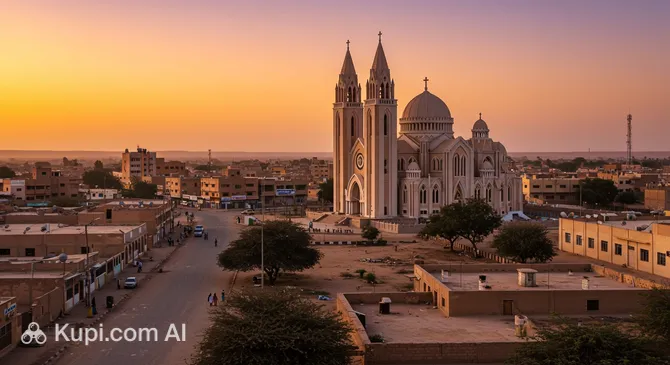
El-Obeid, known among locals as the "bride of the sands," is a major administrative and commercial hub of Sudan. Founded in 1821, this city has served for centuries as a key link between the west, south, and north of the country. Today, it is a bustling metropolis with a population of over 418,000, where the traditions of trade caravans intertwine with the energy of a modern educational center.
The city is located in a picturesque savannah zone, which gradually transitions into desert sands to the north. El Obeid. Illustration.
Source: Kupi.com AI
Although El-Obeid is primarily a business and logistics hub, it charms visitors with its distinctive atmosphere: dusty streets, lively markets, and the hospitality of the locals. The city's rich historical heritage is reflected in its architecture, which combines colonial-era buildings with modern administrative structures.
For the traveler, El-Obeid is primarily a gateway to authentic Kordofan. Here, you can see one of the country's largest universities, grand bazaars, and feel the rhythm of life at a real African trade crossroads. We invite you to explore this unique place, which opens the door to the very essence of Sudanese culture and hospitality.
Weather Overview
The climate in El-Obeid is characterized as tropical semi-desert, which determines the rhythm of life for the entire region. The city is located in a savannah zone, so there are clearly defined hot dry seasons and periods of monsoon rains. If you are planning a visit, be prepared for sunny and sweltering weather for most of the year.
In the summer months, especially May and June, temperatures can rise to 40°C and above, creating conditions of extreme heat. Winter in the city is milder and more pleasant: daytime temperatures stay around 25–30°C, and at night it can be quite cool—around 15°C. Precipitation falls mainly between July and September, bringing temporary relief from the heat but also contributing to increased humidity.
An important feature is the dust storms that occur during the dry season and can temporarily reduce visibility. Before your trip, we recommend checking the current city climate to choose the right wardrobe and prepare for the weather conditions of this region.
Average monthly temperature
Average monthly precipitation
Interesting Facts
"Bride of the Sands" — this is the poetic name given to El-Obeid by locals due to its location on the border of fertile lands and endless deserts.
The city is one of the few places in Sudan besides Khartoum that officially hosts a Roman Catholic diocese and an Anglican bishopric center.
El-Obeid was completely destroyed in 1883 during the Mahdist uprising and rebuilt in 1898 according to a modern grid plan, which distinguishes its layout from many other ancient cities in the region.
It is home to one of the world's largest trading centers for gum arabic — a valuable acacia resin used in the food and pharmaceutical industries worldwide.
El-Obeid is the eighth largest city in the country and serves as a key railway and road hub connecting the western regions with the Red Sea ports.
How to Get There
El-Obeid is a vital transport hub in the central part of the country, connecting the western regions with the capital. The primary way to reach the city quickly is by air. El-Obeid Airport (IATA: EBD) handles regular domestic flights, mainly from Khartoum. The flight takes about an hour and a half, saving significant time compared to ground transport.
For those who prefer traveling by land, the city is accessible via modern highways. The journey from Khartoum by car or scheduled bus is about 400 kilometers and takes between 6 to 8 hours. It is worth considering that part of the route passes through sandy sections, so it is recommended to choose reliable carriers or rent a 4WD vehicle. More detailed information can be found in the section on how to get to El-Obeid.
Railway service in the region is currently underdeveloped and used primarily for freight transport. Passenger trains run irregularly, so it is better to rely on aviation or road transport for trip planning. Within the city, taxis and motor rickshaws remain the most popular and affordable ways to get around.
Main Attractions
El-Obeid is first and foremost a city of living history and daily activity rather than a classic tourist center with museums. The main point of attraction here is the Central Grand Market. This is a true labyrinth of trading stalls where you can see all the richness of the region: from fragrant spices and bright fabrics to the world-famous gum arabic. The market is the pulse of the city, where life teems from early morning.
Another important landmark is the University of Kordofan, founded in 1990. Its campus serves as the center of intellectual life in the region and is one of the most prestigious educational institutions in Sudan. A walk through the surrounding areas allows you to see the modern face of the city and meet the local youth.
History and architecture enthusiasts should pay attention to the city's old quarters, rebuilt at the end of the 19th century. Among the low-rise buildings, majestic mosques and administrative buildings stand out, as well as the El-Obeid Cathedral. The presence of a Roman Catholic diocese in such a conservative region makes the city a unique cultural crossroads, emphasizing its openness and diversity.
Local Cuisine
The culinary traditions of El-Obeid are the heart of Sudanese hospitality. The local diet is based on simple but hearty dishes, where grains and meat play the leading roles. Be sure to try assida — a thick sorghum porridge served with various sauces, and kisra — thin fermented pancakes that serve as a bread substitute. Also incredibly popular is ful — a spiced bean puree that many city dwellers start their day with.
Meat dishes in the region are primarily represented by lamb and, giving the local menu a special flair, camel meat. Meat is often cooked over an open fire (shaya) or stewed with vegetables and aromatic spices. The city's gastronomic scene is mainly represented by street food stalls and traditional tea houses located near the markets. Here, you can not only have a delicious meal but also observe the daily life of the city.
Among drinks, a special place is held by Sudanese Arabic coffee, brewed with ginger or other spices, and strong sweet tea with milk. On hot days, freshly squeezed tropical fruit juices—mango and guava—are a lifesaver, known here for their incredible sweetness. The cuisine in El-Obeid is oriented toward locals, so every dish is authentic and prepared according to long-standing traditions.
Travel Tips
A trip to El-Obeid is an opportunity to see the real, non-touristic Sudan. To make your journey as comfortable and safe as possible, we have prepared several important tips.
Clothing and Dress Code: Choose light clothing made from natural fabrics (cotton, linen) to better endure the heat. Given local traditions, clothing should be modest: covered shoulders and knees are mandatory for both women and men.
Finances: Bring enough cash in dollars or euros to exchange for Sudanese pounds. International bank cards are practically not accepted in El-Obeid, and ATMs may not work with foreign accounts.
Health: Drink only bottled water and avoid ice in drinks. During the dry season, the city can be very dusty, so it is useful to have a light scarf to protect your face during dust storms.
Transport: Taxis and motor rickshaws are best for getting around the city. Always agree on the price before starting the trip. For long trips outside the city, renting a car with a driver is recommended.
Connectivity: A local SIM card can be purchased at the airport or specialized stores. Wi-Fi is available only in some hotels and cafes in the university area, so mobile internet will be your primary communication channel.
Etiquette: Sudanese people are very polite and value traditional greetings. Don't forget to say hello and show respect to elders. Taking photos of government facilities, bridges, and people without their consent is categorically discouraged.
Safety: Stick to the central areas and avoid walking alone at night, especially on the outskirts of the city. Areas near industrial zones are also not of interest for walking.
Additional Tip: Visit the central market early in the morning before the intense heat sets in—it's the best time to see the city in all its color.
May your acquaintance with the "bride of the sands" leave only the warmest memories and provide a unique experience of immersion into Kordofan culture!
Entertainment & Nightlife
The entertainment scene in El-Obeid is deeply rooted in local traditions and has a calm, family-oriented character. There are no noisy nightclubs or bars, which is typical for the region's conservative lifestyle; however, the city's evening life is charming in its own way. As the air cools, major activity moves to the numerous tea houses and outdoor cafes, where residents gather for leisurely conversations over a glass of aromatic Sudanese tea or coffee.
Bazaars remain the center of social activity during the day, while in the evening, attention shifts to the university district. Cultural events, lectures, or sports matches are sometimes held here, attracting the active part of the city's population. For those seeking more familiar forms of leisure, walks across the surrounding plains offer an alternative, providing impressive views of the savannah, especially in the light of the setting sun.
If you are looking for a busy nightlife with concerts and cinemas, it is worth noting that such entertainment is more characteristic of the capital. In El-Obeid, the value lies in the opportunity to immerse yourself in an authentic rhythm of life by visiting local markets or observing traditional trade. Safety in the central areas of the city is good, but it is recommended to use taxis for late-night travel.
Parks & Museums
El-Obeid is a city where nature and the urban environment coexist under hot semi-desert conditions. There are practically no specialized museums in the traditional sense in the city; however, the University of Kordofan plays the role of a guardian of knowledge and culture. Small displays or exhibitions dedicated to the history and ethnography of the region can sometimes be found on its grounds, making it a must-visit for those interested in the heritage of Kordofan.
There are few park zones in the city, and most of the greenery is concentrated around administrative buildings and the university campus. These small oases in the shade of trees provide a real escape during hot hours. For locals, common places for relaxation are the open spaces near mosques and market squares, where a special atmosphere of community and tranquility is created in the evenings.
Despite the lack of large-scale man-made gardens, the natural landscape around the city is an attraction in itself. The endless savannah plains surrounding El-Obeid offer travelers the chance to see the region's pristine nature. Walks on the outskirts allow you to enjoy the silence and space that are so characteristic of the central part of Sudan.
Getting Around
The transport system in El-Obeid is simple and highly adapted to the needs of local residents. The main form of public transport is minibuses, known as arbaish. They run on fixed routes, connecting key points of the city: the central market, the university campus, and the airport. This is the most affordable way to get around, although the vehicles can be overcrowded during peak hours.
For more comfortable and faster trips, tourists and locals often use motor rickshaws and taxis. They allow you to reach any point in the city much more quickly. It is important to remember that taxis in El-Obeid do not have meters, so the cost of the trip must be negotiated with the driver in advance. Prices are generally low, but they may be slightly higher for foreigners if one does not show firmness during the discussion.
The city is quite compact, and its central part can be explored on foot; however, the dustiness of the streets and high air temperatures should be taken into account. There are no modern payment systems or mobile apps for calling transport here, so always keep small amounts of cash with you. Despite its simplicity, El-Obeid's transport network handles the passenger flow well, ensuring mobility in this important trade hub.
Accommodation
The hotel infrastructure in El-Obeid is mainly geared toward business travelers, students, and transit passengers. You won't find luxury five-star international chain hotels here, but the city offers a decent selection of mid-range and budget accommodation. Most options are guesthouses and small 2-3 star hotels providing basic comfort and necessary amenities.
The most convenient areas to stay are concentrated around the central market, the university, and the airport. Proximity to the center ensures easy access to transport hubs and the city's main shopping zones. For those planning to stay in the city for a long period (for study or work, for example), renting apartments is a popular option, often offering more favorable terms.
When planning your trip, keep in mind that service in local hotels can be quite basic. It is recommended to book accommodation in advance, especially if your visit coincides with major regional events or the start of the academic year at the university. Payment is most often made in cash in the local currency, so it's a good idea to arrange for currency exchange beforehand.
Nearby Cities
El-Obeid serves as an excellent starting point for exploring the central and western regions of Sudan. The city's surroundings are classic savannahs with a unique rural way of life, where you can learn about the traditions of local tribes and see the vast expanses of Kordofan.
Among the nearby destinations, the city of Ad-Da'ein, located just a few dozen kilometers away, stands out, as does Umm Ruwaba—an important agricultural center on the way to the capital. For those ready for longer journeys, An-Nuhud, known for its trade and the color of the western steppes, is an interesting option.
Exploring nearby towns and settlements allows for a deeper understanding of the diversity of Sudanese culture and a chance to see the country beyond major administrative centers. Travel along these routes is usually done by bus or private taxi, revealing the authentic landscapes of the African savannah to tourists.
Shopping & Souvenirs
Shopping in El-Obeid is primarily an immersion into the atmosphere of traditional oriental bazaars. You won't find huge modern shopping malls with international brands here, but you will find authentic goods that cannot be bought anywhere else. The main place for shopping is the Grand Market (Central Market). This is the heart of the city's trade, where you can buy everything from daily groceries to unique items of local life.
The city is famous for its leather goods and high-quality fabrics brought here from across the region. If you are looking for souvenirs, look for handicraft items and local spices. El-Obeid is also a global center for the gum arabic trade, and a visit to the market provides a unique opportunity to see how this valuable product is prepared for shipment to different corners of the planet.
Most shops open early in the morning and close by sunset, taking a break during the hottest midday hours. Payment is made exclusively in cash in Sudanese pounds, and the ability to haggle politely is welcomed and helps not only to save money but also to get to know the local sellers better. Shopping here is not just about buying things, but an important part of social interaction and getting to know the city's culture.