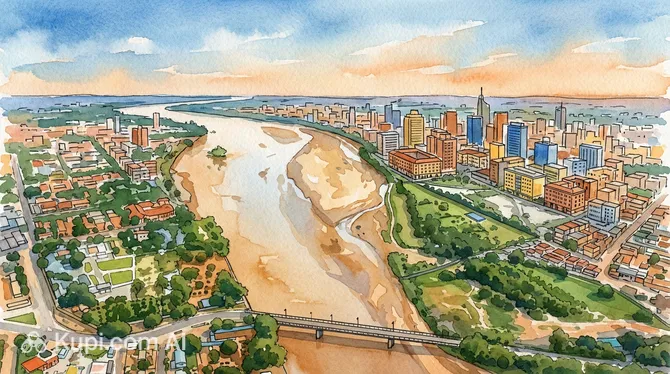
Nyala is a dynamic and bustling trading hub located in the heart of Sudan. As the administrative center of South Darfur state, this city is permeated with an atmosphere of active regional life and business hustle, characteristic of major Sahelian settlements. Sprawling at an altitude of 686 meters above sea level, Nyala serves as an important link between various regions of the country.
Nyala. Illustration.
Source: Kupi.com AI
The city's geographic location, 900 kilometers southwest of Khartoum, has defined its role as a key economic hub. Home to about 500,000 people, the urban space is filled with the hum of markets and the work of local industries. In the history of the region's development, Nyala has always held a place as a strategic center for the trade of gum arabic, textiles, and leather goods, making it an important point on the economic map of Africa.
Despite the city being primarily an administrative and educational center, one can experience the authentic flavor of the Sudanese province here. Nyala University and numerous craft workshops give the city a unique character. A visit to Nyala will be an interesting experience for those who want to see the real, non-touristic Sudan and get acquainted with its rich trading traditions.
Weather Overview
Nyala's climate is characterized as arid, with pronounced hot periods throughout the year. Expect extremely hot summers, especially from March to May, when daytime temperatures can reach +38...+40°C. During this period, the air remains dry and the sky clear.
The winter months, from December to February, are considered the most comfortable for visiting, when the average temperature is around +23...+25°C and nights bring a pleasant coolness. The rainy season in Nyala falls in July and August, when the bulk of the precipitation occurs, tempering the heat but increasing the humidity. At other times of the year, the city is at the mercy of the sun and dry savanna winds.
Average monthly temperature
Average monthly precipitation
Interesting Facts
Nyala holds many interesting details that reveal its significance for the entire African region. Here are a few curious facts about this city:
Global Gum Arabic Hub: The city is one of the most important trading centers for this valuable natural component, which is used in the food industry worldwide.
Banking Center for Farmers: Specialized branches of the Agricultural Bank of Sudan operate here, providing unique support to local artisans and fishermen.
Educational Magnet: Having its own university makes Nyala a key intellectual center of South Darfur, attracting students from all over the region.
High-Altitude Status: Its location at an altitude of nearly 700 meters above sea level creates a specific microclimate here, which differs slightly from the country's lowland territories.
How to Get There
The transport accessibility of Nyala largely depends on air travel and intercity bus routes. For travelers who value time, the main way to get here is by air. The city is connected by regular flights with other major regional centers, making it accessible despite its significant distance from the capital.
The main air gateway is Nyala Airport (IATA: UYL). It is located in close proximity to the city, allowing for a quick trip to the central districts by taxi. The flight from Khartoum takes only a few hours, which is much more convenient than a tiring overland journey across the arid expanses.
Ground connections are provided by bus terminals and a railway station. A bus trip from Khartoum can take from 12 to 18 hours, depending on road conditions and weather. The railway infrastructure in Nyala serves as an important link for freight and passenger transport, although it is recommended to check train schedules directly on-site.
Main Attractions
While Nyala is not positioned as a typical tourist center with an abundance of classic sights, the city is interesting for its authentic atmosphere and the rhythm of everyday life. The main point of attraction for guests is the central markets, where you can see a wide variety of goods — from the famous gum arabic to skillfully crafted leather and traditional Sudanese textiles.
An important part of the cityscape is the Nyala University campus. This is not only an educational institution but also a kind of cultural center reflecting the region's drive for development and knowledge. A walk through the university grounds allows you to meet the local intelligentsia and youth.
For those who want to feel the pulse of the city, it is worth visiting the squares around the train stations and administrative buildings. The city's architecture is predominantly functional, but it is in these places that the fusion of different ethnic groups and traditions of South Darfur is best observed. Here, life bustles from early morning until sunset, offering an attentive observer many interesting stories.
Local Cuisine
The culinary world of Nyala is a colorful combination of African and Arabic traditions, where simple but hearty dishes play the main role. The basis of the local diet consists of grain porridges, stewed meat, and vegetables with aromatic spices. A meal here is always a social event, full of hospitality.
Be sure to try traditional Sudanese dishes such as asida (a thick sorghum or wheat porridge) with various sauces, as well as ful medames — stewed fava beans, which are often served for breakfast. In local establishments near the markets, you can taste succulent grilled meat prepared according to old recipes.
The beverage culture in the city revolves around Sudanese tea and coffee. Small street teahouses are favorite meeting places where drinks are prepared with added ginger, cinnamon, or mint. It is the perfect way to take a break from the heat and observe the lively trade in the city markets.
Travel Tips
A trip to Nyala requires thorough preparation to ensure your stay in this regional center is comfortable and productive. Take advantage of these practical tips for planning your itinerary.
Clothing and Essentials: Choose light clothing made from natural fabrics (cotton, linen) that will protect you from the sun. Don't forget a hat and sunglasses. Due to the cultural characteristics of the region, it is recommended to choose modest, covering clothing.
Transport: The primary way to get around the city is by taxi. Always agree on the fare in advance, as meters are rare. You can also use minibuses to travel between districts.
Finances: The official currency is the Sudanese pound. Cards are rarely accepted, so always carry a sufficient supply of cash. It is best to exchange currency at official bank branches.
Health: Always drink only bottled water. Carry a basic first-aid kit and insect repellent. Pharmacies can be found in the city center, but it's better to bring specific medications with you.
Communication: The main language is Arabic. English is understood at the university and in administrative offices. Learn a few basic greetings in Arabic — this is highly appreciated by the locals.
Local Etiquette: Greeting is an important ritual; do not neglect it. Try to use your right hand for eating and passing items, as local traditions dictate this.
What to Avoid: Do not photograph government buildings, bridges, or military objects without official permission. Caution should also be exercised when photographing people in markets without their consent.
Following these simple rules will help you better understand the local way of life and make your journey through Sudan truly memorable.
Entertainment & Nightlife
Entertainment in Nyala is calm and traditional, reflecting the city's status as an administrative hub. You won't find noisy nightclubs or European-style bars here, as evening life focuses on socializing with family or friends. The main leisure spots are traditional teahouses and small cafes that come to life with the arrival of the evening cool.
The central squares and market areas remain active until sunset. This is the best time for leisurely walks when the heat subsides and city dwellers take to the streets. Locals often gather to discuss news and relax in cozy establishments serving aromatic coffee.
Daytime leisure can be varied by attending events at the local university or strolling through the market stalls in search of unique handmade items. The city's cultural life is closely intertwined with its trading way of life, so even a simple souvenir hunt turns into an exciting adventure and an introduction to local traditions.
Parks & Museums
Finding classic parks and museums in Nyala can be a challenge, as the urban environment here is oriented toward functionality and trade. However, in the region's arid climate, any green islands acquire special value. Small, well-kept areas can be found near administrative buildings and on the university campus, where trees provide much-welcomed shade.
While the city lacks large art galleries, the craft quarters serve as a kind of "living museum." Here, you can personally witness the processes of traditional leather processing and textile manufacturing, which have been passed down through generations. This provides a deeper understanding of South Darfur's cultural heritage than any static exhibition.
For those interested in history and architecture, old administrative buildings that have preserved features of colonial and traditional Sudanese styles can be objects of interest. Although these are not museums in the conventional sense, they clearly demonstrate the stages of the city's development and its transformation into a major regional hub.
Getting Around
The public transport system in Nyala is simple and efficient for the needs of the local population and travelers. The backbone of urban communication consists of taxis and minibuses, which ply between the main commercial zones, stations, and residential quarters. Taxis are the most convenient option for guests, allowing you to quickly reach your destination without needing to study complex routes.
Fares are paid in cash, so it is recommended to always have small denominations of Sudanese pounds with you. There are no universal travel passes or transport cards in the city, and the price of a taxi ride should be agreed upon before you get into the car. Minibuses are a more budget-friendly option, but they are often overcrowded, especially during peak hours near the central markets.
For long-distance travel, residents use bus terminals that connect Nyala with surrounding towns and the capital. Air transport via the local airport remains a priority for connecting with Khartoum, ensuring fast and reliable access to South Darfur from other parts of the country.
Accommodation
Nyala's hotel infrastructure is primarily geared towards business travelers, staff from international organizations, and transit passengers. Mid-range and budget-class hotels predominate, providing the necessary set of amenities for a comfortable rest after the road. The main concentration of accommodation is found in the areas adjacent to the airport and the railway station.
If you are planning a long stay, it is worth considering renting an apartment, which is often practiced among expats and specialists working in the region. This can be a more economical and convenient solution. It is recommended to book accommodation in advance, especially during periods of active business or administrative activity in the city.
The price range for hotels in Nyala remains moderate, though the level of service may differ from that in the capital. When choosing a place to stay, you should pay attention to the availability of air conditioning and a reliable water supply system, which are critical in the hot, arid climate. Most bookings are made through direct contact with the hotels or specialized regional services.
Nearby Cities
Nyala serves as an excellent starting point for exploring other significant centers in South and North Darfur. Traveling around the surrounding areas will allow you to get to know the diversity of this region more deeply and see cities that each possess their own unique character.
One interesting destination is Zalingei, located about 179 kilometers away. This city is known for its agricultural traditions and picturesque surroundings. Another important point on the route is El Fasher — a historical center situated 181 kilometers from Nyala, famous for its rich culture and architectural heritage.
For those ready for longer trips, it is worth noting Kutum, the journey to which is about 239 kilometers. Exploring nearby towns and villages will help form a complete picture of life in western Sudan, its hospitable people, and the endless expanses of the savanna.
Shopping & Souvenirs
Shopping in Nyala is, first and foremost, a visit to the colorful traditional markets, which are the heart of the city's economy. There are no giant shopping centers with glass storefronts, but there is an opportunity to immerse yourself in the authentic atmosphere of an oriental bazaar, where trading begins from early morning. The main shopping zones are concentrated in the city center and around transport hubs.
The region's main commodity is the famous gum arabic, but tourists should also pay attention to other products. Local artisans are famous for their leatherwork; here you can purchase high-quality handmade belts, bags, and shoes. The textiles with traditional patterns are also noteworthy and make excellent mementos of your trip.
The markets operate during daylight hours, and the best time for shopping is in the morning when it is not yet too hot. Payment is made exclusively in cash in Sudanese pounds, and the ability to haggle politely is welcomed. Strolling through Nyala's market stalls is not just about buying things, but an opportunity to meet local craftsmen and feel the true spirit of Sudan.