Support

Baden

About

Baden is a true oasis of comfort and harmony, tucked away just a twenty-minute drive from Zurich. Located on the picturesque banks of the Limmat River in the canton of Aargau, this city invites travelers to enjoy views of green hills and the distant peaks of the Alps. If you are planning a visit to Switzerland, Baden is a wonderful place to experience its culture and nature.
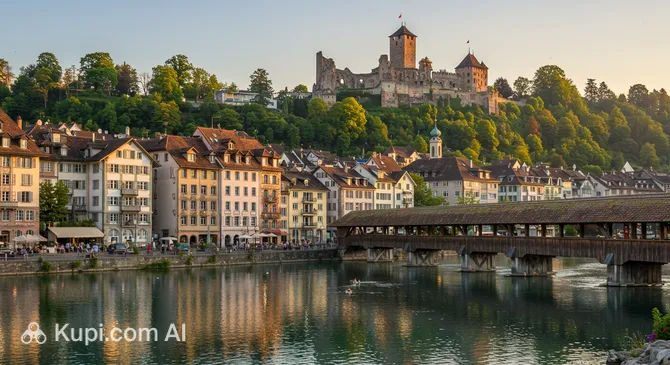
Baden. Illustration.
Source: Kupi.com AI

The city gained particular fame for its mineral thermal springs. Rooted deep in the centuries, Baden's history is inextricably linked with healing traditions: as far back as the Roman Empire, these waters were valued for their properties, and the city's name itself translates as "bath." Today, you can not only touch the past here but also enjoy a wonderful rest in modern spa complexes, restoring your strength and peace of mind.

Despite its compact size and population of about 19,000, the city plays a prominent role in the cultural life of the region. Baden's historical center is entirely pedestrianized, allowing you to admire the ancient bridges, narrow cobbled streets, and cozy squares without the hustle and bustle. Visitors can visit the famous casino, stop by local museums, or go for a walk in the surrounding forests.

Baden is ideal for both lovers of architecture and art, and those seeking tranquility in the heart of nature. This welcoming place is definitely worth including in your itinerary to experience a unique blend of historic charm and modern comfort.

Weather Overview

The climate in Baden can be described as temperate, which makes the city pleasant to visit; however, travelers should be prepared for the changeability of the weather conditions. Summer here is usually mild and not exhaustively hot: in July and August, daytime air temperatures reach a comfortable average of +24...+25°C. This is an ideal time for long walks, though it's better to keep an umbrella handy, as rain occurs quite often.

Winter months bring a chill, but severe frosts are rare. In January, the coldest month of the year, the thermometer can drop to -1°C at night and stay around +2...+4°C during the day. Such weather in Baden is perfectly conducive to visiting the famous thermal springs, where the contrast between the cool air and hot water is felt especially vividly.

Spring and autumn are periods of gradual temperature changes. By May, the air warms up to an average of +13°C, but it is precisely at the end of spring that a large number of rainy days occur (up to 18 per month). Expect a warm summer with occasional rain and fairly mild but damp winters, which is typical for this region of Switzerland.

Average monthly temperature

Average monthly precipitation

Interesting Facts

Beyond its main attractions, Baden holds many fascinating secrets that make a visit truly memorable. Here are a few facts that will help you look at this city from a new perspective:

  • Ancient Roman Heritage. Baden boasts one of the longest traditions of thermal bathing in Europe. The local healing springs were known as far back as the Roman Empire, and archaeologists still find fragments of ancient baths here that are over two thousand years old.

  • A Union of Industry and Art. The city was the birthplace of the famous Brown, Boveri & Cie (ABB) group. The founding families, the Browns and Boveris, left the city a priceless gift—Villa Langmatt. Today, it houses one of the most significant Impressionist collections that Switzerland can boast.

  • The Habsburg Footprint. The ruins of Stein Castle rise majestically above the old town. Once, this fortress belonged to the powerful Habsburg dynasty. By climbing up here, you can not only touch history but also enjoy a breathtaking panorama of the city against the backdrop of Alpine peaks.

  • City of Festivals and Lights. Baden enjoys a rich cultural life: jazz festivals and open-air theatrical performances take place here regularly. And in winter, the city is transformed beyond recognition thanks to Christmas markets and fairytale festive illuminations.

How to Get There

When planning a trip to this cozy Swiss corner, it's worth thinking through your route in advance. Baden is very well-located, being in close proximity to the country's major transport hubs, which makes a trip here easy and comfortable. You can find out more about how to get to Baden by exploring all available options, but most often, tourists choose to fly to the nearest international airports followed by a transfer to ground transport.

Baden does not have its own airport, so the primary air gateway for travelers is Zurich Airport (IATA: ZRH). It is located in the city of Zurich, just 19.2 km from Baden. This is the country's largest aviation hub, receiving flights from all over the world. The journey from the airport by taxi or car will take about 40–50 minutes, depending on traffic. Due to the short distance, this is the most popular choice for tourists.

An alternative option is EuroAirport Basel-Mulhouse-Freiburg (IATA: EAP), located in the city of Basel. The distance to Baden is approximately 60 km. A car trip from here will take about 1 hour and 50 minutes. This airport is often chosen by those traveling on European low-cost carriers or wishing to combine their trip with a visit to the region at the junction of three countries.

For clarity, here is summary information on the main airports through which you can reach the region:

AirportPassenger trafficDistance
Zurich Airport31.2 mln19 km
EuroAirport Basel–Mulhouse–Freiburg8.1 mln60 km
EuroAirport Basel Mulhouse Freiburg8 mln60 km
EuroAirport Basel-Mulhouse-Freiburg8.1 mln60 km
Bern Airport57 00087 km

The Swiss railway system is famous for its punctuality and convenience. Baden itself does not have a large international railway terminal for long-distance trains, but you can travel to one of the country's main stations and then transfer to a regional train or taxi. The nearest key hub is Zurich Hauptbahnhof (ZLP), located in the city of Zurich, about 20.5 km from the center of Baden. This is one of the busiest stations in the world, from where you can reach Baden by local train in a matter of minutes or by taxi in about half an hour.

Another convenient option is Basel SBB station (ZDH), located in the city of Basel, at a distance of 54.7 km. High-speed trains from France and Germany arrive here. The journey from Basel station to Baden by car takes about an hour and a half, but railway connections between the cities are also excellent.

Below is information about the nearest major railway stations that can serve as a starting point for your route:

StationPassenger trafficDistance
Zürich Hauptbahnhof154.6 mln20 km
Basel Badischer Bahnhof7.3 mln54 km
Basel SBB station40 mln55 km
Oerlikon Railway Station34.4 mln87 km
Bern Railway Station69 mln88 km

Main Attractions

Baden is a city where history is harmoniously interwoven with modernity, offering tourists a rich choice of experiences. From medieval fortifications to exquisite art galleries—everyone will find something to their liking here. A walk through the city turns into a fascinating journey through eras, where every turn reveals a new facet of this Swiss corner.

One of the city's main landmarks is the Stein Castle ruins (Ruine Stein). Towering on a steep hill above the old center, the remains of the once-mighty fortress serve as a magnificent observation deck. Upon climbing up here, travelers are rewarded with a breathtaking panoramic view of Baden's tiled roofs, the bends of the Limmat River, and the green vineyards covering the slopes of the surrounding hills. It is the perfect place to appreciate the region's beauty from a bird's-eye view.

No less impressive as a symbol of the city is the covered wooden bridge (Holzbrücke). This historical structure, connecting the banks of the Limmat, impresses with its architecture and authenticity. Walking along its ancient planks, you can feel the breath of time and admire views of the river and embankments. The bridge is especially beautiful in the evening when soft lighting reflects in the river waters, creating a romantic atmosphere.

Art lovers should definitely visit the Museum Langmatt. Located in a luxurious early 20th-century villa that belonged to the family of the ABB group's founders, the museum houses one of the most significant private collections of French Impressionists in Switzerland. Here, in a cozy and almost domestic setting, you can enjoy masterpieces by Renoir, Monet, and Cézanne, and then stroll through the magnificent park surrounding the estate.

For those seeking bright emotions and social entertainment, the Grand Casino Baden is a point of attraction. This establishment is known far beyond the city limits not only as a place for gambling but also as a center of cultural life. Concerts, gastronomic evenings, and various shows are regularly held here, making the casino a popular place for evening leisure among both locals and tourists.

Local Cuisine

Baden's gastronomic scene harmoniously combines Swiss culinary traditions with modern European flavors. In local establishments, tourists should definitely order the hearty and warming dish "Älplermagronen"—these are Alpine macaroni baked with potatoes, fragrant cheese, and crispy fried onions. Thanks to the city's location on the river, restaurant menus often feature specialty dishes made from fresh fish caught directly in the waters of the Limmat.

It is customary to accompany a meal in Baden with a glass of local wine. The winemaking traditions of the Aargau region are very strong, and the areas surrounding the city produce excellent white and red varieties that perfectly complement the taste of local dishes. Those with a sweet tooth will enjoy the cozy coffee shops and confectioneries, where guests are offered signature desserts and, of course, the famous Swiss chocolate.

The food culture here is diverse: from elegant restaurants serving cantonal cuisine to casual street food. A special atmosphere is created by farmers' markets, where you can buy the freshest bread, homemade pastries, and local cheeses while chatting with the producer families. Additionally, gastronomic festivals often take place on the city streets, allowing you to try both traditional and international treats in a festive setting.

Travel Tips

Welcome to cozy Baden! To ensure your trip to this city of thermal springs and rich history is as comfortable and hassle-free as possible, we have prepared a list of useful recommendations to help you feel right at home here.

  1. Clothing and Essentials: The weather in Switzerland can be changeable, so the principle of layering will be your best friend. Be sure to bring comfortable flat-soled shoes for walking on the cobblestones of the old town. And, of course, don't forget your swimwear—visiting Baden and not taking a dip in its famous thermal waters would be a great omission, regardless of the season.
  2. Transport: The city's historical center is compact and entirely pedestrianized, so it's best to explore it on foot. For trips around the area or to neighboring Zurich, public transport (buses and trains) is ideal—it runs strictly on schedule and is very comfortable. Renting a car within the city is not necessary and can be burdensome due to paid parking.
  3. Finances: The official currency is the Swiss franc (CHF). Although cards are accepted almost everywhere, from restaurants to ticket machines, it's useful to have a small amount of cash on hand for small purchases at markets or kiosks. The country is not cheap, so plan your budget with a cushion; tips are usually already included in the bill, but rounding up the amount is appreciated.
  4. Health and Safety: Baden is a very safe city where you can walk peacefully even in the evening. Tap water here is of excellent quality and suitable for drinking, so feel free to fill your bottles from the fountains. Pharmacies (marked as Apotheke) are easy to find in the center, and on-call ones work even on weekends.
  5. Communication: The main language of communication is German (more specifically, the Swiss dialect), but most locals, especially in the tourism sector, speak English perfectly. For navigation and buying tickets, we strongly recommend downloading the SBB Mobile app—it's indispensable for traveling across the country and shows real-time transport schedules.
  6. Local Etiquette: Locals value politeness and personal space. When entering a small shop or cafe, it's customary to greet the staff (a universal "Grüezi" or just "Hallo" will do). Maintain silence on public transport—loud phone conversations or noisy behavior are considered bad form here.
  7. What to Avoid: Do not cross the road on a red light, even if the horizon is clear and there are no cars—it's not done and may cause disapproval from locals or even a fine. Also, avoid noise on Sunday: this is a traditional day of silence and rest, when it's not customary, for example, to throw glass into recycling containers or listen to loud music.
  8. Sweet Souvenir: Be sure to try the local gastronomic attraction—the Spanischbrödli pastry. This light puff pastry with a hazelnut and apricot jam filling has an interesting history and is the sweet symbol of Baden, perfectly complementing a cup of coffee.

We hope these tips help you plan the perfect trip. Baden knows how to charm with its tranquility, high level of service, and hospitality—enjoy every moment of your stay in this wonderful corner of the canton of Aargau!

Entertainment & Nightlife

Despite its reputation as a quiet wellness resort, Baden knows how to surprise guests with a rich evening program. As the sun sets, the city is transformed: leisurely walks along the river give way to bright lights, music, and lively conversations. Baden is considered the nightlife center of the canton of Aargau, attracting entertainment seekers even from neighboring Zurich.

The Grand Casino Baden is rightfully considered the epicenter of social life and excitement. This establishment is not just a place to play roulette or poker, but a true entertainment complex with restaurants, bars, and its own club. An atmosphere of elegance and celebration prevails here: live music concerts, themed parties, and gastronomic shows are frequently held. It is recommended to follow a casual chic dress code to feel comfortable among the fashionable crowd.

If you are looking for a more casual and youthful atmosphere, head to the Baden Nord district, where new life is buzzing in former industrial buildings. One of the main points of attraction here is the Nordportal cultural center. This is a multifunctional venue hosting noisy parties with DJs, rock concerts, and alternative events. The crowd here is very diverse, and musical genres range from electronic music to hip-hop.

Fans of bar culture should stroll through the pedestrian streets of the Old Town. Here, in historical buildings, many cozy pubs, wine cellars, and cocktail bars are hidden. In summer, life spills out onto the streets: terraces fill with people enjoying the warm evenings and local beer. Many establishments stay open until midnight or 1:00 AM, and clubs are open until early morning, especially on Fridays and Saturdays.

For those who prefer cultural leisure, Baden offers a visit to the Kurtheater Baden—the largest theater in the region. Its repertoire includes everything from classical dramas and opera to modern dance and comedy productions. During the day, the city invites guests to its museums, such as the Historical Museum located in Landvogtei Castle, or simply to enjoy nature in the well-maintained city parks.

In terms of safety, Baden is a very peaceful city. Night walks through the illuminated streets of the center and the Limmat embankment do not cause concern. The transport system is also excellently designed: on weekends, special night trains and buses (the Nachtwelle network) run, allowing you to easily reach your hotel or return to Zurich even late at night. Prices for entertainment correspond to Swiss levels: a cocktail in a bar will cost an average of 15–20 francs, and club entry may be paid.

Parks & Museums

Baden is a city where cultural life is in full swing, surrounded by picturesque landscapes. If you have come to Switzerland for a combination of nature and art, this corner of the canton of Aargau will not disappoint you. An impressive number of green zones and museum spaces are concentrated here, allowing you to alternate educational leisure with relaxing walks in the fresh air.

The heart of green Baden is rightfully considered the Kurpark. This magnificent park, located in close proximity to the Grand Casino and the theater, is famous for its ancient trees and well-kept alleys. It is the perfect place for a leisurely promenade after visiting the thermal springs: an atmosphere of tranquility and aristocratic comfort, characteristic of classic European resorts, reigns here.

For those who prefer to be closer to the water, the promenade along the Limmat River will be a true discovery. A picturesque pedestrian zone stretches along the bank, offering views of ancient bridges and city architecture reflected in the water's surface. This is a popular route among both tourists and locals, ideal for morning jogs or romantic evening strolls as the city lights up.

The city's cultural map is no less rich. One of the most unusual and touching attractions is the Swiss Children's Museum (Schweizer Kindermuseum). Located in an old villa, it tells the story of childhood over the last 300 years. The exhibition includes thousands of toys, school supplies, and books, allowing adults to dive into nostalgia and young visitors to learn how their peers lived and played in past eras.

History buffs should stop by the Baden Historical Museum (Historisches Museum Baden). It occupies the building of the former bailiff's castle (Landvogtei) right on the riverbank. Here, in authentic interiors, a rich collection of artifacts tells the story of the city's development from Roman times to the industrial era. A modern multimedia approach to the exhibits makes the visit engaging even for those who are usually indifferent to dry historical facts.

Fine art connoisseurs cannot pass by the Museum Langmatt. This is not just a gallery, but an early 20th-century industrialist's villa preserved in its original form, housing a unique private collection of French Impressionists. Visiting this place offers a chance to see canvases by Renoir, Monet, and Cézanne in an intimate domestic setting, and then stroll through the magnificent garden surrounding the mansion, which is itself a work of landscape art.

Insider Tip: If you are looking for peace and solitude away from the tourist trails, pay attention to the old city cemetery, which today has been turned into a quiet park area. This place, with its special melancholic beauty, ancient gravestones, and tall trees, is often overlooked but is a true oasis of peace in the city center.

Getting Around

Baden's transport system is characterized by Swiss precision, comfort, and thoughtfulness, despite the city's relatively small size. Since the historical center is compact and closed to cars, many attractions are easy to explore on foot. However, for trips to thermal springs, remote areas, or neighboring settlements, public transport becomes an indispensable assistant.

The core of intra-city communication is buses, operated by the company RVBW (Regionalle Verkehrsbetriebe Baden-Wettingen). These bright yellow buses run with high frequency and cover the entire city and its surroundings with a dense network. There are no subways or trams in Baden itself, but the role of rapid transit is fulfilled by suburban trains (S-Bahn), which depart from the main railway station and allow you to reach neighboring communes in a matter of minutes.

A unique feature of the city's transport infrastructure is the Limmat-Aufzug public elevator. It connects the station square (Bahnhofplatz) with the Limmat River embankment. This is not just a convenient way to avoid a steep descent or ascent, but also an opportunity to quickly move from the busy center to the walking area by the water. Use of the elevator is generally free and available 24/7.

The fare payment system is integrated into the A-Welle tariff network. The price of a ticket depends on the number of zones crossed. For trips within the city, a ticket for one or two zones is usually sufficient. Tickets must be purchased before boarding the transport. Drivers do not sell tickets on buses, and there are no validators inside—control is carried out randomly by inspectors, and fines for fare evasion are quite substantial.

For tourists, the most convenient way to pay is the SBB Mobile app. In it, you can plan a route and buy an electronic ticket in a few clicks (the app will determine the necessary zones itself). Tickets are also sold at touchscreen machines at stops (accepting cards and cash) and at station ticket offices. If you have a Swiss Travel Pass, it fully covers travel on Baden's public transport.

As an alternative to public transport, bike rental services such as PubliBike are popular in the city. Bike rental stations (including electric ones) are located at the station and key points in the city. Taxis can be found at special ranks at the station or called by phone, but it should be noted that prices for trips here are traditionally high even for short distances. Ride-hailing apps (like Uber) work, but their availability may vary.

It is important to remember the schedule: buses and trains run strictly on time. During the day, intervals are minimal, but after 20:00, transport runs less frequently. At night on Fridays and Saturdays, a special Nachtwelle network (night buses and trains) operates, allowing late guests of clubs and bars to get home, though a special night surcharge on top of the regular ticket may be required for travel on them.

Accommodation

Baden offers tourists a variety of accommodation options that harmoniously combine Swiss service quality with the unique historical atmosphere of the city. Since it is a well-known thermal resort, you can find both luxury spa hotels with centuries-old traditions and modern business-class hotels geared towards business travelers and visitors to local industrial headquarters. For those who prefer a more budget-friendly or secluded holiday, cozy apartments, small guest houses (B&Bs), and a modern youth hostel are available in and around the city.

The choice of area largely depends on the goals of your trip. The most atmospheric and authentic place to stay is considered the famous Baths Quarter (Bäderquartier), located at a bend of the Limmat River. Here you will find historical buildings, many of which have functioned as hotels for centuries, offering guests direct access to healing waters. If mobility, transport accessibility, and proximity to shops are important to you, consider options in the city center, within walking distance of the railway station and the pedestrian zone of the Old Town.

The price range in Baden corresponds to the general price level in Switzerland: it is traditionally higher than the European average. The cost of a night in a standard double room in a mid-range hotel (3-4 stars) usually varies from 150 to 250 Swiss francs. Staying in historic spa hotels or luxury suites will cost significantly more. Budget travelers can expect prices from 50 to 100 francs for a bed in a hostel or a simple room without amenities.

When planning your trip, it is important to take into account the high demand for accommodation. Baden is popular as a destination for wellness weekends, so it is recommended to book rooms in advance, especially for Friday and Saturday, as well as during the summer season. It is most convenient to search for options through major international online platforms; however, experienced tourists advise checking the official websites of hotels as well: special "Wellness packages" including accommodation and unlimited access to thermal complexes can often be found there.

Nearby Cities

For those who want to explore the surroundings, Baden serves as an excellent starting point for day trips to several interesting nearby locations:

Just a 20-minute train ride away is Zurich—the country's largest city and financial center. Here, travelers can stroll along the famous Bahnhofstrasse, enjoy views of the lake, or immerse themselves in the atmosphere of the old town of Niederdorf. Zurich offers endless opportunities for shopping, museum visits, and gastronomic discoveries.

History and architecture enthusiasts should visit Aarau, the capital of the canton of Aargau. This city is famous for its unique painted roof eaves, called "Dachhimmel," which decorate the old houses in the center. A walk through its cozy streets will give you the feeling of traveling back in time.

Literally next door is Wettingen. It is worth coming here for the famous Cistercian Abbey, which is considered one of the best-preserved monastery complexes in Switzerland. The silence of the monastery gardens and the grandeur of the architecture create ideal conditions for a peaceful rest.

CityPopulationDistance
Wettingen20 8432 km
Obersiggenthal8 5652 km
Neuenhof8 8243 km
Spreitenbach11 7887 km
Brugg11 1297 km

These nearby destinations provide an insight into the diverse culture and landscapes of the region, complementing the experience of visiting Baden.

Shopping & Souvenirs

Shopping in Baden is a harmonious blend of tradition and modernity that offers the pleasure of leisurely strolls. Unlike bustling metropolises, there is no rush here, and the compact historical center allows you to visit the most interesting shops on foot. The city is famous for its cozy boutiques where you can find high-quality clothing, jewelry, and unique accessories, as well as gastronomic shops with local delicacies.

The city's main shopping artery is Weite Gasse, passing through the heart of the Old Town. This pedestrian zone is surrounded by beautiful historical buildings, with various shops on the ground floors—from well-known brands to small family-run stores. A walk here smoothly transitions into exploring neighboring alleys, where antique shops and art galleries are often hidden.

For those looking for a concentration of shops in one place, the railway station area is an excellent option. Here you will find the Langhaus shopping center, offering a wide choice of goods: from fashion clothing and shoes to electronics and books. Thanks to its convenient location, this place is popular among both locals and tourists waiting for their train.

Markets give the city a special atmosphere. The main city market (Wochenmarkt) typically unfolds in the center on Tuesdays and Saturdays. Here, farmers from the Aargau surroundings offer the freshest vegetables, fruits, flowers, and homemade cheeses. This is the best place to feel the true taste of the region and buy edible gifts.

When choosing souvenirs, it is impossible to overlook the famous Spanischbrödli. This light puff pastry has become the sweet symbol of Baden, best purchased in local confectioneries (Confiserie). Also, wines from the Aargau region, which is one of the country's winemaking centers, or high-quality handmade Swiss chocolate make excellent gifts.

When planning your purchases, keep in mind that shops in Baden operate on a classic Swiss schedule. On weekdays, doors are usually open from 09:00 to 18:30, while on Saturday, the workday is shortened to 16:00 or 17:00. Sunday is a day off for most retail outlets, except for shops at the station. Swiss francs and bank cards are accepted everywhere.

Tourists residing permanently outside of Switzerland can take advantage of the Tax Free system. When purchasing goods worth over 300 francs in a single store, you can fill out a VAT refund form. Be sure to ask for a "Tax Free Form" receipt at the checkout and present it along with your passport and purchases at customs when leaving the country.

Reached the end of the page?

That means the route is fully explored