Support

Delemont

About

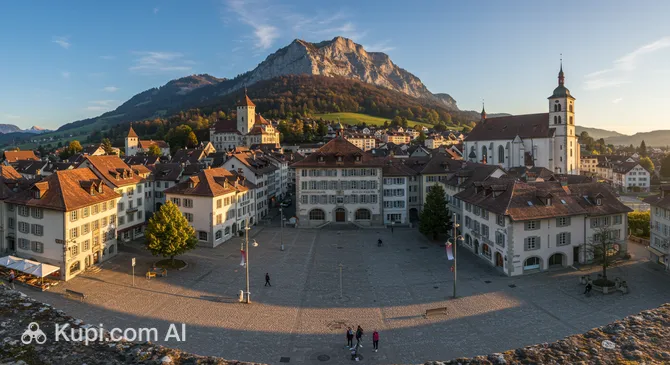
Delémont is the charming capital of the Canton of Jura, located in the northwest of the country near the French border. This cozy city, surrounded by dense forests and picturesque hills, is a perfect example of how Switzerland skillfully combines a modern rhythm of life with a careful respect for tradition. The population here is small, around 12,000 people, which creates a special, intimate atmosphere ideal for a peaceful getaway.

Delemont. Illustration.
Source: Kupi.com AI

The city boasts a rich past, traces of which can be found on every street in the historic center. The fascinating history of Delémont is closely linked to the Prince-Bishops of Basel, who for centuries used the city as their summer residence. Their legacy lives on today: the majestic castle, built in the 18th century, remains one of the main architectural landmarks and a symbol of the city.

A stroll through the Old Town is a true delight for architecture lovers. Here, the medieval Porte de Porrentruy gate and old houses with vibrant facades have been preserved. Of particular note are the famous monumental Renaissance fountains, decorated with allegorical figures that lend the squares a unique charm. It is also worth visiting the Jura Museum of Art and History to dive deeper into the region's cultural context.

Delémont is more than just an administrative center; it is a lively and welcoming city ready to reveal its secrets to travelers. Come here to enjoy the authentic atmosphere of Switzerland's youngest canton, sample the local cuisine, and take a break from the hustle and bustle of big metropolises.

Weather Overview

The climate in Delémont is characterized by mildness and distinct seasonality, making the city attractive to visit at any time of year, provided you are properly prepared. Summer here is pleasant and warm: in July and August, the average temperature is about 19.5°C, while daytime maximums reach a comfortable 24.5°C. This is the best time for long walks in the Jura surroundings, although you should be prepared for precipitation—around 15 rainy days per month are recorded in summer.

The winter period brings coolness, but severe frosts are rare. In January, the coldest month, the thermometer averages 1.8°C, sometimes dropping at night to -1.1°C. To ensure a comfortable trip, we recommend checking the forecast for the weather in Delémont for the dates of your visit. This is especially relevant for May and December, which are considered among the rainiest months of the year (up to 18 days with precipitation).

Overall, expect a warm summer with occasional rain and cool, relatively humid winters. Spring and autumn are characterized by a smooth transition of temperatures: from a brisk 5.9°C in March to a pleasant 11.4°C in October, creating excellent conditions for sightseeing tourism.

Average monthly temperature

Average monthly precipitation

Interesting Facts

Beyond its main architectural monuments, Delémont hides many fascinating secrets and unique features that only the most curious travelers discover. Here are a few facts to help you see this city in a new light:

  • Capital of the youngest canton. Delémont is the administrative center of the Canton of Jura, which officially appeared on the map of Switzerland only in 1979. This makes the city one of the "youngest" capitals in the country from a political standpoint, despite its ancient history.

  • Home of the Swiss Army Knife. The city is inextricably linked to legendary Swiss quality: it was here in 1893 that the famous Wenger company was founded. For a long time, Delémont remained one of only two places in the world where authentic Swiss Army Knives, a symbol of reliability, were produced.

  • Prestigious urban planning award. In 2006, Delémont was awarded the Wakker Prize. This high honor from the Swiss Heritage Society was given to the city for the exemplary restoration of its historic center and the skillful transformation of former industrial zones into comfortable public spaces.

  • Symbolism of the fountains. The five ancient 16th-century fountains in the Old Town are not just water sources, but complex allegorical messages. The most famous is "The Savage" (Le Sauvage), depicting a man with a club; this character also appears on the city's coat of arms and is considered its unofficial guardian.

How to Get There

When planning a trip to this picturesque corner of the Canton of Jura, it's worth thinking through the logistics in advance, as the city is located slightly away from the country's main air gateways. You can learn more about how to get to Delémont by studying various routes and modes of transport. Most often, tourists combine a flight with a train or car journey.

The city does not have its own airport, so travelers usually fly into nearby major transport hubs. The closest and most convenient option is EuroAirport Basel-Mulhouse-Freiburg (EAP). It is located only 28.5 km from Delémont. A taxi or transfer will take less than an hour, making this route an excellent choice for those looking to minimize overland travel time.

Another popular option is Zurich Airport (ZRH), the country's largest aviation hub. It is situated 92.2 km from the destination. The journey from here to Delémont takes about an hour and a half. Despite the greater distance, this airport offers the widest selection of international flights and convenient rail connections.

For convenience, here is summary information on the main airports used to reach the region:

AirportPassenger trafficDistance
EuroAirport Basel Mulhouse Freiburg8 mln29 km
EuroAirport Basel-Mulhouse-Freiburg8.1 mln29 km
EuroAirport Basel–Mulhouse–Freiburg8.1 mln29 km
Bern Airport57 00052 km
Zurich Airport31.2 mln92 km

The railway is one of the most comfortable ways to get around Switzerland. Keep in mind that major international rail hubs are located outside the city, and you may need to transfer to a regional train. The nearest major hub is Basel SBB station, which is about 27.4 km from Delémont. The trip from this station takes very little time, and trains run regularly.

You can also use Bern station. It is 46.9 km away from Delémont. Travel time by car or train is less than an hour. Both of these stations accept trains from all over Europe, providing excellent connections to neighboring countries and regions.

Below is information about major railway stations in the vicinity:

StationPassenger trafficDistance
Basel SBB station40 mln27 km
Basel Badischer Bahnhof7.3 mln30 km
Bern Railway Station69 mln47 km
Oerlikon Railway Station34.4 mln51 km
Zürich Hauptbahnhof154.6 mln90 km

Main Attractions

Although Delémont is a compact city, it is rich in attractions that allow visitors to touch the history of the region. It is best to start your walk in the historic center, where every stone breathes antiquity. The pride of the Old Town is the five monumental Renaissance fountains. Created in the 16th century, they are decorated with bright sculptures, including the figure of "The Savage"—the symbol of the city. These hydraulic structures are still functional and serve as popular photo spots, adding a special character to the streets.

The architectural centerpiece is the Castle of the Prince-Bishops (Château de Delémont). This majestic Baroque palace complex, built in the 18th century, served as the summer residence for the rulers of Basel for a long time. Today, tourists can admire its elegant facade, wide courtyard, and stroll through the adjacent park. The building impresses with its scale and fits harmoniously into the urban landscape, serving as a reminder of the city's important political status in the past.

Culture enthusiasts should visit the Jura Museum of Art and History (Musée jurassien d'art et d'histoire). The museum's exhibition covers a vast span of time—from archaeological finds of the Celtic period to contemporary art. Here you can learn how the canton's identity was formed, see ancient household items, and unique religious artifacts. It is the perfect place to understand the spirit of this corner of the country, which Switzerland is so proud of.

Another important monument is the Church of Saint-Marcel (Église Saint-Marcel). The temple is interesting for its architectural blend of styles, from the Baroque interior to the classical elements of the facade. Inside, visitors will find rich decoration, stained glass windows, and an organ whose sound can be heard during concerts. Next to the church stands a detached bell tower, which was historically part of the city's defensive fortifications.

You can conclude your introduction to the city at the medieval Porte de Porrentruy. This is one of the two surviving towers that once protected the entrance to the city. The 18th-century structure, featuring a clock and a coat of arms, looks very picturesque and serves as a kind of portal between the modern quarters of Delémont and its historic heart.

Local Cuisine

Delémont's gastronomy is a reflection of the generous soul of the Canton of Jura, which Switzerland is so proud of. Local cuisine is famous for being hearty, rustic, and using farm products of the highest quality. There is no pursuit of complex haute couture in food here, with a preference for time-tested recipes that provide warmth and a sense of home comfort.

The main delicacy that you must try is Tête de Moine cheese (AOP). Its name translates as "Monk's Head," and it is served in a special way: not sliced, but scraped with a special rotating knife (a girolle), turning the cheese into delicate "rosettes." This serving method allows the product's spicy aroma to fully unfold. Another gastronomic pride of the region is the Saucisse d'Ajoie. This smoked pork sausage with cumin is often served with rösti or stewed beans, creating the perfect lunch for a traveler.

Pastry lovers should definitely order a Toetché—a unique savory pie with a thick sour cream topping. Traditionally prepared for the feast of St. Martin, this dish can now be found in bakeries and restaurants year-round. This filling treat with a golden crust is great for a snack while walking around the city.

Among drinks, the absolute leader is Damassine (AOP). This is a famous local fruit brandy produced from a special variety of small red plums that grow in the gardens of Jura. The drink has a rich aroma of stone fruit, and locals consider it the best digestif after a heavy meal. For those who prefer non-alcoholic beverages, the excellent apple juice from local orchards is worth noting.

The food culture in Delémont is democratic and welcoming. In the historic city center, you will find many cozy brasseries where locals dine. However, for an authentic experience, it is recommended to visit métairies—traditional farm restaurants located on the picturesque hills surrounding the city. These establishments have a simple, rustic atmosphere, and dishes are prepared from the freshest ingredients, often produced right on the same farm.

Travel Tips

Delémont is a calm, cozy, and very organized city, but even here there are nuances a traveler should know in advance. To ensure your trip to the capital of the Canton of Jura goes smoothly, we have gathered a list of the most important practical recommendations to help you feel confident.

  1. Dress for the weather. The climate in the Jura foothills can be changeable. Even if the forecast promises sun, the "onion principle" (layering) works best here. Be sure to bring comfortable flat shoes: walking on the cobblestones of the Old Town in heels is a questionable pleasure. An umbrella or a light raincoat should be in your backpack in any season.

  2. Smart transport. Delémont's historic center is compact and best explored on foot. However, if you plan to travel around the region, a pleasant surprise awaits you. Tourists staying in hotels in the Canton of Jura for at least one night receive the Jura-Pass. This pass entitles you to free travel on all trains and buses within the Vagabond transport network. Be sure to ask about this when checking in!

  3. Financial matters. The official currency is the Swiss franc (CHF). Although cards are accepted almost everywhere, it is still worth having a little cash on hand in Switzerland. This will be useful for purchases at farmers' markets, at small kiosks, or for paying for parking. Tips are usually already included in the bill, but rounding up the amount or a small gesture of gratitude for excellent service is considered good manners.

  4. Health and water. Delémont is a very safe city. Pharmacies are easily recognized by a green neon cross; if you need help on a weekend or at night, the address of the on-duty point is always posted on the door of any pharmacy. An important point: you can safely drink water from the tap and from most city fountains unless there is a sign saying "Eau non potable" (water not for drinking). It is free, eco-friendly, and delicious.

  5. Language nuance. Delémont is in the French-speaking part of the country. Although many locals understand German (due to the proximity of the border) and speak English in tourist areas, the main language of communication remains French. Learn a few phrases: a simple "Bonjour" (hello) and "Merci" (thank you) will instantly melt the ice and win over your interlocutor.

  6. Local etiquette. Politeness is the foundation of everything here. It is customary to greet shopkeepers when entering a store and even bus drivers. The Swiss highly value silence and personal space, so loud phone conversations on public transport or in a restaurant may draw disapproving looks.

  7. What to avoid. Do not try to cross the road in the wrong place or on a red light, even if the street is empty—this is considered a lack of respect for the rules and may result in a fine. Also, avoid making noise on Sundays: on this day, locals enjoy their rest, and disturbing the peace (whether through loud music or the clatter of suitcase wheels on cobblestones early in the morning) is perceived negatively.

  8. Consider the lunch break. Life in Delémont flows at a measured pace. Remember that many shops, especially small boutiques and stores, close for lunch from 12:00 to 13:30 or 14:00. Plan your shopping around this "sacred" time, which is better spent tasting local dishes in one of the restaurants.

By following these simple tips, you can quickly adapt to the local rhythm of life and avoid minor inconveniences. Enjoy the hospitality of Delémont, its safety, and its unique atmosphere!

Entertainment & Nightlife

Delémont's nightlife, like the city itself, is characterized by its intimacy and coziness. You won't find massive metropolitan raves or 24-hour neon noise here, but Switzerland knows how to surprise with the quality of leisure even in small towns. Evening entertainment is mainly concentrated in two areas: the labyrinthine streets of the Old Town (Vieille Ville) and the lively area around the railway station (Place de la Gare). The atmosphere in most venues is democratic and friendly, and the dress code is relaxed casual, so you can safely leave your evening gowns and tuxedos at the hotel.

The heart of alternative culture and the main spot for night owls is the legendary SAS (Section d'Animation Socio-culturelle). This cult venue, located in an atmospheric basement, is famous far beyond the canton. It regularly hosts live concerts by rock bands, performances by indie artists, and DJ sets of various genres—from reggae to electronics. The crowd is diverse, ranging from students to the creative intelligentsia, and everyone is sincerely welcome here.

If you prefer a quieter evening with a glass of wine or a cocktail, it's worth checking out the bars in the city center. For instance, the Bar de l'Ecluse is popular for trying local drinks and snacks in a pleasant setting. Locals also often spend time at places like La Croix Blanche, enjoying leisurely conversations. In summer, life spills out onto the terraces: townspeople love to sit outside for hours, discussing news over an aperitif. Drink prices follow Swiss standards: a glass of beer costs an average of 7–9 francs, while cocktails start from 15 francs.

An important tip for planning your evening: the nightlife here winds down earlier than in southern countries. Bars on weekdays may close around midnight, so the most active times are Friday and Saturday. In terms of safety, Delémont is impeccable; you can walk through the night streets with complete peace of mind. For returning to the hotel or traveling around the area on weekends, a special night bus called Noctambus runs, which is a real lifesaver for tourists since taxis in the region are not cheap.

In addition to bars and clubs, the city offers an excellent cultural program that flows smoothly from day to evening. The recently opened Théâtre du Jura has become a new architectural and cultural landmark, hosting plays, dance shows, and high-level classical music concerts. During the day, guests should take time to visit the Museum of Art and History or simply stroll through the picturesque parks along the Sorne River, enjoying the silence before an evening out.

Parks & Museums

Delémont, surrounded by picturesque hills and dense forests, offers travelers an ideal balance between natural beauty and a rich cultural life. Despite its compact size, the capital of the Canton of Jura has well-maintained green areas for relaxation and informative museum spaces that help visitors better understand the unique identity of this region of Switzerland.

For those seeking peace and aesthetic pleasure, the Gardens of the Château de Delémont (Jardins du Château) are a must-see. Located at the foot of the former residence of the Prince-Bishops, these gardens are a beautiful example of landscape art. Here you can take a leisurely stroll along neat paths, admiring the view of the Baroque palace facade, or enjoy a small picnic in the shade of ancient trees. This spot is particularly popular in summer when the flower beds bloom in all colors, creating a romantic atmosphere in the heart of the city.

Lovers of wilder nature and long walks should look to the Sorne River promenade. A green corridor stretching along the river crosses the city and serves as a favorite spot for jogging and evening promenades for locals. The sound of water and the abundance of greenery allow you to temporarily forget the urban bustle while staying within the Delémont city limits. From here, it is easy to access numerous hiking trails that lead into the surrounding forests for which the Jura region is so famous.

The cultural heart of the city is rightly considered to be the Jura Museum of Art and History (Musée jurassien d'art et d'histoire). It occupies a historic building known as the "Red House" and offers visitors a fascinating journey through the centuries. The exhibition covers everything from geological finds and traces of Roman settlements to the complex political history of the canton's struggle for independence. Of particular interest is the collection of ancient bishops' crosiers and religious art objects reflecting the region's spiritual past.

For connoisseurs of contemporary art and cultural dialogues, the Anna and Robert Bloch Foundation (FARB) will be an interesting discovery. This cultural space, located near the Market Square, regularly hosts temporary exhibitions, concerts, and literary meetings. The gallery focuses on promoting the cultural heritage of Jura but in a modern context, often exhibiting works by local artists and photographers. It's a great place to see the "living" face of the city that goes beyond classic guidebooks.

Insider Tip: If you have a bit of time and a desire to see a panorama of the city from an unusual angle, climb up to the Chapelle du Vorbourg. This oldest sanctuary in the canton is located on a rocky ledge above the city. The climb requires some effort (or a short drive), but the view of the Delémont valley and the ruins of the medieval castle next to the chapel are well worth it—it's a place of power that few tourists know about.

Getting Around

The transport system in Delémont is characterized by Swiss precision, comfort, and smart design, despite the city's relatively small size. There is no metro or tram system here, as they are unnecessary: distances are compact, and passenger flow is perfectly served by the bus network. For a tourist, navigating here is very simple since most routes are integrated into a single transport hub at the railway station.

The main means of getting around the city are the buses of the local TUB network (Transports Urbains Delémontains). They are painted in distinctive colors and connect the historic center, the station, shopping zones, and residential areas. Intervals are short, and schedules are strictly followed. For trips outside the city, to picturesque suburbs and neighboring villages, the famous yellow CarPostal (PostBuses) are used. This is not just transport, but a kind of attraction, allowing you to comfortably view the pastoral landscapes of the region.

The fare payment system deserves special attention as it is incredibly traveler-friendly. The main secret for tourists is the Jura-Pass. If you stay in a hotel, guesthouse, or campsite in the canton for at least one night, you receive this pass for free. It entitles you to free use of all buses and trains within the Vagabond regional network for the entire duration of your stay. This allows for significant savings on your travel budget.

If you are visiting Delémont for a single day without staying overnight, tickets must be purchased in advance. Bus drivers do not sell tickets. You can buy them at machines at stops (most accept cards and coins) or, much more conveniently, through the SBB Mobile or Fairtiq apps. The app will calculate the optimal fare using a "check-in/check-out" system. Don't forget that ticket inspectors work frequently, and fines for fare evasion are quite substantial.

The Noctambus night transport deserves a special mention. Since regular services usually end around midnight, special night buses take to the routes on Fridays and Saturdays. They run throughout the region until early morning, allowing you to return safely to your hotel after visiting a bar or a concert. Jura-Pass holders can use this service without additional charge.

Among alternative ways to get around, the bicycle is popular. The Velospot city bike-sharing network has many automated rental stations; registration and a linked card are required for use. The landscape in the city itself is quite flat, making cycling pleasant. Taxis exist in Delémont but are considered an expensive luxury. It is practically impossible to "hail" a car on the street—you need to find them at the station stand or call by phone. However, given the compactness of the historic center, your own feet often remain the fastest and most pleasant form of transport.

Accommodation

The choice of accommodation in Delémont perfectly reflects the character of the city itself: there are no pompous five-star resorts or massive hotel complexes, but there is an abundance of cozy family-run hotels and modern business hotels. Hospitality in this region of Switzerland is distinguished by special domestic warmth and a high level of service, regardless of the "star rating" of the chosen place. Tourists can count on clean, comfortable rooms, often decorated in a traditional style, or functional apartments.

Geographically, accommodation options can be divided into two main zones, each with its own advantages. The railway station area is ideal for those planning to travel actively throughout the Canton of Jura or those arriving with heavy luggage. More modern hotels are located here, providing quick access to transport infrastructure. The second popular location is the Old Town. Staying here puts you in the heart of medieval architecture, fountains, and restaurants, creating a special romantic atmosphere in the evenings.

For budget travelers and young people, there is an excellent hostel in the city offering inexpensive accommodation with opportunities to socialize with other travelers. Those who prefer more independence should look at the short-term apartment rental market: locals often rent out cozy apartments, allowing you to feel like a true resident and save a bit on food by cooking at home.

Important booking tip: Delémont is a small city, and the number of rooms is limited. During periods of major events, such as the St. Martin's feast in November or summer festivals, the demand for housing rises sharply. We strongly recommend booking your hotel several weeks, or better yet, months before your trip to guarantee the best value for money.

The price range varies from budget (hostels and simple guesthouses) to mid-range, which includes most of the city's hotels. Booking is most convenient through popular online platforms; however, direct contact with the hotel can sometimes result in pleasant bonuses. Don't forget that official stays in hotels, hostels, and campsites in the canton entitle you to receive the Jura-Pass—a transport pass that makes your travel within the region free.

Nearby Cities

For those wishing to explore the surroundings, Delémont serves as an excellent starting point for day trips to several interesting nearby locations:

CityPopulationDistance
Grenchen17 14020 km
Solothurn16 77722 km
Aesch10 35222 km
Therwil9 94722 km
Reinach19 14423 km

The most popular destination for a short trip is Basel, located less than 30 km away. This is the country's cultural capital, famous for its concentration of world-class museums (there are about forty of them) and a beautiful old town on the banks of the Rhine. You can visit the zoo, one of the oldest in Switzerland, or enjoy the architecture of the red sandstone cathedral.

In another direction, but at a similarly close distance, lies Biel/Bienne—a unique bilingual city considered the world capital of the watch industry. In addition to the Omega and Swatch brand museums, the city attracts tourists with its access to Lake Biel, where you can take a picturesque boat trip, and its perfectly preserved historic center which contrasts with the modern quarters.

These nearby destinations offer a glimpse into the diverse culture and landscapes of the region, making a holiday in the Canton of Jura even more fulfilling.

Shopping & Souvenirs

Shopping in Delémont is a calm and pleasant activity, devoid of the hustle of massive metropolises. You won't find endless rows of high-fashion boutiques like in Zurich or Geneva here; however, the city offers something else: authenticity and high quality of local goods. Switzerland is famous for its attention to detail, and the capital of the Canton of Jura is no exception. The shopping scene here is focused on small specialized shops, cozy bookstores, watch shops, and gastronomic boutiques where owners often personally greet customers.

The heart of commercial life is the Old Town (Vieille Ville) and its adjacent pedestrian zones. Stroll along the main streets, such as Rue de l'Hôpital and the area around Place de la Gare (Station Square). This is where most of the clothing, footwear, and accessory stores are concentrated. The historic backdrop of fountains and ancient facades turns shopping into a real sightseeing tour. It's a pleasure to browse the windows of small shops offering handmade goods and products from regional artisans.

If you prefer the format of shopping centers, in Delémont you should check out the Manor department store, located near the historic center. This is a classic Swiss shopping format where you can find everything under one roof: from international brand cosmetics and clothing to home goods and a supermarket with an excellent selection of products. Also, in the city and its surroundings (for example, in the commercial zone on the outskirts), there are branches of the large Coop and Migros chains, convenient for buying groceries and essentials.

The markets add a special character to the city. A traditional weekly market usually takes place on Place de l'Etang or in the center of the Old Town on Wednesday and Saturday mornings. This is the best place to get a taste of the region: farmers bring fresh vegetables, fruits, flowers, and, of course, local delicacies. Before Christmas, the streets are transformed by festive fairs where you can buy unique souvenirs and warm up with mulled wine.

Speaking of souvenirs, you cannot leave Delémont without a famous Swiss Army Knife. The city is historically linked to the Wenger brand (now part of Victorinox), so a quality knife is a symbolic gift. Be sure to pay attention to gastronomy: a bottle of Damassine (Damassine AOP) fruit brandy, a wheel of Tête de Moine cheese, and chocolate sets from local confectioners are foolproof options. Given that Jura is a watchmaking region, you can also look for quality Swiss watches here, from affordable models to luxury brands.

When planning your shopping, it's important to remember the opening hours. Shops in Delémont usually open at 08:30 or 09:00 and stay open until 18:30 (on Fridays often until 20:00, so-called "evening sales"). Saturday is a shorter day (usually until 16:00 or 17:00), and Sunday is a day off when almost everything is closed except for small shops at the station. A key feature that tourists often forget: many small boutiques and shops close for a lunch break from 12:00 to 13:30 or 14:00.

Regarding payment, major credit cards (Visa, MasterCard) and contactless payments are accepted almost everywhere. However, for visiting markets or buying small souvenirs at kiosks, it is recommended to have some cash in Swiss francs. The Tax Free system (VAT refund) is available for tourists from non-Schengen countries for a single purchase of more than 300 francs in one store. Look for the "Global Blue" sign or ask for a tax refund form at the checkout.
Reached the end of the page?

That means the route is fully explored