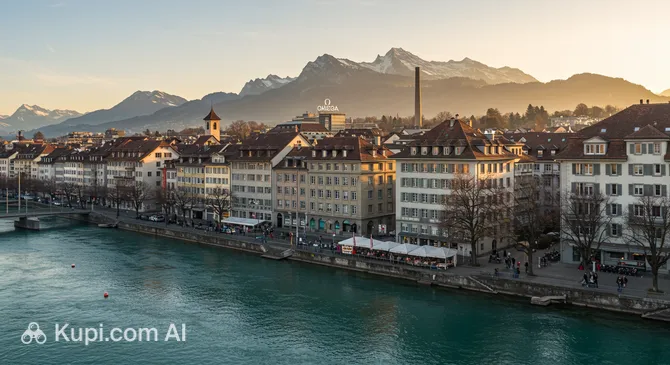
Biel/Bienne is a unique jewel on the map of Europe, located at the foot of the Jura Mountains in the northwest of the country. The city possesses a special charm thanks to its status: it is the only place where German and French are absolutely equal, which is reflected even in its dual name. Nestled on the shores of a picturesque lake, Biel/Bienne serves as a bridge between cultures, offering travelers visiting Switzerland an atmosphere of authentic cosmopolitanism and hospitality.
Biel/Bienne. Illustration.
Source: Kupi.com AI
With a population of around 55,000, the city is the largest in the Three Lakes region and an important center of the Canton of Bern. Biel/Bienne is known worldwide as the heart of the watch industry: it is here that the pulse of giants like Omega, Rolex, and Swatch beats. The rich history of Biel/Bienne is inextricably linked to the development of precision mechanics, yet the city has managed to preserve its medieval charm, which harmoniously coexists with the modern rhythm of life.
Tourists can expect leisurely walks through old streets with cozy boutiques, relaxation in cafes on the lively promenade, and breathtaking views of vineyards sloping down to the water. The city is an ideal starting point for lake cruises or active travel along the region's hiking and cycling trails. Be sure to visit Biel/Bienne to experience its unique bilingual aura and enjoy the beauty of the lakeside landscapes.
Weather Overview
The climate in this region can be described as temperate, with a mild change of seasons, making the city accessible for visiting all year round. Summers here are usually warm and comfortable: in the hottest months, July and August, daytime temperatures rise to 23°C, while average figures stay around 18°C. Winters are cool but generally without extreme frosts; in January, the average temperature is about 1.2°C, sometimes dropping slightly below zero at night.
A characteristic feature of the local climate is fairly high humidity and regular precipitation throughout the year. Even in summer, the number of rainy days can reach 16–18 per month, and May is often the wettest month. When planning walks by the lake or through the old town, be sure to check the forecast and weather in Biel/Bienne to bring an umbrella or raincoat if necessary.
Expect a pleasant warm summer, a cool winter with temperatures around zero, and periodic rain throughout the year.
Average monthly temperature
Average monthly precipitation
Interesting Facts
Beyond its main attractions, Biel/Bienne holds many fascinating secrets that make it a truly unique place on the map of Europe. This city lives at its own pace, combining ancient traditions with cutting-edge technologies and amazing cultural diversity.
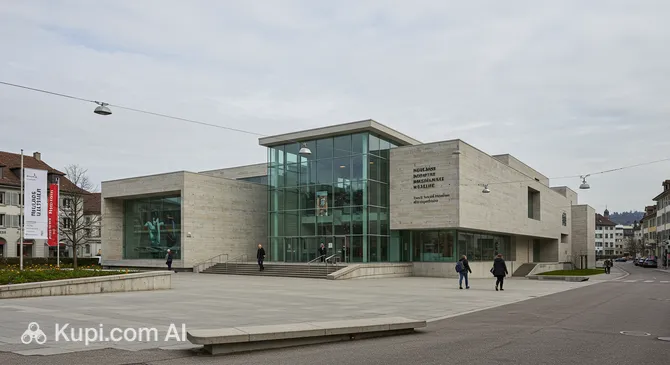
Omega Museum. Illustration.
Source: Kupi.com AI
Traveler photos:
Unique Bilingualism: Biel/Bienne is the largest officially bilingual city in Switzerland. This is not just a formality: signs, announcements, and even school education are conducted in both German and French, creating a unique atmosphere rare for the rest of Europe.
World Capital of Time: The city is rightfully called the "heart of Swiss watchmaking." It is here that world-famous brands such as Rolex and Swatch are manufactured. To immerse yourself in this history, visit the Omega Museum, which attracts connoisseurs of precision and mechanics from all corners of the globe.
Ancient Heritage: The history of these places dates back to deep antiquity. Neolithic stilt houses, part of the UNESCO World Heritage list, have been preserved in the region, proving that people chose the shores of this local lake thousands of years ago.
Legends and Nature: The city's surroundings are steeped in myths of the Jura Mountains. Locals enjoy telling legends related to the region's natural wonders, one of which is the mysterious and picturesque Taubenloch Gorge.
How to Get There
When planning a trip to this bilingual city, it is worth studying the route in advance. Thanks to famous Swiss punctuality and a well-developed railway network, getting here is very easy. You can find all ways to get to the city in more detail on a separate page, while below we will look at the most optimal options for arriving through the nearest transport hubs.
As there is no commercial airport in Biel/Bienne itself, travelers usually fly into one of the major international hubs. The closest is EuroAirport Basel-Mulhouse-Freiburg (IATA: EAP), located about 55 km away. This is the most convenient option in terms of time: a train ride to the center of Biel/Bienne takes only about 1 hour. The railway connection here is so efficient that using a taxi for an intercity transfer makes little sense in terms of either time or cost.
The most popular choice among tourists is the country's main aviation hub, Zurich Airport (IATA: ZRH), located 105 km away. Trains depart directly from the airport terminal and will deliver you to Biel/Bienne in approximately 1.5 hours. This is a scenic and comfortable route without transfers. You might also consider flying into Geneva Airport (IATA: GVA). The journey from there by train along lakes and vineyards takes a bit longer but offers unforgettable views.
Below is summary information on the main airports:
The railway (SBB) is the primary and most reliable way to reach the city. Biel/Bienne station is a major hub where trains regularly arrive from all over Switzerland. If you are already in the country, it is most convenient to travel via Bern Railway Station (IATA: ZDJ). The capital is only 25.4 km away, and high-speed regional trains cover this distance in 25–30 minutes.
Another important transport hub is Basel SBB Station (IATA: ZDH), located 52.5 km away. This is the main gateway for trains from Germany and France. Direct trains run regularly from here to Biel/Bienne, with a travel time of about an hour. Thanks to this connectivity, renting a car or booking a transfer is only worthwhile if you are planning a complex itinerary with many stops in rural areas.
Information on the nearest major railway stations:
Biel/Bienne offers travelers a wonderful combination of industrial heritage and natural beauty. Known as the world capital of watchmaking, the city harmoniously integrates modern architectural solutions into the picturesque landscapes of the Jura foothills. Here, in a single day, you can immerse yourself in the history of precision mechanics and enjoy the silence of the wild nature.
The absolute symbol of the city is the Omega Museum. This is a must-visit place not only for watch enthusiasts but also for fans of history and space. The exhibition fascinatingly tells the brand's journey: from the first movements to the legendary chronometers that traveled to the Moon with NASA astronauts. Tourists are attracted by the opportunity to see James Bond's watches and Olympic chronometers, while interactive stands allow you to literally touch the world of high precision.
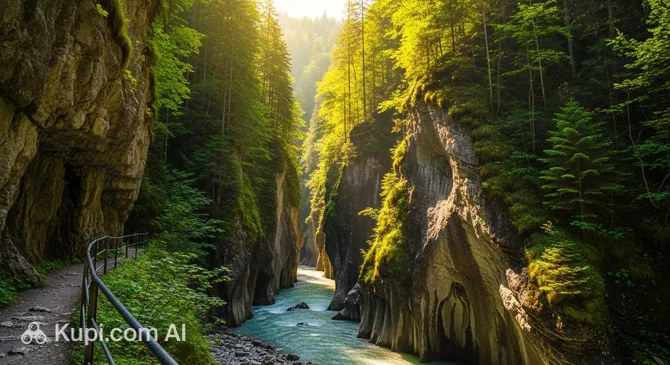
For those seeking connection with nature, Taubenloch Gorge will be a true discovery. This is a breathtaking natural route that starts almost within the city limits and leads along the turbulent Suze River. Walking along the well-maintained paths among steep cliffs and waterfalls gives a sense of a fairy-tale adventure. It is an ideal spot for light hiking, allowing you to escape the city bustle for the cool of the forest.
Taubenloch Gorge. Illustration.
Source: Kupi.com AI
Traveler photos:
Fans of modern architecture should check out Nicolas G. Hayek Park. This space, surrounding the Swatch headquarters, captures the imagination with its futuristic wooden structures designed by the famous architect Shigeru Ban. The park is a magnificent example of how innovative design can harmonize with the urban environment, creating a pleasant zone for relaxation and photo sessions.
Families with children and animal lovers will enjoy Biel Zoo, located on the slopes of Mount Bözingenberg. It is a cozy and well-kept park where animals live in spacious enclosures that closely mimic their natural environment. Visitors appreciate this place for the opportunity to observe chamois, wild boars, and raccoons in a calm setting, as well as for the wonderful views of the city and lake opening up from the zoo territory.
Local Cuisine
The gastronomic culture of Biel/Bienne is a bright reflection of its dual nature, where hearty German traditions harmoniously intertwine with French culinary sophistication. Menus in local establishments are often written in two languages, offering travelers the best of both worlds: from warming cheese fondue and thick Bernese-style stew to exquisite quiches and airy desserts. This is a place where food becomes a way to understand the region's history and geography.
The main gastronomic treasure of the city is fresh fish caught directly from Lake Biel. Be sure to try pike-perch fillet, pike, or trout, which are prepared here with great skill. Traditionally, fish is served with boiled potatoes and a light local herb sauce. The perfect accompaniment to such a meal is a glass of local wine: the vineyards spread across the sunny slopes around the city are famous for their fresh whites and light rosés, which beautifully complement the flavors of the lake's bounty.
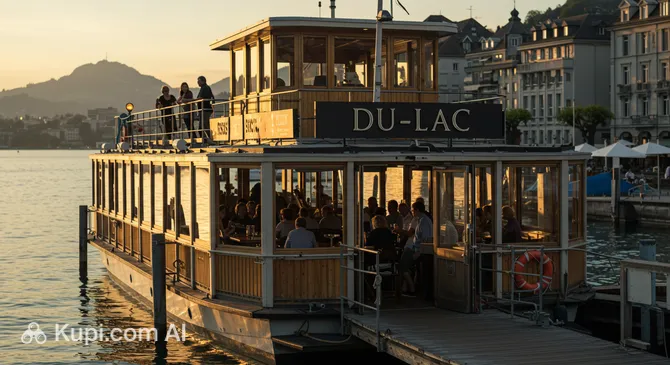
Du Lac. Illustration.
Source: Kupi.com AI
Traveler photos:
The dining culture here is diverse: locals equally love leisurely dinners in restaurants and the lively atmosphere of street markets. On weekends, farmers can be found in the central squares selling Bernese sausages, seasonal fruits, and traditional pastries. To explore the restaurant scene, you can stop by Du Lac — an establishment whose name already sets a romantic mood by the water. And if you're looking for a place to relax after a busy day with a signature drink, visit Twentys Cocktail Bar, which is popular among the townspeople.
Biel/Bienne also has plenty to offer those with a sweet tooth. In addition to the world-famous Swiss chocolate, which can be found here in countless variations, the city is famous for its fruit tarts and almond desserts. Coffee with a piece of local cake in a cozy Old Town cafe is a mandatory ritual that allows you to feel the steady rhythm of life in the "watch capital."
Travel Tips
A trip to the unique bilingual city of Biel/Bienne promises to be rich and interesting, but a little preparation will make it even more comfortable. We have compiled a list of practical recommendations to help you easily navigate the local culture and avoid common tourist mistakes.
Clothing and gear. The weather in the region can be changeable due to the proximity of the lakes and the Jura Mountains. It is recommended to dress in layers to easily adapt to temperature changes. Be sure to bring comfortable flat shoes: they will be useful for both the cobblestones in the Old Town and for walks along natural trails. An umbrella or a compact raincoat is worth having with you at any time of year.
Transport. The city center is compact enough for walking, but the public transport system works perfectly. If you are staying in a hotel or hostel, be sure to ask about the free travel pass (Guest Card), which is often given to tourists for bus and funicular rides within the city zone. Taxis are expensive here, and renting a car within the city makes little sense due to paid parking and excellent transport accessibility.
Finances. The official currency is the Swiss franc (CHF). Although Switzerland is an advanced country and cards are accepted almost everywhere, a small amount of cash will be useful for paying at markets, small kiosks, or for station lockers. Prices in restaurants and shops are high, so plan your budget with a margin. Tips are usually already included in the bill, but rounding up the amount is considered good manners.
Health and safety. Biel/Bienne is a safe city where you can walk calmly even in the evening. Water in street fountains (unless there is a "Kein Trinkwasser" / "Eau non potable" sign) is pure and drinkable; feel free to refill your bottles. Pharmacies (Apotheke/Pharmacie) operate on a standard schedule, but a list of duty points for emergencies is always posted on the door.
Communication and electricity. The city's main feature is the equality of the German and French languages. Greetings like "Bonjour" or "Grüezi" are equally appropriate. English is widely spoken, especially in the tourism sector. Important: sockets in Switzerland are type J (three-pin), so standard European plugs (type C or F) may not fit. We recommend bringing an adapter.
Local etiquette. Politeness plays a key role here. When entering a shop or cafe, be sure to greet the staff. In public transport and restaurants, it is customary to behave quietly and with restraint; loud conversations (including on the phone) may draw disapproving looks from locals.
What to avoid. Never cross the road on a red light, even if no cars are in sight. Locals follow the rules strictly, and violation is considered a bad example, especially if children are nearby. Also, avoid making noise on Sunday — it is a day of silence and rest.
Useful life hack. If you are planning a trip in the summer, be sure to bring swimwear. Lake Biel offers excellent opportunities for free swimming in clean water right within the city limits, which will be a wonderful end to a sightseeing day.
Following these simple tips, you will be able to feel at home in Biel/Bienne and focus on the main thing — enjoying the atmosphere of the watch capital and the beauty of Swiss nature. We wish you a pleasant and worry-free journey!
Entertainment & Nightlife
Nightlife in Biel/Bienne has a special charm that stems from its bilingual nature. You won't find the deafening noise of megacities here, but rather a cozy, almost intimate atmosphere where French relaxation meets German reliability. In the evenings, the city transforms: the streets of the Old Town fill with the soft light of lanterns, and the lakefront becomes a magnet for those who want to watch the sunset with a glass of wine. Most activity is concentrated around Guisanplatz and in the labyrinths of the historical center, where stylish bars and small clubs hide behind medieval facades.
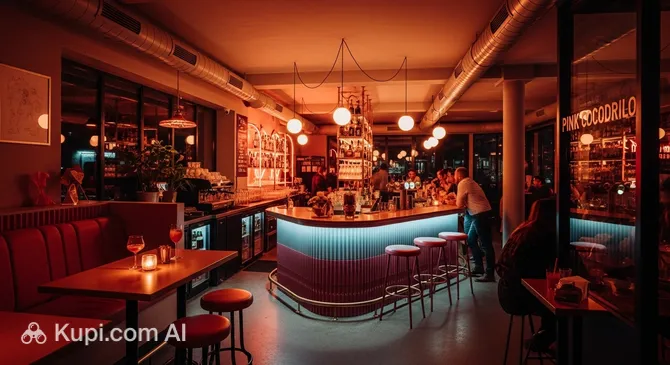
For those looking for a lively atmosphere and wishing to mingle with locals, Pink Cocodrilo bar is an excellent choice. This establishment is famous for its eclectic interior and relaxed vibe. Creative youth and students often gather here, pleasant music plays, and bartenders are ready to offer both classic drinks and signature mixes. The dress code in most city establishments is casual: "smart casual" will be appropriate almost everywhere, from pubs to cocktail lounges.
Pink Cocodrilo. Illustration.
Source: Kupi.com AI
Traveler photos:
If you prefer Latin American rhythms and a hotter atmosphere, it's worth checking out the restaurant-bar Cubbàn. This place is great for starting the evening with a delicious dinner that smoothly transitions into nightly fun. The crowd here is diverse but always friendly. On weekends, bars stay open until 02:00–03:00 am, though it's better to arrive by 10:00 pm when the fun is in full swing. Prices reflect Swiss standards: a cocktail costs on average 15–18 francs, and a glass of beer is around 7–9 francs.
Safety in Biel/Bienne is maintained at a high level. The city is considered very peaceful, and night walks, even alone, cause no concern. Lighting is good, and police patrol the streets unobtrusively but effectively. For returning to your hotel after midnight on Friday and Saturday, special Moonliner night buses run, covering both the city and its surroundings. Taxis can be found at stands near the station or called through an app, costing from 20 francs for a ride across the city.
The city's daytime cultural program is no less rich and serves as an excellent prelude to evening relaxation. Music and subculture enthusiasts should definitely visit the unique Camden Town Museum and Rockademy. This atmospheric place immerses you in the history of rock and pop culture, offering an alternative take on entertainment. Additionally, several theaters and cinemas operate in the city, where you can watch new releases or enjoy stage performances in both of the canton's languages.
Parks & Museums
Biel/Bienne is a city where urban culture harmoniously intertwines with natural riches. Thanks to its location at the border of the lake district and the Jura mountain range, many green areas for recreation have been created here, and the city's museum collections reflect its rich history — from archaeological finds to the modern music scene.
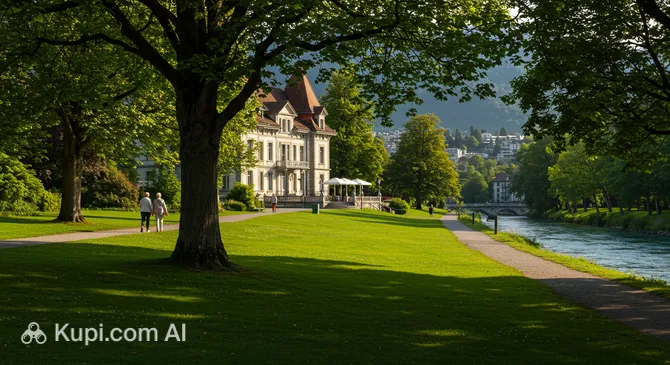
For those seeking peace and union with nature, Elfenau Park is a true find. This is a protected natural area located near the banks of the Aare River. The park is a picturesque oasis with small ponds, old trees, and well-kept lawns. It is an ideal spot for leisurely walks, bird watching, and relaxing from the city bustle in the shade of sprawling canopies.
Another important green artery of the city is the lakeside promenade, which transitions into extensive recreation zones, but speaking of the symbiosis of nature and architecture, Nicolas G. Hayek Park must be mentioned. Located in the center, it serves as a wonderful example of modern landscape design. Here you can relax among unusual wooden structures and greenery, enjoying the atmosphere of innovation that permeates this entire district.
Elfenau Park. Illustration.
Source: Kupi.com AI
Traveler photos:
The city's cultural life goes far beyond watch themes. History and art lovers should visit the New Museum Biel (NMB), which combines historical, artistic, and archaeological exhibitions, telling the story of the region from ancient times to the present day. Nearby is the Centre Pasquart — one of Switzerland's leading venues for contemporary art, located in a former hospital building with an impressive modern annex.
For fans of music and pop culture, the unique Camden Town Museum and Rockademy will be a revelation. This atmospheric space is dedicated to the history of rock and the British music scene. It houses rare artifacts, instruments, and memorabilia that immerse visitors in the world of loud rhythms and legendary performers, creating a contrast with the city's classical museums.
The historical heart of the city — the Old Town (Altstadt) — is an open-air museum in itself. Its medieval architecture remains virtually untouched: the circular layout, cobbled streets, and famous fountain-wells create a unique flavor. Be sure to notice the 15th-century Gothic town church rising above Ring Square.
Insider Tip: To see the city from a completely different perspective, take the funicular up to Magglingen. Although this place is known as a sports center, it is from the terrace there that you get perhaps the most spectacular panoramic view of Lake Biel, the city itself, and, on a clear day, the snow-capped peaks of the Alps in the distance.
Getting Around
The public transport system in Biel/Bienne, as in the rest of the country, is characterized by Swiss precision, comfort, and an extensive route network. The main operator is VB/TPB (Verkehrsbetriebe Biel / Transports publics biennois), which serves bus and trolleybus lines. City transport runs from early morning until midnight with short intervals (usually 7–15 minutes), connecting the city center, station, residential areas, and the coastal zone. Due to the city's compactness, buses are often faster than a private car, especially during peak hours.
A unique feature of the Biel/Bienne transport system is the two funiculars integrated into the general network. They connect the city center with the heights: one leads to Evilard/Leubringen, and the second takes passengers to Magglingen/Macolin, known for its sports center and panoramic views. A funicular ride is not just a way to reach a destination but also an opportunity to enjoy the picturesque landscapes of the lake and mountains using a regular city ticket.
Fares are paid within the Libero tariff association. The entire city and nearby suburbs fall into the central tariff zone (usually zone 300). Tickets can be purchased at machines at stops (accepting coins and cards), at the station office, or via mobile apps such as SBB Mobile or FAIRTIQ. The latter is most convenient for tourists: the app automatically calculates the optimal fare (Check-in/Check-out), eliminating the need to figure out zones. The cost of a single adult ticket is about 3–4 francs, but favorable day passes are also available.
For tourists staying in hotels, hostels, or campsites in Biel/Bienne, there is a pleasant bonus — the Biel/Bienne Guest Card. This card is issued for free upon check-in and entitles you to unlimited travel on public transport within the city zone, including both funiculars. Be sure to check for the card at reception, as it will allow for significant savings on travel. It is important to remember that the transport operates on a trust system: there are no turnstiles, but inspectors check tickets regularly, and fines for fare evasion are quite substantial.
As an alternative to public transport, bicycle rental is popular in the city. The local bike-sharing system Velospot has many stations throughout the city; registration and card linking are required for use. Given the flat terrain near the lake and the presence of bike lanes, this is an excellent way to see the surroundings. Taxis in Biel/Bienne are available but expensive (starting at about 6–8 francs plus mileage), so they are usually used only for night trips or transfers with heavy luggage. Popular car-sharing services like Mobility also operate in the city, but for a short visit, public transport remains the most rational choice.
Accommodation
The choice of accommodation in Biel/Bienne is quite broad and can satisfy the needs of various travelers, from business people visiting watch brand headquarters to families coming to enjoy the nature of the lake district. The city's hotel infrastructure includes modern business hotels and historic inns with special charm, as well as more budget-friendly options — hostels, guest houses, and apartments. In summer, campsites on the lakeshore are particularly popular, offering affordable relaxation in the heart of nature.
In terms of logistics, the city center and the area around the railway station are considered the most convenient neighborhoods for staying. By staying here, you will be within walking distance of shopping streets, museums, and transport hubs, which is ideal for active tourists. If your goal is relaxed leisure and beautiful views, consider hotels in the Lake Biel promenade area or in the neighboring town of Nidau, which virtually merges with Bienne. Lovers of quiet and old-world atmosphere will enjoy the small boutique hotels in the Old Town area.
Among the iconic places to stay, combining comfort and unique style, the Art Deco Hotel Elite stands out. This building is an architectural landmark in its own right, immersing guests in the elegant atmosphere of the 1930s. Located in the heart of the city, it serves as an excellent example of how Biel/Bienne carefully preserves its heritage while offering modern levels of service.
Booking Tips: Switzerland is a country with a high standard of living, and accommodation prices reflect this. The price range varies from medium (100–180 CHF per night) to high. Budget options (hostels or B&Bs) can be found, but their number is limited. It is strongly recommended to book rooms in advance, especially if your trip falls during the summer season or during major watch exhibitions when demand spikes. You can use popular international online platforms or the hotels' own websites, where special offers can sometimes be found.
Nearby Cities
For those who want to explore the surroundings, Biel/Bienne serves as an excellent starting point for day trips to several interesting nearby locations. Just 26 km away is the country's capital, Bern, whose medieval Old Town is a UNESCO World Heritage site and enchants with its arcades and famous Bear Pit. History and architecture enthusiasts should also visit Neuchâtel, located on the shores of the lake of the same name; this city is famous for its yellow sandstone castle and elegant promenade. For those who want to dive deeper into the theme of watchmaking, a trip to La Chaux-de-Fonds will be a true discovery — its unique urban layout, created for the needs of watchmakers, is also under UNESCO protection.
These nearby destinations provide insight into the region's diverse culture and landscapes, offering travelers a rich choice of experiences just a short train ride away.
Shopping & Souvenirs
Shopping:
Shopping in Biel/Bienne is a fascinating immersion into the world of Swiss quality and bilingual flavor. Since the city holds the unofficial title of the world capital of the watch industry, this is where you can find the best examples of chronometers: from affordable models to luxury brands. However, shopping here is not limited to watches; tourists can expect cozy boutiques, modern shopping centers, and colorful markets where French charm meets German practicality.
The heart of the city's commercial life is the pedestrian street Nidaugasse (Rue de Nidau). It stretches from the central square to the old town and is literally dotted with clothing stores, shoe shops, bookstores, and department stores. Walking here is a pleasure thanks to the absence of cars and the beautiful architecture. Parallel to it and in the adjacent alleys, you can find many specialized boutiques offering unique goods and designer items.
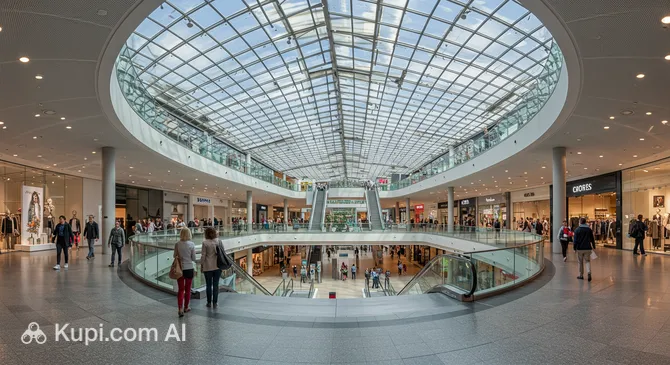
For those who prefer comfort and variety under one roof, there are excellent shopping complexes in the city. Located right at the railway station is Bahnhof Center Biel/Bienne. This is an ideal place for travelers: here you can not only buy groceries and clothes but also find useful small items for the road, operating on a convenient schedule that often exceeds the hours of regular city shops.
Bahnhof Center Biel/Bienne. Illustration.
Source: Kupi.com AI
Traveler photos:
If you have the time and want to visit a larger mall, consider Centre Brügg, located in the immediate vicinity of the city. This is a large-scale shopping site with a wide selection of mass-market brands, electronics, and home goods, easily accessible by both public transport and car.
The markets give the city a special atmosphere. The most famous is the fresh produce market at Burgplatz in the Old Town. Here, local farmers offer seasonal vegetables, fruits, cheeses, and flowers. It is the best place to feel the true taste of the region and interact with residents. Periodically, flea markets are held in the city, where you can find vintage items and antiques.
When choosing souvenirs, it is impossible to ignore the watch theme. Swatch, Omega, Rolex — local shops offer an extensive range. Additionally, handmade Swiss chocolate or a set of famous Victorinox army knives make excellent gifts. Don't forget local wines: the vineyards around Lake Biel are famous for their white varieties, which will serve as an exquisite reminder of your trip.
Opening hours and payment: Most shops are open Monday to Friday from 09:00 to 18:30 or 19:00 (often until 20:00 or 21:00 on Thursdays). On Saturday, the workday is shortened to 16:00 or 17:00. Sunday is a day off for most retail outlets, except for shops at the station and in tourist zones. Credit cards (Visa, MasterCard) and cash in Swiss francs are accepted almost everywhere.
Tax Free: Tourists residing permanently outside of Switzerland can use the VAT refund system (Tax Free) when purchasing goods totaling over 300 Swiss francs in one store. Be sure to ask for a special receipt (Tax Free Form) at the checkout and present it along with your passport and purchases at customs when leaving the country.