Support

Fribourg

About

Fribourg is a picturesque city located on the border between the French and German-speaking zones, giving it a unique cultural flavor. It stretches across a rocky peninsula surrounded on three sides by the Sarine River, creating natural defensive barriers and breathtaking landscapes. When traveling through Switzerland, it is definitely worth stopping here to see one of the most impressive medieval ensembles in the country.
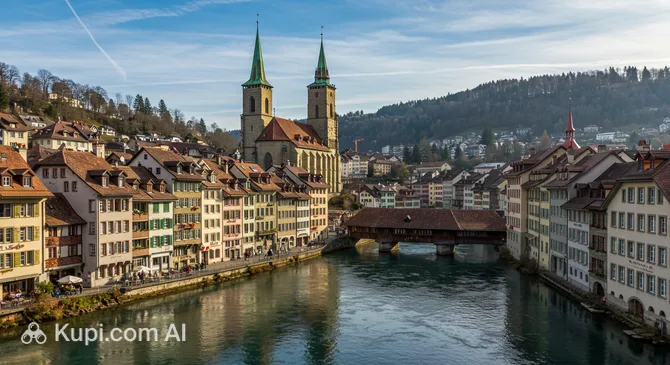
Fribourg. Illustration.
Source: Kupi.com AI

The rich history of Fribourg is etched into its architecture: more than 200 Gothic facades from the 15th century have been preserved here, forming the unique character of the Old Town (Basse-Ville). A stroll through these districts will transport you back in time, where narrow cobblestone streets lead to ancient fountains, cozy squares, and massive fortifications that have guarded the city for centuries.

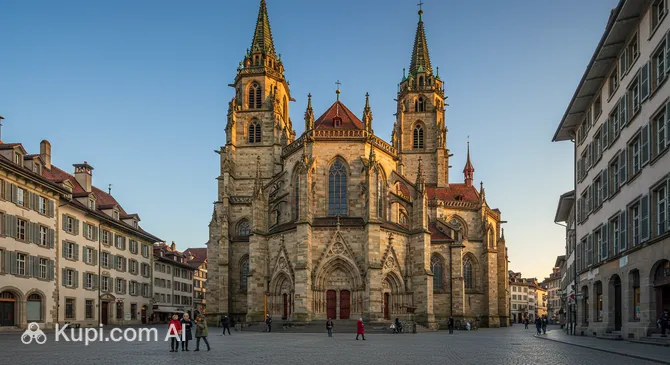
Among the main attractions, the majestic St. Nicholas Cathedral stands out. If you decide to climb the steps of its high tower, you will be rewarded with a magnificent panorama of tiled roofs and the Alpine foothills. Special attention should also be paid to the old bridges, including a covered wooden bridge over the river, as well as the famous funicular, which is a monument to engineering and operates on a unique counterweight system.

Despite its venerable age, Fribourg is full of life and energy thanks to its status as a university city. A friendly and creative atmosphere prevails here among a population of about 38,000 people. It is the perfect destination for those seeking a blend of cultural heritage, gastronomic discoveries, and scenic views away from the noise of major metropolises.
Weather Overview

The climate of Fribourg can be described as temperate, with clearly defined seasons, allowing visitors to enjoy the city in different ways depending on the time of year. Summer here is usually mild and comfortable: in July and August, the air warms up to an average of +23°C, creating ideal conditions for sightseeing without exhausting heat.

The winter period brings coolness, but severe frosts are rare. In the coldest months, January and December, night temperatures can drop to -2.6°C, while staying slightly above zero during the day. Expect warm summers with occasional rain and cool, fairly damp winters. Spring arrives gradually: while in March the average temperature is about +4.5°C, by May the air already warms up to +16°C.

When planning your wardrobe, consider the high probability of precipitation throughout the year: the number of rainy days varies from 12 to 19 per month. Before your trip, we recommend checking the detailed weather in Fribourg so you can bring an umbrella or raincoat if necessary.

Average monthly temperature

Average monthly precipitation

Interesting Facts

Beyond its main attractions, Fribourg holds many fascinating secrets, from unique linguistic phenomena to wonders of medieval engineering. This city knows how to surprise even seasoned travelers with its subtle details.

  • The city's funicular, which connects the upper and lower towns, is a unique technical monument. It is one of the last funiculars in Europe to operate on water ballast, using water from the city's sewage system for this purpose. The system requires no electricity: wastewater is poured into the tank of the upper car, and under its weight, it descends, pulling the lower car up.

  • Fribourg is the birthplace of the rare "Bolze" dialect. It emerged in the Lower Town (Basse-Ville) as a result of mixing French and the Swiss-German dialect. For a long time, locals spoke it to understand their neighbors from the other side of the river, and today this linguistic phenomenon can still be heard from long-time residents or during the carnival.

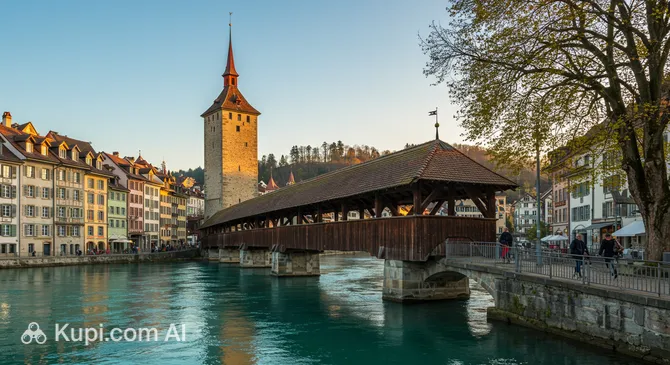
  • The Bern Bridge, spanning the Sarine River, is considered one of the oldest covered wooden bridges in Switzerland. It was built as far back as 1290, and remarkably, its supporting pillars are still made of wood rather than stone, which required incredible skill from ancient builders to protect the structure from rot.

  • The famous St. Nicholas Cathedral has an unfinished look if you look closely at its top. Originally, the tower was intended to be crowned with a high Gothic spire, but construction stopped in the 15th century at a height of 74 meters due to a lack of funding, leaving the tower with a flat roof that has now become a symbol of the city.

Bern Bridge. Illustration.
Source: Kupi.com AI

Traveler photos:

How to Get There

Fribourg is located in the heart of the country and boasts excellent transport accessibility, making a trip here comfortable and pleasant. Travelers most often arrive at the large international hubs of neighboring cities and then continue their journey by land. You can find out more details on how to get to Fribourg, and below we will look at the most popular routes through the nearest airports and stations.

Fribourg itself does not have its own airport, so it is most convenient to use the air gateways of neighboring large cities. One of the main options is Zurich Airport (IATA: ZRH), located in the city of Zurich. This is the country's largest aviation hub, located about 128 km from Fribourg. A trip from there by taxi or bus will take about 3.5 hours. Another popular choice is Geneva Airport (IATA: GVA), located in Geneva at a distance of about 102 km. The road by car from this airport to the center of Fribourg will take approximately 3 hours.

For clarity, here is a summary of the main airports:

AirportPassenger trafficDistance
Bern Airport57 00028 km
Sion35 92966 km
EuroAirport Basel Mulhouse Freiburg8 mln91 km
EuroAirport Basel-Mulhouse-Freiburg8.1 mln91 km
EuroAirport Basel–Mulhouse–Freiburg8.1 mln91 km

Railway connections in Switzerland are excellently developed, and the train is often the best way to travel between cities. The nearest major railway hub is Bern Station in the city of Bern, located just 26 km from Fribourg. This is very convenient, as a transfer by car will take less than an hour. Also, many tourists arrive via Basel SBB Station in Basel (about 88 km from Fribourg), from where you can continue your journey into the heart of the country.

Below is a list of the nearest significant railway stations:

StationPassenger trafficDistance
Bern Railway Station69 mln26 km
Oerlikon Railway Station34.4 mln29 km
Sion Railway Station4.5 mln66 km
Basel SBB station40 mln89 km
Basel Badischer Bahnhof7.3 mln91 km

Main Attractions

Fribourg is a city where history coexists with science and nature. After exploring the architectural masterpieces of the Old Town, it is worth spending time in the unique museums and parks that reveal another side of this Swiss canton.

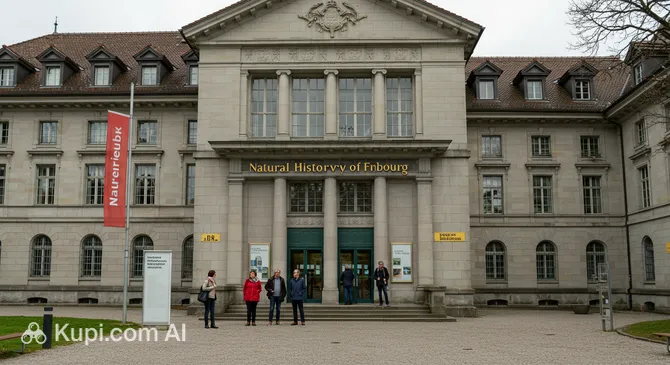
One of the most popular locations for families is the Natural History Museum of Fribourg. The museum's exhibits fascinatingly detail the geology and biological diversity of the region. Here you can see everything from minerals found in the depths of the Alps to taxidermy of local animals and even a whale. This place doesn't just display artifacts; it helps visitors better understand the ecology and natural processes occurring around us.

Natural History Museum of Fribourg. Illustration.
Source: Kupi.com AI

Traveler photos:

Fans of engineering and modeling will thoroughly enjoy a visit to the Kaeserberg Railway Museum. This hidden gem of Fribourg features an incredibly detailed model railway. The creators spent years recreating Swiss landscapes at a 1:87 scale, through which miniature trains traverse. The precision and technical complexity of the system impress even those far removed from the world of model making.

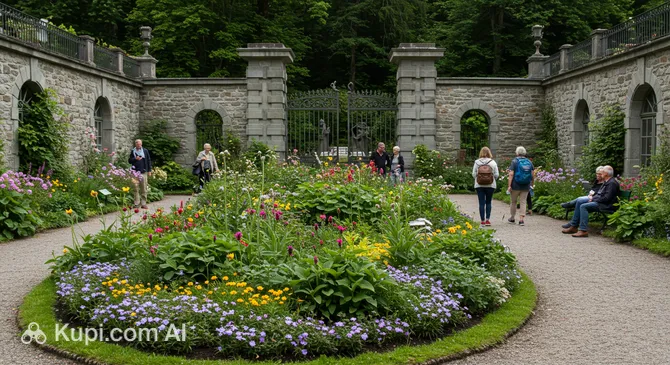
If you are looking for peace and harmony, head to the Botanical Garden of the University of Fribourg. This green oasis located within the city limits features thousands of plant species. A walk along its paths and through its greenhouses will introduce you to both typical Swiss flora and exotic or medicinal plants. It is an ideal spot for a quiet break after a busy day of sightseeing.

Local Cuisine

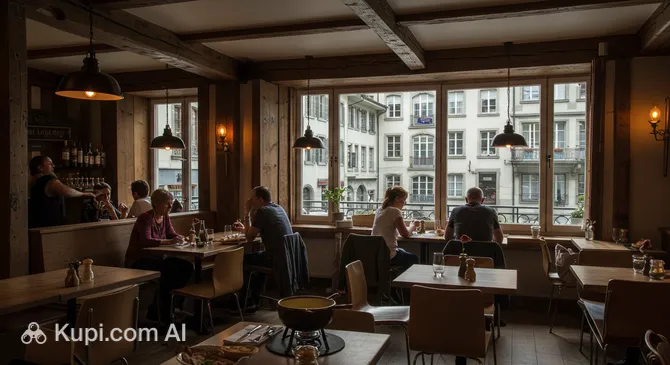
Fribourg's cuisine is a real treat for gourmets, especially those fond of cheese and hearty Alpine traditions. The region's gastronomic signature is the famous "Moitié-Moitié" (half-and-half) fondue. Its secret lies in the perfect combination of two local cheeses: the piquant Gruyère (Gruyère AOP) and the delicate Vacherin Fribourgeois (Vacherin Fribourgeois AOP). This dish is served in almost every traditional establishment and is considered a must-try for any traveler.

Another unique specialty worth trying is Cuchaule AOP. This is a sweetish saffron bread traditionally eaten with Bénichon mustard (Moutarde de Bénichon). The mustard here is unusual: it resembles a spicy jam made from wine must, sugar, and spices. For dessert, locals invariably choose meringues with Gruyère double cream—a thick, rich delicacy often served with berries.

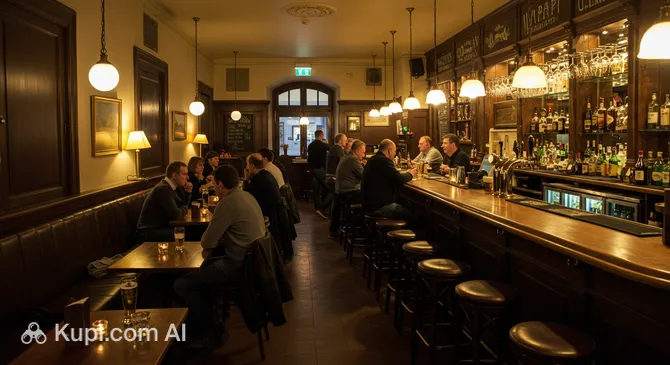
As for drinks, the Canton of Fribourg is famous for its wines from the Vully region, located on the shores of Lake Murten. Excellent white wines from Chasselas grapes and reds from Pinot Noir are produced here. Beer lovers should know that the city has long-standing brewing traditions. In the evening, you can drop into the atmospheric Banshees' Wreck pub to appreciate the selection of drinks and soak up the lively atmosphere of the city at night.

Le 83. Illustration.
Source: Kupi.com AI

Traveler photos:

The food culture in Fribourg is diverse: from cozy ancient taverns in the Lower Town to modern gastronomic spaces. Locals love to visit weekly markets where farmers sell fresh produce, cheeses, and homemade pastries. If you are looking for a place for lunch or dinner with an interesting concept, check out the popular restaurant Le 83. And for those who want to combine shopping with a quick bite, Fribourg Centre is a great option, offering a wide selection of cafes and snack bars.

Travel Tips

Welcome to Fribourg—a city where medieval charm meets the modern rhythm of life, and French culture intertwines with German. To make your journey as comfortable as possible and leave you with only pleasant memories, we have prepared a list of useful recommendations to help you feel at home here.

  1. Clothing and Footwear. Given the city's hilly terrain and the abundance of cobblestones in the historic center (Basse-Ville), the most important rule is comfortable, flat-soled shoes. Forget about heels if you plan on long walks. The weather in Switzerland is changeable, so dress in layers: even in summer, it can be cool in the evening. An umbrella or a light raincoat is a must-have for a tourist in any season.
  2. Transport and Getting Around. The city center is compact but has significant elevation changes. Use the famous funicular to get from the lower town to the upper town—it's not just transport, but an attraction in itself. Public transport (TPF buses and trolleybuses) works like clockwork. Tickets can be bought at machines at stops (accepting coins and cards) or via the SBB Mobile app. Taxis are expensive here, so for short trips, it's better to choose walking or the bus.
  3. Finance and Payment. The currency is the Swiss franc (CHF). Although euros may be accepted in large stores, you will be given change in francs at an unfavorable rate. Bank cards (Visa, Mastercard) are accepted almost everywhere, including ticket machines and cafes. However, having some cash (10-20 franc notes) is useful for paying at markets or in small kiosks. Tips are usually already included in the bill, but rounding up the amount is considered good manners.
  4. Language and Communication. Fribourg is a unique bilingual city. People speak both French and German (Swiss dialect) here, although French predominates in the center. English is well understood in tourist areas, hotels, and restaurants. A polite "Bonjour" (Good day) or "Merci" (Thank you) will win over the locals, no matter what language you continue the conversation in.
  5. Etiquette and Behavior. The Swiss value politeness and restraint. When entering a shop, it is customary to greet the shopkeeper. In public transport and restaurants, it is not customary to speak loudly, including on the phone. If you are traveling by train, observe "quiet zones" if your carriage is marked as such.
  6. Health and Safety. Fribourg is a very safe city; you can safely walk around even at night. Pharmacies are marked with a green cross; if you need medicine late at night or on the weekend, look for an on-call pharmacy (pharmacie de garde)—a list is usually posted on the doors of any closed pharmacy. Water from city fountains is drinkable unless there is an "Eau non potable" (non-potable water) sign.
  7. Things to Avoid. Never cross the road on a red light, even if there are no cars—this causes disapproval and can lead to a fine. Avoid noise on Sundays and after 10:00 PM—the Swiss strictly respect the right to peace and quiet of their neighbors. Also, don't be late if you have a table reservation or an appointment—punctuality is held in high regard here.
  8. Tourist Hack. If you plan to actively visit museums and use transport, consider buying the Fribourg City Card. This card entitles you to free travel on public transport in zone 10 (city center), free admission to most museums, a visit to the cathedral tower, and a ride on the tourist train. It's a great way to save money and see more.

Fribourg reveals itself to those who are ready to wander slowly through its streets, listening to the chime of bells and the sound of the Sarine River. By following these simple tips, you can avoid minor troubles and fully immerse yourself in the atmosphere of this amazing Swiss city. We wish you an unforgettable journey!

Entertainment & Nightlife

Entertainment and nightlife in Fribourg are inextricably linked to its status as a lively university city. Thanks to the large number of students, evenings here are dynamic and approachable, but without the excessive bustle of big cities. Most activity centers around the city center, near the train station, and in the colorful streets of the Lower Town (Basse-Ville), where historic facades hide cozy establishments.

For fans of classic bar culture and socializing, Banshees' Wreck is an excellent choice. This venue offers an authentic Irish pub atmosphere where locals and tourists alike gather to grab a pint of beer and listen to music. During the warmer months, the Port de Fribourg becomes a major attraction—a unique open-air public space in the Lower Town. It’s not just a spot by the water, but a real cultural hub with a bistro and a community garden where concerts and themed evenings are held.

Banshees' Wreck. Illustration.
Source: Kupi.com AI

Traveler photos:

The atmosphere of Fribourg at night is relaxed; strict dress codes are rare, so a "casual" style is appropriate almost everywhere. The main fun starts after 10:00 PM, especially on Thursdays, Fridays, and Saturdays. Prices align with Swiss standards: a cocktail costs an average of 15 francs, while a glass of beer is around 7–9 francs. The city is very safe, and night walks do not cause concern.

For night owls, the region has a convenient network of "Moonliner" night buses that run on weekends, connecting the center with the suburbs. This is a great alternative to taxis, which can be quite expensive at night. If you plan to travel late at night, check the schedules for these routes in advance.

During the day, the city offers quieter forms of leisure. Shopping enthusiasts can head to the Fribourg Sud Shopping Center or stroll through the galleries of Fribourg Centre, which also houses a cinema for an evening screening. The cultural program might include visiting theaters or the numerous festivals that regularly take place in the city's squares.

Parks & Museums

Fribourg harmoniously combines medieval heritage with green oases, offering tourists a rich cultural program and opportunities for outdoor relaxation. The city, surrounded by the river and cliffs, boasts many picturesque spots where you can escape the urban bustle, while its museums house treasures spanning centuries of history and art.

Among the green zones, Lake Pérolles (Lac de Pérolles) deserves special attention. This nature reserve is located just a few steps from the city limits and represents a unique ecosystem. Surrounded by high sandstone cliffs, the lake has become home to many waterfowl. Convenient trails with information boards are laid out here, making a walk not only pleasant but also educational.

Fribourg University Botanical Garden. Illustration.
Source: Kupi.com AI

Traveler photos:

Another important place for plant lovers is the Botanical Garden of the University of Fribourg. It is a true living open-air museum, containing more than 5,000 plant species from all over the world. The garden is divided into thematic zones, including an alpine garden and a medicinal herb sector, allowing visitors to take a world tour without leaving the city. For those who prefer wilder nature, we recommend a walk through the Gottéron Gorges (Gorges du Gottéron)—a mystical place with wooden bridges, mosses, and waterfalls, steeped in local legends.

Fribourg's cultural life is equally rich. The Museum of Art and History (MAHF), located in the elegant Ratzé Palace, is a must-visit. Its collection is impressive in its diversity: from Burgundian buckles to monumental sculpture and paintings by Swiss masters. It is the best place to immerse yourself in the artistic past of the canton.

Fans of contemporary art should visit the Espace Jean Tinguely — Niki de Saint Phalle. Located in a former tram depot, this museum is dedicated to the work of two outstanding 20th-century artists. Here you can see Tinguely's famous kinetic sculptures that come to life before your eyes and the vibrant, phantasmagoric works of de Saint Phalle. Also, don't forget the Natural History Museum of Fribourg, which remains a favorite among curious travelers of all ages.

Speaking of architecture, it's impossible to pass by the city's symbol—St. Nicholas Cathedral. This Gothic masterpiece was built over centuries and is famous for its Art Nouveau stained glass windows created by Polish artist Józef Mehoffer. Another architectural gem is the city's fortifications. Fribourg has preserved a significant portion of its medieval walls and 14 towers, making it one of the largest ensembles of military architecture in Switzerland.

For those seeking authentic experiences, we suggest climbing up to the Loretto Chapel (Chapelle de Lorette). Its terrace offers perhaps the most breathtaking and "postcard-perfect" view of the Old Town, the Sarine River, and the bridges, which is especially beautiful at sunset.

Getting Around

The public transport system in Fribourg is organized efficiently and conveniently, allowing for easy movement around the city despite its challenging hilly terrain. The main operator is TPF (Transports publics fribourgeois), which manages a dense network of bus and trolleybus routes. Buses run frequently, strictly according to the schedule, and connect the railway station, the historic center, and outlying districts. Most stops are equipped with electronic displays showing the arrival time of the next service in real time.

A true highlight and point of pride for the city's transport network is the old funicular (Funiculaire), which has been in operation since 1899. It is not just an attraction, but a full-fledged mode of transport connecting the upper city center (St-Pierre) with the lower historical district (Basse-Ville). Its uniqueness lies in the fact that it operates on water ballast: water is poured into the tank of the upper car, and under its weight, it descends, lifting the lower car. A ride on it is the fastest and most scenic way to overcome the height difference without a tiring climb on foot.

Fribourg is part of the Frimobil fare network, so a single ticket is valid for all types of transport (bus, trolleybus, funicular, and suburban trains within the city). The entire city is in fare zone 10. Tickets can be purchased at machines at the stops (accepting coins and cards), at TPF ticket offices, or, more conveniently, through mobile apps such as SBB Mobile or FAIRTIQ. The latter is especially popular: just swipe your finger on the screen before boarding and after alighting, and the app will automatically calculate the optimal fare.

A standard one-hour ticket costs about 3 francs, and 24-hour passes are also available. It is important to remember: tickets must be purchased before boarding the vehicle. There are usually no validators or ticket machines inside the buses, and fines for fare evasion in Switzerland are quite substantial. If you plan to move around a lot and visit museums, the most advantageous option is purchasing the Fribourg City Card, which includes unlimited travel in zone 10.

As an alternative to public transport, the city has a developed PubliBike bike-sharing network. Stations are located at key points, including the station and university campuses, allowing you to rent a standard or electric bike via the app. Taxis in Fribourg are available but quite expensive, so they are usually only used for trips with heavy luggage or at night when the main bus routes are no longer running. However, given the compactness of the center, many tourists prefer to get around on foot, enjoying the views, and only use transport for steep climbs.

Accommodation

Where to stay:

Fribourg offers travelers a decent selection of accommodation options that match its status as a university and tourist city. Here you can find affordable hostels and guesthouses geared towards youth and students, cozy mid-range hotels, and elegant boutique hotels located in historic buildings. There are few large luxury chain resorts here, but their absence is compensated for by an intimate atmosphere and a high level of Swiss service.

When choosing a place to stay, you should consider two main areas. The Upper Town (the area around the railway station and pedestrian streets) is ideal for those who plan to travel outside the city frequently or value proximity to shops and modern infrastructure. This is a practical choice for tourists with heavy luggage. The Lower Town (Basse-Ville) is the heart of medieval Fribourg. Staying here, you will find yourself surrounded by ancient bridges, the sound of the river, and major attractions like the majestic St. Nicholas Cathedral. However, keep in mind that car access here may be limited, and walking will require navigating climbs and descents.

St. Nicholas Cathedral. Illustration.
Source: Kupi.com AI

Traveler photos:

A feature of Fribourg's hotel stock is that many hotels are housed in renovated buildings with centuries of history, which adds a special charm to the stay. In recent years, apartment rentals have also been gaining popularity, which is convenient for families and groups wishing to feel like locals.

Booking Tip: Fribourg is a popular destination, especially during the summer season and during festivals. We recommend booking accommodation 2–3 months before your trip to get the best value for your money. If you are planning a visit in December for the Feast of St. Nicholas, you should start looking for a room even earlier.

The price range in Fribourg corresponds to the general Swiss level: budget options start from 100–120 francs per night, while comfortable rooms in the center will cost more. Booking is most convenient through major international online platforms, where most local properties are listed, or directly through hotel websites, which sometimes allows you to receive a welcome bonus or discount.

Nearby Cities

For those looking to explore the surroundings, Fribourg serves as an excellent starting point for day trips to several interesting nearby locations. Thanks to its convenient location in the center of the country and its developed railway network, travelers can easily reach iconic Swiss cities in just 30-60 minutes.

First and foremost, it is worth visiting Bern, the capital of Switzerland, whose historic center is a UNESCO World Heritage site. Here you can stroll through the famous covered arcades, see the Zytglogge clock tower, and observe the city's symbols in the Bear Park. Another attractive destination is Thun—the "gateway to the Bernese Oberland." This city charms with its majestic 12th-century castle perched on a hill and picturesque views of the lake and the Alps. Fans of industrial history and architecture will find La Chaux-de-Fonds interesting, known as the world capital of watchmaking with its unique grid-like street planning.

CityPopulationDistance
Villars-sur-Glane12 0923 km
Payerne9 94317 km
Bulle22 70923 km
Köniz41 78424 km
Mattenhof12 09825 km

These nearby destinations provide insight into the diverse culture and landscapes of the region, making your stay in Fribourg even more rewarding.

Shopping & Souvenirs

Shopping in Fribourg is a pleasant and relaxed activity, devoid of the bustle of huge metropolises. The city offers a harmonious blend of modern shopping galleries and charming boutiques tucked away in historic buildings. Here you can find both international brands and unique items from local artisans, making the shopping process interesting for any tourist.

The heart of the city's commercial life is the pedestrian zone near the railway station. Rue de Romont and Rue de Lausanne are the main arteries for window shoppers. Clothing stores, shoe shops, bookstores, and jewelry salons are concentrated here. However, if you descend to the Lower Town (Basse-Ville), the atmosphere changes: antique shops, art galleries, and small workshops rule here, where you can find something truly authentic and unique.

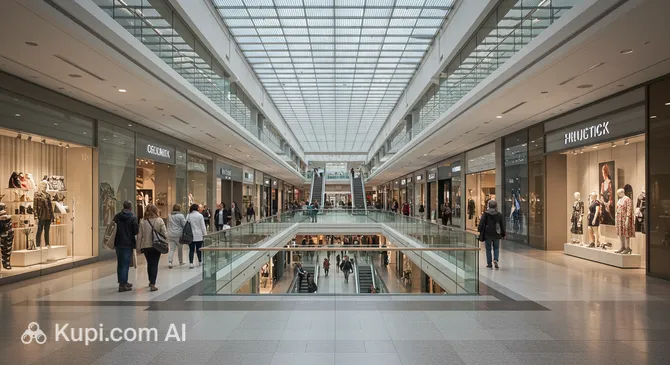
For those who prefer to do all their shopping in one place, Fribourg offers several large complexes. In the very center, in close proximity to the station, is Fribourg Centre. This is a modern mall with many fashion, electronics, and cosmetics stores. If you need a wider selection of home goods or hypermarkets, it's worth heading to the outskirts of the city to the Fribourg Sud Shopping Center.

Fribourg Centre. Illustration.
Source: Kupi.com AI

Traveler photos:

The special flavor of local life can be felt at the street markets. Every Wednesday and Saturday morning, market stalls unfold on Place Georges-Python or in the town hall area. Here, farmers from surrounding villages sell fresh vegetables, fruits, flowers, and, of course, the famous Swiss cheeses. This is a great place to try local delicacies and chat with the residents.

When choosing souvenirs from Fribourg, pay attention to the gastronomy. The city is home to the well-known Villars chocolate factory, so a bar of high-quality local chocolate makes the best gift. Be sure to buy Gruyère and Vacherin Fribourgeois cheeses for making fondue at home. Also a popular souvenir is Bénichon mustard (Moutarde de Bénichon)—a sweet-spicy jam traditionally eaten with Cuchaule saffron bread.

Shops in Fribourg are usually open from Monday to Friday from 08:30 or 09:00 until 18:30 or 19:00. On Thursday, many outlets stay open longer—until 20:00 or 21:00 (so-called "night shopping"). On Saturday, the working day is shortened to 16:00 or 17:00, and Sunday is a day off for most shops except for small stores at the station. Bank cards are accepted almost everywhere, but it's better to have some cash for the markets.

Tourists living outside of Switzerland can use the Tax Free system. If the purchase amount in one store exceeds 300 Swiss francs, you are entitled to a VAT refund. Don't forget to ask for a special Tax Free Form at the checkout and present it along with your passport and goods at customs when leaving the country.

Reached the end of the page?

That means the route is fully explored