Support

Berne Bridge

About

Among the many architectural treasures for which the city of Fribourg is famous, the Bernese Bridge (Pont de Berne) holds a special place. This unique historical site in Switzerland is one of the last remaining examples of medieval covered wooden bridges. Built around 1250, it has served as a link between the lower and upper town for centuries, crossing the waters of the Sarine River.
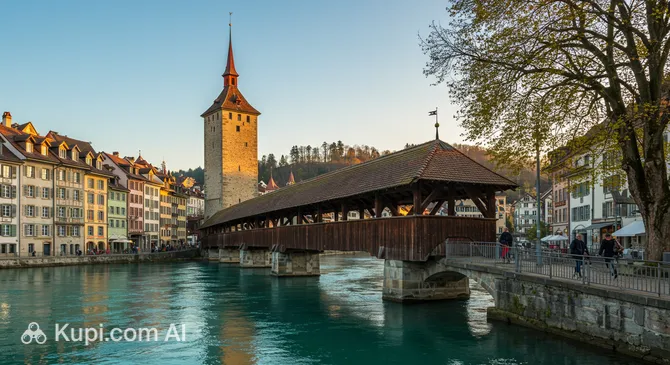
Bern Bridge
Bern Bridge. Иллюстрация. Источник: Kupi.com AI

The bridge's construction, spanning about 40 meters, is impressive in its engineering elegance: it rests on powerful wooden supports and trusses, protected from above by a gabled roof covered with traditional tiles. The walls are clad in wooden planks that have protected the load-bearing beams from the whims of the weather for centuries, turning the bridge into a true fortress-crossing.

Today, the Bernese Bridge is recognized as a cultural heritage site of national importance. It is not just a functional structure, but a symbol of continuity through time and an outstanding example of carpentry craftsmanship. Visitors appreciate it for its authentic atmosphere and the chance to literally touch history while walking on the same planks once trodden by medieval merchants and knights.

Contacts

To inquire about visiting the attraction or to book a tour of the Old Town, you can contact the local tourist office.

How to contactContact
AddressPont de Berne, 1700 Fribourg, Switzerland
Phone+41 26 350 11 11
Websitewww.fribourgtourisme.ch

What to Do

A walk across this historic bridge is, above all, an opportunity to enjoy the aesthetics of ancient wooden architecture. As you cross the Sarine River, be sure to note the massive wooden trusses and the tiled roof. Attentive tourists might spot whimsical decorative elements under the ceiling, such as bat models, which add a unique character to the place.

From the bridge itself, there are magnificent panoramic views of the medieval city of Fribourg. From here, you can see the 14th-century Cat Tower (Tour des Chats), the Bernese Gate, and fragments of the mighty fortress wall. It is an ideal spot for photographers looking to capture the spirit of Old Europe without the noise and bustle.

Experienced travelers recommend combining a visit to the Bernese Bridge with a walk across the city's other crossings. By following a route through the Zaehringen, Gotteron, and Milieu bridges, you can see all seven picturesque bridges that shape the unique landscape of the Sarine Valley. Such a walk allows you to fully appreciate the scale of Fribourg's fortifications and enjoy views of the legendary Tour Rouge tower.

Getting There

Finding your way to this landmark is easy, as the city of Fribourg has a compact and walkable historic center. From the famous St. Nicholas Cathedral, the bridge is just a 10–15 minute walk down the picturesque cobbled streets toward the river.

If you prefer public transport, you can use the city's buses or trams. The nearest stops are located in the Place du Petit-Saint-Jean area or near the cathedral, from where it is only a few hundred meters to the river. The famous Fribourg Funicular, which is water-powered, can help save energy when moving between the city's levels, though it does not take you directly to the bridge.

For those traveling by car, keep in mind that parking in the Old Town is very limited. It is recommended to leave your car in one of the public parking lots on the edge of the center and continue on foot to enjoy the medieval atmosphere. The exact navigation address is: Pont de Berne, 1700 Fribourg.

Ближайший город: Fribourg

History & Facts

The history of this structure dates back to the High Middle Ages. The Bernese Bridge was built around 1250 to provide a reliable crossing over the Sarine River. At that time, it was vital for trade and communication, as Fribourg was rapidly growing as a center for crafts, renowned for its weavers and tanners.

Over its long centuries of existence, the structure has undergone numerous restorations. One of the most significant repairs took place in the 17th century, when the wooden pillars were further reinforced. In the 19th century, the bridge faced the threat of demolition as the city required more modern transport infrastructure, but thanks to the decisive actions of local authorities and preservationists, this masterpiece of engineering was saved for future generations.

Today, the bridge is officially included in the Swiss Inventory of Cultural Property of National Significance. It is not only an important transport link for pedestrians but also a living witness to changing eras—from the Habsburg rule to the present day. Its authentic appearance, featuring wooden shingles and massive trusses, has remained virtually unchanged for hundreds of years.

Time Needed

For a standard look at the structure itself, taking some souvenir photos, and contemplating the views of the Sarine River, 30 to 60 minutes is sufficient for most tourists. This is enough time to cross the bridge at a leisurely pace and examine the details of its wooden construction.

If you plan a full walking route through the Old Town of Fribourg, including visits to nearby towers, fortress walls, and other historical bridges (such as the Zaehringen Bridge), you should set aside about 2–3 hours. The evening is particularly conducive to long walks, when the city lights come on, giving the historical sites a fairytale appearance.

Working Hours

Since the Bernese Bridge is part of the city's pedestrian infrastructure, it is accessible for visiting 24/7, daily. It has no gates or ticket offices, so you can come here at any time that suits you.

The operating schedule remains the same throughout the week:

  • Monday – Sunday: Open 24 hours.
For the most atmospheric shots, it is recommended to visit the bridge either early in the morning, when mist may linger on the river, or at sunset, when the wood takes on a warm golden hue.

Круглосуточно

Nearby

The bridge's location in the heart of the historic district makes it easy to combine your visit with other iconic sites. A stroll through the surrounding area will reveal the charm of ancient squares and the unique fountains that the city is so proud of.

Exploring nearby sites will help you dive deeper into the atmosphere of medieval Fribourg and see how carefully the architectural heritage of different centuries is preserved here.

NameDistance
Banshees' Wreck0.1 km
Port of Fribourg0.3 km
Le Sauvage0.5 km
St. Nicholas Cathedral0.5 km
Espace Jean Tinguely – Niki de Saint Phalle0.7 km
KUMO0.9 km
Crapule Club1.2 km

Reached the end of the page?

That means the route is fully explored