Support

Naturhistorisches Museum Bern

About

Imagine a place where the nature of every continent comes to life. The Bern Natural History Museum is one of the most significant and visited museums in Switzerland. Located in picturesque Bern, it invites guests on a fascinating journey through the world of science, geology, and biology.
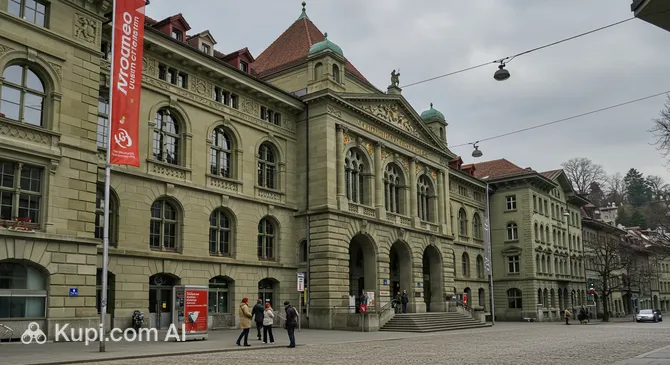
Natural History Museum of Bern
Natural History Museum of Bern. Иллюстрация. Источник: Kupi.com AI

The museum is famous for its unique collections, among which minerals, meteorites, and incredibly accurate animal skeletons hold a special place. It is not just an exhibition of artifacts under glass, but a vital scientific and educational center working in close cooperation with the local university.

Every year, this institution attracts more than 100,000 visitors. Tourists and locals alike come here to see the famous dioramas, which are considered among the best in Europe for their craftsmanship and historical value.

Contacts

For more information about special exhibitions or educational programs, you can contact the museum administration directly.

How to contactContact
AddressBernastrasse 15, 3005 Bern, Switzerland
Phone+41 31 350 71 11
Websitewww.nmbe.ch

What to Do

The main feature of the museum, which draws visitors from all over, is its collection of over 220 full-scale dioramas. You can literally "walk" through the African savannah, peek into Asian jungles, or find yourself on the snow-capped peaks of the Swiss Alps, observing animals and birds in their natural habitats.

Be sure to visit the Mineral Hall. It houses the legendary "Plaggenstock Treasure"—a group of giant quartz crystals that are stunning in their clarity and size. Additionally, the collection features genuine gold bars found in the depths of Switzerland and fragments of rare meteorites.

Don't forget to visit the museum's most famous resident—Barry the St. Bernard. The taxidermy of this legendary rescue dog, who lived in the 19th century, has become a symbol of devotion and courage. The story of Barry, who saved dozens of lives in the mountains, touches the hearts of visitors of all ages.

Getting There

The Bern Natural History Museum is located at Bernastrasse 15, in the cozy historical quarter of Kirchenfeld. Thanks to its central location, it is easy to reach both on foot from the historical center and by public transport.

The most convenient way is to use the city tram. You can take any route that stops at Helvetiaplatz, which is just a few minutes' walk from the museum entrance. If you prefer a taxi, the ride from Bern's main railway station will take only 5–10 minutes.

For those traveling by private car, please note that parking in this area can be limited, so it is recommended to use "Park and Ride" lots or the public transport system, which operates flawlessly in Bern.

Ближайший город: Bern

History & Facts

The history of this scientific institution began back in 1832. Initially, the collections were housed in a building on Hodlerstrasse, but over time, the archives grew so significantly that the museum required a new, more spacious home.

The modern building we see today on Bernastrasse was constructed between 1932 and 1934. The official opening within these walls took place in 1936. The museum's architecture was specifically designed for the needs of the exhibition, allowing for the creation of ideal conditions for storing rare collections.

One of the most touching exhibits and symbols of the museum is the taxidermy of Barry the St. Bernard. This legendary dog from the Great St. Bernard Hospice saved dozens of people in the Alps in the early 19th century. In 2001, the museum even held a large-scale exhibition dedicated exclusively to Barry's story, highlighting his status as a national hero.

Over the years of its existence, the museum has transformed from a modest collection of antiquities into a leading research center. It maintains close ties with the University of Bern, participating in international projects studying biological diversity and geology.

Time Needed

To leisurely explore all levels of the museum and enjoy the detailed dioramas, we recommend setting aside 2 to 3 hours for your visit. If you are traveling with children, time may fly by unnoticed, as the interactive elements and realistic animal figures always cause delight.

Mineralogy and paleontology enthusiasts might need a bit more time to study the rich collection of crystals and meteorites in detail. In any case, even a quick look at the main exhibition will leave a lasting impression.

Working Hours

When planning your visit to the Bern Natural History Museum, please note the opening hours, which vary slightly during the week:

  • Monday: 14:00 – 17:00;
  • Tuesday, Thursday, Friday: 09:00 – 17:00;
  • Wednesday: 09:00 – 18:00 (extended day);
  • Saturday and Sunday: 10:00 – 17:00.

It is important to remember that the museum is usually closed on holidays such as Christmas (December 24–25), New Year (December 31 – January 1), Easter, and Swiss National Day (August 1).

DayWorking hours
Понедельник2:00 – 17:00
Вторник9:00 – 17:00
Среда9:00 – 18:00
Четверг9:00 – 17:00
Пятница9:00 – 17:00
Суббота10:00 – 17:00
Воскресенье10:00 – 17:00

Nearby

A visit to the Natural History Museum can easily be combined with a walk to other iconic city spots. The Kirchenfeld district and its surrounding neighborhoods are rich in architectural monuments and cultural sites that will help you dive deeper into the atmosphere of the Swiss capital.

Just a few minutes' walk from the museum are the streets of the Old Town, a UNESCO World Heritage site, where history is hidden around every corner.

NameDistance
Bern Historical Museum / Einstein Museum0.1 km
Museum of Communication0.1 km
Swiss Alpine Museum0.2 km
Bellevue Palace Restaurant0.5 km
Einstein House0.6 km
Federal Palace of Switzerland0.6 km
Bern Cathedral0.6 km

Reached the end of the page?

That means the route is fully explored