Support

Le Locle

About

Le Locle is not just a city, but a true open-air monument to the art of watchmaking, nestled comfortably in the Jura Mountains. This small but world-famous settlement is often called the "City of Precision," as it is here, on the border with France, that the industrial heart of the region beats. A journey here is a unique opportunity to see another side of a country like Switzerland, where technical progress harmoniously blends with the rugged beauty of nature.
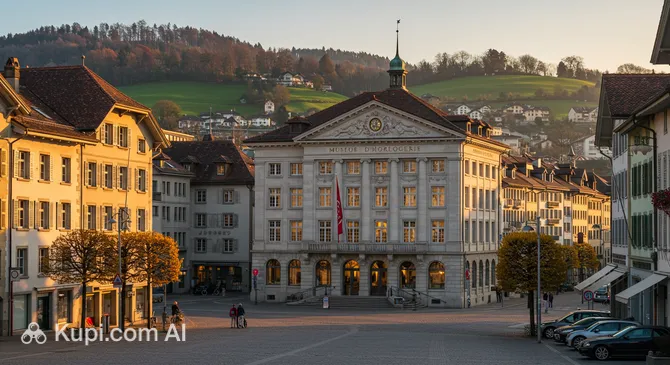
Le Locle. Illustration.
Source: Kupi.com AI

Located in the Canton of Neuchâtel at an altitude of about 940 meters above sea level, the city features a fresh mountain climate and picturesque snowy winters. With a population of just over 10,000 people, Le Locle maintains an intimate atmosphere, yet its contribution to world culture is immense. The unique street layout was created specifically for the needs of watchmakers, allowing the city (together with neighboring La Chaux-de-Fonds) to be included in the UNESCO World Heritage list. The rich history of Le Locle can be traced in its architecture, where residential houses sit side-by-side with workshops, ensuring maximum natural light for the artisans' meticulous work.

Among the main attractions, the Watch Museum (Musée d'Horlogerie du Locle), located in the elegant Château des Monts mansion, is a must-see. Here, you can view rare collections of chronometers and mechanical automata. No less impressive are the Col-des-Roches Underground Mills — a unique cave factory-museum where the energy of an underground waterfall has been used to power machinery since the 17th century.

Le Locle is an ideal destination for those seeking inspiration in the history of technology and who enjoy quiet walks through places with a special character. Come here to discover how time is measured and to enjoy the silence of the Swiss mountains.

Weather Overview

The climate of Le Locle is largely determined by its location in the Jura Mountains: freshness prevails here, and the air is always invigorating. Summer in the city is mild and comfortable, ideal for those who do not like intense heat. In the warmest months, July and August, the average temperature is about 19°C, and daytime highs rarely exceed 24°C, creating wonderful conditions for walking.

The winter season brings coolness and a snowy atmosphere. In January and December, average temperatures hover around 1.6°C to 2.4°C, with night temperatures often dropping below freezing. A characteristic feature of the local climate is relatively high humidity: precipitation falls steadily throughout the year, on average between 13 to 18 days per month.

In general, expect warm summers with occasional rain and cold winters that require warm clothing and reliable footwear. To make your trip as comfortable as possible and ensure you're not caught off guard by the rain, we recommend checking the current weather in Le Locle for your travel dates before packing.

Average monthly temperature

Average monthly precipitation

Interesting Facts

Le Locle is not just a center of watch production, but a city with an unusual history and unique architecture. Here are a few facts that will help you better understand the character of this place.

  • A "Factory-City" in Marx's writings. Le Locle is mentioned in Karl Marx's famous "Das Kapital." The philosopher cited the city as an example of a special industrial organization where, due to the many small workshops, the entire settlement functioned as a single production mechanism.
  • A storyteller's visit. In 1833, Hans Christian Andersen visited these parts. It is believed that the Danish writer was impressed not only by the nature of the Jura Mountains but also by the meticulous work of the local craftsmen, which may have been reflected in his notes and creative work.
  • The legend of the blacksmith. The birth of the watch industry is associated with the name of Daniel JeanRichard. According to legend, a local blacksmith managed to repair a traveling merchant's watch without any experience and then independently created tools for production. This event laid the foundation for the craft that Switzerland is proud of today.
  • The architecture of light. After a fire in the middle of the 19th century, the city was rebuilt with the needs of watchmakers in mind. The streets and houses were designed to ensure maximum natural light reached the workshop windows, which was critically important for precision work.

How to Get There

Le Locle, situated in the picturesque Jura Mountains, does not have its own airport; however, thanks to the well-developed transport system of Switzerland, getting here is quite easy. For detailed route planning, we recommend checking the information on how to get to Le Locle, where all available travel options are listed.

If you prefer flying, the nearest major transport hub is the EuroAirport Basel-Mulhouse-Freiburg (EAP). It is located in the city of Basel, approximately 84 km from Le Locle. A trip by car from there will take about 2–2.5 hours. This is a convenient option for travelers arriving from European countries.

Another popular option is Geneva Airport (GVA), located in the city of Geneva (about 103 km from Le Locle). This is an important international hub that receives many flights. The journey by taxi or transfer will take about 2.5–3 hours. Also, for long-haul flights, Zurich Airport (ZRH) is often chosen. It is located in Zurich, 144 km from the destination, and is the largest airport in the country.

For convenience, here is a summary of the main airports:

AirportPassenger trafficDistance
Bern Airport57 00059 km
EuroAirport Basel-Mulhouse-Freiburg8.1 mln84 km
EuroAirport Basel–Mulhouse–Freiburg8.1 mln84 km
EuroAirport Basel Mulhouse Freiburg8 mln84 km
Dole-Jura Airport125 141100 km

Traveling by train is one of the most scenic ways to reach the region. There is no major international terminal in the city of Le Locle itself, but you can travel to one of the hub stations and transfer. One of the key points is Bern Station in the city of Bern, located approximately 54 km away. This is a major railway hub from which it is easy to reach regional lines.

Also playing an important role is Basel SBB Station in Basel (about 84 km from Le Locle). High-speed trains from neighboring countries arrive here, after which tourists can continue their journey on local transport, enjoying the views of the Swiss countryside. Travel time by car from these stations to Le Locle will be between 1.5 and 2.5 hours.

Below is information about the nearest major railway stations:

StationPassenger trafficDistance
Bern Railway Station69 mln54 km
Oerlikon Railway Station34.4 mln59 km
Basel SBB station40 mln84 km
Basel Badischer Bahnhof7.3 mln86 km
Sion Railway Station4.5 mln103 km

Main Attractions

Despite its modest size, Le Locle offers travelers a rich cultural program. The main points of interest here are connected to its rich industrial past and unique architectural appearance, which has been recognized by UNESCO. A walk through the city is an immersion into the world of precision mechanics and unexpected artistic solutions.

The absolute jewel of the city is the Watch Museum, located in the picturesque Château des Monts estate. This place is not just a collection of chronometers, but a true palace of time surrounded by an English garden. Inside, visitors will find not only rare pocket and wall clocks from different eras but also amazing mechanical automata that come to life before your eyes. The exhibition allows you to trace the evolution of watchmaking from simple mechanisms to atomic time standards, telling the story of the masters who made the region famous.

The Col-des-Roches Underground Mills offer a completely different experience. This is the only factory in Europe built inside a natural karst cave. Descending underground, tourists enter a damp and mysterious world of tunnels where, as early as the 17th century, the energy of an underground waterfall drove millstones and sawmills. Today, a museum operates here, demonstrating restored mechanisms and telling the story of the harsh working conditions of past centuries. The atmosphere of the underground leaves a lasting impression.

For fans of contemporary art, the Exomusée is an interesting find. This unique open-air museum project has turned the facades of city buildings into canvases for street artists. Monumental graffiti and murals created by masters from all over the world blend harmoniously into the historical buildings, adding bright colors to the austere look of the "city of precision." It is a great reason to stroll through the streets and see Le Locle from a new perspective.

The Town Hall (Hôtel de Ville), built at the beginning of the 20th century, also deserves attention. This majestic structure combines elements of the Neo-Renaissance and regional style, symbolizing the city's prosperity during the heyday of the watch industry. The building's facade is decorated with frescoes, and the interiors are striking in their solemnity, reminding us of the importance of civil institutions in the life of Swiss communes.

Local Cuisine

Le Locle's gastronomic scene is a reflection of the rugged but beautiful character of the Jura Mountains. Local cuisine is hearty and simple, perfect for warming up after a walk through snowy streets. Swiss traditions and French influence intertwine here, creating a cozy atmosphere where food is not just about satisfying hunger, but an important part of social culture.

The main culinary symbol of the region, which every tourist must try, is saucisson neuchâtelois. This smoked pork sausage is often steamed or baked in pastry, but the most refined version is braised in a sauce made from local Pinot Noir red wine. The dish is usually served with potato gratin or beans. Cheese lovers should pay attention to fondue, which is prepared here with great skill, often using a mixture of Gruyère and Vacherin, with a hint of garlic and white wine.

The famous Tête de Moine cheese, produced in the neighboring districts of the Jura, deserves special attention. It is not cut with a knife but scraped with a special tool called a girolle, turning the cheese into elegant "rosettes," which allows the aroma to fully unfold. For dessert, locals often choose chocolate treats—as Switzerland is famous for its confectioners—or pastries with local berries.

Among the drinks, absinthe is considered the king of the region. Le Locle is in close proximity to the Val-de-Travers valley, the birthplace of the "Green Fairy." Tourists will be offered a taste in the traditional way—through a sugar cube and ice water. Among wines, Œil-de-Perdrix stands out—a refined rosé wine made from Pinot Noir grapes that pairs perfectly with local appetizers.

Dining culture in Le Locle leans toward coziness and tradition. Locals love to have lunch in métairies—traditional farm-restaurants located on the mountain pastures around the city. These establishments have a rustic atmosphere, and dishes are prepared from the freshest farm products. In the city itself, small brasseries and bakeries are popular, where you can have a quick snack or a coffee with a view of the watchmaking workshops.

Travel Tips

A trip to Le Locle is a visit to the heart of the watch industry, where time flows according to its own special laws. To ensure your visit to this unique corner of the Jura Mountains is flawless and comfortable, we have prepared a list of practical recommendations to help you plan the perfect itinerary.

  1. Clothing and Climate. Le Locle is located at an altitude of about 1000 meters, so it is always cooler here than in the lowland parts of the country. Even in summer, evenings can be chilly, so be sure to bring a windbreaker or sweater. In winter, the city is often covered in snow, so warm, waterproof shoes with non-slip soles are your main ally for walking the historic streets.
  2. Transport and Mobility. The city center is compact and ideal for walking—this is the best way to see the UNESCO-listed architecture. Public transport consists of buses and trains that run strictly on schedule. If you are staying in a hotel or official apartment in the Canton of Neuchâtel, ask about the Neuchâtel Tourist Card—it grants free travel on regional public transport and discounts at museums.
  3. Finances and Payment. The official currency is the Swiss franc (CHF). Although cards are accepted in most restaurants and museums, cash may be required in small bakeries or souvenir shops. The price level in Switzerland is quite high; plan your budget with a buffer. Tips are usually already included in the bill, but rounding up the amount is considered good manners.
  4. Communication and Language. Le Locle is in the French-speaking part of the country (Romandy). The main language of communication is French. English is understood in tourist areas, but a polite "Bonjour" (Hello) and "Merci" (Thank you) will open many doors. Wi-Fi is available in hotels and cafes, but for city navigation, it is more convenient to purchase a local SIM card or e-SIM.
  5. Health and Water. It is a safe city with a high level of medical care. Pharmacies are marked with a green cross, but there are few 24-hour points—bring necessary medications with you. Tap water here is of excellent quality: you can safely drink it from the tap and from most street fountains unless they have a sign with a crossed-out glass.
  6. Local Etiquette. The Swiss highly value politeness and personal space. It is customary to greet the seller when entering a shop. Stand on the right on escalators, letting those in a hurry pass on the left. Loud conversations in public transport or restaurants are not common and may draw disapproving looks.
  7. What to Avoid. You should not make noise on Sundays or in the evening (after 22:00)—observing silence is almost a law here. Also, avoid crossing the street in the wrong place: even if there are no cars, locals (and the police) take traffic rules very seriously.
  8. Time Planning. Keep in mind that many museums (including the famous Watch Museum) and shops are closed on Mondays. On Sunday, life in the city comes to a standstill; only some restaurants and bakeries are open. Plan your cultural program from Tuesday to Saturday to avoid encountering closed doors.

Le Locle charms with its steady pace and engineering aesthetics. By following these simple tips, you can avoid minor inconveniences and fully immerse yourself in the atmosphere of a city where precision is a cult and hospitality remains a constant tradition.

Entertainment & Nightlife

Nightlife in Le Locle is characterized by calm and tranquility, which perfectly matches the spirit of this small mountain city. You won't find noisy discos or nightclubs open until dawn here. Evening leisure in the "City of Precision" is primarily about cozy gatherings with friends, cultural events, and enjoying gastronomy. Life quiets down quite early, leaving the streets to silence and fresh mountain air.

The center of cultural life in the evenings is the Casino du Locle (or Casino Théâtre). Don't let the name mislead you: this is not a gambling establishment, but a historic theater and cinema that plays an important role in the life of the townspeople. Here you can watch the latest movie releases or attend a theatrical production in an intimate setting. This place attracts an intellectual crowd of all ages. If you are looking for classic gambling, the nearest casino is in the neighboring city of Neuchâtel, located about 20–30 minutes away.

For those who want to spend the evening in pleasant conversation over a glass of something, local bars and pubs open their doors. The Churchill Pub is popular, offering a classic atmosphere and a good selection of beer. Locals also like to drop by Le Moka or Le Royal — cozy spots to leisurely discuss the news. Look for local specialties on the menu: wines from the Canton of Neuchâtel or the famous absinthe, which is served here according to all the rules of the traditional ritual.

In terms of safety, Le Locle is an ideal place for evening walks, confirming the high level of tranquility for which Switzerland is famous. Crime is practically non-existent here, and the streets are well-lit. However, tourists should keep the transport schedule in mind: buses and trains run infrequently at night. If you plan to stay out late, it is recommended to find the numbers of local taxi services in advance, as catching a car on an empty street can be problematic.

Parks & Museums

Despite its serious industrial image, Le Locle offers travelers a surprising combination of cultural richness and natural beauty. Surrounded by the green hills of the Jura Mountains, the city harmoniously integrates its museums and parks into the unique landscape, allowing for a mix of educational excursions and relaxing outdoor leisure. Here, technical genius exists alongside the silence of ancient forests.

Among the green spaces, the Parc du Château des Monts holds a special place. This elegant English-style garden surrounds the famous Watch Museum. Located on a hill, it offers visitors seclusion and beautiful views. Here, you can leisurely stroll along winding paths among ancient trees and flower beds, enjoying the atmosphere of an aristocratic estate. It is the perfect place for those who want to take a break from the city bustle without leaving Le Locle.

For nature lovers, the surroundings of the Doubs River, specifically the area near the Saut du Doubs waterfall, are a mandatory stop. Although this natural monument is located slightly away from the city center (on the border with France), it is an integral part of the region's recreational area. The majestic 27-meter-high waterfall and picturesque canyons attract tourists with the opportunity to take a boat trip or walk along forest trails, enjoying the freshness and power of the water.

The cultural life of the city is concentrated in its unique museums:

The Musée des Beaux-Arts (Museum of Fine Arts) is a true treasure trove for lovers of graphic arts and painting. Unlike the technical museums of the region, this gallery focuses on aesthetics. The collection features a wide range of works by Swiss artists of the 19th and 20th centuries, as well as contemporary engravings. Visiting the museum allows you to see another side of the creativity of local masters, where the precision of lines is transferred from clockwork to canvas and paper.

Although the Watch Museum (Musée d'Horlogerie) has already been mentioned as the main attraction, it cannot be missed in the context of a museum route. It is interesting not only for its exhibits but also for how it reveals the social history of the region. It houses collections demonstrating the evolution of style and tastes across different eras—from Baroque to Art Deco. This place will be of interest to anyone who wants to understand how time became the main export of a country like Switzerland.

The city of Le Locle itself can be called an open-air museum of architecture. Thanks to its status as a UNESCO World Heritage site, the city streets represent a living history of urban planning. Note the residential workshop-houses with rows of frequent windows, designed for maximum lighting of the watchmakers' workspaces. A walk through the center is an immersion into the era of the Industrial Revolution, where every facade tells of the industriousness of the local residents.

Insider tip: If you want to see Le Locle from an unusual perspective, head to the Sommartel viewpoint. This is an elevation in the vicinity of the city, from which on a clear day a breathtaking panorama of the Alpine chain and the plateau opens up. Here you can also find traditional mountain restaurants (métairies), serving simple but incredibly delicious farm dishes not found in typical city cafes.

Getting Around

The public transport system in Le Locle is characterized by Swiss precision and convenience, being fully integrated into the Onde Verte regional network. Despite the compact size of the city, all conditions have been created for comfortable travel without a car. The main operator is transN (Transports publics neuchâtelois), ensuring the coordinated operation of buses and rail services.

The main means of getting around the city are buses. The route network covers all key areas, from industrial zones to residential quarters. Buses run regularly, though tourists should keep in mind that intervals may increase in the evenings and on weekends. For trips to neighboring cities, such as La Chaux-de-Fonds, it is convenient to use regional trains, which depart from the central station and serve as an excellent alternative to intercity buses.

A unique feature of Le Locle's transport system is Le Remontoir — a funicular-lift connecting the railway station (located on an elevation) with the city center (Place Sidmouth). This is not just transport, but a real attraction: the cabin covers the height difference in a couple of minutes. The best part for travelers is that the ride on this funicular is absolutely free, and it works on the principle of an elevator—on call.

The Onde Verte zonal system is used for fare payment. Le Locle belongs to zone 20. You can purchase single tickets (usually valid for 1 hour) or day cards (24 hours), which allow an unlimited number of trips within the selected zones. Tickets must be bought before boarding from special machines at stops (they accept coins and cards) or through mobile apps like Fairtiq or SBB Mobile. The latter is most convenient: the app calculates the optimal fare itself. You do not need to validate an electronic ticket; simply activate the trip before starting.

If you are staying in a hotel, apartment, or campsite within the canton, you will definitely be given the Neuchâtel Tourist Card. This card is a real gift for tourists, as it grants free travel on all public transport in the region (buses, trains, funiculars) for the duration of your stay. Just keep it with you along with your passport.

As an alternative to public transport in the summer season, the Le Locle'Roule bike rental system is popular. Electric bikes can be rented via the Donkey Republic app at one of the self-service stations. This is a great way to explore the city's architecture while overcoming the hilly terrain without extra effort. For late returns when buses are no longer running, the MobiCité service (evening buses on demand on Fridays and Saturdays) or classic taxis, which are best ordered by phone in advance, are available.

Accommodation

The choice of accommodation in Le Locle, as in most small Swiss towns, is characterized by intimacy and coziness. You won't find huge chain resorts or skyscrapers with hundreds of rooms here. Instead, the city offers tourists accommodation in historic buildings, small family hotels, and bed and breakfasts (B&Bs) that allow you to fully immerse yourself in the atmosphere of the "city of precision." The main range of accommodation varies from mid-range to more comfortable boutique hotels, often located in restored mansions of watchmaking masters.

Geographically, the most convenient and popular area to stay is the city center (Centre-Ville). By staying here, you will be within walking distance of the main UNESCO-listed attractions, as well as the railway station. This is a strategically advantageous decision, as the city's terrain is hilly, and staying in the center will save you from having to constantly walk uphill after your excursions. Additionally, the main cafes and shops are concentrated in the center.

For those who prefer more independence, the apartment and holiday rental segment is widely represented in Le Locle and its surroundings. This is an excellent option for families or those planning a long stay. Nature lovers should consider accommodation options on the outskirts or in nearby farm-inns, where you can enjoy the silence of the Jura Mountains and fresh farm products for breakfast.

An important detail when choosing accommodation: if you stay in official hotels, hostels, or licensed apartments in the Canton of Neuchâtel, you are entitled to the Neuchâtel Tourist Card. This card is issued for free upon check-in and provides free travel on public transport and free entry to many museums in the region. This is a significant bonus that makes staying in official accommodation more economical than it might first appear.

The price range in Le Locle corresponds to the general price level in a country like Switzerland: budget options are hard to find, but prices here are still lower than in major tourist centers like Geneva or Zurich. The cost of a night usually starts at a mid-range level and increases depending on the hotel category. Booking tip: since the number of rooms in the city is limited, it is highly recommended to book your accommodation in advance, especially if your trip coincides with the summer season or the period of watch exhibitions. It's best to use major international online platforms or contact the hotels directly.

Nearby Cities

For those who want to explore the surrounding area, Le Locle serves as an excellent starting point for day trips to several interesting nearby locations. The Jura region and the Swiss Plateau offer a rich variety of cultural and natural attractions, all easily accessible by train or car.

Just a few minutes' drive away is La Chaux-de-Fonds—Le Locle's sister city on the UNESCO World Heritage list. It is known for its unique grid layout and magnificent Art Nouveau buildings. This is a logical continuation of exploring the region's watchmaking history. A little further, on the shores of a picturesque lake, lies Biel/Bienne. It is a unique bilingual city where German and French cultures are as closely intertwined as the gears in the mechanisms of Rolex and Omega, whose headquarters are located right here.

If you are willing to drive a bit further, be sure to visit Bern. The capital of Switzerland charms with its medieval old town, the famous Zytglogge clock tower, and the bear park. A walk under its covered arcades will give you the feeling of traveling back in time.

CityPopulationDistance
La Chaux-de-Fonds38 9658 km
Neuchâtel33 47515 km
Estavayer-le-Lac9 71224 km
Payerne9 94330 km
Yverdon-les-Bains30 15732 km

These nearby destinations offer insight into the diverse culture and landscapes of the region, from lakeside promenades to capital city grandeur.

Shopping & Souvenirs

Shopping in Le Locle is a calm and measured activity, devoid of the hustle and bustle of huge metropolises. Don't expect endless rows of fashion boutiques or giant outlets here. The main feature of local shopping is authenticity and quality. The city, being the cradle of the art of watchmaking, primarily offers tourists goods related to precision mechanics, as well as magnificent gastronomic souvenirs of the region. It is a place where purchases are made thoughtfully, often in small family shops with long histories.

The main commercial life is concentrated in the city center (Centre-Ville). Thanks to the unique urban layout, the streets here are straight and wide, making shopping strolls very convenient. The main points of interest are located around the Place du Marché and the adjacent Grand-Rue. Here you will find pharmacies, bookstores, opticians, clothing stores, and, of course, watch salons. Strolling through these quarters, you can combine exploring UNESCO architecture with searching for interesting goods.

Le Locle is a small city, so there are no large shopping and entertainment complexes in the traditional sense. The role of shopping centers is fulfilled by department stores of major Swiss chains, such as Migros and Coop. They are located in the center and offer a wide range of goods: from food and cosmetics to electronics and household items. These are great places to buy famous Swiss chocolate at regular supermarket prices or to purchase small items needed for travel.

The street markets give the city a special flavor. They usually take place on the central square, Place du Marché. This is the best place to meet local farmers and artisans. Here you can buy the freshest cheeses made from mountain milk, seasonal fruits, vegetables, and flowers. The market is not just a place for trade, but also a center of social life where locals meet to discuss the latest news.

The choice of souvenirs in Le Locle is obvious but no less attractive. First and foremost, there are Swiss watches. The city is home to boutiques and showrooms of famous brands (for example, Tissot or Zenith), where you can purchase accessories directly "from the source." The second most popular souvenir is absinthe. Since the region borders the Val-de-Travers valley, the birthplace of this drink, local shops offer an excellent selection of legal and high-quality absinthe, as well as special spoons and glasses for drinking it. Don't forget about local chocolate and cheeses (especially Tête de Moine).

When planning your shopping, it's important to consider the opening hours. Shops in Le Locle, as in the rest of Switzerland, close quite early. On weekdays, most points are open from 09:00 to 18:30 (sometimes with a lunch break, especially in small shops). On Saturday, the working day is shortened, usually until 16:00 or 17:00. Sunday is a day off; only small shops at gas stations or bakeries may be open. Bank cards (Visa, MasterCard) are accepted almost everywhere, but for purchases at the market or kiosks, it's better to have cash francs with you.

The Tax Free system is available for foreign tourists residing outside of Switzerland. If you make a purchase in one store for an amount exceeding 300 Swiss francs (including VAT), you are entitled to a tax refund. Be sure to ask the seller to issue a special check (Tax Free Form) and present your passport. Refunds can be processed when leaving the country (at the airport or border) after obtaining a customs stamp.

Reached the end of the page?

That means the route is fully explored