Support

Thun

About

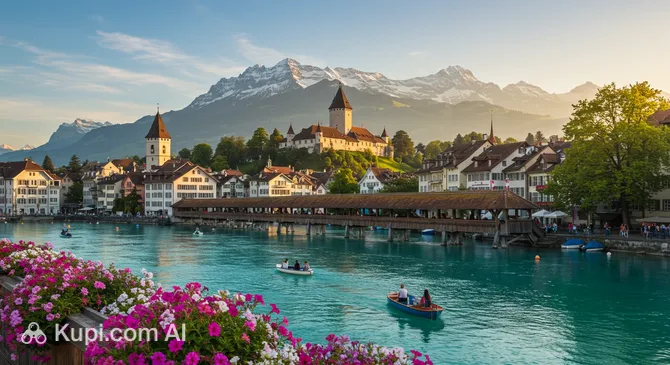
Thun is a picturesque gem located in the heart of the Bernese Oberland. The city stretches along the southern shore of Lake Thun, right where the turquoise Aare River flows out of it. This is a place where Switzerland reveals its most romantic side to travelers, combining the majesty of the Alps with the charm of medieval architecture. Thanks to its prime location, Thun is often called the "gateway" to the mountain regions, making it the perfect starting point for grand adventures.

Thun. Illustration.
Source: Kupi.com AI

Even though the city has a population of about 44,000, it possesses a special atmosphere: Thun retains the charm of a small provincial town while offering the dynamic of a modern administrative center. Strolling along the embankments, feeding snow-white swans, and taking in views of the snow-capped peaks create a uniquely relaxing mood that tourists so highly value.

The region's rich past deserves special attention, as the first settlements appeared here 2,500 years ago. The fascinating history of Thun is etched into its stone pavements and ancient buildings. The city's main symbol is the majestic 12th-century castle towering over the roofs of the Old Town. Its towers offer breathtaking panoramas of the lake and surrounding mountains, and the two-level quays in the center add a unique touch to the urban landscape.

Thun harmoniously blends historical heritage with the modern comfort of cozy cafes and shops. It is an ideal destination for those seeking inspiration, wishing to enjoy the beauty of nature, and wanting to take a break from the hustle and bustle in one of Europe's most scenic corners.

Weather Overview

The climate in Thun can be described as moderate, with a noticeable influence from the Alpine mountains and the proximity of the lake. It is rarely sweltering here, making city strolls pleasant even at the height of the holiday season. Summer is the warmest time of year: in July and August, the average temperature stays around 17°C, and during the day, the air often warms up to a comfortable 22°C. However, travelers should account for a high probability of precipitation, especially in May and June, when the number of rainy days can reach 19 per month.

Winter here is cool but, as a rule, without extreme frosts. In January and February, average thermometer readings hover around 0°C... +1.7°C, although at night the temperature can drop to -3.9°C. To ensure you choose the right clothing for walks along the embankment or excursions to the mountains, it is worth checking the expected weather in Thun for your visit dates before you travel.

Spring and autumn delight with picturesque changes in nature, although they remain fairly wet seasons. Expect a moderately warm summer with occasional rain and cool winters with temperatures often balancing on the edge of freezing.

Average monthly temperature

Average monthly precipitation

Interesting Facts

In addition to its main attractions, Thun holds many fascinating secrets and historical details that make exploring the city even more exciting. Here are a few facts that offer a new perspective on this place:
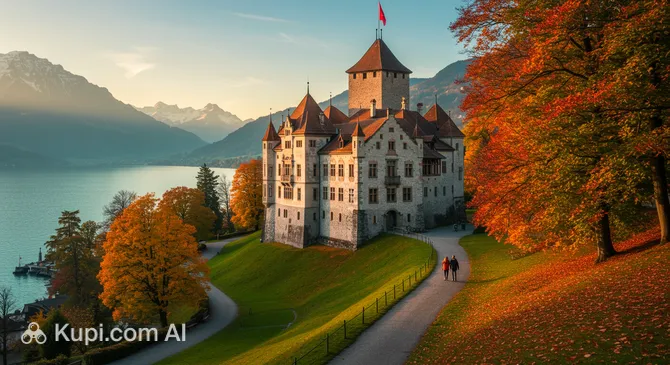
Thun Castle. Illustration.
Source: Kupi.com AI

Traveler photos:

  • The famous Thun Castle, built in the 12th century by the Dukes of Zähringen, is not only an architectural landmark today but also a guardian of time. Its walls house a historical museum with exhibits ranging from the prehistoric era to the 19th century, with the restored Knights' Hall — one of the few surviving halls of its type in Switzerland — being a particular point of pride.

  • The city played an important strategic role in the country's history. After World War II, Thun was designated as a gathering place for the population of southern regions in case of emergencies, which speaks to its reliability and special status in the defense system of those years.

  • Thun is famous for its old wooden bridges over the sluices, which are often compared to Lucerne's famous bridges. However, here, walking across them gives a sense of privacy and tranquility, especially in the picturesque area of Mühleplatz, where there are no large crowds of tourists.

  • Legends surround the ancient fortress with a touch of mysticism. According to local lore, hidden treasures may still lie in the deep dungeons of the castle, which, as old-timers believe, are guarded by the spirits of the past.

How to Get There

When planning a trip to this picturesque corner of the Canton of Bern, it is important to think through the logistics in advance for a comfortable journey. You can learn more about how to get to Thun by exploring all available routes. The city has excellent transport accessibility, making it easy to reach from any part of the country while enjoying the views along the way.

Thun itself does not have its own airport, so most tourists arrive via the major international air hubs of neighboring cities. One of the most popular options is Zurich Airport (IATA: ZRH). This is the country's largest airport, located approximately 104.8 km from Thun. Many flights from all over the world land here, making it a convenient starting point for your journey.

Another excellent option is Geneva Airport (IATA: GVA), located 130.2 km from your destination. You should also consider EuroAirport Basel Mulhouse Freiburg (IATA: EAP) in the city of Basel. It is even closer, at 92.8 km from Thun, and is an important transport hub with high passenger traffic.

For clarity, here is summary information on the main airports:

AirportPassenger trafficDistance
Bern Airport57 00020 km
Sion35 92964 km
EuroAirport Basel–Mulhouse–Freiburg8.1 mln93 km
EuroAirport Basel Mulhouse Freiburg8 mln93 km
EuroAirport Basel-Mulhouse-Freiburg8.1 mln93 km

Switzerland is famous for its impeccable railway system, and the train is often the most convenient way to travel. While Thun does not have a major international railway hub comparable to those in the capital, you can use the Bern Railway Station (IATA: ZDJ). It is only 25.7 km from Thun, making the transfer quick and effortless. This is one of the busiest stations in the country.

Another convenient option is the Basel SBB Station (IATA: ZDH), located about 87.8 km from Thun. From these major hubs, it is easy to reach your destination on regional trains while admiring the famous landscapes outside the window.

Below is a table with the nearest significant railway stations:

StationPassenger trafficDistance
Oerlikon Railway Station34.4 mln20 km
Bern Railway Station69 mln26 km
Sion Railway Station4.5 mln62 km
Basel SBB station40 mln88 km
Basel Badischer Bahnhof7.3 mln90 km

Main Attractions

Thun's attractions are a harmonious ensemble of medieval architecture, magnificent parks, and picturesque embankments. Looking like something straight out of a fairy tale, the city invites guests to dive into its rich history and enjoy breathtaking views. Here, every stone holds a legend, and the natural landscapes serve as the perfect backdrop for walks.

One of the most romantic locations is rightfully considered Schadau Castle and Schadau Park. Located right on the shore of Lake Thun, this palace, built in the mid-19th century in the Historicist style, impresses with the elegance of its facades and turrets. The surrounding English park is an ideal place for leisurely strolls, offering magnificent panoramas of the famous Eiger, Mönch, and Jungfrau peaks. This place attracts those seeking solitude and beauty.

Schadau Castle & Schadau Park. Illustration.
Source: Kupi.com AI

Traveler photos:

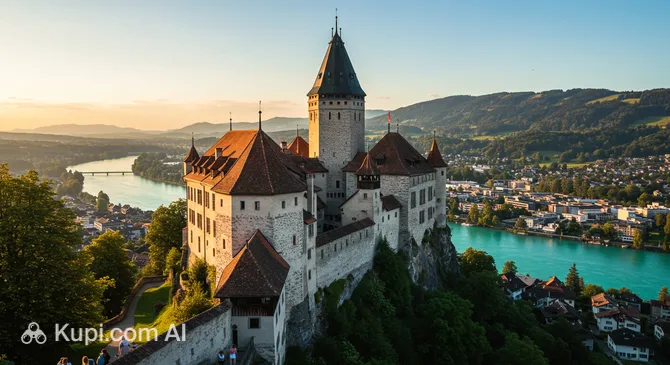
It is impossible to imagine the city panorama without its main symbol — the powerful fortress on the hill. The majestic Thun Castle, built in the 12th century, dominates the Old Town and is visible from almost any point. Today, it houses a fascinating historical museum with an exhibition covering 4,000 years of the region's development. After climbing the corner towers of the keep, tourists are rewarded with a spectacular view of the city's tiled roofs and the turquoise waters of the Aare River.

Thun Castle. Illustration.
Source: Kupi.com AI

Traveler photos:

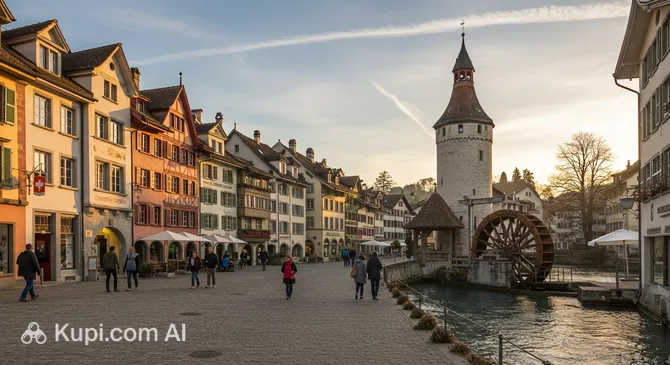
If you want to feel the pulse of the city's modern life, be sure to visit Mühleplatz. This square, located in the very heart of Thun, is a popular meeting spot for both locals and travelers. Numerous cozy cafes and restaurants with open terraces are concentrated here. It is especially beautiful in the evening when the lights of the establishments reflect in the river's waters, and the sound of the water creates a unique atmosphere of comfort.

Mühleplatz. Illustration.
Source: Kupi.com AI

Traveler photos:

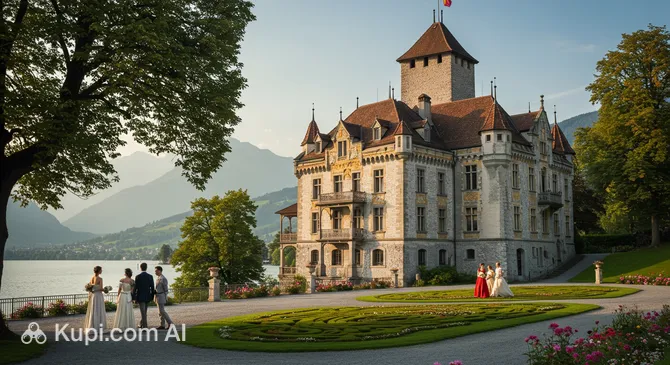
Connoisseurs of exquisite interiors and domestic history should pay attention to Hünegg Castle. It is located very close to the city, on the lakeshore, and is a unique museum of residential culture from the Historicist and Art Nouveau eras. The special feature of this place is that the luxurious room furnishings have remained virtually unchanged since 1900, allowing guests to literally step back in time and see how the Swiss nobility lived in the last century.

Hünegg Castle. Illustration.
Source: Kupi.com AI

Traveler photos:

Local Cuisine

Thun's gastronomic culture is a magnificent reflection of the traditions of the Bernese Oberland, where hearty, simple, and high-quality food is valued. Local cuisine is based on fresh farm products: Alpine milk, meat, and, of course, cheese. Cheese delicacies are considered the hallmark of the region. Be sure to try the classic fondue — cheese melted in white wine and eaten with pieces of bread, or raclette, served with hot potatoes and pickled vegetables. These dishes are perfect for warming up and staying full after long walks.

The proximity of Lake Thun brings another important component to restaurant menus — fish. Local chefs expertly prepare fresh lake trout. It is often grilled, braised with aromatic herbs, or served with a delicate lemon sauce. This is an exquisite and lighter alternative to meat dishes, allowing you to appreciate the gifts of local nature.

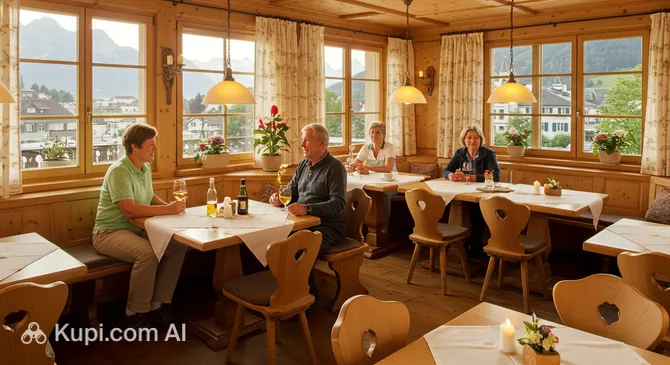
In the city, you can find establishments for every taste: from cozy family inns to elegant restaurants. If you want to immerse yourself in an atmosphere of history and tradition, a visit to the Hotel-Restaurant Schützen is well worth it. Here, guests are offered authentic Swiss dishes in a setting conducive to leisurely relaxation and savoring the flavor.

Hotel Restaurant Schützen. Illustration.
Source: Kupi.com AI

Traveler photos:

Meals in Thun are traditionally accompanied by a glass of local wine. Vineyards located on the sunny slopes around the lake produce an excellent harvest for white wines, which pair perfectly with cheese and fish. For evening relaxation and cocktails, you can stop by the popular bar Mani's or visit the stylish Atelier Classic Bar, where a wide selection of drinks and a pleasant atmosphere await you.

For those who want to take a piece of the taste of Switzerland with them or have a snack on the go, farm markets operate regularly in the city. The stalls here abound with homemade cheeses, fresh pastries, and seasonal fruits. This is a great opportunity to chat with locals and try genuine farm products without intermediaries.

Travel Tips

Preparing for your trip to Thun will make your journey not only exciting but also as comfortable as possible. We have collected some useful recommendations to help you feel at home in this cozy Swiss city and avoid common tourist mistakes.

  1. Clothing and Gear: The weather by the lake and in the Alpine foothills is changeable, so the best principle is layering. Even in summer, bring a light jacket or windbreaker for evening promenades by the water. Since the historical center is paved with cobblestones and the famous castle is on an elevation, be sure to bring comfortable flat shoes.
  2. Transport: Thun is compact, and its center is best explored on foot. If you are staying at a hotel, hostel, or campsite, be sure to ask for the PanoramaCard Thunersee. This guest card entitles you to free travel on buses (STI) and discounts on many mountain railways and museums in the region. Renting a car within the city is not necessary and can be costly due to expensive parking.
  3. Finance: The official currency is the Swiss franc (CHF). Although euros may be accepted in many tourist spots, the exchange rate will be extremely unfavorable, and change will be given in francs. Cards are accepted almost everywhere, but it's better to have some cash for payments at farmers' markets or small kiosks. Tips are usually already included in the bill, but rounding up the amount is welcomed.
  4. Health and Safety: Thun is a very safe city where you can walk peacefully even after dark. The tap water here is of excellent quality — you can safely drink it straight from the tap or from numerous city fountains, provided they don't have a "Kein Trinkwasser" (Not drinking water) sign. This will help save on buying bottled water.
  5. Communication: The official language is German, but in everyday life, locals speak a Swiss dialect (Swiss German). The vast majority of tourism workers and young people speak English. For navigation, it is convenient to use the SBB Mobile app, which perfectly plans routes throughout the country.
  6. Local Etiquette: In Switzerland, politeness is a way of life. It is customary to greet staff in shops and even strangers on hiking trails using the word "Grüezi" (Groot-see). Also, locals highly value peace and quiet: loud phone conversations on public transport or in a restaurant are considered bad form.
  7. What to Avoid: Do not cross the road in the wrong place or on a red light, even if the street appears empty. Local drivers and police take traffic rules very seriously. Also, avoid making noise on Sunday — it is a traditional day of rest when you shouldn't mow lawns, throw glass into containers, or listen to loud music.
  8. Local Bonus: Pay attention to the wooden bridge-sluices in the city center. Locals often use them not just to cross the river but to watch surfers catching waves on the Aare River right within the city limits. This is a sight you shouldn't miss!

Thun is a welcoming city where Swiss order harmoniously blends with the relaxed atmosphere of a lakeside resort. By following these simple tips, you can easily blend into the rhythm of local life and fully focus on the beauty of ancient streets and Alpine landscapes.

Entertainment & Nightlife

Nightlife in Thun, while not as large-scale as in major metropolises like Zurich, has its own unique charm. You won't find noisy raves until dawn here; instead, the city offers an excellent culture of bars and cozy lounges where you can relax after a busy day. The epicenter of evening attraction is always the Aare River embankment, where the lights of the venues reflect beautifully in the turquoise water, creating a magical atmosphere.

The heart of the nightlife beats at Mühleplatz. It is here, in the old Mühle quarter, that most of the popular bars, pubs, and restaurants with outdoor terraces are concentrated. In the evening, especially on Fridays and Saturdays, this area fills up with local youth and tourists. The crowd here is very diverse but always friendly; the dress code in most places is casual — "casual" style will be appropriate almost everywhere.

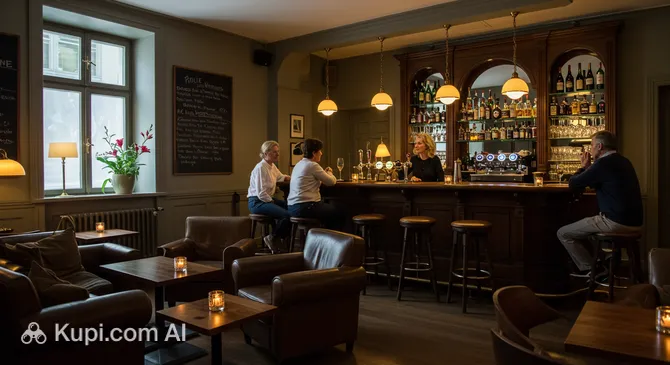
If you're looking for a place with high-quality cocktails and a stylish interior, you should drop by the Atelier Classic Bar. This establishment is famous for its drink menu and relaxed atmosphere, perfect for long conversations. For those who prefer a livelier atmosphere and perhaps live music or DJ sets, Mani's is a great choice — a popular bar where groups of friends often gather to enjoy a glass of beer or wine.

Atelier Classic Bar. Illustration.
Source: Kupi.com AI

Traveler photos:

Regarding practical tips, nightlife in Thun quiets down earlier than in Southern Europe. Most bars operate until 00:30 on weekdays and until 02:00 on weekends. Prices reflect Swiss levels: a cocktail costs an average of 15–20 francs. The city is very safe, and nighttime walks through the illuminated center carry no risks. For those staying out late, "Moonliner" night buses operate in the region, taking passengers to surrounding areas on Friday and Saturday nights.

During the day, the city's entertainment program shifts toward cultural and shopping leisure. In addition to museums, Thun offers excellent shopping opportunities. For example, the Panorama Center offers many stores under one roof, which is especially convenient in rainy weather. Theater and concert enthusiasts can visit the KKThun cultural center, which regularly hosts touring shows and local events.

Parks & Museums

Thun is a city where nature and culture are intertwined in a wonderful way. Here, green oases seamlessly transition into historical quarters, and museums do more than just store exhibits; they tell living stories within the walls of ancient castles. For tourists, it's an opportunity to combine relaxed walks in the fresh air with an immersion into the region's rich heritage.

Among the green zones, the absolute jewel is Schadau Castle and Schadau Park. It is not just the grounds around the palace, but a magnificent English landscape garden stretching right to the lake's edge. Walking along its paths, you can enjoy what is perhaps one of the most beautiful views in Switzerland: the combination of the water surface and the famous trio of mountain peaks — Eiger, Mönch, and Jungfrau. The park is perfect for picnics and quiet relaxation in the shade of century-old trees, and for children, there is a small steam railway that operates during the warmer months.

Another significant natural space is Bonstetten Park. It is located a bit further from the center, on the border with the Gwatt nature reserve. This place is less touristy and more "wild" compared to the manicured Schadau. People come here to walk along the long wooden boardwalks through the reed beds, have a barbecue in designated areas, or simply listen to the birds singing away from the city noise.

The cultural life of the city is centered around its historical landmarks. The main museum complex is located in Thun Castle. The Historical Museum, occupying five floors of the keep, offers a journey through the centuries. Here, you can see not only knightly armor and weapons but also a unique collection of local ceramics, toys, and household items that tell the story of the daily lives of townspeople in different eras. The architecture of the halls themselves, including the majestic Knights' Hall, is part of the exhibition.

Equally interesting is Hünegg Castle, which functions as a Museum of Residential Culture and Interiors. Unlike medieval fortresses, an atmosphere of Art Nouveau and late 19th-century Historicism prevails here. The exhibition is unique because the interiors have been kept intact, creating the complete illusion that the owners have simply stepped out for a walk. It is a rare chance to see the genuine luxury and comfort of the Swiss aristocracy of that time.

Art lovers should pay attention to the Thun Art Museum (Kunstmuseum Thun), located in the former Grand Hotel Thunerhof building. It specializes in contemporary art and presents works by both Swiss and international masters. Also, in Schadau Park, there is a pavilion housing the "Thun Panorama" — the world's oldest surviving circular painting, created by Marquard Wocher in the early 19th century. It allows you to see the city as it was 200 years ago with amazing detail.

Insider Tip: If you are looking for solitude by the water, go for a walk along the Brahmsquai embankment. This picturesque trail, named after composer Johannes Brahms who spent his summers here, leads from the city toward Hünibach and offers quiet benches with lake views, hidden from the main tourist flows.

Getting Around

Thun's transport system is organized with the precision and comfort characteristic of the region, allowing tourists to easily plan routes without the need to rent a car. The city is compact enough that many movements can be made on foot; however, for trips to distant attractions or neighboring resorts, public transport is indispensable.

The core of intra-city communication is buses operated by the STI company (yellow in color). The route network covers not only the center and residential areas but also the picturesque surroundings of the lake. Buses run strictly according to the schedule, which can be found at every stop or in electronic form. It is important to remember that bus doors do not always open automatically: to enter or exit, you must press a special button on the door or handrail.

A unique feature of the local transport system is the active use of the water space. Ships operated by the BLS company, cruising on Lake Thun, are not just an attraction but a full-fledged mode of transport. They connect the city with other settlements on the coast, such as Spiez or Interlaken. This is a great way to reach your destination while enjoying panoramic mountain views, although such a trip will take longer than by train.

Thun Railway Station serves as the main hub connecting the city with the rest of the region. From here, not only intercity expresses but also regional trains (S-Bahn) depart, operating under a single tariff system with the buses. There are no subways or trams in the city due to its small size and complex terrain.

For fare payment, Thun is part of the Libero tariff zone. The ticket price depends on the number of zones crossed and the duration of validity.
For tourists, there is an incredibly advantageous offer — the PanoramaCard Thunersee. This card is given free of charge to all guests staying in hotels, hostels, or campsites in the region for at least one night. It grants the right to free travel on STI buses and PostBuses within key zones, as well as discounts on mountain railways and funiculars.

If you have come to the city for a day trip without an overnight stay, tickets should be purchased at special machines at the stops (accepting cards and coins) or through mobile applications. The most convenient tools for planning and payment are the SBB Mobile or Fairtiq apps. They automatically calculate the optimal route and charge the lowest possible fare. Remember: the ticket must be purchased before boarding the transport; drivers generally do not sell them.

As an alternative to public transport, bicycle rental is very popular in Thun. A "Rent a Bike" service operates at the railway station, where you can rent either a regular city bike or an e-bike, which will help you navigate local hills effortlessly. The city is equipped with convenient bike paths, especially along the Aare River embankments.

Taxi services are available 24/7, with stands located at the station and in the city center. However, trip prices here are high even by European standards, so taxis are usually only used for transfers with heavy luggage. Car sharing (e.g., Mobility) is also available, but for short tourist trips within the city, it is less convenient due to paid parking and the excellent bus service.

Transport usually operates from early morning (around 05:30) until midnight. On Friday and Saturday nights, special Moonliner buses run, taking late guests to the surrounding areas, but a separate surcharge or a special ticket may be required to ride them, as regular passes may not be valid.
Accommodation

The choice of accommodation in Thun, despite its compact size, is surprisingly diverse. The city offers options for every taste: from cozy family-run guesthouses in historical buildings to modern business hotels and luxury apartments with lake views. Since Thun is a popular tourist hub and the gateway to the Bernese Oberland, the hospitality infrastructure here is developed to a very high level, meeting general Swiss quality standards.

If you want to be at the center of the action, choose hotels in the Old Town area or near the railway station. This is an ideal location for those who plan to actively use public transport and want to have major attractions and restaurants within walking distance. Life is vibrant here, and evening walks along the cobblestones create a special mood. For those seeking privacy and romance, areas along the Lake Thun embankment are better suited. Here, you can find accommodation options with panoramic water views, located, for example, near Schadau Park or in the Hünibach area.

The price range for accommodation in Thun can be described as "above average," which is typical for the region.

  • Budget segment: Represented by hostels and campsites. Campsites on the lakeshore are especially popular in summer, offering high-quality service and maximum proximity to nature.
  • Middle class: Traditional 3-4 star hotels, often family-managed. Here, you will find comfortable rooms, a hearty breakfast, and attentive staff.
  • Luxury: Historic hotels and lakeside resort complexes offering spa services and fine-dining restaurants.

Booking Tip: Thun is an extremely popular destination, especially during the summer season (July-August) and the Christmas holidays. We strongly recommend booking accommodation in advance, preferably 2–3 months before your trip, to guarantee availability and get the best prices. It is most convenient to search for options through major online platforms, but sometimes direct booking on the hotel's website can include nice bonuses, such as a welcome drink.

Don't forget an important detail: when staying in official accommodation (hotels, hostels, campsites) and paying the city tax, you are entitled to the PanoramaCard Thunersee. This card is your key to free public transport and discounts on excursions, making your stay in the city even more cost-effective.

Nearby Cities

For those wishing to explore the surrounding area, Thun serves as an excellent starting point for day trips to several interesting nearby locations. Thanks to its convenient location in the center of the country and a developed transport network, travelers can easily reach iconic Swiss cities in just 30 to 60 minutes.

The undisputed favorite for a short visit is Bern — the federal capital, located just 25 km away. Its historical center is a UNESCO World Heritage site. Here, you can stroll through the famous 6-km-long covered arcades, see the Zytglogge clock tower, and visit the Bear Park. Bern offers the perfect blend of shopping, culture, and leisurely relaxation.

Another fascinating destination is Fribourg, a city standing on the cultural border between German- and French-speaking Switzerland. It is known for its impressive medieval Old Town, one of the largest in Europe, the Gothic St. Nicholas Cathedral, and picturesque bridges over the Sarine River. This is a place with a unique bilingual atmosphere and a rich history.

A trip to Burgdorf, often called the "gateway to the Emmental," is also worth considering. The city's main attraction is its majestic castle perched on a cliff, considered one of the best-preserved castle complexes in the country. Burgdorf offers a chance to dive into the atmosphere of traditional Switzerland and learn more about the home of the famous cheese.

CityPopulationDistance
Steffisburg15 8162 km
Spiez12 8109 km
Belp11 51018 km
Worb11 31120 km
Interlaken5 50020 km

These nearby destinations offer an insight into the diverse culture and landscapes of the region.

Shopping & Souvenirs

Shopping:

Shopping in Thun is a pleasant combination of leisurely strolls through historical streets and visits to modern shopping centers. The city is famous for its cozy atmosphere, where the shopping process is often called by the local term "Lädele" — which means relaxed walking through small shops in search of something special. You won't find the hustle and bustle of big cities here; instead, you'll discover many unique boutiques, craft shops, and high-quality Swiss brands.

The city's main shopping artery is the Bälliz district. This is an island on the Aare River, completely dedicated to pedestrians. Major department stores, international clothing chains, bookstores, and perfume boutiques are concentrated here. Another important location is Obere Hauptgasse in the Old Town. This street is famous for its unique architecture with raised terrace-sidewalks. While walking along it, you can stop by small independent shops offering jewelry, home decor, and designer clothing.

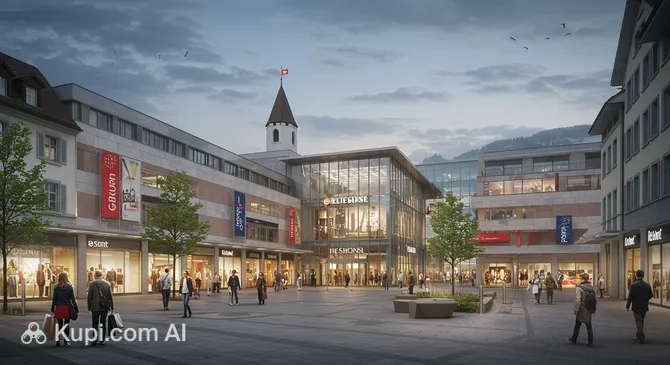
For those who prefer to shop in one place, Thun has excellent shopping complexes. One of the most popular is the Panorama Center, located south of the city center. It is a modern mall with a wide selection of shops and convenient parking, offering views of the mountains. Also worth noting is Centrum Oberland — a large shopping center presenting a wide range of goods: from electronics and sports equipment to food and fashion.

Panorama Center. Illustration.
Source: Kupi.com AI

Traveler photos:

You can experience the special flavor of city life at the local markets. Every Wednesday and Saturday, Bälliz street turns into a vibrant farmers' market. Here, local producers offer the freshest vegetables, fruits, flowers, Alpine cheeses, and homemade pastries. This is the best place to try regional delicacies and buy edible gifts. Occasionally, flea markets and craft fairs are held at Mühleplatz, where you can find vintage items and antiques.

As souvenirs from Thun, tourists most often bring back the famous Thun Majolica (Thuner Majolika) — painted ceramics whose production has long-standing traditions in the region. Swiss watches, army knives, and, of course, chocolate are also popular. In local confectioneries, you can buy sets of handmade pralines, which will make an excellent sweet memory of the trip.

Shops in Thun are usually open from Monday to Friday from 09:00 to 18:30, and on Saturdays, they close earlier — around 16:00 or 17:00. On Sundays, most retail outlets are closed, except for small shops at the railway station and gas stations. Credit cards (Visa, MasterCard) are accepted everywhere, but it is better to have cash francs for market purchases.

Tourists residing permanently outside of Switzerland can use the Tax Free system. When making a one-time purchase of goods for more than 300 Swiss francs (in one store), you are entitled to a VAT refund. Be sure to ask the seller for a special check (Tax Free Form) and present it together with your passport and purchases at customs when leaving the country.

Reached the end of the page?

That means the route is fully explored