Support

Interlaken

About

Interlaken is a true gem, nestled in the heart of the Swiss Alps between two crystal-clear lakes — Thun and Brienz. The city's name, derived from the Latin "Interlacus," which means "between lakes," perfectly describes its picturesque location. This charming town in Switzerland serves as a gateway to the majestic world of Alpine peaks and glaciers.
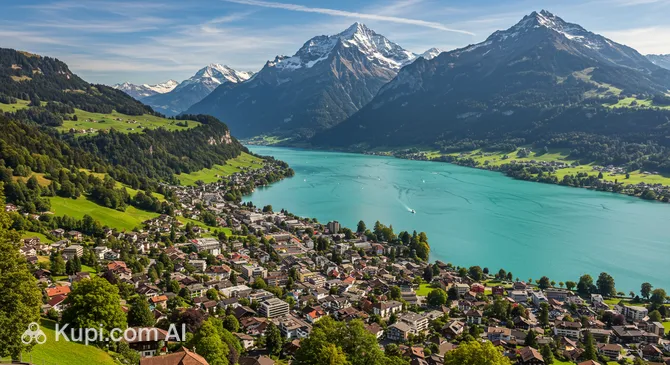
Interlaken. Illustration.
Source: Kupi.com AI

With a population of about 5,500 people, Interlaken maintains the atmosphere of a small and cozy town. It is not only the administrative center of the district of the same name in the canton of Bern but also a popular starting point for travels throughout the Bernese Oberland region, known for its breathtaking landscapes.

Interlaken is a real paradise for active recreation and adventure enthusiasts. In winter, fans of skiing and snowboarding flock here, while in summer, the city attracts lovers of hiking, paragliding, rafting, and other water sports on the lakes. Additionally, Interlaken serves as an ideal base for excursions to famous peaks such as the Jungfrau, Mönch, and Eiger, offering unforgettable views and experiences.

Strolling through the picturesque streets of Interlaken, lined with traditional chalets and blooming gardens, will allow you to feel the unique atmosphere of an Alpine resort with a rich history. If you are looking for a place to enjoy natural beauty, active recreation, and Swiss hospitality, Interlaken will undoubtedly charm you and leave you with unforgettable memories.

You can find more interesting facts on the history of Interlaken page.
Weather Overview

In Interlaken, you can expect a moderately warm summer, with the average temperature in July and August being around 14°C, and the maximum can rise to 19°C. Winters here are cold, with the average temperature in January around -3.6°C and frequent nighttime frosts. Precipitation occurs throughout the year; however, the summer months (June-August) and May are characterized by the highest number of rainy days and volume of rainfall.

For detailed information on climatic conditions and the current forecast, we recommend visiting the weather in Interlaken page.

Average monthly temperature

Average monthly precipitation

Interesting Facts

In addition to its breathtaking landscapes and world-famous adventures, Interlaken holds many surprising stories and little-known details. Are you ready to discover this Swiss corner from an unexpected side?

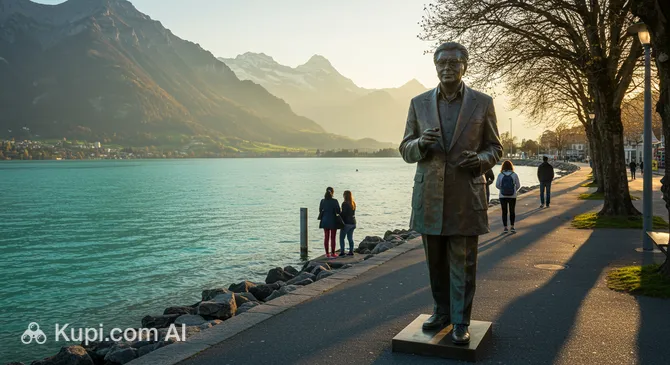
Yash Chopra Statue. Illustration.
Source: Kupi.com AI

Traveler photos:

  • Legend of Origin: The incredible beauty of Interlaken has a mythical explanation. According to legend, an angel tasked with decorating the Earth saved its most precious ornaments for this very place, creating its unique landscapes.

  • Monastic Past: The heart of Interlaken's history beats around a monastery founded in 1130 by Baron Seliger. For centuries, this abbey was the spiritual and cultural center of the region before the city transformed into a world-famous resort for health and relaxation.

  • Bollywood Connection: Interlaken holds a special place in the hearts of Indian filmmakers. So much so that a statue of Yash Chopra, the legendary director who filmed many iconic Bollywood scenes here, has been erected in the city.

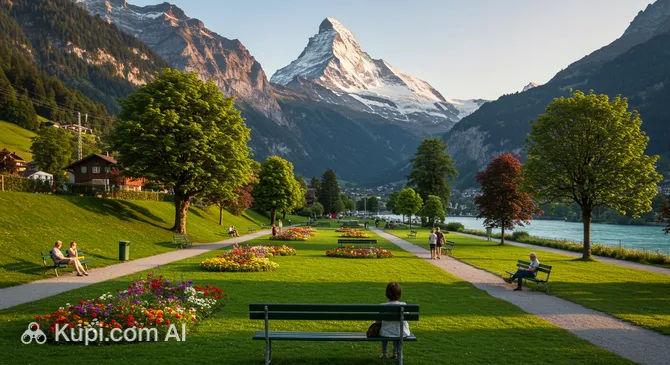
  • Park with a View: The vast green space in the center of Interlaken, known as Höhematte Park, was originally kept free of development by hotel owners in the 19th century. They wanted to ensure their guests had an unobstructed view of the Jungfrau massif, thus gifting the city its famous open space.

How to Get There

Interlaken, located in the heart of Switzerland, is an important tourist hub and is easily accessible from various parts of the country and Europe. Although the city does not have its own airport, an excellent transport system allows you to quickly get here from major international hubs. If you want to plan your route in maximum detail, we recommend finding out more about how to get to Interlaken on our dedicated page.

Most travelers choosing to fly arrive in the country via Zurich Airport (ZRH). This is Switzerland's largest international airport. It is important to note that it is located not in Interlaken itself, but in the city of Zurich, about 100 km away. The journey by taxi or transfer will take approximately 2.5–3 hours; however, many tourists prefer to switch to a train here, which will take them to the lakes faster and more comfortably.

Another convenient option is EuroAirport Basel-Mulhouse-Freiburg (EAP). It is also not in Interlaken but near the city of Basel, approximately 103 km from the resort. This is an important transport hub with high passenger traffic, handling many European flights. The travel time by car is about 3 hours.

For clarity, here is summary information on the main airports used to reach the region:

AirportPassenger trafficDistance
Bern Airport57 00038 km
Sion35 92966 km
Zurich Airport31.2 mln100 km
EuroAirport Basel Mulhouse Freiburg8 mln104 km
EuroAirport Basel-Mulhouse-Freiburg8.1 mln104 km

The railway system in Switzerland is considered one of the best in the world. Tourists often change trains at major stations to reach Interlaken via regional trains. One of the key hubs is Bern Station. It is located in the city of Bern, about 44 km from Interlaken. This is the nearest major station from which you can reach the resort very quickly by train or taxi (travel time by car is about 1 hour and 20 minutes).

Another significant transfer point is Zurich Hauptbahnhof — the main station in Zurich. It is located 92.5 km from Interlaken. International trains from all over Europe arrive here, after which travelers set off on a scenic journey to the mountains.

Below is a table with information about the nearest major railway hubs:

StationPassenger trafficDistance
Oerlikon Railway Station34.4 mln38 km
Bern Railway Station69 mln44 km
Sion Railway Station4.5 mln64 km
Zürich Hauptbahnhof154.6 mln93 km
Basel SBB station40 mln98 km

Main Attractions

Interlaken, situated between two magnificent lakes and at the foot of the majestic Alps, offers tourists many fascinating attractions and activities. This city is a true paradise for lovers of nature, adventure, and relaxation.

One of the city's central spots is Höhematte Park. This vast green area in the heart of Interlaken offers breathtaking views of the Jungfrau mountain. The park is ideal for walks and picnics and is also a popular landing spot for paragliders, which is a colorful sight in itself. Various events and festivals are also frequently held here.

Höhematte Park. Illustration.
Source: Kupi.com AI

Traveler photos:

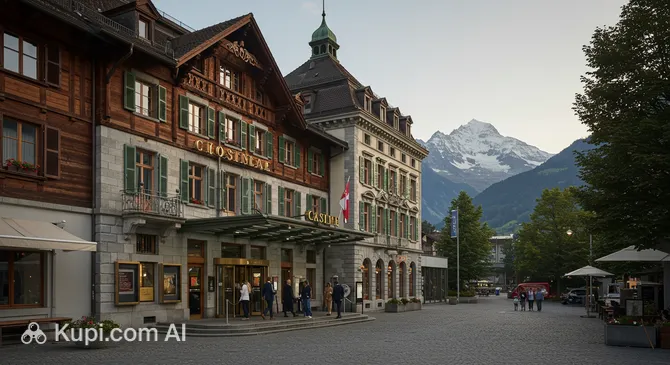
For those seeking a bit of excitement or simply wanting to enjoy an elegant atmosphere, Casino Interlaken is worth a visit. Located in a beautiful historical building with a well-kept garden, the casino offers not only slot machines and tables but also serves as a venue for concerts and other cultural events. It is a wonderful opportunity to spend an evening in a sophisticated setting.

Casino Interlaken. Illustration.
Source: Kupi.com AI

Traveler photos:

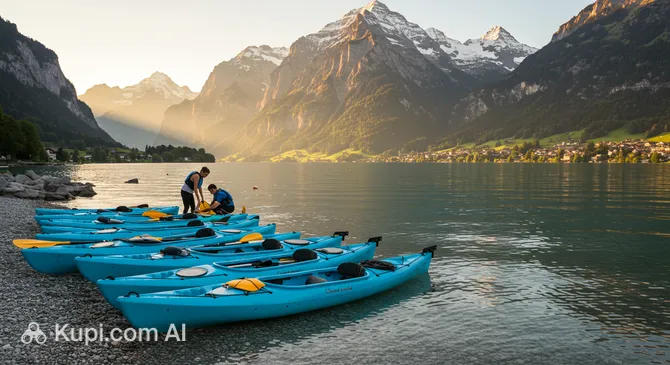
Water activity enthusiasts will certainly enjoy kayak tours on Lake Brienz. This is a unique opportunity to explore the crystal-clear waters of the lake, surrounded by picturesque mountains, and enjoy the peace and quiet of nature. The tours are suitable for both beginners and experienced kayakers, offering unforgettable impressions of the surrounding landscapes from the water.

Kayak Tours on Lake Brienz. Illustration.
Source: Kupi.com AI

Traveler photos:

An unusual and interesting attraction is the Yash Chopra Statue. This monument is dedicated to the famous Indian filmmaker who shot many movies in picturesque corners of Switzerland, including Interlaken, thereby popularizing the region among Indian tourists. The statue is a symbol of cultural connection and attracts Bollywood fans from all over the world.

For those craving adventure and adrenaline, Outdoor Interlaken will be a real find. They offer a wide range of activities: from rafting and canyoning to bungee jumping and paragliding. It is the perfect place to test yourself and get unforgettable emotions against the backdrop of stunning Alpine landscapes.

Local Cuisine

The gastronomic scene in Interlaken is a delightful immersion into the world of Swiss cuisine with its Alpine accents. Here, everyone will find a dish to their liking, from hearty traditional recipes to exquisite delicacies made from local products. The city offers many opportunities to enjoy the flavors of the region, whether in a cozy little restaurant or a lively market.

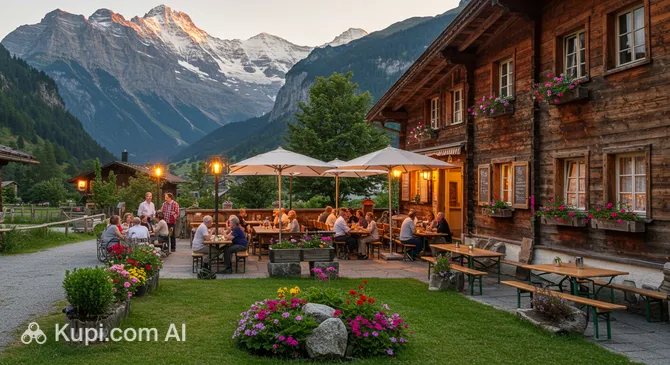
Be sure to try the famous Swiss fondue — aromatic melted cheese served with pieces of crusty bread and pickled vegetables. It is not just food, but an entire ritual perfect for soulful gatherings. Another iconic dish is raclette: melted cheese served with boiled potatoes, gherkins, and pearl onions, often complemented by smoked meats. Fish lovers should taste the freshest trout or whitefish from Lakes Thun and Brienz, masterfully grilled or baked with herbs.

Fondue Villa & Garden. Illustration.
Source: Kupi.com AI

Traveler photos:

Among the local drinks, both non-alcoholic and alcoholic options are popular. Refresh yourself with the Swiss carbonated drink Rivella, try apple juice (Apfelschorle), or an aromatic herbal tea. Regarding alcoholic beverages, pay attention to local beers, Swiss white wines, and traditional Kirsch (cherry brandy), which perfectly complements cheese dishes. Don't forget the desserts: famous Swiss chocolate, which can be found here in the products of small family confectioneries, or delicate meringues with Alpine cream will be a wonderful conclusion to your meal.

The dining culture in Interlaken is diverse. Locals and tourists like to dine in restaurants, many of which specialize in traditional cuisine. For example, you can enjoy a classic fondue in a place like Fondue Villa & Garden. Street food and farmers' markets also play an important role, offering seasonal products: Alpine cheeses, sausages, homemade pastries, and fresh berries. Stop by one of the cozy cafes to have a cup of coffee with a fresh apple or nut tart while admiring the mountain views. Gastronomic festivals that periodically take place in the region are a great opportunity to get acquainted with the culinary wealth of Interlaken.

Travel Tips

Welcome to Interlaken! To ensure that your trip to this picturesque corner of Switzerland, located between two lakes and at the foot of the majestic Alps, goes smoothly and leaves only the best impressions, we have prepared some practical tips for you.

  1. What to pack for Interlaken

    The weather in Alpine Interlaken can be changeable. In summer, pack light clothing, but be sure to bring a raincoat and a warm sweater or fleece for evening walks and mountain excursions. In winter, you will need warm, layered clothing, including a hat, gloves, and a scarf. Comfortable, waterproof footwear for walking around town and on mountain trails is an absolute necessity year-round. Don't forget sunscreen and sunglasses, even in winter, as snow in the mountains strongly reflects the sun's rays. For electrical appliances, you will need a type J adapter (Swiss standard).

  2. Getting around Interlaken and its surroundings

    Interlaken itself is quite compact, and its central part is easy to explore on foot. For trips to Lakes Thun and Brienz, as well as for ascending the mountains (for example, to the Jungfraujoch or Schilthorn), the public transport system is excellent: trains, buses, and funiculars. Many hotels provide their guests with a special Guest Card, which entitles them to free or discounted travel on some local bus routes. Taxis are available in Interlaken, but they are a rather expensive way to get around. Renting a car may be justified if you plan to actively explore more remote corners of the region; however, note that parking in the city can be paid and limited.

  3. Money in Interlaken: currency, cards, and tipping

    The official currency of Switzerland is the Swiss franc (CHF). Euros may be accepted in some tourist spots, but the exchange rate is usually unfavorable, and you will likely receive change in francs. You can exchange currency at banks or exchange offices. Credit and debit cards (Visa, Mastercard) are widely accepted almost everywhere — in hotels, restaurants, shops, and on transport. ATMs are easy to find throughout the city. Switzerland is a country with high prices, so plan for a daily budget starting from 100-150 CHF per person (not including expensive activities and excursions). Tips in restaurants are usually already included in the bill (the check may say "Service Compris" or "inkl. Bedienung"), but if the service was exceptional, you can leave an additional 5-10% of the bill amount.

  4. Health and safety

    Interlaken is a very safe city with low crime rates. Pharmacies (Apotheke) are easy to find, but most are not open 24/7; information about on-call pharmacies can be obtained at your hotel or searched online. In case of emergency medical assistance, call 144. It is recommended to have travel medical insurance. Basic precautions are standard: keep an eye on your belongings in crowded places and be especially careful and follow safety rules when engaging in active sports in the mountains.

  5. Language and communication

    The official language in the canton of Bern, where Interlaken is located, is German (specifically its Swiss dialect, known as Schweizerdeutsch). However, in the tourism sector, English is very widely spoken, so you should have no problems communicating in hotels, restaurants, and shops. Locals will appreciate it if you learn a few basic phrases in German: "Guten Tag" (Good day), "Danke" (Thank you), "Bitte" (Please). The Swiss "Grüezi" is often used for greetings. A SIM card for mobile internet can be purchased at local mobile operator stores or in large supermarkets. Free Wi-Fi is available in most hotels, cafes, and some public areas.

  6. Etiquette

    Swiss people value politeness, punctuality, and respect for personal space. It is customary to say hello and goodbye when entering small shops or when meeting on hiking trails. In public places, try not to be noisy or draw undue attention to yourself. One of the most important rules when visiting natural attractions is not to leave trash behind and to treat the environment with care.

  7. What not to do

    Try to avoid comparing Switzerland with neighboring countries, especially Germany or Austria, in conversations with locals — Swiss people are very proud of their unique culture and independence. Also, do not be overly familiar during the first interaction; Swiss people are usually more reserved.

  8. Useful life hack for Interlaken

    If you plan to travel a lot through the Bernese Alps region by train, bus, and boat, consider purchasing a Regional Pass Berner Oberland. It may turn out to be more economical than individual tickets and includes many routes, including lifts to some peaks. For more extensive travels throughout Switzerland, the Swiss Travel Pass is perfect, as it also provides discounts or free entry to many museums.

We hope these tips help you plan an unforgettable trip to Interlaken and fully enjoy its incredible nature and opportunities for active recreation. Have a pleasant journey!

Entertainment & Nightlife

When the sun sets behind the majestic Alps, Interlaken doesn't go to sleep but offers its guests a cozy and diverse evening program. The nightlife here differs from that of large metropolises — it is calmer, focused on pleasant conversation, delicious food, and a relaxing atmosphere. The main concentration of evening venues is along the main street Höheweg and its adjacent alleys. Here you will find many bars, pubs, and restaurants open late into the evening.

The atmosphere in Interlaken in the evening is predominantly relaxed and friendly. The crowd is mixed, ranging from tourists from all over the world to locals. Most establishments do not require a strict dress code, with smart casual prevailing; however, a more elegant outfit may be required for visiting the casino. Bars are usually open until midnight or 1:00 AM, with some staying open later, especially during the high season. Restaurants generally take dinner orders until 9:00 PM or 10:00 PM.

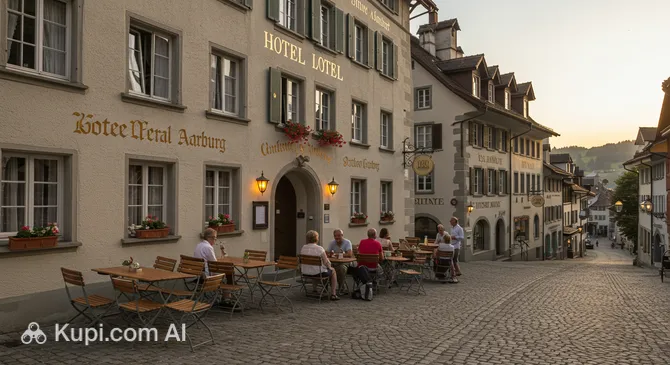
The Aarburg Hotel & Cafe. Illustration.
Source: Kupi.com AI

Traveler photos:

Among the popular spots for evening leisure is Casino Interlaken, which offers classic gambling in the elegant setting of a historical building. It is a great place to try your luck or simply enjoy the refined atmosphere. If you prefer gastronomic pleasures, look out for the Fondue Villa & Garden restaurant, where you can taste traditional Swiss fondue in a cozy environment. Many hotels also have their own bars, open to non-guests as well, where you can enjoy drinks in a quiet setting.

When planning an evening out, keep in mind that prices in Switzerland, and in Interlaken specifically, are quite high. The average bill in a restaurant or bar may be higher than in other European countries. Walking is the most convenient way to get back to your hotel at night since the city center is compact. Taxi services are also available but can be expensive. It is best to arrive at popular bars and restaurants earlier in the evening, especially if you want to secure a table without a prior reservation.

Interlaken is considered a very safe city, and nighttime walks along the well-lit central streets usually do not cause concern. Nevertheless, it is always worth taking basic precautions. You can call a taxi by phone or find one at designated stands.

During the day, Interlaken also offers plenty of entertainment. Although the city is better known for its natural beauty and outdoor activities, you can spend a pleasant time here, for example, strolling through the picturesque Höhematte Park, which offers the famous view of the Jungfrau. There are also small museums and galleries in the city that introduce you to the local culture and history. For shopping enthusiasts, stores like Oberland Shopping are open.

Parks & Museums

Interlaken, situated between two magnificent lakes and at the foot of the majestic Alps, offers guests not only breathtaking landscapes and active recreation but also charming green corners for relaxation and interesting cultural sites reflecting its unique history and atmosphere.

The heart of the city's green zones is undoubtedly Höhematte Park. This vast open space in the center of Interlaken offers the famous views of the Jungfrau mountain range. The park is ideal for leisurely walks, picnics, or simply enjoying the sun and fresh Alpine air. Various events are often held here, and in winter, it becomes a popular spot for ice skating. Additionally, the picturesque embankments of Lakes Thun and Brienz, which frame the city, offer countless opportunities for relaxing by the water, walking, and admiring nature.

Höhematte Park. Illustration.
Source: Kupi.com AI

Traveler photos:

While Interlaken is better known for its natural beauty than an abundance of traditional museums, the city and its surroundings hold interesting cultural and historical attractions. One such iconic site is Casino Interlaken, located in the magnificent Kursaal building with an adjacent garden. This is not just a gambling establishment, but an important historical and architectural monument that also hosts concerts and cultural events. Its elegant architecture and well-kept park attract many visitors.

Casino Interlaken. Illustration.
Source: Kupi.com AI

Traveler photos:

Another notable cultural site testifying to Interlaken's international popularity is the Yash Chopra Statue. This monument is dedicated to the famous Indian director who filmed many scenes for his movies against the backdrop of Swiss landscapes, making Interlaken a popular destination among Indian tourists. For a deeper immersion into the region's history, you can visit the Tourism Museum of the Jungfrau Region (Touristikmuseum der Jungfrau-Region), located in neighboring Unterseen, which tells the story of tourism development in this Alpine area.

Yash Chopra Statue. Illustration.
Source: Kupi.com AI

Traveler photos:

For an authentic experience, take a walk through the old part of Unterseen, adjacent to Interlaken, with its historical wooden houses and quiet streets. Also, do not miss the opportunity to walk along the Aare River, which connects Lakes Thun and Brienz, enjoying the tranquility and picturesque views opening from its banks.

Getting Around

Public transport in Interlaken and its surroundings is well-developed and geared towards tourists wishing to explore the picturesque Jungfrau region. Although the city itself is compact enough to easily explore on foot, transport is indispensable for trips to the lakes, mountains, and neighboring villages.

The main types of public transport in Interlaken and its surroundings are trains and buses. The city is served by two railway stations: Interlaken Ost and Interlaken West. Interlaken Ost is the main transport hub, from which trains depart to popular mountain peaks such as the Jungfraujoch, as well as national SBB trains. Local bus routes (PostAuto) connect various parts of the city and nearby settlements. These bright yellow buses are easily recognizable and run on schedule.

The transport payment system in Switzerland is integrated and offers various options. For tourists, travel passes are often the most advantageous. The Swiss Travel Pass is very popular, granting unlimited travel on trains, buses, and boats throughout the country, including public transport in most cities, as well as discounts on many mountain railways and cable cars. There are also regional passes, such as the Jungfrau Travel Pass or Berner Oberland Pass, which cover a specific area around Interlaken and can be beneficial if you plan to actively explore this specific region. Single tickets can be purchased at station vending machines, ticket offices, or via the SBB mobile app. The cost depends on the distance and type of transport.

It is recommended to buy train and bus tickets in advance, especially for popular tourist routes. Most tickets purchased for a specific date and time do not require additional validation. Travel passes must be kept on hand and presented upon request by a controller. Transport schedules are generally precise; you can check them on the SBB or PostAuto websites or via mobile apps. Transport runs regularly throughout the day, but the number of services may decrease in the evening and at night, especially on less popular routes.

Besides public transport, other modes of travel are available in Interlaken. Taxis can be found at stations or ordered by phone, but this is quite an expensive option. Bicycle rental is very popular — it's a great way to explore the city and its picturesque surroundings, especially along Lakes Thun and Brienz. Given the city's location, funiculars and cable cars play a vital role, taking tourists to numerous observation decks and mountain trails; for instance, the funicular to Harder Kulm departs right from Interlaken. It is also worth mentioning the excursion boats on Lakes Thun and Brienz, which are not just a means of transport but also a popular tourist attraction. The docks are located near the railway stations.

Accommodation

Interlaken offers a wide choice of accommodation options capable of meeting the needs of any traveler. Here you will find everything: from cozy budget hostels and guesthouses to comfortable mid-range hotels and luxury resorts, as well as apartments and chalets for rent if you prefer more privacy and home comfort.

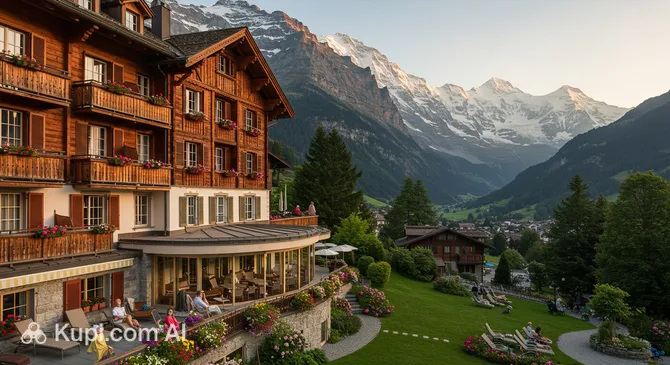
Many tourists prefer to stay in the city center, along the main street Höheweg or in its immediate vicinity. This provides easy access to shops, restaurants, transport hubs (including Interlaken Ost and West railway stations), and major attractions such as Höhematte Park or Casino Interlaken. Areas located closer to the shores of Lakes Thun and Brienz are also popular, offering picturesque views and a quieter atmosphere. For example, one of the well-known options is Interlaken Resort, which offers high-class service and a convenient location.

Resort Interlaken. Illustration.
Source: Kupi.com AI

Traveler photos:

The price range for accommodation in Interlaken varies from budget to luxury. During the peak tourist season (summer and winter holidays), prices can be significantly higher, so it is recommended to book accommodation in advance. The most common booking methods are popular online platforms and aggregators, as well as direct booking through hotel websites. Early booking often allows you to find better deals and guarantee availability in your preferred hotel or apartment.

Nearby Cities

For those who want to explore the surroundings, Interlaken serves as an excellent starting point for day trips to several interesting nearby locations. Among them, the following especially stand out:

Bern: Just 43 km from Interlaken is the capital of Switzerland and a UNESCO World Heritage site. This city will charm you with its beautifully preserved medieval Old Town (Altstadt), the famous Zytglogge clock tower, and the chance to see the city's symbol — bears in the Bear Park (Bärenpark). A trip to Bern is an immersion into the country's history and culture.

Thun: Located only 20 km away, this charming town on the shore of Lake Thun offers picturesque views and a calmer atmosphere. Visit the majestic Thun Castle towering over the city, stroll through the cozy streets of the Old Town with its characteristic raised sidewalks, and enjoy the beautiful panoramas of the lake and the surrounding mountains.

In addition to these cities, there are other settlements that may be interesting for a short visit. Below is information about some of them:

CityPopulationDistance
Wengen1 30010 km
Spiez12 81014 km
Grindelwald4 00015 km
Steffisburg15 81620 km
Thun43 74320 km

These nearby destinations allow you to gain insight into the diverse culture and landscapes of the Switzerland region, complementing the impressions of your stay in Interlaken.

Shopping & Souvenirs

Interlaken, located in the heart of the Swiss Alps, offers tourists not only breathtaking landscapes but also pleasant shopping opportunities. The city is famous primarily for classic Swiss goods: watches, chocolate, cheeses, and high-quality sports equipment. Here you can find both world-famous brand stores and small shops with local products.

The main shopping area in Interlaken is Höheweg street. This picturesque avenue, stretching through the city center, is dotted with a variety of shops. Here you will find boutiques with watches and jewelry, clothing stores, souvenir shops, as well as stores specializing in Swiss knives and chocolate. A stroll along Höheweg is a pleasure in itself, allowing you to combine shopping with admiring the mountain views.

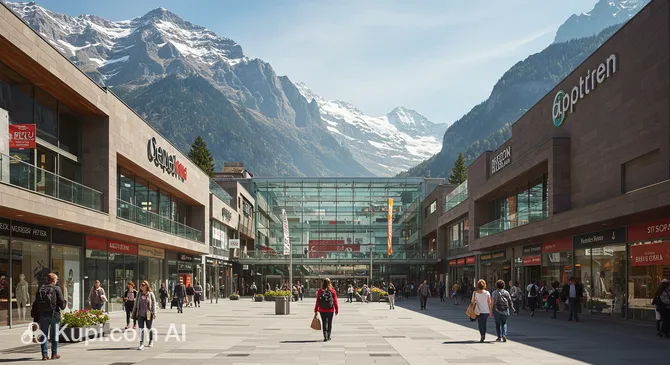
For those who prefer one-stop shopping, there are shopping centers in the Interlaken area. One notable one is Oberland Shopping, which features a good selection of stores in various categories, from clothing and footwear to electronics and household goods.

Oberland Shopping. Illustration.
Source: Kupi.com AI

Traveler photos:

Although Interlaken is not famous for large permanent markets, local fairs may be organized from time to time, especially during the tourist season or holidays. At these fairs, you can find farmers' products, handmade items, and traditional souvenirs. It is worth checking for information about such events upon arrival in the city.

From Interlaken, it is worth bringing back traditional Swiss souvenirs. Of course, these include the famous Swiss watches — the choice is huge, from luxury to more affordable models. Don't forget Swiss chocolate and cheeses. Victorinox Swiss Army knives, music boxes, cowbells, and textiles with Alpine motifs are also popular. In sports stores, you can find high-quality equipment for active recreation.

Shops in Interlaken are usually open from Monday to Friday from about 9:00 AM to 6:30 PM, and on Saturday until 4:00 PM or 5:00 PM. Many shops, especially in tourist areas, may also be open on Sunday, particularly during peak season. Large supermarkets may have longer opening hours. Credit cards (Visa, Mastercard) as well as Swiss francs (CHF) are accepted almost everywhere. Euros may also be accepted in some tourist spots, but the exchange rate might not be the most favorable.

For tourists from non-EU countries, a value-added tax refund system (Tax Free) is available. To take advantage of this opportunity, the purchase amount in one store must exceed a certain threshold (usually around 300 CHF). Upon purchase, you must ask the seller for a special Tax Free check, which is then presented to customs when leaving Switzerland to receive a refund.

Reached the end of the page?

That means the route is fully explored