Support

Wengen

About

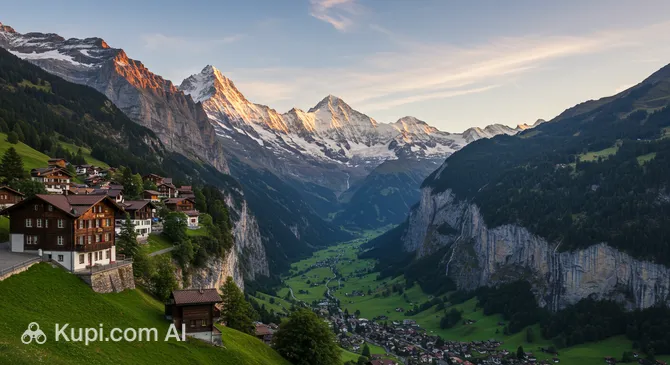
Wengen is a picturesque alpine village that looks as if it has been lifted from the pages of a fairy tale, situated on a sunny terrace in the Bernese Alps. Located in the heart of the Jungfrau region in Switzerland, this cozy resort offers travelers a unique experience of connecting with nature. Perched at 1,274 meters above sea level, the town literally soars above the deep Lauterbrunnen Valley, offering breathtaking views of majestic mountain peaks.

Wengen. Illustration.
Source: Kupi.com AI

One of the town's main and most pleasant features is the complete ban on car traffic. It can only be reached by a colorful mountain train, which helps preserve the crystal-clear air and wonderful silence in the valley. Walking past traditional wooden chalets and elegant buildings, you will feel a special atmosphere of comfort. The rich history of Wengen as a classic mountain resort is felt everywhere here: from the Belle Époque architecture to century-old traditions of hospitality.

Wengen is the perfect starting point for exploring the legendary Eiger, Mönch, and Jungfrau peaks. In winter, this place attracts skiers from all over the world, and in summer, it turns into a paradise for hiking and mountain biking enthusiasts. From here, it is easy to reach the famous Kleine Scheidegg pass and embark on a journey to the "Top of Europe" — Jungfraujoch. If you are looking for a place to slow down the pace of life and enjoy the beauty of the Alps without the hustle and bustle, Wengen will be an ideal discovery for you.

Weather Overview

Wengen's climate is a classic example of high-altitude alpine weather, where the height above sea level dictates its own rules. It is always fresh and cool here, even in the middle of the calendar summer. In winter, the resort turns into a snowy fairy tale: in January, the average temperature is about -4.5°C, and at night the air cools down to -7.9°C. This time of year is characterized by stable sub-zero temperatures, which creates ideal conditions for winter sports, although snowfalls are quite frequent — with up to 18 days of precipitation in December.

The summer season here is mild and comfortable, without exhausting heat. In July and August, average figures stay at 13.5°C, and the maximum temperature rarely exceeds 18.3°C. However, it should be noted that summer in the mountains is also the wettest period: up to 21 rainy days per month are recorded in May and June. When planning mountain walks, be sure to check the detailed weather in Wengen to bring appropriate clothing.

Overall, this region is characterized by cool summers with frequent rain and cold, snowy winters with temperatures consistently below freezing.

Average monthly temperature

Average monthly precipitation

Interesting Facts

Помимо живописных пейзажей и горнолыжных трасс, Венген скрывает множество любопытных особенностей, которые делают отдых здесь по-настоящему уникальным.
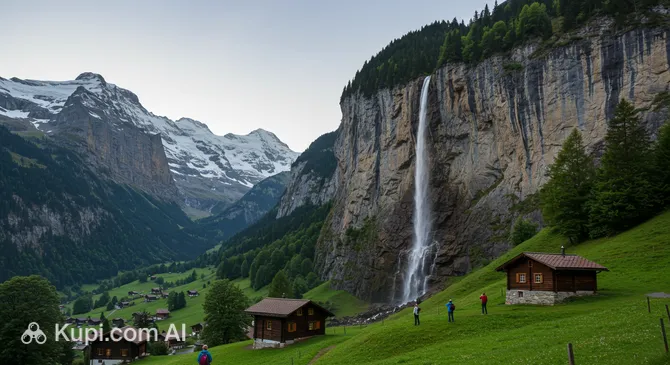
Staubbach Falls. Illustration.
Source: Kupi.com AI

Traveler photos:

  • Wengen is an entirely car-free territory. This is not just a tourist gimmick, but a strict rule: all guests leave their cars below, in the Lauterbrunnen Valley. Within the town itself, movement is only allowed on foot or in special electric cars, which provides the resort with exceptional silence and ecological purity.

  • The town gained worldwide fame through its annual alpine skiing competitions. Every January, stages of the World Cup are held here on the legendary Lauberhorn track, which is considered one of the longest and most technically challenging downhill courses on the planet.

  • Despite its modern infrastructure, the settlement has ancient roots and was first mentioned in chronicles back in the 13th century. Wengen acquired its status as a popular holiday destination at the end of the 19th century, when the construction of the mountain railway opened these beauties to the general public.

  • Alpine traditions are carefully honored in the town. In summer, folklore festivals and colorful processions often take place here, where you can see locals in national costumes, hear the sounds of the alphorn, and immerse yourself in the authentic atmosphere of a Swiss village.

How to Get There

The journey to Wengen is a small adventure in itself, as the path lies through some of the most picturesque landscapes in Europe. Since the resort is a car-free zone, the final part of the route always takes place by rail. You can find out more about how to get to Wengen to plan your logistics, but the general travel scheme usually looks like this: a flight to a major city, a train transfer to Interlaken and Lauterbrunnen, and then an ascent on a cogwheel railway.

Most tourists choose Zurich Airport (ZRH) as the most convenient point of entry. It is the country's largest aviation hub, located approximately 106 km from the region. Trains depart directly from the airport terminal and, with one or two transfers (usually in Bern or Interlaken), will deliver you to the foot of the mountains in 2.5–3 hours. This is the most reliable and popular method, allowing you to avoid traffic jams and enjoy the views.

Another popular option, especially for combined tours, is Milan Malpensa Airport (MXP). It is located in Italy, approximately 125 km from Wengen. Travelers often choose this route to travel through the picturesque Simplon Pass by train to the Swiss town of Spiez, and then head to Interlaken. The entire rail journey will take about 3.5–4 hours.

You can also use flights to EuroAirport Basel Mulhouse Freiburg (EAP). It is located 113 km away and serves many European low-cost airlines. From here, you will need to take a bus to Basel station and then catch a direct train to Interlaken. The total travel time will be just over 3 hours.

Summary information on the nearest airports:

AirportPassenger trafficDistance
Bern Airport57 00047 km
Sion35 92963 km
Lugano Airport190 698101 km
Zurich Airport31.2 mln106 km
EuroAirport Basel Mulhouse Freiburg8 mln113 km

The Swiss train system (SBB) is the gold standard for punctuality and comfort, and it is the primary way to get around. The key transport hub for traveling to the Jungfrau region is Zurich Hauptbahnhof. Trains regularly depart from this central station toward Bern and Interlaken. The journey to the Interlaken Ost transfer hub takes about two hours, followed by a short trip to the Lauterbrunnen Valley.

If you are closer to the capital, Bern railway station is a convenient starting point. The distance to the mountains from here is only 53 km in a straight line. Trains from Bern to Interlaken run very frequently (every half hour), and the travel time to the gateway to the high mountains is only about 50 minutes. In Lauterbrunnen, all passengers transfer to the yellow-and-green Wengernalpbahn train, which takes guests directly to the center of Wengen in 15 minutes.

Below are the main railway stations through which tourist routes pass:

StationPassenger trafficDistance
Oerlikon Railway Station34.4 mln48 km
Bern Railway Station69 mln53 km
Sion Railway Station4.5 mln60 km
Zürich Hauptbahnhof154.6 mln98 km
Lugano Railway Station11.2 mln103 km

Main Attractions

The sights of Wengen are a harmonious blend of natural wonders and alpine traditions. The main visual landmark that is impossible to miss is Staubbach Falls. Although its base is in the Lauterbrunnen Valley, it is from the terraces of Wengen that the best panoramic views of this flow are found. The water falls from a height of almost 300 meters, often turning into water dust before it even reaches the ground, creating a mystical mist that has inspired poets and artists for centuries.

For those who want to go even higher, a trip to Jungfraujoch — the highest railway station in Europe — is a mandatory part of the program. This place is called the "Top of Europe," and eternal winter reigns here. Tourists can visit the Ice Palace carved directly into the glacier and step onto the Sphinx Observatory observation deck, which offers an incredible view of the Aletsch Glacier, the longest in the Alps.

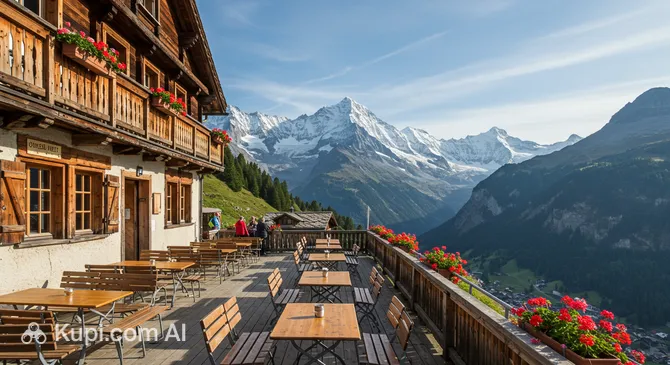
Allmend Mountain Restaurant. Illustration.
Source: Kupi.com AI

Traveler photos:

After active walks, it's worth getting to know the region's culinary culture. An excellent place for this is the Allmend Mountain Restaurant. This cozy establishment is located right by the Wengernalpbahn railway tracks, making it a convenient stop during hiking or skiing. Here you can try traditional Swiss dishes such as fondue or rösti in the authentic atmosphere of a wooden chalet, while enjoying views of the snow-covered slopes.

Lovers of breathtaking landscapes should head to Mount Männlichen. A cable car from the center of Wengen will take you to the summit in just a few minutes. From here begins the popular and easy Royal Walk route, leading to a crown-shaped viewing platform. From this point, the famous trio of peaks — Eiger, Mönch, and Jungfrau — appears in all its glory, as if in the palm of your hand.

Local Cuisine

Wengen's gastronomy is a true feast for gourmets, where every dish is steeped in the spirit of the Alps. The local cuisine is famous for its heartiness and simplicity, making it the perfect reward after an active day on the mountain slopes. The main stars of the table here are invariably cheese delicacies. Be sure to try a classic fondue—a hot mixture of melted cheeses with white wine, into which pieces of bread are dipped—and raclette. The latter is a whole ritual: melted cheese is scraped directly onto a plate with boiled potatoes, pickled cucumbers, and onions, bringing friends and family together at the table.

In addition to cheese masterpieces, the region is proud of its meat and dairy products. Restaurant menus often feature aromatic sausages and cured meats, which pair perfectly with fresh bread from local bakeries. Those with a sweet tooth should look out for homemade pies and, of course, the famous handmade Swiss chocolate. Thanks to the clean mountain air and lush grass that the cows graze on, local yogurts, creams, and butter have a particularly rich and delicate taste.

Meals in Wengen are traditionally accompanied by suitable drinks. With heavy cheese dishes, you will certainly be offered a glass of light Swiss white wine (such as Chasselas), which aids digestion. To round off the dinner, locals often choose a small glass of fruit schnapps, like cherry Kirsch, or a herbal liqueur. Among non-alcoholic drinks, warming hot chocolate, fragrant alpine herbal tea, and the iconic whey-based soda—Rivella—are incredibly popular.

Dining culture here ranges from exquisite dinners in cozy wooden chalets to casual street food. Small kiosks offer quick snacks like hot waffles or traditional sandwiches. The town's unique character is enhanced by farmers' markets that set up on weekends and during high season: here, tourists buy mountain honey, homemade jams, and alpine herb blends. During regular gastronomic festivals, chefs put on real shows and tastings, introducing guests to the secrets of local culinary arts.

Travel Tips

Wengen is a unique place where the absence of cars and high-altitude air create a special atmosphere, but require a little preparation from travelers. To make your trip to this corner of Switzerland as comfortable as possible and without surprises, we have gathered the most important practical recommendations for you.

  1. Clothing and Equipment. Weather in the mountains changes rapidly, so dress in layers. Even in summer, evenings can be cool, so a warm fleece and a windproof jacket are essential. The most important attribute for a tourist here is comfortable shoes with a non-slip sole, as there is little asphalt and many gravel paths. Don't forget sunglasses and cream with a high SPF: at an altitude of 1,274 meters, the sun is very active even in cloudy weather.
  2. Transport within the town. Remember that Wengen is a car-free zone. You can only get around the resort on foot or by special electric taxis, which are usually ordered to transport luggage from the station to the hotel. Regular city taxis or Uber do not work here. If you arrived in the region by car, you will have to leave it in the paid multi-story parking lot below in Lauterbrunnen and take the train up.
  3. Finances and Prices. The currency is the Swiss franc (CHF). Bank cards are accepted almost everywhere, including lift ticket offices and supermarkets. However, it is necessary to have some cash on hand: it will be needed for lockers, small souvenir stalls, or remote mountain huts. Switzerland is an expensive country, so plan your budget with a margin. Tips are usually included in the bill, but it is considered good manners to round up the amount or leave 5–10% for excellent service.
  4. Health and Water. The water from the tap and in the street fountains of Wengen is pure, mountain water and safe for drinking, so feel free to bring a reusable bottle. The pharmacy (Apotheke) is located near the railway station, but it does not operate 24/7. Given the mountain terrain, take out good insurance covering active sports (hiking or skiing).
  5. Communication and Electricity. The main language of the region is German (specifically its Swiss dialect), but staff in hotels, restaurants, and shops speak excellent English. To charge your gadgets, you will likely need an adapter: Swiss sockets (type J) differ from standard European ones, although flat plugs often fit. Wi-Fi is available in most hotels and restaurants, as well as at the station.
  6. Local Etiquette. In the mountains, it is customary to greet those you meet on the trails, even if you are strangers. The universal greeting is "Grüezi." Since there is no engine noise in town, silence is highly valued. Loud music or noisy parties on balconies after 10:00 PM may cause dissatisfaction among neighbors and locals.
  7. What to Avoid. In winter, it is strictly forbidden to walk on prepared ski slopes or sledding runs — it is life-threatening. Look for special routes with pink signs for winter walks. Also, do not count on late-night shopping: the only large Coop supermarket closes quite early (usually around 6:30 PM), and on Sundays, it may not work at all or have reduced hours.
  8. Guest Card (Gästekarte). Upon checking into your hotel or apartment, be sure to ask for the Wengen Guest Card. This document entitles you to discounts on cable car tickets (e.g., Wengen–Männlichen), free entry to the ice rink or outdoor pool, and discounts on some excursions. It's a great way to save a bit in an expensive region.

By following these simple tips, you can avoid everyday troubles and focus entirely on the main thing — enjoying the majestic views of the Jungfrau and the cozy atmosphere of alpine hospitality. We wish you an unforgettable journey!

Entertainment & Nightlife

Nightlife in Wengen is not about noisy metropolis parties until dawn, but classic alpine "après-ski," where an atmosphere of comfort, warmth, and friendly socializing prevails. After the lifts close, the center of activity shifts to the main street — Dorfstrasse. This is where most of the establishments are concentrated, where tourists gather to discuss the slopes they've conquered over a glass of mulled wine or local beer. Evening leisure here is elegant and calm, perfectly suited for those who want to relax after an active day.

For lovers of music and dancing, there are several iconic spots in town. One of the centers of attraction is the Tanne bar, located right on the main street, as well as the livelier Hasenstall at the Hotel Silberhorn, which is considered the local equivalent of a nightclub. Live music or DJs often perform here. If you prefer a more gastronomic evening in an authentic style, pay attention to the Allmend Mountain Restaurant. In the evening, this place takes on a special charm: wooden interiors and soft light create the perfect conditions for a romantic dinner or a quiet gathering with friends.

The atmosphere in Wengen's establishments is very casual. There is practically no dress code: "sporty casual" or even neat ski wear is perfectly appropriate. The crowd here is international, but families and middle-aged groups of friends predominate. Prices correspond to Swiss standards—above the European average. A glass of beer or wine will cost around 7–10 francs, and cocktails start from 15 francs. Most bars work until midnight or 1:00 AM, with only a few places open until 2:00–3:00 AM.

In terms of safety, Wengen is impeccable. Even late at night, walking through the village's lit streets is absolutely safe. Since there is no car traffic, you can get to your hotel on foot or by ordering an electric taxi if you are tired or live far from the center. Keep in mind that calling a taxi at night can be more difficult than during the day, so it is better to check the local service number at your hotel reception or at the bar in advance.

During the day, if you decide to take a break from skiing and hiking, Wengen offers other entertainment. In the center of the village, there is an ice rink (in winter) and tennis courts (in summer). Curling — a traditional game in these parts — is also popular, and anyone who wishes can try their hand at it. The cultural program often includes classical music concerts in the local church and film screenings, allowing for a variety of leisure activities in this quiet mountain haven.

Parks & Museums

Wengen is one of those rare cases where a town doesn't need man-made parks, as it is situated right in the middle of a vast nature reserve. Since the entire village is a car-free zone, the boundaries between streets and wild nature are virtually blurred, and the role of museum halls is often played by majestic mountain landscapes and historic chalets.

The primary "green area" for walking and relaxation here is the alpine meadows at the foot of Männlichen. In summer, this place turns into a veritable open-air botanical garden, where gentians, alpine roses, and edelweiss bloom. The trails laid out here, such as the "Romantic Trail," allow you to enjoy the silence and the scents of wild herbs. Another important natural site is the area around the famous stream — Staubbach Falls. Although technically located slightly lower, its surroundings and viewing platforms represent a magnificent natural park where you can feel the power of the water and enjoy the coolness on a hot day.

Regarding museums, Wengen itself doesn't have large exhibition complexes due to its size; however, the region's cultural heritage is carefully preserved in the immediate vicinity. The main guardian of history is the Lauterbrunnen Valley Museum (Talmuseum), located in a neighboring village (just 15 minutes by train). The museum's exhibition is housed in an old mill building and tells the story of the difficult life of the mountain people, the history of mountaineering, and the traditional craft of lace-making. This place is a must-visit for those who want to understand how people have survived in these harsh but beautiful mountains for centuries.

The route of the legendary Lauberhorn race can be called a unique sports history gallery. Information stands are installed along the track, telling the stories of alpine skiing heroes and the evolution of equipment. It is a unique "museum on the slope" that allows you to touch Wengen's sporting glory right while walking or skiing.

Among the architectural monuments, St. Bernard’s Anglican Church attracts special attention. Built in the early 20th century, it serves as a reminder of the British tourists who were among the first to open this resort to the world. The small stone building with stained glass windows is harmoniously integrated into the landscape and is a beautiful example of historical construction from the era when tourism was born.

If you are looking for privacy away from popular routes, head for a walk to the Leiterhorn. This is a forested hill reached by a pleasant trail through a coniferous forest. There are far fewer tourists here than on Männlichen, and the viewing platform offers perhaps the most unusual view of the Lauterbrunnen Valley — you will see it strictly from the top down, as if from a helicopter. It is an ideal place for meditative relaxation in nature.

Getting Around

The public transport system in Wengen is unique, as the town itself is an entirely car-free zone for internal combustion engine vehicles. The main transport artery here is the Wengernalpbahn (WAB) cogwheel railway. The yellow-and-green trains serve not only as an intercity express connecting the resort with the Lauterbrunnen Valley and the high-altitude transfer hub of Kleine Scheidegg but also as a kind of "metro." Stops are located such that they are convenient for moving between different parts of the slope, especially if you are heading out for hiking or skiing.

An important element of the transport network is the cable car (Luftseilbahn), connecting the center of the village with the summit of Männlichen. Cabins depart every 20 minutes, and the ascent takes only about 5–6 minutes. This is the fastest way to reach the skiing area or panoramic hiking routes. In the winter season, a network of chairlifts and T-bars also operates, essentially becoming part of the public transport system for skiers, linking Wengen with neighboring Grindelwald.

Since regular cars are banned here, the only alternative to walking is electric taxis. These are small electric vehicles that can be found at the railway station. They function as taxis and freight transport: delivering tourists and their luggage to hotels and chalets. Conventional services like Uber or car-sharing do not exist here, and bicycles are used more for sport than as a means of getting around the steep village streets.

The payment system in the Jungfrau region may seem complicated, but it is very high-tech. The most convenient way to buy tickets and check schedules is the SBB Mobile app. For tourists, travel passes are extremely beneficial. If you plan to move around the region a lot, it's worth considering purchasing a Jungfrau Travel Pass or a Berner Oberland Pass, which grant the right to unlimited travel on most trains and cable cars. Holders of a nationwide Swiss Travel Pass can travel to Wengen for free, but going higher (to Kleine Scheidegg or Jungfraujoch) will require a separate ticket, albeit with a 25% discount.

Tickets for trains and cable cars can be purchased at station ticket offices, at machines (accepting cards and cash), or online. There is no need to validate electronic tickets—simply show the QR code to the inspector. Paper tickets without a specific time indicated sometimes require stamping in the orange machines on the platform before boarding, but most often they are valid for a specific date.

When planning trips, be sure to consider transport operating hours. Trains run on a strict clockface schedule (usually every 30 minutes), but service stops at night. The last train from the valley (Lauterbrunnen) to Wengen departs quite late, however, the cable car to Männlichen finishes operation around 5:00 PM (times vary depending on the season). Always check the departure time of the last service in advance to avoid being stranded on the mountain or down in the valley.

Accommodation

Accommodation in Wengen is an immersion into the atmosphere of true alpine comfort. Since the resort has a rich history, traditional hotels predominate here, many of which have been family-run for several generations. You won't find faceless chain skyscrapers here; instead, guests are greeted by picturesque wooden chalets in Victorian and Belle Époque styles, harmoniously integrated into the mountain landscape.

When choosing accommodation, it is critical to consider the town's geography. Since Wengen is a car-free zone, the hotel's location relative to the railway station plays a huge role. The most convenient options are in the center, a 5–7 minute walk from the station. If you choose a hotel on the outskirts for privacy and panoramic valley views, be prepared for uphill walks or the need to order a paid electric taxi to transport your luggage upon arrival and departure.

The range of offers varies from luxurious historic grand hotels with their own spas to more modest family pensions. A very popular format here is renting apartments in a chalet. This is an ideal option for families with children or groups of friends: having your own kitchen allows you to save on restaurants, and the atmosphere of your own little house in the mountains adds a special charm to the trip. The budget segment is poorly represented: there are only a few hostels and simple guesthouses, which tend to book up first.

The price range in Wengen can be described as "above average" to "high," which is typical for Switzerland. It is strongly recommended to book accommodation in advance, especially if you plan a trip at the peak of the winter season (Christmas, February) or mid-summer. The optimal time is 4–6 months before your visit. Most properties are available on major international booking systems, but sometimes contacting the hotel directly can guarantee a room with the best view of the Jungfrau.

Nearby Cities

For those wishing to explore the surrounding area, Wengen serves as an excellent starting point for day trips to several interesting nearby locations in the valleys.

One of the most attractive destinations is the town of Thun, located at the northwestern edge of the lake of the same name. This place enchants with its historic center featuring two-level embankments and a majestic 12th-century castle, from whose towers a panorama of the Alps opens up. Thun is perfect for leisurely strolls, shopping, and boat excursions, offering a pleasant contrast to the high-mountain atmosphere of Wengen.

Lovers of changing climate zones should pay attention to Sierre, located in the canton of Valais. This town is often called the "City of the Sun" due to its high number of clear days per year. Here you can walk through picturesque vineyards, visit a wine museum, and enjoy a completely different nature and architecture typical of the southern part of the country.

CityPopulationDistance
Grindelwald4 0009 km
Interlaken5 50010 km
Spiez12 81021 km
Kandersteg1 30023 km
Thun43 74328 km

These nearby destinations provide insight into the diverse culture and landscapes of the region, complementing your holiday with new impressions.

Shopping & Souvenirs

General Overview: Shopping in Wengen is a calm and measured activity, perfectly in keeping with the spirit of this alpine village. You won't find huge shopping centers or high-fashion boutiques here. The range of local shops is primarily oriented toward the practical needs of tourists and outdoor enthusiasts. The town is famous for high-quality sports equipment, traditional Swiss souvenirs, and delicacies. It's an ideal place to buy reliable trekking boots, a warm sweater, or gifts for loved ones while enjoying mountain views.

Main Shopping Areas: All the resort's commercial life is concentrated along the main street — Dorfstrasse. It starts right from the railway station and stretches through the center of the village. This is where supermarkets, bakeries, sports shops, and souvenir stalls are located. Due to Wengen's compactness, you can visit all the interesting spots in literally an hour of leisurely walking. While shopping, you will always be in visual contact with natural beauties, such as the famous Staubbach Falls, which is visible from many open spaces between buildings.

Shopping Centers: In the traditional sense, there are no large malls in Wengen. This is a car-free zone, and the scale of construction is intimate. The largest shop is the Coop supermarket, located near the station. Here you can buy food, drinks, essentials, and even some manufactured goods. If you are interested in large-scale shopping with brand-name clothing and accessories, it is better to plan a trip to Interlaken or Bern, which are easily reachable by train.

Markets: There are no regular large markets in the town, but in high season, small stalls of local farmers and craftsmen sometimes appear on the central square. Here you can find the freshest alpine cheese, homemade jams, honey, and handmade crafts. These spontaneous mini-markets add character and allow you to interact with local residents.

Souvenirs: From Wengen, it's worth bringing back classic symbols of Switzerland. First and foremost is chocolate — from well-known brands to handmade bars from local confectioneries. Victorinox Swiss Army knives are very popular and are sold here in a wide range, often engraved with the town's name. Also, look out for watches, music boxes, decorative cowbells, and wooden items. For gourmets, a fondue set or a vacuum-packed Gruyère or Emmental cheese makes a great gift.

Opening Hours and Payment: Shops in Wengen usually open around 8:00 or 9:00 AM and work until 6:30 PM. It is important to remember that many small shops close for a lunch break from 12:00 to 2:00 PM. On Sundays, most shops, except for grocery and souvenir stores, are closed. Credit cards (Visa, MasterCard) are accepted almost everywhere, but for small purchases at kiosks or stalls, it's better to have some cash francs on hand.

Tax Free: Switzerland is not part of the EU, but the Tax Free refund system works excellently here. If you make a purchase of more than 300 Swiss francs in one shop, you are entitled to a VAT refund. Be sure to ask the salesperson to issue a special Tax Free Form and present it along with your passport. You can process the refund when leaving the country, for example, at the airport or major railway stations.
Reached the end of the page?

That means the route is fully explored