Support

Staubbachfall

About

A journey to the Bernese Alps region in Switzerland is incomplete without a visit to the legendary **Staubbach Falls**. This natural phenomenon, located near the picturesque village of Wengen, is one of the most recognizable landmarks in the country. The water here plunges from a sheer cliff from a height of almost 300 meters, turning into an ethereal water curtain that resembles silvery dust mid-flight.
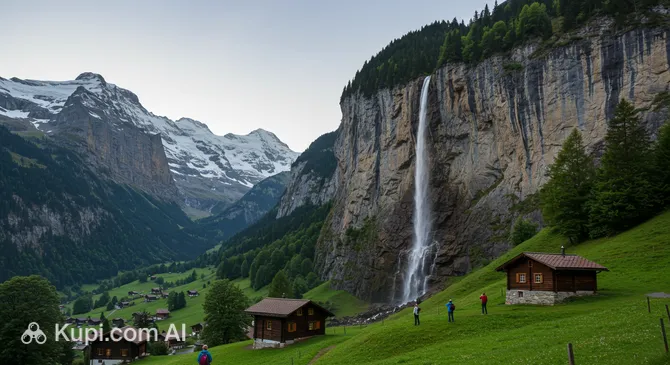
Staubbach Falls. Illustration.
Source: Kupi.com AI

Traveler photos:

Staubbach is considered the second highest waterfall in Switzerland and the crown jewel of the Lauterbrunnen Valley, often called the "Valley of 72 Waterfalls." Unlike many other powerful cascades, this waterfall impresses with its lightness: the wind easily catches the streams, swirling them into whimsical funnels, which gave it its name (from the German Staub — "dust").

Set against the backdrop of the eternal snows of the Jungfrau peak, this majestic site has inspired poets and artists for centuries. Today, it remains a must-see for every traveler wishing to experience a classic Swiss idyll featuring wooden chalets, green meadows, and the power of pristine nature.

Contacts

To plan your trip or get up-to-date information on the condition of the hiking trails around the waterfall, you can contact the local tourist information center. The Jungfrau region professional team will help make your visit as comfortable and safe as possible. Current contact details and the exact address of the attraction are provided in the table below.

How to contactContact
AddressLosisgräbli 419, 3825 Lauterbrunnen, Switzerland
Phone+41 33 856 85 68
Websitewww.jungfrau.ch

What to Do

The main highlight here is a walk along a specially equipped trail that leads directly behind the wall of falling water. During the summer, you can climb a narrow path and pass through a tunnel to a rock terrace. Here, you will be so close to the torrent that you will feel the refreshing cloud of spray and hear the muffled roar of the elements echoing through the rocks.

For photography enthusiasts, Staubbach Falls offers endless angles. The most impressive shots are taken from the center of Lauterbrunnen village, with old houses in the foreground and the vertical white thread of the waterfall in the background. On sunny days, the water mist often creates bright rainbows, adding a fairy-tale touch to the landscape.

If you prefer active recreation, use the waterfall as a starting point for hiking. From here, trails begin toward the Trümmelbach Falls, hidden inside the mountain, or up to the high-altitude alpine meadows. In winter, the waterfall often freezes, turning into a giant ice sculpture, while in spring, during the snowmelt, it appears in its maximum power and thunder.

Getting There

The journey to Staubbach Falls usually begins in Interlaken, which serves as the region's main transport gateway. The most convenient and popular way is to take a Swiss Federal Railways (SBB) train from Interlaken Ost to Lauterbrunnen station. The trip takes about 20 minutes, and the waterfall becomes visible even before you reach the village, towering over traditional chalets.

From Lauterbrunnen station, it is just a 5–10 minute walk to the base of the cliff, following the signs. If you are traveling from the neighboring mountain village of Wengen, you will need to take the cogwheel railway, which will bring you down into the valley in a few minutes, offering breathtaking panoramas of the Bernese Alps along the way.

For those who prefer to drive, there is paid parking available in the village of Lauterbrunnen, though spots can be limited during peak season. If you are arriving from major cities like Zurich or Basel, the train journey with a transfer in Interlaken takes between 2 and 3 hours, offering some of the most beautiful views in the world along the route.

Nearest city: Wengen

History & Facts

The fame of Staubbach Falls spread across Europe as early as the 18th century. In 1779, the valley was visited by the great German poet Johann Wolfgang von Goethe. Impressed by the power and simultaneously the lightness of the falling water, he wrote the poem "Song of the Spirits over the Waters", which forever inscribed this natural site into the history of world literature and made it an icon of the Romantic era.

The famous Lord Byron was also captivated, comparing Staubbach in 1816 to the "tail of the white horse in the Apocalypse" streaming in the wind. The waterfall became known to Russian travelers through Nikolay Karamzin, who described it in his "Letters of a Russian Traveler" at the end of the 18th century, admiring the majesty of Alpine nature.

Interestingly, in the 19th century, the waterfall began to be adapted for mass tourism. Between 1877 and 1886, the first metal ladders and galleries were installed on the sheer rock face, allowing travelers to look "inside" the water flow. In the 1930s, an image of this natural giant even graced Swiss postage stamps, confirming its status as a national treasure.

Time Needed

If you just want to admire the waterfall from a distance and take a few classic photos with the village in the background, 30–40 minutes will be enough. However, if you plan to hike the trail to the special gallery carved into the rock to feel the cool mist on your face, allow about 1.5–2 hours for the visit.

Many tourists prefer to combine a visit to Staubbach with a walk through the entire Lauterbrunnen Valley. In this case, the journey can last 4 hours or even a full day if you decide to walk to the neighboring Trümmelbach Falls or take a cable car to the high-altitude villages. In any case, there is no need to rush—the atmosphere of Alpine tranquility encourages leisurely contemplation.

Working Hours

Staubbach Falls is a natural site and is available for viewing 24/7. You can admire it at any time of the day or night; in the evening, the cliff is often illuminated, creating a mystical atmosphere in the valley.

According to official information, access to the site is open 24 hours a day, seven days a week, from Monday to Sunday. However, it is worth noting that the hiking trail leading behind the water flow may be closed during the winter season or during heavy rains for visitor safety.

Open 24 hours

Nearby

The Lauterbrunnen Valley, where the waterfall is located, is considered one of the most naturally beautiful places in the world. Exploring the area around Staubbach will allow you to see not only other cascades of the "Valley of 72 Waterfalls" but also to immerse yourself in the atmosphere of cozy Alpine villages and hospitable mountain restaurants.

NameDistance
Lauterbrunnen Backpackers Bar0.5 km
Staubbach Falls Viewpoint0.6 km
Bären Alpenkräuter Restaurant2 km
Allmend Mountain Restaurant2.1 km
Crystal Bar2.2 km

Reached the end of the page?

That means the route is fully explored