Support

Sarnen

About

Sarnen is a picturesque and cozy town located in the heart of the central part of the country. As the capital of the Canton of Obwalden, it stretches along the northern shore of the lake of the same name, surrounded by majestic Alpine foothills. Switzerland is famous for its idyllic landscapes, and Sarnen serves as a perfect example of this harmony between nature and architecture. Despite its modest size and a population of about 10,000 people, the town possesses a unique charm and developed infrastructure while maintaining an atmosphere of peace and seclusion.
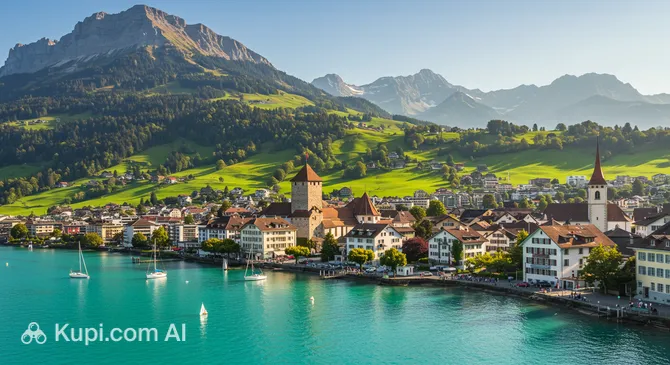
Sarnen. Illustration.
Source: Kupi.com AI

Strolling through the ancient streets, it is impossible not to feel the breath of the past. The rich history of Sarnen is reflected in its beautifully preserved architectural monuments and cultural traditions. One of the main attractions is the historic Landenberg hill. Once home to a castle, today this site attracts tourists with its magnificent terrace offering panoramic views of the town and the lake. Equally impressive is the parish church of Saints Peter and Paul—an outstanding example of Baroque architecture, admired for its rich interior decoration.

The central square, Dorfplatz, adds a special charm to the town, surrounded by traditional houses that create a unique atmosphere. Sarnen is not only an administrative center but also an excellent starting point for trips around the region: from here, you can easily reach ski resorts or go on a boat trip. This town is definitely worth a visit for those seeking authenticity, inspiration, and the opportunity to enjoy the beauty of Alpine nature away from bustling metropolises.

Weather Overview

When planning a trip, it should be noted that the climate in this region is temperate, with pronounced seasonality. The current weather in Sarnen can be changeable, so it is recommended to check the forecast before your trip to choose suitable clothing.

The winter months here are cool: from December to February, the average temperature stays around 0°C, often dropping to -3°C or -4°C at night. This is an atmospheric time of year, but precipitation falls quite often—up to 18 days in December. Spring arrives gradually: while in March the air warms up on average to only +2.5°C, by May it becomes significantly warmer, and daytime maximums reach almost +14°C. It is worth noting that May is one of the wettest months of the year, with about 21 days of precipitation.

The summer season brings the most comfortable conditions for tourism, although extreme heat should not be expected. In July and August, the air usually warms up to 20–21°C during the day, which is ideal for walks by the lake and mountain hikes. However, summer is also characterized by high humidity, and it can rain for up to 20 days a month. In autumn, the temperature gradually decreases: September can still please with a pleasant +16°C, but by November it becomes cold, averaging around +2.8°C. Expect a moderately warm summer with periodic rain and cool winters with frequent precipitation.

Average monthly temperature

Average monthly precipitation

Interesting Facts

Beyond its main attractions, Sarnen holds many fascinating secrets and historical details that often escape the attention of tourists. This town plays a much more significant role in Swiss culture than its modest size might suggest.

  • Did you know that Sarnen is the guardian of a national myth? The local state archive houses the famous "White Book of Sarnen" (Weisses Buch von Sarnen), created around 1470. This is a unique manuscript containing the earliest known written mention of the legend of the national hero William Tell and the famous apple shot.

  • The symbol of the city, the stone tower Hexenturm ("Witch's Tower"), has survived since the days of the 13th-century medieval castle. Despite its grim name hinting at dark times, the tower was historically used not only as a prison but also as a secure treasury and archive, protecting important documents from the frequent fires that destroyed the town's wooden buildings.

  • Sarnen was one of the last places in Europe where direct democracy was practiced in its most archaic form. Until 1998, the Landsgemeinde was held in the town square—an annual open-air public assembly where citizens of the canton passed laws and elected the government by a simple show of hands, rather than by secret ballot in booths.

How to Get There

Its location in the center of the country makes traveling to this region quite comfortable, although there are no direct international flights to the town itself. Travelers will need to combine different modes of transport, enjoying the picturesque views along the way. You can find all the details and plan the perfect route on the page about how to get to Sarnen, and below we will look at the main transport hubs through which tourists usually travel.

There is no airport in the town of Sarnen itself, so most tourists fly into the large air hubs of neighboring cities. The most convenient option is Zurich Airport (IATA: ZRH), located in the city of Zurich, about 66 km from Sarnen. This is the country's largest airport with excellent transport links. The journey from here by taxi or rental car will take about an hour. Another popular option is EuroAirport Basel-Mulhouse-Freiburg (IATA: EAP) in Basel, located 94 km away. The journey from Basel to Sarnen will require a bit more time—approximately 1 hour 20 minutes by car.

For clarity, here is a summary of the main airports located relatively near the town:

AirportPassenger trafficDistance
Bern Airport57 00057 km
Zurich Airport31.2 mln66 km
EuroAirport Basel–Mulhouse–Freiburg8.1 mln94 km
EuroAirport Basel Mulhouse Freiburg8 mln94 km
EuroAirport Basel-Mulhouse-Freiburg8.1 mln94 km

The railway is one of the most popular ways to travel around Switzerland thanks to the punctuality and comfort of the trains. There is no major junction station for international expresses in Sarnen itself, but you can arrive at Zurich Hauptbahnhof in the city of Zurich, which is about 58 km from Sarnen. From there, it is easy to transfer to a regional train heading towards the Canton of Obwalden. Bern Station in the city of Bern (about 62 km from the destination) can also be a convenient transfer point. A car ride from these stations to Sarnen usually takes less than an hour and a half.

Below is a list of the nearest major railway stations through which it is convenient to build a route:

StationPassenger trafficDistance
Oerlikon Railway Station34.4 mln57 km
Zürich Hauptbahnhof154.6 mln58 km
Bern Railway Station69 mln62 km
Basel SBB station40 mln88 km
Basel Badischer Bahnhof7.3 mln89 km

Main Attractions

Despite its compact size, Sarnen is rich in interesting places that allow for a deeper understanding of the culture and nature of the Canton of Obwalden. The main natural landmark is undoubtedly the magnificent Lake Sarnen (Sarnersee). A walk along its promenade brings peace at any time of year. In summer, you can rent a boat or take a cruise on a small motor ship, enjoying the views of the Alpine peaks reflecting in the water, while specially equipped areas such as Seefeld Park are perfect for swimming and picnics.

For connoisseurs of sacred architecture and spiritual relics, the Benedictine Convent of St. Andreas (Frauenkloster Sarnen) is a must-visit. Founded in the early 17th century, this convent houses the famous "Sarnen Infant Jesus" (Sarner Jesuskind) statuette. This 14th-century wooden figure is believed to possess miraculous powers, attracting pilgrims from all over the country. The convent complex itself impresses with its austere beauty and tranquility.

History buffs will find it interesting to visit the Obwalden Historical Museum, located in a former arsenal building. The museum's exhibition tells the story of the region's daily life, traditions, and folklore, showcasing ancient costumes, weapons, and art objects. It is a great place to understand how the locals lived centuries ago and how the unique character of this part of Switzerland was formed.

Krone Bar Sarnen. Illustration.
Source: Kupi.com AI

Traveler photos:

After exploring the history and walking in the fresh air, it's worth taking time to relax in a more casual setting. To feel the local atmosphere of hospitality, you can visit Bar Krone Sarnen. This establishment is popular with both locals and tourists looking to relax over a drink after a busy day of sightseeing and discuss the beauties they've seen.

Local Cuisine

The cuisine of Sarnen is a gastronomic embodiment of Alpine comfort and the peasant traditions of central Switzerland. The basis of most local dishes is the freshest farm products: milk, cream, and, of course, cheese. The Canton of Obwalden is famous for its dairies, so tasting local varieties is a must. Special attention should be paid to the hard cheese Sbrinz (Sbrinz AOP), which is considered one of the oldest in Europe and is produced specifically in this region. It is often served in thin slices as an appetizer with wine or used as a savory seasoning.

The most famous and hearty dish that should definitely be ordered in local restaurants is Alpine Macaroni (Älplermagronen). This is a caloric and incredibly tasty combination of pasta, potatoes, cream, onions, and a large amount of melted cheese. Traditionally, this dish is served with homemade apple sauce, the sweetness of which perfectly complements the salty taste of the cheese. Meat lovers will enjoy the dried delicacies (Trockenfleisch) and hearty sausages that often accompany the meal.

Among drinks in Sarnen, both all-Swiss and regional specialties are popular. Among non-alcoholic drinks, Rivella is found everywhere—a soda based on milk whey that the Swiss simply adore. In the cold season or after a walk in the mountains, locals often order a "coffee with a surprise"—Kaffee Lutz or Kaffee Fertig. This is hot coffee with the addition of fruit schnapps (usually plum or pear), which warms and invigorates perfectly.

The dining culture in the town is characterized by its casual and unpretentious nature. It is customary to eat slowly, enjoying the company and the mountain view. Main life bustles in cozy gasthofs (traditional inns) and small hotel restaurants. In the evening, when the main restaurants close their kitchens, drinking establishments become the center of attraction. For example, Bar Krone Sarnen is a great place to continue the evening, try local beers or cocktails, and immerse yourself in the lively atmosphere of the night town in the company of locals.

Travel Tips

Traveling to Sarnen is an immersion into an atmosphere of tranquility and Alpine beauty, but even in such a peaceful place, it's useful to know a few practical nuances. We have collected current tips for you that will help you plan the perfect trip, avoid minor inconveniences, and enjoy your holiday in the heart of the Canton of Obwalden.

  1. Clothing and essentials. The weather in the Alpine foothills is changeable, so dress according to the "onion principle": layering will allow you to feel comfortable both on a cool morning and a warm day. Be sure to take comfortable waterproof shoes for walking on cobblestones and mountain paths. Don't forget an adapter for sockets: Switzerland uses the Type J standard (three pins), which differs from the usual European one, and your plugs may not fit.

  2. Transport. Sarnen is compact, and its historical center is best explored on foot. For trips to the surrounding areas and the lakes, public transport is ideal—buses and trains run with impeccable precision. We recommend installing the SBB Mobile app to buy tickets and check the schedule. Renting a car only makes sense for trips to remote corners, as parking in the center is paid and can be occupied.

  3. Finances. The official currency is the Swiss franc (CHF). Cards are accepted almost everywhere, including supermarkets and ticket machines, but having some cash (small bills and coins) is necessary for paying for parking meters, making purchases in small shops, or at farmers' markets. Prices here are higher than the European average, so plan your budget with a reserve.

  4. Health and safety. Sarnen is an exceptionally safe town where you can safely walk even after dark. You can safely drink water straight from the tap or from street fountains, unless there is a "Kein Trinkwasser" (not drinking water) sign—it is pure and tasty. Pharmacies work on a standard schedule and close in the evening and on Sundays, so it's better to bring a basic set of medicines with you.

  5. Communication. The main language of communication is German, but in everyday life, locals speak a Swiss dialect that differs significantly from the literary norm. English is well understood in hotels, restaurants, and at the station. For stable internet, it is more profitable to buy a local prepaid SIM card (Swisscom, Sunrise) or use an eSIM, as roaming can be expensive.

  6. Local etiquette. Politeness here is the basis of social interaction. It is customary to say hello when entering a shop or restaurant: the universal greeting "Grüezi" (Grüezi) will immediately win over the locals. It is also customary to greet everyone you meet on walking paths outside the town. In public places, try to behave quietly and with restraint.

  7. What to avoid. Do not make noise after 22:00 and especially on Sunday—the Swiss are very sensitive about the right to rest and quiet. Also avoid crossing the road in the wrong place or on a red light, even if the street is empty: this is considered a sign of disrespect for the rules and can result in a fine.

  8. Useful life hack. When checking into a hotel or official apartments, be sure to ask for the Obwalden Guest Card. It is often issued free of charge to tourists who pay the tourist tax and gives the right to free travel on regional public transport, as well as discounts on museums and cable cars.

Sarnen will enchant you with its hospitality and measured pace of life. By following these simple recommendations, you will be able to feel confident in any situation and focus on the main thing—contemplating magnificent landscapes and getting to know the unique culture of central Switzerland.

Entertainment & Nightlife

The nightlife in Sarnen differs from that of busy metropolises: here you won't find huge night clubs with queues at the entrance or booming discos. Evening leisure in the capital of the Canton of Obwalden is primarily about comfort, an intimate atmosphere, and the opportunity to enjoy conversation in an authentic setting. Most life after sunset bustles in the historical town center and along the lake promenade, where locals and tourists gather to discuss the day over a glass of wine or a mug of local beer.

The center of evening attraction is traditional bars and pubs. A must-visit for those who want to immerse themselves in local color is Bar Krone Sarnen. This establishment is a classic example of Swiss hospitality, where a relaxed atmosphere prevails. People come here not for prestige, but for quality drinks and friendly conversations. The crowd here is very diverse, from young people to respected local residents, creating a feeling of home comfort. Music usually plays in the background, allowing for comfortable conversation.

In the summer season, the epicenter of entertainment shifts closer to the water. Summer terraces of restaurants and small bars by Lake Sarnen become the perfect place for romantic evenings. The dress code in the town's establishments is as relaxed as possible—casual style is appropriate everywhere. Most bars work until midnight or one in the morning, and on weekends they may close slightly later. The average price for a cocktail or a glass of wine ranges from 8 to 15 Swiss francs, which is standard for Switzerland.

In terms of safety, Sarnen is an ideal place. The crime rate here is extremely low, and night walks through illuminated streets or along the lake are absolutely safe even for solo travelers. If you stay out late, you can reach your hotel within the town on foot. Taxi services are available, but it's better to call them or use an app in advance, as "catching" a car on the street at night can be problematic.

When it comes to cultural leisure that flows into the evening, it's worth mentioning day and evening events. There is a local cinema showing the latest releases (often in the original language with subtitles), and the cultural center occasionally hosts concerts and theatrical productions. However, for fans of large-scale parties and raves, the best solution is a short train ride to neighboring Lucerne, where the choice of night clubs is significantly wider.

Parks & Museums

Sarnen is a town where nature and culture are intertwined in a wonderful way. Here, green zones transition smoothly into historical quarters, and museums do not just store exhibits but tell the living history of the Canton of Obwalden. For tourists, this is an opportunity to combine relaxed outdoor recreation with immersion in the rich traditions of central Switzerland.

The main oasis of calm and the center of the town's summer life is Seefeld Park. It's not just a park, but a superbly equipped recreation area right on the shores of Lake Sarnen. Spacious green lawns, shady trees, and stunning views of the water and mountains make it an ideal place for picnics and leisurely walks. During the warm season, an open-air pool (Badi) operates here, attracting both locals and travelers looking to refresh themselves in the crystal-clear water or sunbathe on the wooden decks.

For those seeking oneness with wild nature, a walk to the Wichelsee nature reserve, located very close to the town, will be a real discovery. This picturesque lake, formed in an old riverbed, is home to many rare birds and plants. The paths around the water pass through rocky sections and thick thickets, creating a feeling of total separation from civilization, even though the town is only a few minutes' drive away.

The cultural heart of the town beats within the walls of the Obwalden Historical Museum (Historisches Museum Obwalden). The museum occupies an impressive former arsenal building, which itself adds to the atmosphere. The exhibition deeply immerses you in the life and traditions of the region: here you can see ancient folk costumes, objects of religious art, furniture, and tools used by the ancestors of the canton's modern residents. This is a must-visit for those who want to understand how the rugged but hospitable character of these parts was formed.

No less interesting is the Cantonal Library and archives, where the famous "White Book of Sarnen" is kept. Although access to the manuscript itself may be limited, the building and its surrounding historical quarter constitute an open-air museum. Also located here is the Grundacherhaus—a cultural center where art exhibitions, concerts, and literary readings are regularly held, combining modern art and historical architecture.

The architectural appearance of Sarnen is complemented by majestic structures such as the Baroque Collegiate Church, which dominates the cityscape. While walking through the center, take note of the Town Hall—a building where important political decisions have been made for centuries. These buildings serve as silent witnesses to the town's rich past and create a unique backdrop for photo walks.

Insider tip: if you have a bit of time, head up the hill to the Ramersberg Chapel. This place is rarely mentioned in standard travel guides, but it offers perhaps the most breathtaking panoramic view of the Sarnen valley and the lake, especially beautiful in the rays of the setting sun.

Getting Around

The public transport system in Sarnen, as in the entire region, is characterized by Swiss precision, comfort, and full integration into the national network. Since the town is small, there are no subways or trams, and the main modes of transportation are the Zentralbahn railway trains and the yellow PostAuto buses. This connection works like clockwork: the bus schedule is synchronized with train arrivals, making it easy to reach even remote corners of the valley without long waits.

Sarnen railway station is the town's main transport hub. Trains connecting Lucerne and Interlaken pass through it. Zentralbahn trains are easily recognizable by their red and white livery; they run at intervals of 30–60 minutes. Buses are used for moving within the town and trips to neighboring villages (such as Kerns or Melchtal). Stops are conveniently located, and electronic boards always show the current arrival time.

The fare payment system is unified. Sarnen is part of the Passepartout transport association tariff zone. This means that one ticket is valid for both the train and the bus within the selected zones and time. Tickets can be purchased at ticket machines at the station (they accept cards and cash), at ticket offices, or, most conveniently, via the SBB Mobile app. In the app, you just need to specify your destination, and the system will calculate the optimal fare. The cost of a single trip around the town and its immediate surroundings is a few francs, but the price depends on the number of zones crossed.

For tourists, there is an important and pleasant nuance: if you stay in a hotel, apartment, or campsite in Sarnen, you must be issued an Obwalden Gästekarte (Guest Card). This card gives you the right to free travel on trains and buses within the canton for the duration of your stay. Be sure to carry it with you along with your passport, as inspectors check tickets regularly and the fines for fare evasion are quite substantial.

Given the compactness of the town, the historical center and the promenade are best explored on foot—distances here are minimal. As an alternative, cycling is popular. Rental points are often located right at the railway station or in sports shops. A bicycle is an ideal choice for a ride around the lake along specially equipped paths.

Taxi services exist in Sarnen, but it is not customary to "hail" them on the street. Cars usually wait for passengers at a special stand near the station, or they must be called by phone. It's worth remembering that a taxi in this region is an expensive pleasure and is rarely justified for short trips, given the quality of the bus service. Car sharing (e.g., Mobility) is available but requires pre-registration, which may be inconvenient for a short-term visit.

In the summer period, the transport system is supplemented by scenic water routes. The MS Seestern boat cruises on Lake Sarnen, connecting the town with villages on other shores. While it is more of a tourist attraction than full-fledged public transport, the trip on it can be a great alternative to the bus if you are in no hurry and want to enjoy the views from the water.

Accommodation

Despite its modest size, Sarnen offers travelers a decent choice of accommodation that will satisfy different needs: from nature lovers to fans of historical comfort. You won't find huge, impersonal hotel chains here; the foundation of local hospitality consists of cozy family guesthouses (Gasthof), holiday apartments, and excellently equipped campsites. The atmosphere in the accommodations is generally homey and calm, which fully corresponds to the spirit of this Alpine region.

When choosing a place to stay, you should consider the purpose of your visit. The Historical Center around the main square is ideal for those who want to be in the thick of things, near restaurants and architectural monuments. From here, the train station is just a stone's throw away, which is convenient for tourists planning active trips around the canton. Another popular location is the shores of Lake Sarnen. Hotels and campsites located by the water (for example, in the Seefeld Park area) offer stunning mountain views and direct access to swimming areas, which is especially valuable in the summer season.

Since Sarnen is a popular holiday destination for both foreign tourists and the Swiss themselves, the issue of booking should be resolved in advance. This is especially true for the summer months (July-August), when the demand for lakeside accommodation peaks. It is recommended to book rooms 2–3 months before the trip to guarantee yourself the best view and a reasonable price.

The price range in the town corresponds to the general price level in Switzerland—meaning it is higher than the European average. The main categories of accommodation look as follows:

  • Budget segment: Campsites (places for tents or motorhomes) remain the most affordable option and are very comfortable and clean here. There are few hostels in the classic sense in the town.
  • Middle class: A night in a standard double room in a 3-4 star hotel or a traditional gasthof will cost on average from 140 to 250 Swiss francs.
  • Apartments: Renting apartments is popular among families and groups; prices vary greatly depending on the season and the length of the rental.

Popular international online platforms can be used for booking, but many local family hotels also welcome direct booking through their websites, sometimes offering small bonuses or included breakfast in return.

Nearby Cities

For those looking to explore the surrounding area, Sarnen serves as an excellent starting point for day trips. Thanks to its convenient location in the center of the country, several interesting settlements are easily accessible from here:

CityPopulationDistance
Invalid City Data21 7489 km
Stans8 39311 km
Horw14 24314 km
Engelberg4 00015 km
Kriens26 99716 km

These nearby destinations allow for a more complete picture of the culture and landscapes of the Central Switzerland region.

The absolute favorite for a short trip is Lucerne, located just 20 minutes away by train. It is one of the most photogenic cities in the country, known for its covered wooden bridge, the Chapel Bridge (Kapellbrücke), a historical center with painted facades, and its picturesque location by Lake Lucerne. Here you can visit the famous Museum of Transport or simply enjoy a walk along the promenade.

Another interesting destination is Kriens, which actually borders Lucerne. This town attracts tourists primarily as the base station for the cable car to Mount Pilatus. A trip here is a great chance to combine urban comfort with active recreation in the mountains by ascending one of the most legendary peaks in the region.

Shopping & Souvenirs

Shopping:

Shopping in Sarnen is a calm and leisurely activity, radically different from the bustle of major shopping metropolises. There are no huge quarters with international brands here, but the town charms with its cozy boutiques, family shops, and high quality of service. Sarnen offers tourists the opportunity to purchase essentials, high-quality sports equipment for mountain walks, and, of course, unique products from regional producers.

The main shopping life of the town is concentrated in the historical center and near the railway station. The main artery for shopping enthusiasts can be called the street leading from the station to the central square, Dorfplatz. Walking along these picturesque streets, you will find clothing stores, opticians, bookstores, jewelry salons, and home decor shops. It is an ideal place for those who want to combine the search for interesting items with a tour of ancient architecture.

For those who prefer more concentrated shopping, the Sarnen Center shopping mall is located in the immediate vicinity of the railway station. This is a modern complex where large chain supermarkets, electronics stores, pharmacies, and clothing and footwear departments are gathered under one roof. It is convenient to buy groceries for picnics by the lake here or acquire everything necessary for continuing your journey.

Of particular interest to tourists are the local markets, where you can feel the true spirit of the Canton of Obwalden. The weekly market (Wochenmarkt) usually unfolds in the main square on Saturday mornings. Farmers from all around bring the freshest vegetables, fruits, homemade pastries, and flowers. During the pre-Christmas period, the town is decorated with a festive fair selling unique handmade items that make excellent gifts.

As souvenirs from Sarnen, it is worth bringing back gastronomic specialties. The main pride of the region is the hard cheese Sbrinz, produced here according to ancient recipes. Also popular are local meat delicacies, Swiss chocolate, and fruit schnapps. Connoisseurs of folk crafts will enjoy the skillful wooden items traditional for Alpine villages, or the famous army knives, a wide selection of which is presented in local shops.

Shops in Sarnen operate according to the traditional schedule for the country. On weekdays, they are usually open from 08:30 or 09:00 until 18:30, sometimes closing for a lunch break. On Saturday, the working day is shortened until 16:00 or 17:00. Sunday is an official day off for most retail outlets, except for small shops at the station. Bank cards are accepted everywhere, but it is recommended to have cash on hand for markets and small kiosks.

Tourists who reside permanently outside the country can use the tax refund system (Tax Free). In Switzerland, a VAT refund is possible for a one-time purchase in one store for an amount exceeding 300 francs. Don't forget to ask for a special form at the checkout and present your passport to arrange the refund when leaving the country.

Reached the end of the page?

That means the route is fully explored