Support

Schwyz

About

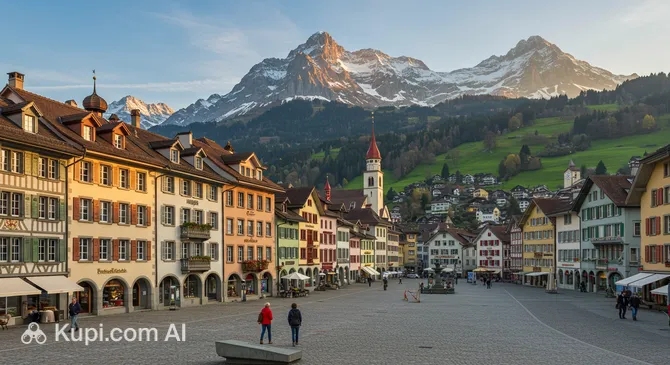
Schwyz is not just a picturesque town, but the true heart of the nation. This very place gave its name to the entire country — Switzerland, and its coat of arms served as the prototype for the famous national flag. Located in the canton of the same name at the foot of the majestic Mythen mountain peaks, the town attracts travelers with its authentic atmosphere and status as the cradle of Swiss independence.
Schwyz. Illustration.
Source: Kupi.com AI

Despite its compact size and a population of about 15,000, the town holds immense cultural significance. The fascinating history of Schwyz is closely intertwined with the birth of the Swiss Confederation. It is here, in the Museum of the Federal Charter, that the most important document of 1291 is kept, which solidified the alliance of the first cantons. A walk through the town's streets allows you to literally touch the origins of the state.

The center of attraction for tourists is the main square — Hauptplatz, often called one of the most beautiful Baroque squares in the country. Standing here are the impressive St. Martin's Parish Church and the historic Town Hall with its painted facade. Nature lovers will be captivated by the Grosser Mythen and Kleiner Mythen mountains: their characteristic jagged peaks create a unique landscape and offer excellent hiking opportunities with panoramic views of the surrounding lakes.

A trip to Schwyz will give you a sense of peace and harmony typical of a traditional Swiss province. It is an ideal place to learn more about the country's traditions, enjoy Alpine scenery, and take a break from the hustle and bustle of major metropolises.
Weather Overview

The climate of Schwyz can be described as temperate, with a noticeable influence from the nearby Alps. It is rarely exhaustingly hot here, which makes the town attractive for those who prefer freshness and comfort. When planning a trip, it is worth considering that the weather in Schwyz is quite changeable and rich in precipitation in any season.

Winter here is cool, but not extremely frosty. In January and December, the temperature usually ranges from -3°C to +3°C. Spring arrives gradually: while in March the air warms up only to +8°C, by May daytime figures reach +15°C. However, May often turns out to be the wettest month of the year, with up to 20 rainy days.

The summer season brings pleasant warmth. In July and August, the average maximum temperature is around +22°C, which is ideal for long walks and mountain hikes. Expect a fairly warm summer with frequent rain and cool winters with high humidity throughout the year. In autumn, the temperature gradually decreases, and by November the air cools down to +3...+7°C.

Average monthly temperature

Average monthly precipitation

Interesting Facts

In addition to its main attractions, Schwyz holds many fascinating secrets that only reveal themselves to the most curious travelers. This town is not just a historical backdrop, but a place where ancient traditions intertwine with living legends of a global scale.

  • Home of the Swiss Army Knife. Few people know that the world-famous Victorinox army knife originates from here. In the Ibach district, part of the municipality, lies the company's main factory, where tens of thousands of the legendary red knives are produced daily.

  • A house older than the country itself. In the center of Schwyz, you can see the unique wooden mansion "Haus Bethlehem." It was built in 1287 — four years before the signing of the Federal Charter that marked the beginning of Swiss statehood. This is one of the oldest wooden residential buildings in Europe preserved to this day.

  • Cherry Country. The town's surroundings are famous for a huge number of cherry orchards. Schwyz is known for its high-quality kirschwasser (cherry brandy), and in spring, the blooming of thousands of trees at the foot of the mountains creates landscapes that rival the famous Japanese sakura.

How to Get There

Schwyz is located in the central part of the country, and thanks to its well-developed transport infrastructure, getting here is easy. You can study all the ways to get to the city in detail on a separate page, and here we will look at the most popular routes through the nearest transport hubs.

Schwyz does not have its own airport, so travelers usually fly into neighboring large cities. The most convenient option is Zurich Airport (IATA: ZRH), located in the city of Zurich. This is the largest aviation hub in the country, situated just 48.5 km from Schwyz. The journey by taxi or rental car will take about 50–60 minutes, and there is also an excellent rail connection.

An alternative option is EuroAirport Basel-Mulhouse-Freiburg (IATA: EAP), located in the city of Basel, approximately 106 km from Schwyz. This is an important transport hub receiving many European flights. The journey from here by car will take about 1.5–2 hours.

For convenience, here is summary information on the main airports used to reach the region:

AirportPassenger trafficDistance
Zurich Airport31.2 mln49 km
Altenrhein Airport84 10086 km
Bern Airport57 00089 km
Friedrichshafen Airport339 55696 km
EuroAirport Basel Mulhouse Freiburg8 mln106 km

The railway is the pride of Switzerland and one of the most comfortable ways to travel. It's worth noting that major international expresses arrive at the hub stations of neighboring metropolises. The nearest major hub is Zurich Hauptbahnhof in Zurich, located about 40 km from Schwyz. Regional trains depart from here regularly and will quickly take you directly to your destination. The travel time by taxi from Zurich station to Schwyz is about 45 minutes.

Below is information about the major railway stations located relatively close to the town:

StationPassenger trafficDistance
Zürich Hauptbahnhof154.6 mln41 km
Oerlikon Railway Station34.4 mln88 km
Bern Railway Station69 mln93 km
Basel SBB station40 mln99 km
Basel Badischer Bahnhof7.3 mln100 km

Main Attractions

The town of Schwyz is rich in historical monuments and cultural sites that provide a deeper understanding of the country's history. Here, ancient architecture stands alongside modern spaces, offering tourists a diverse program to explore.

One of the main cultural points of interest is the Forum of Swiss History. This modern museum is located in a restored 18th-century granary. Unlike traditional exhibitions, the emphasis here is on interactivity and telling the story of everyday life in the Middle Ages. The displays clearly show how the Swiss lived, traded, and traveled during the formation of the Confederation, making history feel alive and accessible.

Connoisseurs of architecture should pay attention to the Ital Reding Estate (Ital Reding-Hofstatt). This luxurious Baroque mansion, built in the early 17th century, belonged to one of the most influential families in the region. The complex includes not only the manor house with its richly decorated interiors but also a picturesque garden and outbuildings. A walk through the estate grounds transports guests into the aristocratic past of the canton.

Mythen Center. Illustration.
Source: Kupi.com AI

Traveler photos:

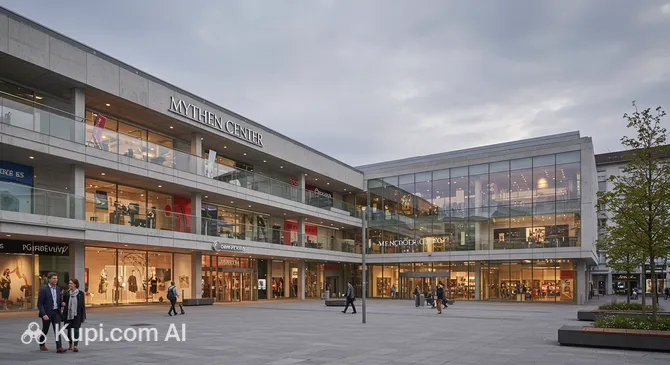
For those who want to combine a cultural program with shopping and gastronomic delights, the Mythen Center is an excellent choice. This is a large shopping and entertainment complex where you can find many stores, from clothing boutiques to shops selling local delicacies and souvenirs. A cozy restaurant is also located here, offering local and European cuisine, making the center a convenient spot for the whole family to relax.

Another unique site is the Kerchel — a bone house chapel located next to the main parish church. Although this place might seem somber, it represents an important monument to the religious culture of the region. The small building draws attention with its architecture and serves as a reminder of the deep Catholic traditions that have shaped life in Schwyz for centuries.

Local Cuisine

The gastronomic scene in Schwyz is a reflection of the region's rugged yet generous Alpine character. Local cuisine is based on simple, hearty, and incredibly tasty ingredients: fresh milk, aromatic cheeses, meat, and seasonal vegetables. There is no pursuit of pretentiousness here, with a preference for time-tested recipes that are perfect for warming up after walks along mountain trails.

The main culinary symbol of the region is undoubtedly Hafechabis. This is a thick and rich stew made of pork and potatoes, traditionally prepared in the Muotathal area. The dish is simmered for a long time so that the meat becomes tender and literally melts in your mouth. You should also definitely try the classic Älplermagronen — pasta with potatoes baked under a layer of cheese and served with apple mousse. This combination of salty and sweet is a hallmark of central Switzerland.

Desserts and drinks related to the region's "cherry" status hold a special place on the menu. Schwyz is famous for its cherry orchards, so the main local drink is Kirsch (Kirschwasser) — a strong fruit brandy. it is drunk as a digestif or added to fondue for aroma. Those with a sweet tooth must order a piece of local cherry cake with delicate whipped cream infused with that same kirsch.

The dining culture here is democratic: locals love to gather in cozy, wood-paneled taverns (Gasthof) with a homey atmosphere. For those who prefer a more modern format or want a quick bite while shopping, the Mythen Center is perfect. Its restaurants offer both traditional Swiss dishes and familiar European cuisine, making it a convenient stop for the whole family.

Travel Tips

A trip to Schwyz is an immersion in the calm and steady life of a classic province where Switzerland itself was born. To ensure your holiday is as comfortable as possible and without organizational hiccups, we have prepared a list of practical recommendations to help you feel confident in this historic canton.

  1. Clothing and Adapters. The weather in the foothills of the Alps is changeable, so dress in layers: a T-shirt, a fleece jacket, and a windbreaker. Even in summer, evenings can be cool. Be sure to bring comfortable waterproof shoes, as the historic center is paved with cobblestones, and the surrounding areas are full of hiking trails. Important: Switzerland uses type J (three-pin) sockets, so take care of an adapter in advance, as standard European plugs (type C) fit, but "thick" ones (type F) do not.

  2. Transport Nuances. Schwyz is a compact town, and its historic center is best explored on foot. For trips to the surrounding areas (for example, to the lifts on the Mythen mountains), the AAGS bus network is ideal. Taxis are expensive here, so we recommend installing the SBB Mobile app — it will help you plan your route, find bus and train schedules, and buy tickets online, which is often cheaper than buying from the driver.

  3. Currency and Payments. The official currency is the Swiss Franc (CHF). Although many places may accept euros, the exchange rate will be extremely unfavorable, and change will still be given in francs. Bank cards are accepted almost everywhere, including museums and supermarkets, but for buying farm products at the market or a snack in small mountain huts, it's better to have some cash with you. Tips are usually already included in the bill, but rounding up the amount is considered a gesture of good manners.

  4. Water and Safety. Schwyz is one of the safest towns in the world; you can safely walk even late in the evening. Special attention should be paid to water: pure drinking water of excellent quality flows from any street fountain (unless there is a "Kein Trinkwasser" sign) and from the tap. Don't waste money on bottled water, just carry a reusable bottle with you. Pharmacies (Apotheke) follow standard hours; a duty pharmacy can be found by a notice on the door of any closed one.

  5. Language and Communication. The main language of communication is the Swiss dialect of German, but locals are fluent in standard German (Hochdeutsch) and generally speak English well. For a greeting, use the universal word "Grüezi" — this will immediately make the person you're speaking to feel more comfortable. Free Wi-Fi is available at the station, on PostBuses, and in many cafes, but for a stable connection in the mountains, it's better to buy a local prepaid SIM card (e.g., Swisscom or Sunrise) at any mobile shop or post office.

  6. Greeting Etiquette. In Schwyz, as in many small Swiss towns, it is customary to greet strangers on the street if you make eye contact, and definitely on hiking trails in the mountains. When entering a small shop, be sure to greet the shopkeeper. Locals value politeness and restraint; loud conversations in public places are not encouraged.

  7. What to Avoid. The main taboo is noise on Sunday. Sunday in Switzerland is a day of silence and rest ("Sonntagsruhe"). You should not listen to loud music, shout under the windows of residential buildings, or throw glass into containers (this creates noise). Also, avoid crossing the road in the wrong place or on a red light, even if there are no cars — this can cause disapproval from locals and even a fine.

  8. Shop Opening Hours. Note that life in the town slows down quite early. Most shops close as early as 18:30 on weekdays and at 16:00–17:00 on Saturday. On Sunday, almost everything is closed, except for small shops at gas stations and railway stations. Plan your purchases of souvenirs and groceries in advance so you don't end up in front of closed doors.

Observing these simple rules will help you easily blend into the rhythm of life in Schwyz and avoid typical tourist mistakes. Enjoy the majestic views, the pure air, and the unique history of this place without being distracted by everyday trifles!

Entertainment & Nightlife

Entertainment and nightlife in Schwyz have their own unique, tranquil character, perfectly matching the spirit of this ancient Alpine town. You won't find the noisy mega-clubs or round-the-clock raves typical of Zurich or Geneva. Evening leisure in Schwyz is primarily about cozy gatherings in pubs, dinners in restaurants serving traditional cuisine, and cultural events. This is a place where the quality of conversation is valued above loud music, and the atmosphere encourages relaxation after an active day in the mountains.

The center of evening life is rightfully considered the area around the main square — Hauptplatz. Most establishments where locals and tourists gather in the evenings are concentrated here and on the adjacent streets. In summer, life spills out onto outdoor terraces where you can enjoy a glass of wine with a view of the sunset over the Mythen peaks. In winter, all activity moves into the warm, wood-paneled halls of bars and gastropubs.

For those looking for variety in food and entertainment in one place, the Mythen Center is a great option. Although it is primarily a large shopping complex, in the evening it attracts visitors with its restaurants and cafes. It is a popular location for a family dinner or meeting friends in a more modern setting, different from the historic center. Here you can spend time comfortably, enjoying both local and international cuisine.

The crowd in Schwyz's establishments is quite diverse but invariably friendly. There is practically no dress code anywhere: casual style or even neat sportswear after hiking is perfectly appropriate. Most bars are open until midnight or until 01:00 on weekends, so it's better to start your evening earlier, around 19:00–20:00.

In addition to gastronomy, the town's cultural life offers other types of leisure. Schwyz has small theater venues and cinemas that are popular with locals. A special buzz is brought to the nightlife by the Fasnacht (carnival) season, which takes place at the end of winter. During these days, the town is transformed: the streets fill with costumed participants, "Guggenmusik" bands play, and bars and temporary tents stay open until morning.

Practical Tips and Safety:

  • Safety: Schwyz is an exceptionally safe town. You can safely walk through the historic center or return to your hotel late at night. Street lighting is good, and the crime rate is near zero.
  • Transport: Night buses are rare, especially after midnight. If you stay out late, it's better to find out the number of a local taxi service in advance, as catching a car on the street is almost impossible here. Taxi hailing apps may work inconsistently or have long wait times.
  • Prices: The cost of cocktails in bars varies from 12 to 18 francs, while beer costs about 6–9 francs. Many small bars may not accept cards for small amounts, so having cash (francs) with you is highly desirable.

Parks & Museums

The town of Schwyz wonderfully combines the monumentality of Alpine nature with the intimacy of historical spaces. There aren't many traditional urban parks with alleys here, as the town itself is literally nestled in the greenery of the foothills, and its museums house the main treasures of Swiss statehood. This is a place where a walk in the fresh air seamlessly turns into a fascinating history lesson.

Parks and Natural Areas

Although Schwyz is surrounded by wilderness, there is a true oasis of tranquility right in the town center — the Garden of the Ital Reding Estate. This Baroque garden, stretching behind the walls of the majestic mansion, is open to the public and is a magnificent example of 17th-century landscape art. Here you can stroll among neatly trimmed hedges, enjoy the scent of roses in summer, and find solitude in the shade of old trees. The garden serves as a wonderful spot for relaxation with a view of the towering Mythen mountains.

For those who prefer large-scale natural landscapes, the town's surroundings offer access to the Sägel nature reserve on the shores of Lake Lauerz. This is a nature reserve located just a few minutes' drive from the center of Schwyz. The area is famous for its biodiversity: rare bird species nest here, and the marshy meadows create a unique ecosystem. It is an ideal place for leisurely walks along equipped trails and observing nature in its pristine form.

Museums and Galleries

The main guardian of national memory is the Museum of the Federal Charter (Bundesbriefmuseum). This place is a must-visit for anyone who wants to understand the essence of Switzerland. The museum houses the famous Federal Charter of 1291 — the document that sealed the alliance of the three forest cantons and marked the beginning of the state. The exhibition is not limited to a single manuscript: it tells the story of the old Confederation through banners, weapons, and multimedia installations, explaining complex historical processes in simple and engaging language.

Another important cultural institution is the Forum of Swiss History. This is one of the country's most important historical museums, located in a modern building that is an architectural highlight of the town in itself. Three floors of exhibition space are dedicated to everyday life in the Middle Ages. There are no dusty display cases here: history comes alive through interactive stations where you can hear the sounds of a medieval town or learn how knights wore their armor.

Historical and Architectural Monuments

Strolling through the town, it is impossible not to notice the Schwyz Town Hall, located on the main square. The building, restored after a fire in the mid-17th century, is famous for its unique frescoes on the facade depicting scenes from the battles of Morgarten and Sempach. This is a real open-air history book that impresses with its artistic detail.

Insider Tip

For inspiration and silence, head to the convent of St. Peter am Bach (Kloster St. Peter am Bach). The area around the monastery is characterized by a particularly peaceful atmosphere. From here, there are wonderful views of the town, and the gurgling of the monastery stream creates the perfect backdrop for reflection away from tourist groups.

Getting Around

The public transport system in Schwyz is characterized by Swiss precision and comfort, although the town itself is compact enough to cover many distances on foot. The basis of intra-city communication consists of buses that connect the historic center with residential areas, the railway station, and surrounding villages. There is no metro or trams here — they are simply not needed for a town with such a population.

The main bus operator is the Auto AG Schwyz company. Their red buses run regularly and strictly according to the schedule. The key transport hub in the center is the "Schwyz, Post" stop, from where you can go in almost any direction. It is important to remember that the main railway station (Bahnhof Schwyz) is not in the very center, but in the Seewen district, about 2 km from the historical core. Buses run between the center and the station every 15–30 minutes, providing a convenient connection with trains.

Fare payment is integrated into the national system. The most convenient way to buy tickets is via the SBB Mobile app. It allows you to plan a route and buy an e-ticket in a couple of clicks, often offering an "EasyRide" function that automatically calculates the best price based on your journeys. Tickets can also be purchased at machines at stops (accepting cards and coins) or, in rare cases, from the driver, but this is a less reliable option.

The fare depends on the number of zones crossed. A short trip around the town will cost about 2.50–3.50 francs. If you plan to travel a lot in the region, it is profitable to use Swiss Travel Passes or regional tourist cards, which often include free travel on public transport. Tickets bought at a machine are usually already validated and have a time limit (e.g., 1 hour), but always check the information on the ticket.

As an alternative to public transport, you can use a taxi, but it is worth considering that this pleasure is not cheap here. Catching a car on the street is almost impossible: taxis must be ordered by phone or through local apps in advance. Popular aggregators like Uber work unstably in this region or are absent entirely. For short trips during the warmer months, renting a bike is an excellent option; rental points are available at the railway station.

A unique feature of the region's transport system is its proximity to record-breaking engineering structures. Just a few minutes' drive from Schwyz is the base station of the Stoosbahn funicular — the steepest funicular in the world. Although technically a tourist attraction, it performs an important transport function, delivering residents and guests to the mountain village of Stoos, which cannot be reached by a regular car.

Accommodation

Accommodation options in Schwyz fully reflect its spirit: here you won't find massive, soulless chain hotels or skyscrapers of glass and concrete. The town's hotel stock consists mainly of cozy family-run hotels, traditional Swiss inns (Gasthof), and apartments. This creates an intimate atmosphere that allows guests to feel like part of the local community rather than just tourists.

When choosing an area to stay, you should focus on the goals of your trip. The most atmospheric place is the historic center around the main square (Hauptplatz). By staying here, you will be within walking distance of the main museums, restaurants, and architectural monuments. This is an ideal choice for those who want to immerse themselves in history and enjoy evening walks along ancient streets.

Another popular location is the Seewen district. It is located a bit further from the historical core, but this is where the Schwyz railway station is situated. This area is convenient for travelers planning active trips around the region by train or bus, as well as for those who want quick access to major shopping spots and the highway exit.

Regarding the booking process, the golden rule applies: plan your trip in advance. Schwyz is a popular starting point for hiking in summer and skiing in winter (due to the proximity of the Stoos resort), so during peak seasons, the best rooms are booked several months ahead. Bookings can be made through popular international online platforms or directly on hotel websites — sometimes this allows you to get a better deal or included breakfast.

The price range in Schwyz corresponds to the general Swiss level, which is considered above the European average. There are practically no budget hostels in the town itself. The bulk of offers fall into the mid-price segment: comfortable rooms with all amenities, often decorated in Alpine style using wood. There are no luxury five-star complexes within the town limits; for a luxury holiday with spa treatments, tourists usually head to nearby resort areas on the shores of Lake Lucerne.

Nearby Cities

For those who want to explore the surroundings, Schwyz serves as an excellent starting point for day trips to several interesting nearby places. Thanks to its convenient location in the central part of the country, it is easy to reach picturesque lakeside resorts and historic towns from here.

One of the most attractive destinations is Zug. This city, located on the shores of the lake of the same name, is famous for its incredible sunsets, which are considered some of the most beautiful in the region. A walk along its promenade and a visit to the ancient Zytturm tower will provide plenty of impressions. Another great option for a short visit is Rapperswil-Jona, often called the "town of roses" because of the abundance of these flowers in public gardens. Here, travelers will find a medieval castle on a hill and the longest wooden bridge in Switzerland, stretching across Lake Zurich.

CityPopulationDistance
Ingenbohl8 9124 km
Arth11 98311 km
Fluelen2 00014 km
Unterageri8 86714 km
Einsiedeln15 55014 km

These nearby destinations provide an insight into the diverse culture and landscapes of the region, complementing the experience of visiting Schwyz itself.

Shopping & Souvenirs

Shopping in Schwyz is not a race for high fashion, but a measured and pleasant introduction to local traditions and quality. The town does not claim to be a fashion capital, but you can find everything you need here: from unique regional products to everyday goods. The main feature of local shopping is the emphasis on the origin of items ("Swiss Made") and the personal approach of small shop owners to each client.

The heart of the commercial life of the historical part of the town is the area around the main square — Hauptplatz and the streets adjacent to it. Here, among the painted facades of old houses, are cozy boutiques, bookstores, pharmacies, and traditional bakeries. A walk through this area allows you to combine sightseeing with the purchase of pleasant trifles. Special attention should be paid to specialized stores offering home goods and decor in Alpine style.

For those who prefer a modern shopping format and a wide range in one place, the main destination will be the Mythen Center. This is the largest shopping complex in the region, located in the Ibach district. Under its roof, more than 50 stores are gathered, offering clothing from well-known European brands, sporting goods, electronics, and cosmetics. This is an ideal place to update your wardrobe or buy everything you need for a mountain hike if you forgot something at home.

Markets are an important part of the local culture. On Saturdays (and sometimes on weekdays), farmers' stalls are set up on the central square. Here, local producers offer fresh vegetables, fruits, homemade bread, and flowers. This is the best opportunity to buy real Alpine cheese directly from the hands of the cheesemaker, who will be happy to tell you about the nuances of its ripening.

Speaking of souvenirs, it's impossible to leave Schwyz without a famous Swiss Army Knife. After all, it is here, in the neighboring Ibach district, that the factory of the legendary Victorinox brand is located. A visit to the brand store will be a real event: the range of models and colors here is mind-boggling. In addition to knives, a bottle of local kirsch (cherry brandy), for which the region is famous, or a box of handmade chocolates from local confectioneries are worth bringing as a gift.

When planning a shopping trip, consider the local working hours. Most retail outlets are open Monday to Friday from 09:00 to 18:30, sometimes with a lunch break. On Saturday, the working day is shortened, and shop doors close as early as 16:00 or 17:00. Sunday is a day off when almost everything is closed, except for shops at gas stations and train stations. Credit cards are widely accepted, but for purchases at the market or in small kiosks, it's better to have some cash francs with you.

Tourists residing permanently outside of Switzerland can take advantage of the Tax Free system. If the purchase amount in one store exceeds 300 Swiss francs (including VAT), you are entitled to a tax refund. Be sure to ask the salesperson to issue a special check (Tax Free Form) and present it together with your passport and the goods at customs when leaving the country.

Reached the end of the page?

That means the route is fully explored