Support

Zug

About

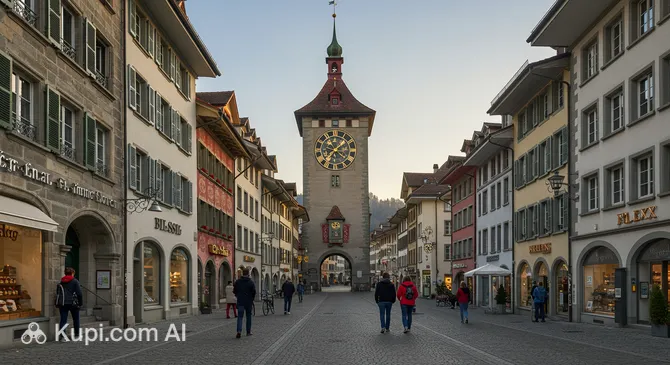
Zug is a true gem, nestled comfortably on the shores of the lake of the same name just 23 kilometers south of Zurich. The city seems perfectly designed for slow-paced relaxation, alpine scenery contemplation, and fresh-air strolls. When planning a trip to Switzerland, be sure to include this picturesque corner in your itinerary.

Zug. Illustration.
Source: Kupi.com AI

As the administrative center of the canton with a population of about 30,500, Zug wonderfully combines the features of a prosperous business hub and an ancient town. Narrow cobbled streets, medieval towers, and neat houses create a unique atmosphere of comfort. The ancient history of Zug is harmoniously intertwined with modernity: historical heritage is carefully preserved here alongside convenient urban infrastructure.

Tourists are drawn here not only by architectural beauty but also by magnificent nature. The lakeside promenade is the perfect spot to admire the reflection of snow-capped peaks in the water and take in panoramic views. The city is known for its high standard of living, cleanliness, and the hospitality of the locals. Here, you can take a break from the hustle and bustle of megacities, enjoying local cuisine in cozy cafes or engaging in active mountain tourism.

It is worth visiting Zug at least once to feel a special rhythm of life where time seems to slow down. This is a place people come to for inspiration, tranquility, and authentic Swiss character.

Weather Overview

The climate in this Swiss city can be described as temperate and quite mild, making it pleasant to visit at any time of year. To plan your travel wardrobe correctly, it is worth checking in advance what the weather in Zug will be like for the dates of your visit, as precipitation is quite common here.

The warmest period is summer: in July and August, the average temperature is about 19.0°C, and during the daytime, the air warms up to a comfortable 23.6°C. However, even at the height of the season, rain is possible, as the number of days with precipitation in summer varies from 15 to 18 per month. Winters here are cool but not harsh: in January, the thermometer shows an average of 1.4°C, and night temperatures rarely drop below -1.4°C.

Expect a warm summer with frequent rain and a cool winter with high humidity. Since the number of rainy days per year remains consistently high (from 13 to 19 days per month), having an umbrella or a waterproof jacket will be relevant in any season.

Average monthly temperature

Average monthly precipitation

Interesting Facts

Beyond its picturesque views and business reputation, Zug holds many fascinating stories and unique traditions that not every traveler knows about.

Zug Old Town. Illustration.
Source: Kupi.com AI

Traveler photos:

  • The Zytturm clock tower, with its clock installed in the 16th century, is considered the city's symbol. It is decorated with tiles in the colors of the canton and rises majestically over the Old Town Zug district, serving as a reminder of the times when the region became the seventh canton of the Swiss Confederation.

  • Zug is home to the Lohri House — the oldest goldsmiths' house in the world. This place has become a true legend among collectors: jewelry for European nobility was created here, and today you can see unique jewelry exhibits.

  • The city is famous for its "cherry" traditions. Local cherries are recognized as some of the best in the country, and a festival is held annually in their honor. This fruit is the base for the famous Zug cherry cake and kirsch.

  • Zug is often called the "business oasis" of Europe. Thanks to favorable tax policies, the canton has become one of the wealthiest in Switzerland, attracting entrepreneurs from all over the world and providing residents with one of the highest levels of well-being on the continent.

How to Get There

Thanks to its central location in Europe and the country's excellent transport system, reaching this picturesque corner is easy. You can learn more about how to get to Zug or check out the main transport hubs located nearby in our brief overview.

Zug itself does not have its own airport, so travelers usually fly into the nearest large aviation hubs. The most convenient option is Zurich Airport (ZRH). It is the largest international airport in the country, located just 32 km from your destination. The journey from there by taxi or transfer will take approximately 40–50 minutes, and there is also an excellent rail connection.

An alternative option could be EuroAirport Basel-Mulhouse-Freiburg (EAP), located in the city of Basel, about 88 km from Zug. It is an important transport hub with high passenger traffic. You could also consider flying into the German Friedrichshafen Airport if your route goes through Germany.

For convenience, here is summary information on the main airports located nearby:

AirportPassenger trafficDistance
Zurich Airport31.2 mln32 km
Bern Airport57 00082 km
Altenrhein Airport84 10087 km
EuroAirport Basel–Mulhouse–Freiburg8.1 mln88 km
EuroAirport Basel Mulhouse Freiburg8 mln88 km

Rail service in Switzerland is considered one of the best in the world. If you plan to travel by train, you should aim for major interchange hubs. Zug has its own station, but the main lines pass through nearby large cities. The closest major hub is Zurich Hauptbahnhof, located just 23.6 km away. From there, you can reach your destination very quickly: travel time by car is about 30–40 minutes, and even faster by local train.

Another important transport hub is Basel SBB station, located about 82 km away. This is a key point for trains arriving from France and Germany. From this station, it is convenient to transfer to domestic trains heading toward central Switzerland.

Below is information about the nearest major railway stations:

StationPassenger trafficDistance
Zürich Hauptbahnhof154.6 mln24 km
Basel SBB station40 mln82 km
Basel Badischer Bahnhof7.3 mln82 km
Oerlikon Railway Station34.4 mln82 km
Bern Railway Station69 mln85 km

Main Attractions

Zug is a compact city, but the concentration of interesting spots here is impressive. Its main landmarks harmoniously combine medieval heritage and modern dynamics, offering tourists a variety of experiences: from leisurely strolls along cobblestone streets to vibrant sporting excitement and shopping.

The heart of the city is undoubtedly the Old Town Zug. This is a true labyrinth of narrow alleys and historical buildings that transports travelers back several centuries. Here, you can see the famous Zytturm tower with its astronomical clock, admire the painted facades of the houses, and reach the picturesque promenade. For tourists, this place is interesting for its authentic atmosphere and the chance to take the best panoramic photos with views of the lake and mountains.

Zug Old Town. Illustration.
Source: Kupi.com AI

Traveler photos:

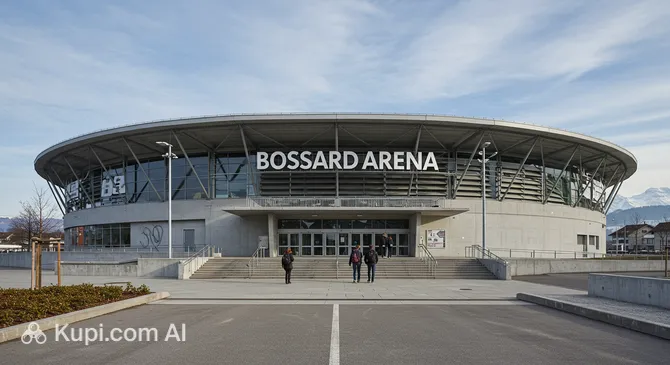
Sports fans and those who enjoy lively events should visit the Bossard Arena. This is a modern ice palace and the home arena for the well-known ice hockey club EV Zug. The arena is famous for its incredible energy during matches and excellent acoustics. Even if you are not a hockey fan, visiting this complex is interesting for its modern architecture and the chance to feel the true Swiss sporting spirit.

Bossard Arena. Illustration.
Source: Kupi.com AI

Traveler photos:

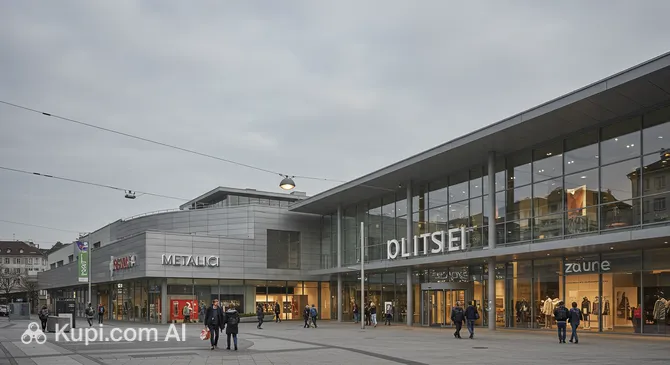
Those who want to get to know the modern side of the canton's life should stop by the Metalli Shopping Center. It is not just a place for shopping but a unique architectural space integrated into the urban environment between the train station and the business district. Glass roofs and open alleys create a sense of spaciousness. Here, tourists can find both international brands and local Swiss goods, as well as relax in numerous cafes after a city walk.

Metalli Shopping Center. Illustration.
Source: Kupi.com AI

Traveler photos:

In addition to these locations, a walk along the promenade of Lake Zug remains a mandatory part of any program. Especially at sunset, it offers breathtaking views of the Rigi and Pilatus peaks, making the city a perfect place for romantic evenings and peaceful relaxation.

Local Cuisine

Zug's local cuisine is a harmonious combination of lake treasures and exquisite confectionery traditions. The main gastronomic pride of the region is undoubtedly the famous Zug cherry cake (Zuger Kirschtorte). Invented by confectioner Heinrich Höhn in 1915, this dessert has become a true calling card of the canton. Its secret lies in the combination of airy sponge cake, delicate cream, and a generous soaking of aromatic cherry liqueur. You can try this masterpiece in almost any coffee shop in the city, and it is a must-do for every tourist.

Since the city is located on the shores of a lake, fish dishes hold a place of honor on the menus of local establishments. The water here is crystal clear, which guarantees high-quality catches. Gourmets should look out for fried perch-pike or traditional hearty fish soups. These dishes are best tasted in cozy restaurants on the promenade while enjoying the view of the water.

Speaking of drinks, one must mention "kirsch" — a strong cherry liqueur or brandy produced from local cherry varieties. It is consumed as a digestif or used in cooking, including for the preparation of that very cake. Non-alcoholic drink lovers will be offered excellent coffee, which is traditionally drunk slowly here, accompanied by sweet pastries, or fresh seasonal juices.

Dining culture in Zug is diverse: from street farmers' markets, where you can buy the freshest cheeses, meat delicacies, and homemade pies, to stylish modern establishments. Markets have a special atmosphere: here you can not only have a snack but also chat with local residents. And if you want something exotic or an evening cocktail, you should check out the city's popular spots.

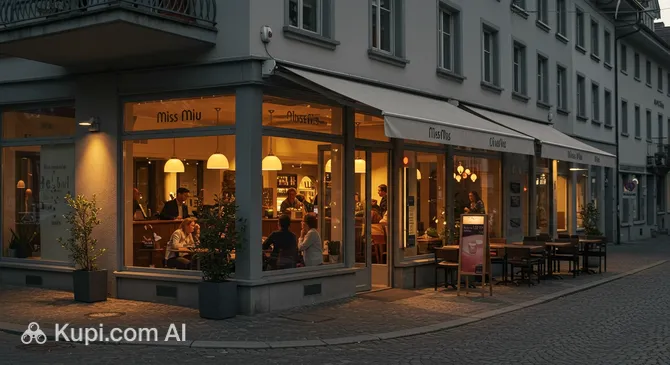
Miss Miu. Illustration.
Source: Kupi.com AI

Traveler photos:

For example, for lovers of Asian cuisine and unusual interiors, the Miss Miu restaurant is a great fit, serving bright and modern dishes. And for those looking for a combination of delicious food and a relaxed atmosphere by the water, Gotthärdli am See Thai Restaurant and Cocktail Bar would be an excellent choice. The city's gastronomic scene knows how to surprise, offering choices for every taste and budget.

Travel Tips

Welcome to Zug! This city is characterized by an incredibly high quality of life, tranquility, and picturesque views. To make your stay here as comfortable as possible and to help you feel confident, we have prepared a list of useful practical recommendations for planning your trip.

  1. Clothing and seasonality. The weather in the region can be changeable, so the principle of layering clothes is your best friend. Even in summer, it won't hurt to bring a light waterproof windbreaker and an umbrella, as rain is not uncommon here. For walks on the cobblestones of the historical center and the promenade, choose comfortable flat shoes. If you plan to climb Mount Zugerberg, be sure to take sports shoes with good grip.
  2. Transport. Zug is a compact city, and its historical center is best explored on foot. For trips to the surrounding areas, the public transport system (ZVB) and the city train (Stadtbahn) are ideal — they run with exceptional precision. Taxis in Switzerland are expensive, so to save budget and time, we recommend installing the SBB Mobile app for buying train and bus tickets. Renting a car within the city is not a necessity.
  3. Finances and budget. The local currency is the Swiss franc (CHF). Bank cards are accepted almost everywhere: from restaurants to ticket machines; however, it's worth having a small amount of cash for small purchases at markets. Keep in mind that prices here are higher than the European average: plan your food budget based on at least 25–30 francs per person for lunch. Tips are generally already included in the bill, but rounding up the amount is considered good form.
  4. Health and safety. Zug is one of the safest cities in the world; you can safely walk here at any time of day. Tap water here is of excellent quality — you can drink it directly from the tap or from street fountains unless there is a warning sign "Kein Trinkwasser." Pharmacies are easily recognized by a green cross, but there are few 24-hour ones, so it is better to bring a basic set of medicines with you.
  5. Communication. The official language of the canton is German (Swiss dialect). However, since Zug is a major international business center, the level of English proficiency here is very high. Locals will be pleasantly surprised if you learn a few polite words in the local dialect, for example, "Grüezi" (hello) when entering a shop. Free Wi-Fi is often available in cafes, at the station, and in the promenade area.
  6. Local etiquette. The Swiss highly value politeness, personal space, and silence. When entering small shops or an elevator, it is customary to greet those present. Stand on the right on escalators so that those passing can go around you on the left. Punctuality here is not just a rule, but a way of life, so try to arrive on time for excursions or meetings.
  7. What to avoid. Try not to make noise in public places, especially after 10:00 PM and on Sundays — this is a legally protected time of silence. Also, it is strictly not recommended to cross the road on a red light or in an improper place: this not only causes disapproval from locals but can also result in a substantial fine.
  8. City secret. Zug is famous for its sunsets, which are considered some of the most beautiful in the country. Be sure to plan an evening walk along the promenade to see the sun set over the lake — it is a completely free but unforgettable sight. And in summer, take the opportunity to swim in the lake in one of the specially equipped areas (Badi); the water here is crystal clear.

Zug is a place where Swiss precision harmoniously combines with natural beauty and comfort. By following these simple tips, you will be able to avoid minor troubles and fully immerse yourself in the atmosphere of this charming city, taking home only warm memories.

Entertainment & Nightlife

Nightlife in Zug is not about noisy raves until dawn, but rather elegant relaxation steeped in an atmosphere of respectability and comfort. Being a major business center, the city lives in an "after-work" rhythm: in the evening, locals and expats fill stylish bars and lounges to unwind after a workday with a glass of wine or a signature cocktail. The atmosphere here is calm yet lively, perfect for pleasant socializing.

The epicenter of evening activity is the lakeside promenade (Seepromenade) and Landsgemeindeplatz square. During the warmer months, life bustles right under the open sky: people enjoy sunsets over the lake while sitting on the terraces of numerous venues. It is also worth exploring the alleys of the old town, where cozy pubs are hidden, and the modern district around the train station, where more trendy and dynamic spots are concentrated.

If you are looking for the perfect place to start your evening, consider Gotthärdli am See Thai Restaurant and Cocktail Bar. This establishment successfully combines exotic cuisine with an excellent drink menu. Located right by the water, it offers stunning views and a relaxed atmosphere that becomes more lively closer to nightfall thanks to the music and great cocktails.

For those who prefer more energetic leisure, the highlight of the evening is often sports. In Zug, hockey is almost a religion, and home matches at the Bossard Arena stadium turn into a real show. An evening spent in the stands surrounded by passionate fans will give you an adrenaline rush that no club can match. After the match, fans often move to nearby sports bars.

Practical tips for tourists:

  • Dress code: Most venues adopt a smart casual style. The crowd here dresses stylishly but understatedly. Sneakers might be out of place in elite bars.
  • Prices: Be prepared for Swiss prices. A cocktail costs on average between 18 and 25 francs, and a glass of wine starts from 9 francs.
  • Safety and transport: Zug is exceptionally safe at night. You can walk along the promenade or return to your hotel on foot without fear. If you need a taxi, it is better to call one via an app (like Uber) or by phone, as "hailing" a car on the street is not common here.
  • Opening hours: Bars are usually open until midnight or 1:00 AM on weekdays and until 2:00 AM–3:00 AM on weekends. If you want to keep the party going until morning, it makes sense to take a night train to Zurich (only 25–30 minutes away), where the club scene is much larger.

Beyond nightly entertainment, Zug offers a rich cultural program during the day as well. Art lovers will appreciate the Art Museum (Kunsthaus Zug), which houses interesting modernist collections. Theater-goers should check the schedule at Theater Casino Zug — the city's main stage for plays and classical music concerts. And in good weather, the best entertainment is a walk on the Zugerberg mountain, which offers a panoramic view of the city and lake.

Parks & Museums

Zug will surprise you with its harmonious proximity of urban landscapes and untouched nature. Despite its status as a business center, the city pays great attention to preserving green zones, and its cultural calendar can satisfy even the most demanding connoisseurs of art and history.

For those seeking solitude with nature, the main point of attraction is the Lake Zug promenade. This is not just a walking area but a real landscape park by the water, where you can admire the famous Zug sunsets and views of the Rigi and Pilatus mountain peaks. Another important natural location is Mount Zugerberg — Zug's "local mountain." You can quickly ascend here by funicular to walk along forest trails, have a picnic on alpine meadows, and enjoy a bird's-eye view of the city panorama.

The city's cultural life is concentrated in its unique museums. A visit to the Museum Burg Zug, located in a historical fortress, is a must. The exhibition is interactive and fascinatingly tells the history of the region from the Middle Ages to the present day, allowing you to literally touch the past. Art lovers should stop by the Kunsthaus Zug. This gallery is known for one of Europe's most significant collections of Viennese Modernism, as well as bold contemporary art exhibitions that often extend beyond the building into the sculpture garden.

The Old Town Zug itself can safely be called an open-air museum. Strolling here, you will see perfectly preserved buildings in the Late Gothic style, including the famous Town Hall and the Zytturm tower. This place breathes history, and every facade here tells its own unique legend.

If you want to see something unusual, head to the Choller nature reserve on the western edge of the city. This is a marshy area with reed beds and wooden walkways — an ideal place for bird watching and meditative relaxation away from the city hustle.

Getting Around

Public transport in Zug is organized with the precision and comfort typical of this region. The city and its surroundings are served by the ZVB (Zugerland Verkehrsbetriebe) company. The transport network is based on modern buses, easily recognizable by their characteristic blue color. They run strictly on schedule, connecting the city center, the station, remote districts, and neighboring communes.

In addition to buses, the Stadtbahn Zug urban rail plays an important role. This is a fast and convenient way to travel, operating on the principle of an above-ground metro. The trains connect Zug with settlements such as Baar, Cham, and Rotkreuz, allowing you to reach them in a matter of minutes. A special "transport attraction" is the funicular to Mount Zugerberg. It is included in the general public transport system, so you can reach the popular recreation area with a regular travel pass.

The fare system here is zonal. The entire canton and adjacent territories are divided into tariff zones. For travel within the city (zone 10), it is enough to buy a short trip ticket or a one-hour ticket. The most convenient payment method for a tourist is the SBB Mobile or Fairtiq mobile apps. They automatically calculate the travel cost and eliminate the need to figure out the zones. Tickets can also be purchased from machines at stops (accepting cards and cash). Important: tickets must be bought before boarding; they are not sold inside buses and trains.

If you plan to move around a lot, it is profitable to buy a day pass (Tageskarte), which pays for itself after just two or three trips. For holders of the national Swiss Travel Pass, travel on Zug's buses, trains, and the funicular is free.

Zug is a very compact city, and many tourists prefer alternative ways to get around. During the summer season, the Zugrollt program operates, offering free or very cheap bicycle rentals (including e-bikes) with a document deposit. Rental points are usually located near the railway station. This is a great way to explore the promenade and the old town.

In the warmer months, regular boats run across the lake. While this is more of a leisure activity than full-fledged transport, you can use them to reach other towns on the coast, combining the trip with a scenic cruise. As for taxis, they are the most expensive way to travel. Cars are rarely hailed on the street; they are usually ordered by phone or through apps (such as Uber), but prices here are significantly higher than the European average, so taxis should only be used in exceptional cases.

For those who enjoy late walks, Nightliner night buses run on weekends (the nights from Friday to Saturday and Saturday to Sunday). Please note that a special surcharge on top of the regular ticket may be required to ride them, which can also be arranged via the app.

Accommodation

Zug offers travelers a selection of accommodation that fully reflects the city's status as a prosperous business and tourist center. There are not as many options here as in large megacities, but almost all offers are characterized by impeccable Swiss service, cleanliness, and comfort. The main stock consists of middle- and high-class hotels catering to both business travelers and tourists looking for a quiet holiday.

When choosing an area, you should be guided by the purpose of your trip. If logistics and quick access to transport are important to you, it is best to stay in the modern part of the city, near the train station and the Metalli Shopping Center complex. This is a lively area with excellent infrastructure, from where it is convenient to set out on trips around the region. For those looking for romance and peace, hotels near the promenade or in the Old Town Zug area are worth considering. Staying here will allow you to enjoy lake views and a historical atmosphere right from your doorstep.

Zug Old Town. Illustration.
Source: Kupi.com AI

Traveler photos:

Accommodation types and prices:

  • Business and luxury hotels: Since Zug is an important economic hub, high-level hotels (4 stars and above) predominate here. Prices in this segment usually start from 250–300 Swiss francs per night.
  • Apartments: A very popular format in the city due to the large number of visiting professionals. Renting stylish apartments can be a great alternative to a hotel, especially for long stays or family trips.
  • Budget options: Finding truly cheap accommodation in Zug itself is not easy. There are few hostels and inexpensive guesthouses, and even a modest room can cost around 120–150 francs. Budget-conscious tourists may find it more profitable to stay in neighboring small towns (for example, in Baar or Cham), from where the center can be reached in 5–10 minutes by train.

Booking advice: Zug lives by a business calendar. On weekdays, hotels are often filled with business travelers, and prices may be higher than on weekends. We strongly recommend booking accommodation in advance (at least 2–3 weeks, and in summer — a month), as demand here is consistently high. To find the best deals, it is convenient to use popular international online platforms or check hotel websites directly.

Nearby Cities

For those who want to explore the surroundings, Zug serves as an excellent starting point for day trips to several interesting nearby locations:

Literally next door is Baar. This city is primarily known for its famous Höllgrotten caves. This is a fantastic underground world with stalactites and small lakes, skillfully illuminated with multi-colored lights, creating a true fairytale atmosphere.

On the shores of Lake Zurich lies picturesque Horgen. This place attracts visitors with its historical center and peaceful atmosphere by the water. Here you can visit a unique museum in the former Käpfnach coal mine, the largest in Switzerland, or simply enjoy a boat trip.

Another interesting point for a visit is Wädenswil. The city is famous for its educational institutions and beautiful location. From here, it is easy to reach the Au peninsula, where breathtaking panoramic views of the lake and the Alps open up among vineyards and a castle park.

CityPopulationDistance
Baar24 4643 km
Steinhausen10 0254 km
Unterageri8 8676 km
Risch10 8577 km
Hunenberg8 8077 km

These nearby destinations allow you to get a sense of the region's diverse culture and landscapes, perfectly complementing your impressions of visiting Zug.

Shopping & Souvenirs

Shopping in Zug is a pleasant and relaxed activity, devoid of the hustle and bustle of huge megacities. Here you won't find endless rows of hypermarkets, but you can enjoy quality and exclusivity. The city offers a great balance between international brand boutiques, elegant watch salons, and traditional shops selling unique local goods. The compactness of the center allows you to visit all the main shopping points on foot, combining shopping with sightseeing.

The main shopping routes run through the area around the railway station and lead to the lake. Bahnhofstrasse and Bundesplatz are the city's modern arteries, home to clothing, shoe, and accessory stores. If you are looking for something more authentic, head to Old Town Zug. In its winding alleys are hidden small boutiques with designer items, jewelry workshops, and souvenir shops steeped in historical atmosphere.

The center of attraction for shopping enthusiasts is the Metalli Shopping Center. It is a stylish open-air space with glass canopies located right by the station. More than 50 stores are gathered here under one roof: from popular mass-market brands and supermarkets to specialized boutiques and pharmacies. "Metalli" is not just a mall, but a real city district where it is pleasant to walk and have a coffee during a shopping break.

Local markets deserve special attention, as they liven up the city on weekends. The most famous is the Saturday market on Landsgemeindeplatz, right by the lake. Farmers from all over the canton gather here, offering the freshest cheeses, vegetables, flowers, and homemade pastries. It is the perfect place to feel the true taste of the region and buy gastronomic souvenirs directly from the producers.

Speaking of souvenirs, you cannot leave Zug without the famous Zug cherry cake (Zuger Kirschtorte). It is best to buy it in branded pastry shops, such as Treichler, where this dessert was invented. Also, a bottle of local "kirsch" (cherry brandy) or a set of handmade Swiss chocolates would make a great gift. For those who value long-lasting gifts, Swiss knives or watches are suitable, with a traditionally large selection in local salons.

Shops in Zug operate on a classic Swiss schedule. On weekdays, doors are usually open from 09:00 to 18:30 or 19:00 (often until 20:00–21:00 on Thursdays). On Saturdays, the workday is shortened to 16:00 or 17:00. Sunday is a day off for most stores, except for outlets at the station. Swiss francs and bank cards are widely accepted, and in many large places, you can also pay in euros (change will be given in francs).

Tourists residing permanently outside of Switzerland can use the Tax Free system. If your purchase amount in one store exceeds 300 Swiss francs, you are entitled to a VAT refund. Don't forget to ask the seller for a special form (Tax Free Form) and present it along with your passport and purchases at customs when leaving the country.
Reached the end of the page?

That means the route is fully explored