Support

Thun Castle

About

Rising above the tiled roofs of the ancient city of Thun is a true symbol of medieval power — Thun Castle. This majestic structure, built at the end of the 12th century, is considered one of the most recognizable architectural monuments in Switzerland. Its dazzling white walls and four corner towers with pointed roofs create a truly fairytale silhouette against the backdrop of the rugged Alps.
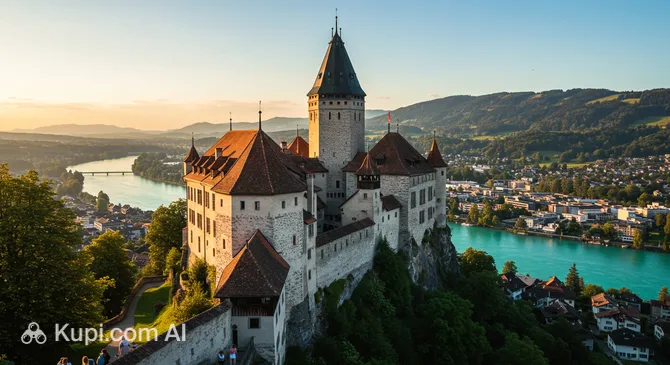
Thun Castle
Thun Castle. Иллюстрация. Источник: Kupi.com AI

Today, it is not just an ancient fortress, but a living history museum spanning five floors. Visitors come here to touch the legacy of the Dukes of Zähringen and see the unique Knights' Hall, preserved in its original form. Its status as a cultural heritage site of national importance underscores the significance of this place to the history of the entire country.

The main bonus for travelers is the panoramic views. From the height of the fortress walls, a breathtaking view opens up over the emerald Lake Thun, where the Aare River originates, and the snow-capped mountain peaks. It is an ideal place for those who want to combine historical exploration with the contemplation of natural beauty.

Contacts

For more details before your visit or to book group tours, you can contact the Thun Castle administration directly. The official website provides up-to-date information on special exhibitions and events.

How to contactContact
AddressSchlossberg 1, 3600 Thun, Switzerland
Phone+41 33 223 20 01
Websitewww.schlossthun.ch

What to Do

Inside Thun Castle, a fascinating journey through time awaits you. Five floors of the historical museum offer a glimpse into the life and culture of the region, from archaeological finds to exquisite interior items from past centuries. Be sure to visit the Knights' Hall — its scale and 14-meter-high ceilings leave a lasting impression, allowing you to imagine the lavish feasts and important councils held here.

For those who appreciate details, there is a pottery workshop and halls with temporary exhibitions where contemporary art often intertwines with historical context. By exploring the "New Castle" — the Late Gothic administrative wing — you can experience the atmosphere in which the city's rulers lived and worked centuries ago.

Photography enthusiasts and lovers of beautiful views should climb one of the four round towers. From there, through the ancient embrasures, you get the best view of the Alps and the sea of tiled roofs in the old town. A stroll through the inner courtyard, protected by a massive medieval roof, will allow you to appreciate the power of the bergfried (keep) — the oldest and strongest element of the castle complex.

Getting There

Reaching this historical gem is easy. Thun Castle is located at Schlossberg 1, right in the heart of the city atop a picturesque hill. If you are already in the old town, a pleasant walk uphill will take no more than 10–15 minutes.

For those traveling by train, the most convenient option is to arrive at the main Thun station. From the station, you can walk to the foot of the castle hill in about 10 minutes. The train journey from Bern takes only 20–30 minutes, making Thun an excellent day-trip destination.

If you prefer to drive, follow the A6 or A8 motorways. You can leave your car in one of the city parking lots at the base of the hill, as vehicle access directly to the castle gates is restricted. Local buses also run from the city center and the station, which can help shorten the walk.

Ближайший город: Thun

History & Facts

The history of this majestic structure began at the end of the 12th century. Thun Castle was built between 1180 and 1190 by order of Duke Berthold V of Zähringen. The city's founders used it as a symbol of their power, although they preferred to live in Burgdorf. The massive walls and the magnificent Knights' Hall, which served as a venue for ceremonial receptions in those days, have been preserved to this day.

In 1218, the castle passed into the possession of the powerful von Kyburg family. The new owners not only expanded the living quarters but also strengthened the outer defensive lines. This period is associated with a dark family drama: in 1322, a conflict broke out within the fortress walls between brothers Eberhard II and Hartmann II, which ended tragically for the latter.

A new chapter in the castle's history opened in 1384 when it was purchased by the Canton of Bern. In the mid-15th century, its architectural appearance was enhanced with a massive roof over the inner courtyard and a "new castle" in the elegant Late Gothic style. For a long time, the regional administration was housed here, and in the 19th century, part of the premises was even used as a prison.

The fortress's history as a museum began in 1888. With the growth of tourism in Switzerland, the castle opened its doors to the general public, transforming from a stern defensive bastion into one of the region's most visited cultural centers. Today, it is recognized as a site of national importance and carefully preserves the secrets of centuries of history.

Time Needed

To leisurely explore all levels of the castle and enjoy the views, it is recommended to allocate between 1.5 to 2.5 hours. This is usually enough time to get acquainted with the museum collections and study the architectural features of the towers.

If you plan to study each historical exhibit on the five floors in detail or decide to linger at the observation decks for a photo session, it is better to plan for half a day. A walk through the surrounding areas of the old town may also take an additional hour.

Working Hours

Thun Castle is open to the public daily, making it very convenient for planning a trip on any day of the week. The museum and observation decks operate without a lunch break, allowing guests to enjoy the historical atmosphere at their convenience.

The opening hours are as follows:

  • Monday — Sunday: 10:00 AM – 5:00 PM

10:00 – 17:00

Nearby

After immersing yourself in the medieval atmosphere of the castle, it is worth spending some time exploring its surroundings. The city of Thun and the shores of its lake offer many interesting locations that perfectly complement your cultural itinerary.

A walk through the old town will allow you to see preserved fragments of the fortress walls and ancient gates, while nearby parks and panoramic viewpoints offer unforgettable views of the Alpine peaks.

NameDistance
Atelier Classic Bar0.1 km
Parada 300.1 km
Mühleplatz0.2 km
Mani's0.6 km
Schadau Castle & Schadau Park1.6 km
Thun Panorama1.6 km
Chartreuse Hotel & Restaurant1.9 km

Reached the end of the page?

That means the route is fully explored