Support

Chateau-dOex

About

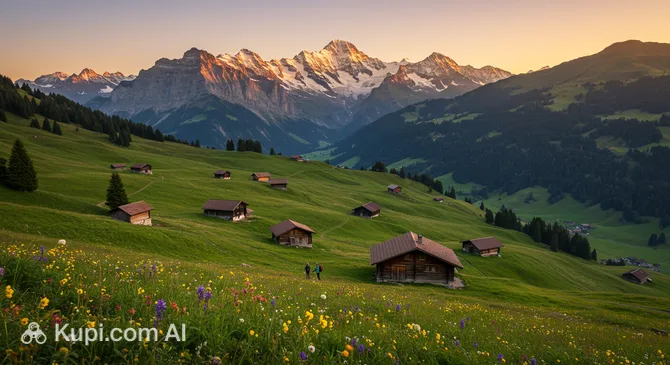
Château-d'Oex is a charming Alpine resort nestled in the picturesque Pays-d'Enhaut valley. This cozy corner of the Canton of Vaud perfectly illustrates the traditional way of life and natural beauty that Switzerland is so famous for. Surrounded by majestic mountain peaks, the town attracts travelers with its tranquility, mild climate, and stunning panoramic views opening up from almost any point.

Château-d'Oex. Illustration.
Source: Kupi.com AI

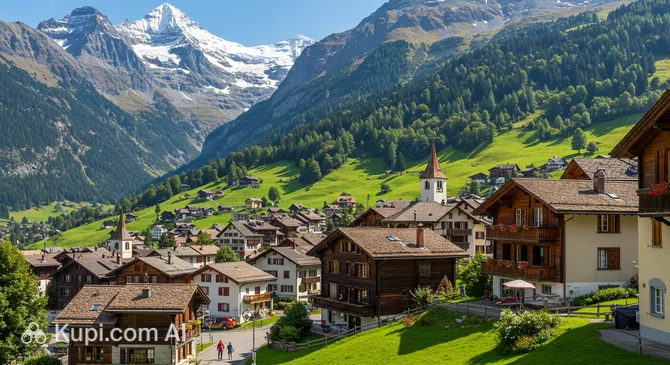
Despite its modest population of around 3,000 people, the cultural life and history of Château-d'Oex are remarkably rich. Traditions of folk architecture are carefully preserved here: walking through the streets, you can admire magnificent wooden chalets, many of which are decorated with intricate carvings and flowers, creating a unique atmosphere of comfort and antiquity.

The town gained world fame thanks to its unique microclimate, which is ideal for hot air ballooning. Château-d'Oex is deservedly considered the hot air balloon capital of the Alps. Every year, it hosts a famous International Festival, when the sky above the snow-covered valley is colored with hundreds of bright balloons. Additionally, the region is famous for its gastronomic traditions, particularly the production of the renowned Alpine cheese L'Etivaz, which is prepared over an open fire in mountain huts.

Visiting Château-d'Oex is an excellent choice for those seeking harmony with nature. Whether it's winter sports, summer hiking, or simply the desire to enjoy the silence of the Swiss countryside, this welcoming town will give you an unforgettable experience.

Weather Overview

The climate of this Alpine corner is mild, but the weather can be changeable, so it's worth checking the forecast before your trip. The current weather in Château-d'Oex will help you plan your wardrobe correctly, whether for winter skiing or summer mountain walks.

Winters here are bracing but not extremely frosty. In January, the average temperature is around -2.3°C, and at night the thermometer can drop to -6°C. With the arrival of spring, the air gradually warms up, but be prepared for frequent precipitation: for example, in May, it can rain for up to 21 days a month, making it one of the wettest periods of the year.

The summer season brings comfortable warmth without sweltering heat. In July and August, the air warms up to an average of +20°C during the day, which is ideal for active outdoor recreation. Expect a moderately warm summer with occasional rain and cool, snowy winters characteristic of this region of Switzerland.

Average monthly temperature

Average monthly precipitation

Interesting Facts

Besides the main attractions, Château-d'Oex holds many fascinating secrets and unique stories that make this Alpine corner truly special.
  • The town entered the history of world aviation as the starting point for the first successful non-stop round-the-world flight in a hot air balloon. It was from here in 1999 that the Breitling Orbiter 3 balloon, piloted by Bertrand Piccard and Brian Jones, took off, forever cementing the resort's status as the world capital of aeronautics.

  • Local residents carefully preserve the tradition of the intricate art of paper cutting, known as "découpage" (Pays-d'Enhaut paper cutting). Craftsmen create incredibly detailed, lace-like pictures from single sheets of paper, depicting scenes of Alpine life and the movement of livestock to pastures.

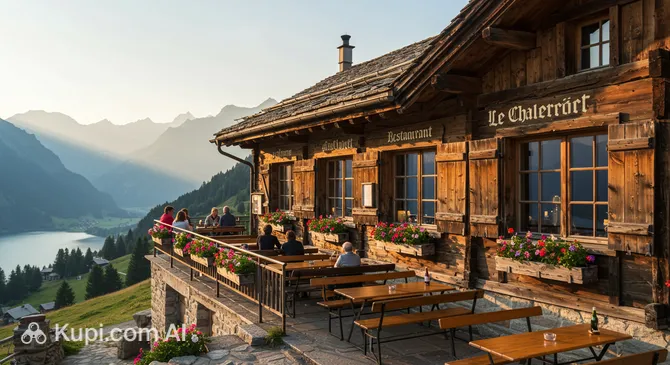
  • Here you can see the birth of cheese with your own eyes. The famous Le Chalet (restaurant and cheese dairy) offers guests a unique experience: a master cheesemaker prepares traditional hard cheese in a huge copper cauldron over an open fire right in the dining hall while visitors enjoy their fondue.

  • Château-d'Oex became a favorite refuge for the famous British actor David Niven, star of the "Pink Panther" films. He was so enchanted by the beauty and tranquility of the valley that he lived here for many years, and local residents still fondly remember their star neighbor.

  • The territory around the town is part of the Gruyère Pays-d'Enhaut Regional Nature Park. This is not just a beautiful area, but a living example of harmony between man and nature, where centuries-old farming traditions support the biodiversity of Alpine meadows.

Le Chalet (Restaurant and Cheese Dairy). Illustration.
Source: Kupi.com AI

Traveler photos:

How to Get There

When planning a trip to this picturesque Alpine corner, it's important to think through the logistics in advance, as the town is located in a mountainous area. You can explore all the ways to get to the city on our detailed page, and below we will look at the main transport hubs through which tourists usually enter the region.

Château-d'Oex itself does not have its own airport, so travelers usually fly into major cities in Switzerland or neighboring France and then continue their journey by land. One of the most popular options is Geneva Airport (GVA). It is located in the city of Geneva, approximately 82.5 km from the resort. This is a major international hub receiving flights from all over the world. The journey from there by taxi or transfer will take approximately 2 hours and 25 minutes, and convenient rail connections are also available.

An alternative option could be EuroAirport Basel-Mulhouse-Freiburg (EAP), located near Basel, at a distance of about 128 km. This is also a major transport hub, from where the car journey will take about 3 hours and 30 minutes. If you are looking for the closest possible arrival point (mainly for private aviation or seasonal charters), pay attention to Sion (SIR) airport. It is located in the city of Sion, just 32 km from Château-d'Oex, and the trip from there will take a little over an hour.

For clarity, here is a summary of the main airports:

AirportPassenger trafficDistance
Sion35 92932 km
Bern Airport57 00057 km
Geneva Airport17.8 mln82 km
EuroAirport Basel Mulhouse Freiburg8 mln128 km
EuroAirport Basel-Mulhouse-Freiburg8.1 mln128 km

The railway is one of the most scenic ways to reach the resort, as the route passes through beautiful mountain passes (the famous GoldenPass line). However, major long-distance expresses arrive at the stations of neighboring large cities, where you need to transfer to a regional train. An important transfer hub is Geneva Cornavin in Geneva, located 81 km from Château-d'Oex. Many trains depart from here towards Montreux, where you can transfer to a panoramic express to the resort.

Another key station for those arriving from the north or east of the country is Bern station in the Swiss capital, Bern (about 58 km from Château-d'Oex). This is one of the busiest transport hubs in the country with excellent infrastructure. The car journey from Bern will take about 1 hour and 50 minutes, but many tourists prefer the comfortable Swiss trains.

Below is a table of the nearest major railway stations for route planning:

StationPassenger trafficDistance
Sion Railway Station4.5 mln33 km
Oerlikon Railway Station34.4 mln57 km
Bern Railway Station69 mln58 km
Geneva Railway Station42.1 mln81 km
Basel SBB station40 mln125 km

Main Attractions

Château-d'Oex offers guests a unique combination of natural beauty and cultural traditions, which are carefully preserved by the locals. The attractions of this Alpine town allow you not only to enjoy the scenery but also to dive deep into the history of the region, from ancient crafts to the conquest of the sky.

One of the resort's landmarks is Espace Ballon — a museum dedicated to hot air ballooning. As the town is considered the ballooning capital of the Alps, this place is a must-visit. The exhibition tells the fascinating history of aeronautics, from the first flights to modern records. Special attention is paid to the famous round-the-world trip in the Breitling Orbiter 3 balloon, which started from here. Here you can see the balloon's capsule and learn about the technical challenges of this feat.

To get acquainted with gastronomic traditions, it's worth visiting Le Chalet (restaurant and cheese dairy). It's not just a place for a delicious lunch, but a real attraction. In the center of the cozy wooden hall, there is a large wood-burning hearth where a master cheesemaker turns fresh milk into the famous hard cheese "Le Chalet Bio" right in front of the visitors. The atmosphere here is filled with the aromas of Alpine herbs and wood smoke, and the building itself, constructed for the Swiss National Exhibition, is a beautiful example of traditional architecture.

Gruyère Pays-d'Enhaut Regional Nature Park. Illustration.
Source: Kupi.com AI

Traveler photos:

History and art lovers will be interested in the Museum of Old Pays-d'Enhaut (Musée du Vieux Pays-d'Enhaut). It is located in a historic building and houses a rich collection of household items, furniture, and tools that tell the story of life in the valley in past centuries. The crown jewel of the museum is the collection of decoupage — traditional pictures cut out of paper. These delicate masterpieces, created by local craftsmen, are striking in their thinness and detail.

Surrounding the town is the picturesque Gruyère Pays-d'Enhaut Regional Nature Park. This is a vast protected area stretching across the cantons of Vaud and Fribourg. The park is famous for its idyllic landscapes: green pastures, dense forests, and rocky peaks. It is an ideal place for hiking, where you can encounter rare plant species and observe wildlife in its natural habitat, enjoying the silence and the purest mountain air.

Local Cuisine

The gastronomic scene in Château-d'Oex is a hymn to Alpine traditions and natural farm products. The main treasure of the local cuisine is rightfully considered cheese, and the king of the table here is the famous L'Etivaz (L'Etivaz AOP). This hard cheese is made exclusively by hand during the summer period in high-altitude pastures, heating milk in copper cauldrons over an open fire of spruce wood. It is the smoke that gives it a unique, recognizable taste that cannot be confused with anything else.

Travelers should prepare for hearty and warming dishes, perfectly suited for the mountain climate. In any establishment, you will be offered a classic fondue (often the "moitié-moitié" version, which is half Gruyère and half Vacherin) or raclette. However, to get a real taste of the region, order Soupe de Chalet. This is a thick, rich soup made of vegetables, potatoes, pasta, and cream, generously sprinkled with grated cheese and garnished with wild herbs — a dish that has warmed shepherds for centuries.

For dessert, it is customary in the region to serve airy meringues, which are eaten here with thick Gruyère double cream (crème double). This is a very high-calorie but incredibly delicious treat. As for drinks, dry white wines from the Canton of Vaud, especially Chasselas varieties, pair perfectly with cheese dishes. For those who prefer non-alcoholic beverages, it's worth trying local herbal teas from Alpine blends or fresh milk, the taste of which is particularly rich here.

Dining culture in Château-d'Oex is devoid of pretense; it focuses on comfort and product quality. Locals and tourists prefer to dine in traditional wooden chalets or mountain hut-buvettes located on the slopes. A landmark place combining gastronomy and tradition is Le Chalet (restaurant and cheese dairy). Here you can not only have a delicious candlelit dinner but also observe the ancient process of cheese making right in the dining hall.

Travel Tips

Preparing for a trip to the Swiss Alps requires attention to detail so that household trifles don't distract you from enjoying nature and relaxation. We have compiled a list of proven recommendations to help you plan the perfect trip to Château-d'Oex and feel confident in any situation.

  1. Clothing and Adapters. Mountain weather is changeable: even in the height of summer, evenings can be cool, so be sure to bring a fleece jacket and a windbreaker. In winter, warm clothes and, most importantly, comfortable shoes with a non-slip treaded sole for walking on snow are necessary. An important detail: Type J sockets (with three pins) are used in Switzerland. Common European flat plugs fit them, but for "thick" plugs (from laptops or hair dryers), you will definitely need an adapter, which is better to buy in advance.

  2. Transport and Getting Around. Château-d'Oex itself is compact, and it's most pleasant to explore on foot. Renting a car only makes sense for trips to remote places where transport does not go. For traveling around the region, MOB (GoldenPass) panoramic trains and yellow PostBus buses are ideal. Be sure to install the SBB Mobile app: it shows the schedule of all types of transport to the second and allows you to buy tickets online, which is often cheaper.

  3. Finances and Currency. The country's currency is the Swiss Franc (CHF). Although bank cards are accepted almost everywhere, including supermarkets and lift ticket offices, cash is still necessary. It will come in handy in small mountain hut restaurants (buvettes) or souvenir shops. Euros may be accepted here, but the exchange rate will be extremely unfavorable, and change will be given in Francs. Tips in restaurants are already included in the bill, but it's good manners to round up the amount or leave a couple of Francs for excellent service.

  4. Health and Safety. Château-d'Oex is a very safe place; you can safely walk at any time of day or night. Pharmacies (Pharmacie in French) are usually open Monday to Saturday until 18:30, and closed on Sundays (look for an on-duty pharmacy by the notice on the door). Water can be drunk straight from the tap and from street fountains unless there is an "Eau non potable" sign. The emergency number for medical assistance is 144.

  5. Communication and Internet. The main language of communication is French, but many people in the tourism sector speak English. Remember that Switzerland is not part of the EU roaming zone, so using your home SIM card can be expensive. It's more profitable to buy a local prepaid card (e.g., Swisscom or Sunrise) at the airport or post office, or use an e-SIM. Free Wi-Fi is available in most hotels and cafes, as well as at the station.

  6. Local Etiquette. Politeness is the foundation of everything here. When entering any shop, cafe, or even an elevator, it's customary to say hello: say "Bonjour" (during the day) or "Bonsoir" (in the evening). This is not just a formality, but a sign of respect. In public places and transport, it's customary to be quiet; loud phone conversations may draw disapproving looks.

  7. What to Avoid. Don't make noise on Sunday or late in the evening (after 22:00) — the Swiss highly value the peace and quiet of their neighbors. Also, never cross railway tracks in unauthorized places and do not try to ride a train without a ticket — inspectors work on all lines, and fines are very high and collected on the spot.

  8. Useful Lifehack. If you stay in a hotel or apartment overnight, be sure to ask for the Pass d'Enhaut guest card. It is often issued for free or for a nominal fee and provides the right to free travel on the region's public transport, as well as discounts on museums, bowling, and lifts. This is a great way to save your budget.

Château-d'Oex is an incredibly welcoming town where every traveler quickly begins to feel at home. Follow these simple rules, respect local traditions, and your Alpine adventure will leave behind only the warmest and brightest memories!

Entertainment & Nightlife

Nightlife in Château-d'Oex flows at a calm and measured pace, characteristic of traditional Alpine resorts. You won't find noisy metropolitan clubs with neon signs or red-light districts here. Evening entertainment in this town is primarily about comfort, gastronomy, and warm communication in an "après-ski" atmosphere, which prevails here not only in winter but also in summer.

Main activity at twilight centers in the village heart, along the main street and around the railway station. This is where the key venues are located, where locals and tourists gather. The format for an evening in Château-d'Oex is a long dinner with fondue and wine, transitioning into quiet gatherings at a hotel bar or a local pub. The dress code here is as casual as possible: casual style or neat sportswear will be appropriate almost everywhere.

The absolute center of evening attraction is the famous Le Chalet (restaurant and cheese dairy). In the evenings, this place transforms from a simple restaurant into a real theater of taste. Tourists come here not only for a hearty dinner but also for the unique atmosphere of a wooden chalet, where the crackling of logs in the fireplace and the aromas of melted cheese create a feeling of home comfort. It is an ideal location to spend an evening with friends or family, enjoying the local flavor.

If you want to continue the evening after dinner, it's worth checking out the bars at the major hotels or finding the local bowling center, which often becomes a meeting place for young people. For those seeking communion with nature even at night, the Gruyère Pays-d'Enhaut Regional Nature Park offers a completely different kind of leisure. On a clear night, away from streetlights, you can observe a stunning starry sky that seems especially close and bright in the mountains. This is an excellent option for a romantic walk before bed.

Daytime entertainment in the city also deserves attention and harmoniously complements the holiday. The cultural program may include visiting museums dedicated to the life and traditions of the region or walking along scenic routes. In winter, this includes skiing and snowboarding, and in summer — hiking and hot air balloon flights, for which this valley is so famous.

Practical tips for tourists:

  • Opening hours: Remember that life in the Swiss countryside settles down early. Restaurant kitchens often close as early as 21:00–21:30, so plan your dinner in advance.
  • Safety: Château-d'Oex is an exceptionally safe place. You can walk the streets at any time of night without fear.
  • Transport: Public transport runs infrequently at night. Since the town is compact, it's best to move around on foot — most hotels can be reached within 10–15 minutes. Taxi services exist, but it's better to book a car in advance through the hotel reception or restaurant.
  • Prices: Be prepared for Swiss price levels. A cocktail at a bar or a glass of good wine will not be cheap, so many tourists prefer to budget for the evening in advance.

Parks & Museums

The cultural and natural landscape of Château-d'Oex goes far beyond typical Alpine postcards, offering tourists a deep immersion into the region's history and its unique ecosystem. The town and its surroundings harmoniously combine protected natural areas with museums that preserve the memory of the traditions and achievements of local residents.

The region's main natural asset is the Gruyère Pays-d'Enhaut Regional Nature Park. This vast territory is a true benchmark for how agriculture can coexist with wildlife. Famous flower meadows and pastures surrounded by forests, where legendary cheeses are produced, stretch across the area. For lovers of wilder nature, the La Pierreuse reserve — the largest protected nature zone in western Switzerland — is of great interest. This is a kingdom of rocks, karst funnels, and rich Alpine flora, where you can encounter ibex, chamois, and golden eagles in their natural habitat.

For quiet walks, the banks of the Sarine river are ideal. Picturesque paths are laid along its course, leading through forests and clearings, which are perfect for picnics and contemplative relaxation away from the hustle and bustle.

The town's museum map is small but extremely rich. A must-visit is the Museum of Old Pays-d'Enhaut (Musée du Vieux Pays-d'Enhaut). It is considered one of the best folklore museums in the country and is famous for its unique collection of decoupage — the traditional art of paper cutting. It also features recreated interiors of old chalets, collections of ceramics, wrought iron, and household items that tell the story of the highlanders' life since the 18th century.

Another important site is Espace Ballon, a museum dedicated to hot air ballooning. Since Château-d'Oex holds the title of the Alpine capital of balloons, the exhibition here is fascinating. Visitors can learn the history of aeronautics from the Montgolfier brothers to the present day and see the capsule of the famous Breitling Orbiter 3 balloon, which made the first non-stop round-the-world flight.

Among the architectural monuments, the town's Temple (Le Temple) stands out, perched on a hill in the center of the settlement. Built on the foundations of a medieval church, it attracts attention with its stained glass windows and organ, and the square in front of it offers perhaps the best panoramic view of the valley. Also noteworthy is the historic Pont Turrian — the oldest suspension bridge in French-speaking Switzerland, built back in 1883 and still serving as a crossing over the Sarine river.

For those seeking special experiences, we recommend a walk to the Ramaclé Waterfall (Cascade du Ramaclé). This is a hidden gem in the forest near the Pont Turrian, where water crashes into a natural pool — an ideal spot for meditation and beautiful photos that not all tourists know about.

Getting Around

The transport system of Château-d'Oex, as befits a small Alpine resort, is compact, efficient, and perfectly integrated into the surrounding landscape. You won't find subways, trams, or trolleybuses here — there is simply no need for them. The main means of transportation linking the town with the outside world and neighboring villages is the railway, and for trips to more remote mountain corners, the famous yellow postal buses are used.

The heart of the transport network is the railway station (Gare de Château-d'Oex), located in the center of the village. The famous panoramic MOB (Montreux Oberland Bernois) line passes through it. Trains run with enviable regularity, about once an hour, connecting the resort with Montreux, Gstaad, and other towns. This is not just transport, but a real attraction: carriages are often equipped with large panoramic windows, allowing you to admire the views during the trip.

For routes where rails are not laid, the PostBus (CarPostal) network is used. These bright yellow buses with a characteristic three-tone signal are indispensable for trips to the Col des Mosses pass or neighboring valleys. The bus stop is usually located right next to the railway station, making transfers as convenient as possible.

The fare payment system is unified with the entire Swiss transport network. Tickets can be purchased at station machines (accepting cards and cash) or at the station ticket office during working hours. However, the most convenient way for tourists is the SBB Mobile app. It allows you to build a route, find the exact schedule, and buy an electronic ticket in a few clicks, often at a better price (Saver Tickets). If you have a Swiss Travel Pass, it is valid on all trains and buses in the region.

An important detail for resort guests: when checking into a hotel or apartment (even for one night), you receive a Pass d'Enhaut guest card. It entitles you to free travel on MOB trains and PostBus buses within a certain zone (between Rougemont and Rossinière). Always carry it with you along with an identity document, as inspectors check tickets regularly.

As for alternative ways to get around, it's best to walk within Château-d'Oex itself — distances are small, and the walk is enjoyable. Taxis are available in town, but they are few and quite expensive; you won't be able to hail one on the street, you need to order by phone or through the hotel. Car-sharing services and Uber are practically non-existent here.

On the other hand, bicycle rentals are very popular, especially e-bikes, which help to overcome mountain climbs without effort. Rental points can be found near the station or in sports shops. This is a great way to explore the surroundings at your own pace. Remember that public transport operates strictly according to the schedule, and night services may be absent, so plan your return to the hotel in advance if you stay late in neighboring towns.

Accommodation

The choice of accommodation in Château-d'Oex fully corresponds to the spirit of this traditional Alpine resort. You won't find faceless multi-story hotel complexes or large international chains here. The core of hospitality consists of cozy family-run hotels, historic chalets, and guesthouses where owners personally greet guests, creating an atmosphere of home warmth and comfort.

A wide range of accommodation options is available for travelers: from budget youth hostels and campsites to comfortable three- and four-star hotels. Renting apartments or entire floors in wooden chalets is particularly popular. This is an ideal choice for families or groups wishing to live in an authentic setting with mountain views, enjoying the crackling of logs in the fireplace in the evenings.

In terms of location, the town can be divided into two zones. The central part, located around the railway station and the main street, is most convenient for tourists without a car. From here, shops, restaurants, and the lift station are just a stone's throw away. This is a strategically sound choice if you plan to actively use panoramic trains for trips around the region. Those seeking solitude and silence should look at options on the slopes of the valley. Accommodation there often offers the best panoramic views, but you will have to reach the center on foot uphill or by taxi.

The price range varies from moderate (by Swiss standards) to high. Budget travelers can count on a hostel bed or inexpensive B&B rooms, while prices for private chalets and rooms in the best hotels correspond to the level of a high-quality European resort. You can book accommodation through popular international online platforms, directly on hotel websites, or through the local tourist office, which sometimes allows you to find exclusive offers.

Important booking tip: It's worth planning your trip well in advance. This is especially true for January, when the town hosts the famous International Hot Air Balloon Festival. During this period, the town's population increases many times over, and finding a free room becomes almost impossible several months before the event. High demand is also observed during the peak ski season (February) and in the middle of summer holidays (July-August).

Nearby Cities

For those who want to explore the surrounding area, Château-d'Oex serves as an excellent starting point for day trips to several interesting nearby locations:

One of the most popular destinations is Montreux, located just 17 km from the resort. This elegant city on the shores of Lake Geneva is famous for its mild climate, a flower-filled promenade, and its renowned jazz festival. It's worth coming here to see Chillon Castle, walk along the "Swiss Riviera," and feel the contrast between the Alpine meadows of Château-d'Oex and the Mediterranean atmosphere of the coast.

Another interesting option is the town of Bulle, which is considered the economic and cultural center of the Gruyère region. A trip here will allow you to dive deeper into the history and traditions of the area. Bulle attracts visitors with its cozy historic center and excellent museum (Musée gruérien). Additionally, it serves as an ideal base for visiting the famous medieval village of Gruyères with its castle and the chocolate factory in neighboring Broc.

If you are ready to drive a little further, visit Lausanne — the Olympic Capital of the world. It is a dynamic city with hilly terrain where you can see a majestic Gothic cathedral, visit the Olympic Museum, and enjoy views of the lake and mountains from the Esplanade de Montbenon. Lausanne offers a rich selection of shops, restaurants, and cultural events for those who miss the rhythm of a large city.

CityPopulationDistance
Gstaad3 00012 km
Bulle22 70917 km
Montreux25 98417 km
La Tour-de-Peilz11 82920 km
Villars-sur-Ollon2 30020 km

These nearby destinations provide an overview of the region's diverse culture and landscapes.

Shopping & Souvenirs

Shopping in Château-d'Oex is not a marathon through giant malls, but rather a cozy and atmospheric introduction to local traditions. In this Alpine town, the shopping process is inextricably linked to the region's culture: here you will find unique handmade items, gastronomic delicacies, and high-quality sports equipment rather than mass-market products. Tourists come here for the authenticity that cannot be found in large metropolises.

Main shopping areas and streets are concentrated in the compact center of the village, within walking distance of the railway station. Strolling along the main street (Grand Rue) and adjacent alleys, you will encounter small boutiques, cozy bakeries smelling of fresh bread, and specialized shops. A calm atmosphere reigns here, where sellers are often the owners of the shops and are ready to personally tell the story of each product.

Shopping centers in the sense of giant complexes are absent in Château-d'Oex, which is quite expected for a town with a population of about 3,000. For essential goods, groceries, and household items, chain supermarkets (such as Coop) are available and fully cover the basic needs of travelers. If you are interested in large-scale shopping for global fashion brands, it is better to plan a trip to the nearest major cities, such as Montreux or Lausanne.

Markets play an important role in community life, especially during the summer season. Periodically, fairs are organized in the central squares, where local farmers offer the freshest products: Alpine honey, homemade sausages, forest berry jams, and, of course, cheeses. It's a great place to chat with locals and "taste" the region.

Speaking of souvenirs, Château-d'Oex is famous for two things: cheese and the art of paper cutting. Be sure to purchase the famous L'Etivaz AOP cheese. It is best to do this in specialized places such as Le Chalet (restaurant and cheese dairy), where you can not only buy a wheel of cheese as a delicious gift but also see the production process. The second iconic souvenir is decoupage art (Pays-d'Enhaut paper cutting). These incredibly thin lace-like works made of black paper, depicting scenes of Alpine life, will be an exquisite reminder of your trip. Traditional cowbells and Swiss chocolate are also popular.

Opening hours and payment follow general Swiss standards but with adjustments for the town's size. Shops are typically open Monday to Friday from 08:00 to 18:30, with shortened hours on Saturday (often until 16:00 or 17:00). Sunday is a day off for most shops, except for some bakeries and souvenir stores. Note that many small shops may close for a lunch break from 12:00 to 13:30 or 14:00. Bank cards (Visa, MasterCard) are accepted almost everywhere, but having some cash in Francs for small purchases at the market or kiosks will be useful.

The Tax Free system is available for tourists living outside of Switzerland. If you spend more than 300 Swiss Francs in one store (including VAT), you can request a tax refund form. However, given the nature of local shops (souvenirs and food), reaching such an amount is not always easy. Look for the "Global Blue" sticker in windows or ask sellers about Tax Free possibilities.
Reached the end of the page?

That means the route is fully explored