Support

Aigle

About

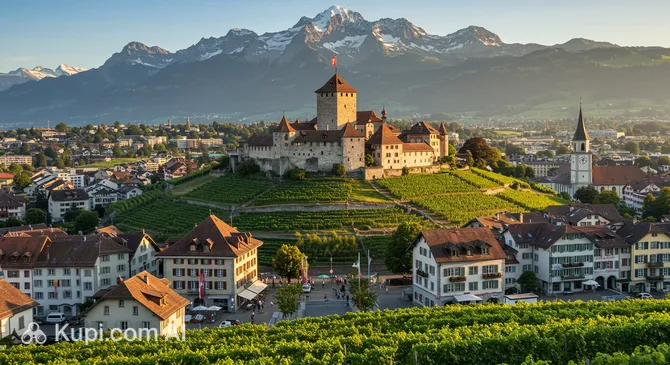
Aigle is a charming town located in the heart of the Chablais wine region in the Canton of Vaud. Surrounded by majestic Alpine peaks and meticulously manicured vineyards, it offers travelers a unique blend of natural beauty and architectural heritage. This is a place where Switzerland reveals its most romantic side, inviting you to enjoy the tranquility and magnificent landscapes of the Rhone Valley.

Aigle. Illustration.
Source: Kupi.com AI

Geographically, the town occupies an important position at the foot of the Alps, serving as a vital transport hub and a gateway to popular mountain resorts. Despite its relatively small population of about 10,000 people, the town boasts a well-developed infrastructure and a lively atmosphere. The centuries-old history of Aigle has left a deep mark on its appearance, harmoniously intertwining medieval traditions with modernity.

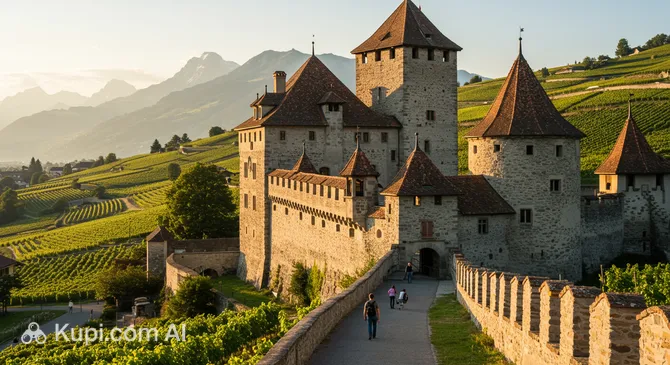
The main symbol and landmark of the landscape is the magnificent Aigle Castle (Château d'Aigle), built in the 12th century. This fortress, looking as if it stepped out of the pages of a fairy tale, rises among the grape plantations and houses the Vine and Wine Museum, which tells the story of the region's main pride. Another interesting feature of the town is its status as the world capital of cycling: it is home to the headquarters of the International Cycling Union (UCI) and a state-of-the-art velodrome.

Aigle is not just a transit point, but a destination in its own right that deserves attention. Be sure to stop here to stroll through the cozy streets, taste the famous white wine, and enjoy breathtaking views.

Weather Overview

Aigle's climate is largely determined by its favorable location in the sunny Rhone Valley, protected by mountain ranges. Moderate weather conditions prevail here, which are ideal for growing grapes. Winters are generally cool: in the coldest month, January, the average temperature stays around -0.8°C, and night frosts can reach -4.0°C. Summers, on the other hand, offer comfortable warmth—in July and August, the air warms up to an average of 17°C, and daytime highs often exceed 21°C.

Precipitation falls in the region quite regularly throughout the year. Spring arrives gradually, but be prepared for frequent rain: for example, in May, up to 19 days of precipitation are recorded. Expect warm summers with occasional rain and cool, snowy winters. To correctly plan your wardrobe for walks in the mountains and vineyards, we recommend checking what the weather in Aigle is expected to be on the dates of your trip.

Average monthly temperature

Average monthly precipitation

Interesting Facts

In addition to the obvious beauty of its vineyards and mountains, Aigle holds several fascinating features that make it a truly unique spot on the map. Here are a few facts that will help you look at this town in a new way:

Aigle Castle. Illustration.
Source: Kupi.com AI

Traveler photos:

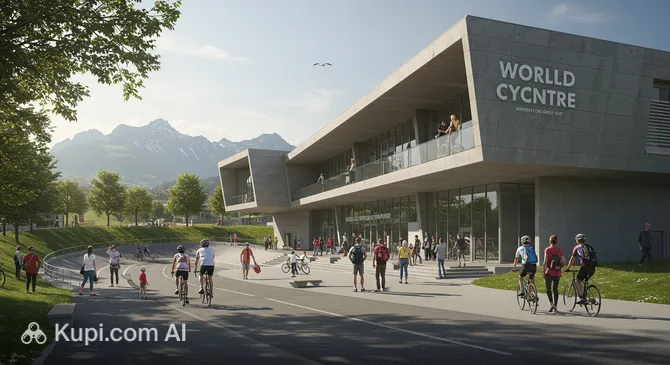
  • The town officially bears the title of the world capital of cycling. It is home not only to the headquarters of the International Cycling Union (UCI) but also to the World Cycling Centre. Under its roof is a 200-meter wooden track that serves as a training base for athletes from all over the globe, and the complex's doors are often open to visitors.

  • The majestic Aigle Castle has a turbulent past: during the Bernese rule, it was used not only as a residence for bailiffs but also as a prison. Today, instead of dungeons, its walls house the Vine and Wine Museum, which boasts an impressive collection of wine labels from over 50 countries.

  • Aigle is a rare railway junction where three narrow-gauge mountain railways begin at once. A curious detail: the trains of the AOMC line (Aigle – Ollon – Monthey – Champéry) pass directly through the town streets like trams, sharing the road with cars before beginning their ascent into the mountains.

  • The name of the town translates from French as "Eagle," which is interestingly reflected in the local heraldry. The Aigle coat of arms is divided into two halves: black and gold. The shield depicts two eagles of contrasting colors—a gold eagle on a black field and a black eagle on a gold field, symbolizing duality and harmony.

How to Get There

Thanks to its location in the Rhone Valley, the town enjoys excellent transport accessibility. You can find out all ways to get to the city on our detailed page, and below we will look at the main air and rail hubs through which tourists enter this picturesque region.

Most travelers fly into Geneva Airport (GVA). This is a major international aviation hub located approximately 67 km from Aigle. A trip from there by car or taxi along the highway will take roughly 50–60 minutes. The airport receives flights from all over the world and serves as the main gateway to the Swiss Alps.

An alternative and closer option is Sion (SIR), located just 30 km from your destination. This is a small regional airport, convenient for those who value speed: the journey by car will take only 25–30 minutes. However, it's worth considering that the number of flights here is significantly lower than in Geneva.

For clarity, here is a summary of the main airports:

AirportPassenger trafficDistance
Sion35 92930 km
Geneva Airport17.8 mln67 km
Bern Airport57 00077 km
Chambéry Airport169 000113 km
Turin Airport4.5 mln135 km

Traveling by train is one of the most convenient ways to reach Aigle, as the town has its own railway station, which is an important transport hub. You can get here from Geneva-Cornavin station, located about 65 km away. Direct trains run regularly, and the travel time is between 1 hour 10 minutes and 1 hour 30 minutes, eliminating the need for expensive transfers.

Another convenient option is Sion Railway Station (about 32 km from Aigle). From here, Aigle can be reached by train in just 20–30 minutes. This is an excellent choice for those traveling within the region or arriving from the Canton of Valais.

Below is a table of the nearest major railway hubs:

StationPassenger trafficDistance
Sion Railway Station4.5 mln32 km
Geneva Railway Station42.1 mln65 km
Oerlikon Railway Station34.4 mln78 km
Bern Railway Station69 mln79 km
Basel SBB station40 mln144 km

Main Attractions

Despite its compact size, Aigle is capable of surprising travelers with a variety of leisure activities—from immersion in medieval history to active sports. The town carefully preserves its traditions while looking toward the future, offering guests unique locations to visit.

The undisputed jewel of the region is Aigle Castle, majestically rising among geometrically aligned vineyards. This 12th-century fortress is not just an architectural monument but also home to the Vine and Wine Museum. Here, tourists can learn about the winemaking culture of Chablais, explore interactive exhibits and ancient wine presses, and enjoy panoramic views of the Rhone Valley from the fortress walls.

A completely different atmosphere is offered by the World Cycling Centre—a magnet for fans of two-wheeled transport. Serving as the headquarters of the International Cycling Union (UCI), the complex features an impressive indoor velodrome and an Olympic-standard BMX track. Visitors can not only watch future champions training but also visit an exhibition dedicated to the history of cycling.

Adventure Park Aigle. Illustration.
Source: Kupi.com AI

Traveler photos:

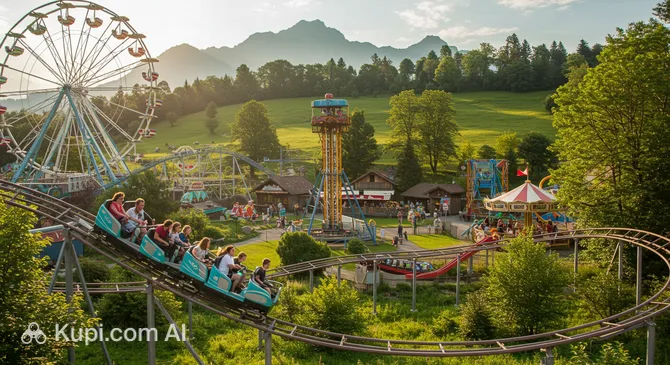
For those who prefer outdoor activities with a touch of adrenaline, the Aigle Adventure Park is open. Located in a shady forest, the park offers several routes of varying difficulty with suspension bridges, vines, and high-speed ziplines. This is an excellent option for family recreation, allowing you to test your agility and get plenty of vivid emotions in a safe environment.

Local Cuisine

The cuisine of Aigle is a reflection of the generous nature of the Chablais region and the gastronomic traditions of the Canton of Vaud. Here, food is perceived as the art of enjoying life, and local recipes have been created over centuries to warm and satisfy the inhabitants of the Alpine foothills. The basis of the menu in most establishments consists of hearty dishes made from potatoes, melted cheese, and local meat.

The gastronomic hallmark of the region is considered to be Papet Vaudois. This is a thick, fragrant leek and potato ragout, stewed in cream with white wine. It is invariably served with "saucisson vaudois"—the famous cabbage sausage with a protected geographical indication. And, of course, a stay in Switzerland would be incomplete without tasting classic fondue or raclette, which are prepared here from select varieties of Gruyère and Vacherin.

Winemaking holds a special place in the town's culture. The vineyards surrounding the castle and the town quarters yield a harvest for excellent white wines, primarily from the Chasselas grape variety. This light wine with floral notes is considered the perfect accompaniment to local cheese delicacies and lake fish.

Kaixin Sushi. Illustration.
Source: Kupi.com AI

Traveler photos:

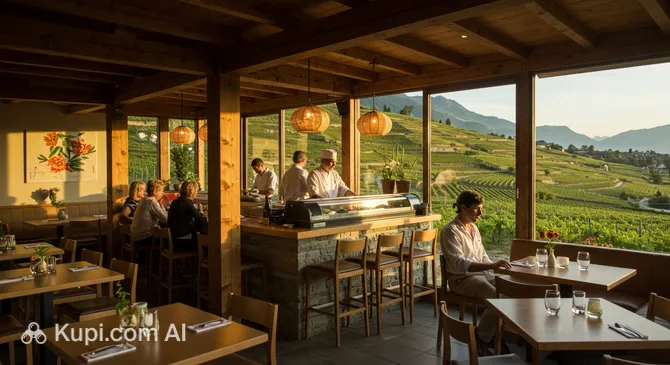
While the town honors tradition, more exotic flavors can also be found here. If you want a change of pace and a break from Alpine heartiness, it's worth checking out Kaisen Sushi, which offers guests a decent selection of Japanese dishes. And for those planning a picnic in nature or wanting to buy local delicacies to take away, the Chablais Centre—the town's main commercial hub with a large assortment of products—will be a convenient destination.

Travel Tips

Welcome to Aigle! To make your introduction to this wine capital of the Chablais region as comfortable as possible and leave only pleasant memories, we have compiled a list of useful recommendations. These simple but important tips will help you navigate the town easily and feel confident in any situation.

  1. Clothing and Footwear: Since the town is located in a valley but surrounded by mountains, the weather here can be changeable. Dress in layers to easily adapt to temperature fluctuations throughout the day. Be sure to bring comfortable flat shoes: they are vital for walking on the cobblestones of the old town and the dirt paths of the vineyards.
  2. Transport: Aigle's historic center is compact and best explored on foot. For trips to neighboring towns or the mountains, it's best to use trains and buses—public transport here works like clockwork. Renting a car only makes sense if you're planning a complex route to remote corners; otherwise, the train will save you the trouble of parking.
  3. Finances: The official currency is the Swiss franc (CHF). Bank cards are accepted almost everywhere, including the castle ticket offices and supermarkets, but it's better to have some cash on hand for buying souvenirs in small shops or a snack at the farmers' market. Tips in restaurants are usually already included in the bill, but rounding up the amount is considered good etiquette.
  4. Health and Safety: Aigle is a very safe town where you can safely walk even after dark. Pharmacies are easily recognizable by a green neon cross, and pharmacists can often provide initial consultations. In emergencies, use the national numbers: 144 (ambulance) and 117 (police).
  5. Communication: The main language of the region is French. In tourist areas (hotels, wine museum), staff often speak English, but learning a few phrases like "Bonjour" (Hello) and "Merci" (Thank you) will immediately win over the locals. For convenience in traveling around the country, Switzerland offers the excellent SBB Mobile app, which helps with schedules and tickets.
  6. Local Etiquette: Politeness is the foundation of Swiss society. When entering a shop, cafe, or even an elevator, it's customary to greet those present. Peace and quiet are also highly valued here: try not to talk loudly on public transport and avoid making noise on the streets after 10:00 PM.
  7. What to Avoid: Being in a wine region, remember that vineyards are private property. Never enter rows of vines without permission or pick grapes "to taste"—this is seen as serious disrespect for the winemakers' labor and can lead to a fine.
  8. Extra Tip: If you have some free time, be sure to ride the narrow-gauge AOMC train, which departs directly from Aigle station. It literally drives through the town streets before starting its ascent into the mountains, offering stunning views of the castle and valley not accessible to pedestrians.

We hope these practical tips help you plan the perfect trip. Aigle is a place where traditions are harmoniously interwoven with hospitality, and by following these simple rules, you can fully enjoy its unique charm!

Entertainment & Nightlife

Nightlife in Aigle isn't about noisy metropolitan clubs and endless raves; it's about coziness, gastronomic pleasures, and the warm atmosphere of Alpine hospitality. Evenings here are typically spent at a leisurely pace, enjoying conversation with friends over a glass of local Chasselas wine. The epicenter of evening activity is the area around the railway station and the historic town center, where the main establishments are concentrated. The crowd here is diverse: from local winemakers discussing the harvest to tourists relaxing after mountain hikes.

An ideal evening in Aigle should begin with a relaxed dinner or some window shopping. A great place for leisure is the Chablais Centre. This is a large shopping complex where you can not only shop but also have a pleasant time in a cafe, observing the flow of local life. It's worth remembering that restaurant kitchens in the town usually work until 10:00 PM or 11:00 PM, so it's better to plan the gastronomic part of your evening in advance.

After sunset, life moves to the small bars and pubs located along Rue de la Gare and Place du Marché. A democratic atmosphere prevails here, and there is no dress code—you will feel comfortable in either an evening dress or comfortable clothes after a hiking tour. For fans of a more active nightlife and dancing until dawn, locals often suggest heading to neighboring Montreux, which is easily accessible by train. However, even in Aigle itself, you can find cozy corners to grab a craft beer or a cocktail before bed.

World Cycling Centre. Illustration.
Source: Kupi.com AI

Traveler photos:

As for entertainment that transitions smoothly from day to evening, the town offers excellent opportunities for active tourists. In the summer, when the daylight hours are long, adrenaline seekers should visit the Aigle Adventure Park. Located in a picturesque wooded area, it offers tracks of varying difficulty levels—a wonderful way to recharge your energy. And for those who prefer quiet romance, a walk around the illuminated ancient castle walls will create an incredible mood, even when the museums are already closed.

Practical tips for evening strolls:

  • Safety: Aigle is a very quiet and safe town. You can safely walk around the center even late at night. The streets are well-lit, and the crime rate is extremely low.
  • Transport: Public transport runs regularly, but night services may be less frequent. If you stay out late, it's better to call a taxi by phone or through an app, as catching one on the street can be difficult.
  • Prices: Be prepared for Swiss price levels. A cocktail in a bar can cost from 15 francs, and a glass of wine from 6-8 francs.

Parks & Museums

Aigle harmoniously combines the natural riches of the Rhone Valley with a rich cultural heritage, offering tourists a balance between outdoor walks and educational excursions. The town is nestled in the greenery of vineyards, and its museums tell unique stories—from centuries-old winemaking traditions to modern sporting achievements.

Green Zones and Nature Spots

Although Aigle does not abound with classic urban parks in the traditional sense, its main natural asset is the surrounding landscape. One of the most popular green zones is the Fahy Forest (Forêt de Fahy). This is where the Aigle Adventure Park is located, perfectly integrated into the natural environment. This place is suitable not only for extreme recreation but also for peaceful walks in the shade of ancient trees, picnics, and enjoying the silence away from the town's bustle.

Another distinct "green zone" of the town consists of the endless vineyard terraces surrounding the residential quarters. Walking along specially equipped trails through the vines is an opportunity to see nature transformed by human labor. From here, the best panoramic views of the Alps open up, and the air is always fresh and filled with the scent of herbs.

Museums and Cultural Centers

The central place in the region's cultural life is occupied by Aigle Castle. Within its ancient walls lies the famous Vine and Wine Museum (Musée de la Vigne et du Vin). The museum's exhibition is a fascinating journey into the world of winemaking: from old presses and barrels to interactive stands explaining the intricacies of production. This is a must-visit place to understand the soul of the Chablais region.

A completely different, dynamic view of culture is offered by the World Cycling Centre. Although it is primarily a training base, the complex also functions as an exhibition space. Guests can see unique bicycles, learn about the history of the sport's development, and the achievements of legendary athletes. It is a modern museum permeated with the spirit of competition and speed.

Architectural Heritage

The historic center of Aigle itself resembles an open-air museum. Strolling through the winding streets, take note of the Church of Saint-Maurice and the old houses with arcades on Jerusalem Street (Rue de Jérusalem). These buildings have preserved the spirit of the Middle Ages and create a unique atmosphere of coziness.

Insider Tip

If you want to see the "non-touristy" Aigle and enjoy nature, go for a walk along the banks of the Grande Eau river. The sound of water and the coolness make this place ideal for morning jogs or meditative evening strolls, known mostly only to locals.

Getting Around

The public transport system in Aigle is organized with the country's typical precision and convenience. The town serves as an important transport hub for the Chablais region, where main railway lines and local mountain routes intersect. Thanks to this, travelers can easily manage without renting a car, relying exclusively on trains and buses that run strictly according to schedule.

The heart of the transport network is the Aigle railway station (Gare d'Aigle). Not only do high-speed trains of the Swiss Federal Railways (SBB) stop here, connecting the town with Geneva and Lausanne, but also the charming narrow-gauge trains of the TPC company (Transports Publics du Chablais). These small mountain trains are a real highlight of the local transport system. Three picturesque lines branch out from the station: toward the resorts of Leysin, Les Diablerets, and Champéry. A trip on them is not just a transfer, but a panoramic adventure in itself.

Buses run within the town and its surroundings, also managed by the TPC company or the CarPostal postal service. The bus network covers residential areas, industrial zones, and neighboring villages surrounded by vineyards. Stops are clean and equipped with information boards, and service intervals are usually between 15 and 30 minutes during peak hours. You enter the bus through the front door, but tickets are not always sold by the driver—it's better to take care of this in advance.

Aigle is part of the Mobilis tariff association (Canton of Vaud). This means that a single ticket applies to travel on trains, buses, and even funiculars within certain zones. The fare depends on the number of zones crossed. For tourists, the most convenient way to pay is the SBB Mobile app. It allows you to plan a route and instantly buy an electronic ticket that doesn't need to be validated. Also, touch-screen machines (accepting cards and cash) are installed at the station and major stops, where you can purchase single tickets or day passes.

If you plan to travel extensively in the region, Switzerland offers tourists beneficial passes such as the Swiss Travel Pass. It gives you the right to unlimited travel on trains and buses, as well as free entry to many museums, including Aigle Castle. An alternative is the Swiss Half Fare Card, which provides a 50% discount on all tickets. Be sure to check the conditions: children under 6 usually travel for free, and there are Junior Cards for children from 6 to 16.

Given Aigle's status as a cycling capital, two-wheeled transport here is a full-fledged alternative to buses. There is a rental point at the railway station, and the town infrastructure includes convenient bike paths. This is an excellent way to get to the World Cycling Centre or ride along the Rhone River. Taxis are available in the town, but they are an expensive luxury: the base fare is around 6–7 francs, plus a charge for each kilometer. Apps like Uber have limited operation in the region, so it's more reliable to use official taxi stands at the station.

An important tip: there are no turnstiles in Swiss transport, but inspections are carried out regularly. Fines for fare evasion are very high, so always buy a ticket before boarding. If you are using a paper ticket without a specified validity time, don't forget to validate it in the orange machines on the platform before starting your journey.
Accommodation

Accommodation in Aigle is characterized by home-like comfort and the tranquility typical of small Swiss towns. Here, you won't find massive hotel complexes of global chains or noisy hostels. The bulk of the accommodation consists of small family-run mid-range hotels (usually 3 stars), traditional guesthouses (B&Bs), and apartments, which are particularly popular among tourists traveling as families or in large groups.

When choosing a place to stay, you should focus on the goals of your trip. The railway station area is strategically most convenient: from here, it's easy to reach ski resorts or neighboring towns, and shops and cafes are nearby. If you're looking for romance and quiet, consider accommodation options closer to the historic center and Aigle Castle. Living here means waking up to views of ancient towers and endless vineyards, enjoying a medieval atmosphere.

It's important to consider seasonality when planning your trip. Since the town serves as a transfer hub for popular ski resorts (Leysin, Villars), demand for housing rises sharply during the winter season. We strongly recommend booking rooms in advance—preferably several months before your trip, especially if you plan to visit for Christmas or during the ski holidays (February).

The price range in Aigle corresponds to the overall Swiss level: finding explicitly budget options can be difficult. Prices vary from medium to high, especially on peak dates. Booking is most convenient through major international online platforms, where most local apartments and hotels are listed, ensuring reliability and transparency.

Nearby Cities

For those who want to explore the surroundings, Aigle serves as an excellent starting point for day trips to several interesting nearby places. Its convenient location in the Rhone Valley and developed railway network allow you to reach famous resorts and historical centers in just minutes.

Just 13 km from the town is the famous Montreux. This is the jewel of the Swiss Riviera, known for its jazz festival and luxurious promenade lined with exotic flowers. A visit to Chillon Castle—a medieval fortress standing right on the waters of Lake Geneva—is a must here.

Slightly further away is elegant Vevey, where history intertwines with modernity. The town is known as the headquarters of the food giant Nestlé and the place where Charlie Chaplin spent his final years. Tourists come here to see the "Chaplin's World" museum and take photos by the famous giant fork installed in the lake.

Fans of medieval architecture will find Sion, the capital of the neighboring Canton of Valais, interesting. This city is considered the sunniest in the country and is recognizable by its two castles—Valère and Tourbillon—which majestically rise on the hills above the historic center.

CityPopulationDistance
Villars-sur-Ollon2 3007 km
Monthey17 7778 km
Montreux25 98413 km
La Tour-de-Peilz11 82917 km
Champery1 40017 km

These nearby destinations provide a sense of the diverse culture and landscapes of the region, from lakeside promenades to Alpine fortifications.

Shopping & Souvenirs

Shopping in Aigle isn't about chasing high fashion or endless walks through giant outlets; it's more about experiencing the measured rhythm of local life. The town doesn't claim to be a fashion capital, so the selection of shops here is primarily focused on resident comfort and gastronomic delights. Tourists should look forward to finding authentic regional products, high-quality sports equipment, and, of course, the magnificent wines for which this region is famous.

The town's commercial life is concentrated mainly in its historic center and around the railway station. Walking along Rue de la Gare and the adjacent Rue du Midi, you'll find cozy boutiques with clothing, bookstores, pharmacies, and optical shops. It's a great place for a leisurely stroll where modern storefronts stand next to ancient architecture, creating a special atmosphere of comfort.

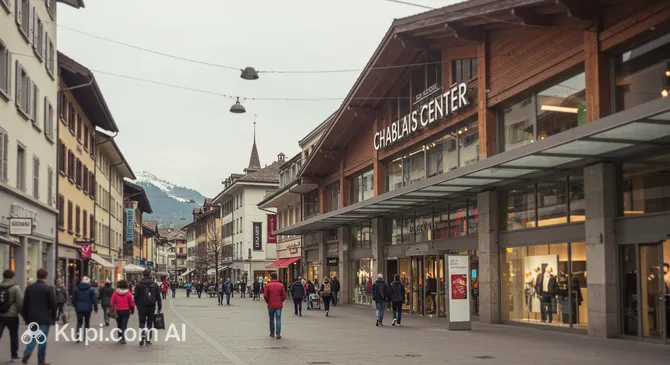
For those who prefer to do all their shopping in one place, the main point of interest is the Chablais Centre. This is a large and modern shopping complex located within easy reach. Under its roof are supermarkets with a wide range of products (including famous Swiss chocolate), electronics stores, mass-market clothing brands, and home goods. It's an ideal location to stock up before a trip to the mountains or buy everything needed for a picnic.

Chablais Center. Illustration.
Source: Kupi.com AI

Traveler photos:

Local markets deserve special attention as they allow you to experience the true taste of the region. A traditional town market usually takes place in the town center square on Saturdays. Here, farmers from surrounding villages offer the freshest cheeses, seasonal fruits, homemade jams, and flowers. Visiting the market is not just shopping, but a cultural experience and a chance to interact with locals.

When choosing souvenirs, it's impossible to ignore Aigle's status as a winemaking center. The best gift would be a bottle of local white wine made from the Chasselas grape. For unique wine accessories and gift sets, it's worth checking out the souvenir shop located in Aigle Castle. Additionally, given the town's cycling fame, high-quality sports gear or accessories with UCI symbols can make for a good souvenir.

When planning your shopping, keep Swiss store hours in mind. They are typically open Monday through Friday from 08:30 to 18:30, sometimes with a lunch break in smaller shops. On Saturday, the working day is shorter (often until 16:00 or 17:00), and Sunday is a scheduled day off for most retail outlets, except for station shops and gas stations. Swiss francs (CHF) and bank cards are universally accepted, but it's better to have cash at the market.

If you're planning major purchases, look into the Tax Free system. Foreign tourists residing outside of Switzerland can get a VAT refund for a single purchase over 300 francs in one store. Don't forget to ask for a special receipt (Tax Free Form) at the checkout and present it along with your passport and the goods at customs when leaving the country.

Reached the end of the page?

That means the route is fully explored