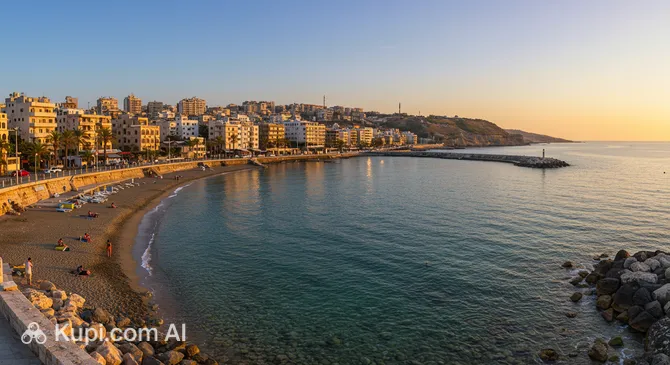
Latakia is the largest seaport and a picturesque "sea gate" of Syria, located on the Mediterranean coast. Spread out at the foot of emerald hills, the city harmoniously combines the atmosphere of a bustling commercial hub with the charm of the country's main beach resort. Thanks to its location and status as an important university center, Latakia is known for its more liberal and progressive character compared to other regions.
Latakia. Illustration.
Source: Kupi.com AI
With a population of around 700,000, the city leads a vibrant life, ranging from the rumble of port cranes to the serenity of palm-lined promenades. Here, modern high-rise districts stand alongside old neighborhoods, and the city's historical heritage, rooted in the Hellenistic era, still peeks through ancient colonnades hidden among the urban buildings.
For tourists, Latakia is primarily attractive for its "azure" coast. It is a place where you can enjoy the Mediterranean breeze, taste the freshest seafood, and use the city as a convenient base for exploring the majestic fortresses and ancient ruins located in the surrounding areas. We invite you to discover this welcoming and multifaceted city where history and the sea meet.
Weather Overview
Latakia is characterized by a classic Mediterranean climate, which gives the city mild winters and hot, sunny summers. Thanks to the proximity of the mountains and the sea, refreshing breezes are frequent, helping to make the summer heat more bearable. If you are planning a trip, it's worth considering that the weather in Latakia largely determines the rhythm of life in the resort area.
The summer months—from June to September—are usually dry and hot, with average air temperatures ranging from +28…+32 °C. During this time, the Mediterranean water warms up to a comfortable +25 °C and higher, making the swimming season very long. Winter in the city is humid but warm: the daytime thermometer rarely drops below +12…+15 °C, although this is when the main rainfall occurs and windy days are possible.
Spring and autumn are considered the shoulder seasons and are ideal for excursions. Expect pleasant warmth and an abundance of greenery on the hills surrounding the city. Rainfall during this period is moderate, and the comfortable air temperature allows you to spend a lot of time outdoors, exploring both Latakia itself and its historical surroundings.
Average monthly temperature
Average monthly precipitation
Interesting Facts
Latakia is a city with a rich past and a unique character that hides many interesting details behind the facade of a modern port.
In ancient times, the city bore the majestic name Laodicea ad Mare, given to it in honor of the mother of Seleucus I Nicator, one of the generals of Alexander the Great.
It was in the vicinity of Latakia, at the site of the ancient city of Ugarit, that archaeologists discovered one of the world's oldest alphabetic writing systems, which became the foundation for many modern languages.
The city is home to Tishreen University—one of the largest and most prestigious higher education institutions in the country, making Latakia an important scientific and youth center.
Despite dense modern construction, ancient columns still stand in the city center, integrated into the urban environment right next to residential buildings and shops.
Latakia is officially recognized as the only major seaside resort in the country, which is why it is often called the "Syrian Riviera" for the azure color of its water and its mild Mediterranean climate.
How to Get There
Latakia's accessibility makes it an important hub on the coast, connecting sea routes with land routes. Several arrival options are available to travelers; however, the most convenient way to plan a trip is to study information about all the ways to get to Latakia on specialized resources to keep track of the current road conditions and schedules.
For those who prefer air travel, the main gateway is Bassel Al-Assad International Airport (IATA: LTK). It is located about 25 kilometers south of the city. The most convenient way to get from the airport to the central districts is by taxi or by using a pre-booked transfer, which takes about 30–40 minutes traveling through green hills and citrus groves.
Railway services connect the city with other key regions, offering scenic coastal views during the journey. The main railway station in Latakia receives trains, ensuring a steady flow of passengers. Additionally, the city is well-connected by road to Damascus and Aleppo, with modern intercity buses and microbuses running regularly.
Main Attractions
Although modern Latakia is primarily a major port, its central part has preserved unique witnesses of antiquity. One of the most famous monuments is the Roman arch from the 2nd century AD, which was once part of a majestic architectural ensemble. Nearby, you can see the Colonnade of Bacchus—the remains of an ancient temple dedicated to Adonis, reminding visitors of the city's glorious Hellenistic past.
An important cultural landmark is the National Museum of Latakia. It is housed in the Khan al-Dukhan building—a beautifully preserved monument of Ottoman architecture. The museum's halls house priceless finds from across the region, including artifacts from ancient Ugarit, allowing guests to touch the origins of world civilization and writing.
The coastline north of the city center has been transformed into a full-fledged recreation zone. Blue Beach and other private beach clubs are particularly popular. Unlike public areas, these clubs offer all the necessary infrastructure for a comfortable holiday: clean sand, sun loungers, swimming pools, and seaside cafes, where it is so pleasant to watch the sunset to the sound of the waves. For many travelers, these well-maintained beaches are the main attraction during the summer season.
Local Cuisine
The gastronomy of Latakia is a magnificent union of Eastern traditions and Mediterranean freshness. The main difference of the local cuisine is the abundance of fish and seafood, which are rarely found in such variety in the inland regions. In coastal restaurants, you should definitely try fish baked with lemon and local herbs, or grilled shrimp prepared with garlic sauce and olive oil.
It is impossible to imagine a meal in Latakia without classic Syrian mezze. Hummus, delicate eggplant baba ghanoush, and refreshing tabbouleh salad with plenty of parsley are always present on the table. Popular hot dishes include kibbeh (meatballs in a bulgur shell) and various types of kebabs. Manakish—fragrant flatbreads with za'atar, cheese, or meat—occupy a special place and are often bought by locals for breakfast at small street bakeries.
The city's beverage culture centers on strong Oriental coffee with cardamom and sweet tea with mint. On hot days, freshly squeezed fruit juices are popular. As for desserts, Latakia is famous for its baklava, knafeh, and delicate milk pudding called mahalabia. An evening dinner at a restaurant on the promenade is not just a meal, but a true ritual of socializing and enjoying the seascape, which is an integral part of life in this port city.
Travel Tips
A trip to Latakia promises to be a bright event, and to ensure your journey is as comfortable as possible and brings only positive emotions, we have prepared a few practical recommendations.
Clothing and Essentials: In summer, take light clothing made of natural fabrics, a hat, and sunscreen. Despite the city's liberal nature, when visiting religious sites (mosques, old churches), you should choose modest attire that covers shoulders and knees.
Transport: The most convenient way to get around is by taxi. It's better to agree on the fare with the driver in advance. For trips to the suburbs, you can use "servis" microbuses that depart from the main squares.
Finance: The main currency is the Syrian pound. It is recommended to have a sufficient supply of cash with you, as international bank cards are rarely accepted. It's best to exchange currency at official exchange offices.
Health and Safety: Always drink only bottled water. Pharmacies are easy to find in the city center; many pharmacists speak English. In crowded places, such as markets, keep a close eye on your personal belongings.
Communication: The official language is Arabic. In the university environment and large hotels, many people understand English or French. Learn a couple of basic phrases: "Marhaba" (hello) and "Shukran" (thank you)—this is very much appreciated by the locals.
Local Etiquette: Syrians are very hospitable. Don't be surprised if you are invited for tea—it's a sign of respect. Greetings are usually warm and often accompanied by a handshake.
What to Avoid: Do not photograph government buildings, military sites, or port areas—this can cause unnecessary questions. It is also advisable to refrain from discussing political topics.
Additional Tip: If you want to enjoy the best beaches, head to the hotel zones north of the city—the coastline there is cleaner and better equipped.
Latakia is a city that reveals its best side to those ready for communication and exploration. Enjoy your holiday on the azure coast!
Entertainment & Nightlife
The entertainment scene in Latakia is largely focused on the coastal strip and the infrastructure of major hotels. This is where the most popular beach clubs are concentrated, and during the summer season, life there doesn't quiet down until late in the evening. Visitors are offered not only relaxation by the pool but also opportunities for water sports, tennis, and volleyball, making for active and diverse leisure time.
The city's evening atmosphere is imbued with Mediterranean tranquility. The main place for walking is the city promenade—the Corniche. Numerous coffee shops and family restaurants operate here, where locals and tourists gather to drink strong Oriental coffee or have dinner while admiring the sea. Thanks to the large number of students from Tishreen University, the city has a youthful and secular energy, and many establishments feature modern designs and musical accompaniment.
While Latakia doesn't have an abundance of noisy mega-clubs, the city is considered one of the most liberal in terms of evening leisure. Major events—such as live music concerts or themed evenings—most often take place within the hotel complexes. Safety in the central and resort areas is at a good level, allowing you to comfortably enjoy night walks along the sea or sit in cozy city cafes.
Parks & Museums
The cultural heart of the city is the National Museum of Latakia, which is a must-visit for every tourist. Housed in the building of the former Ottoman inn Khan al-Dukhan, the museum itself is an architectural monument. Its collection includes unique cuneiform tablets and jewelry found during excavations of ancient Ugarit, providing a deep understanding of the region's history as one of the centers of world civilization.
For outdoor walks, residents and visitors choose coastal zones and boulevards. Although there are not many classical parks in the European sense in Latakia itself, the main recreational roles are fulfilled by the promenades and green outskirts. The city is surrounded by picturesque hills, which in spring and autumn become ideal places for picnics and light hikes, offering panoramic views of the Mediterranean Sea.
It is also worth paying attention to the religious architecture, which is closely intertwined with the city's history in Latakia. Ancient churches and majestic mosques, such as the Grand Mosque of Latakia, are of interest not only to believers but also to history and art enthusiasts. Many of these sites are located in the old part of the city, where a stroll through the narrow streets turns into a small journey back in time.
Getting Around
The transport system of Latakia relies on a network of bus routes and microbuses, known to locals as "servis". This is the most common and affordable type of transportation in the city: microbuses connect the center with the outskirts, the port, the university, and the beach areas. There is usually no fixed schedule at the stops, so tourists should look for signs with district names or check the direction with drivers and passers-by.
For more comfortable trips, guests of the city prefer to use taxi services. Both official taxi services with recognizable branding and private carriers operate in Latakia. The cost of a trip within the city is low, but it is recommended to agree on the price in advance or ensure the meter is turned on, if available. A taxi is an ideal option for trips to remote beach clubs or the airport, especially during the hot season.
Cycling infrastructure in the city is poorly developed, and moving on two wheels among heavy traffic can be difficult. Walking is pleasant in the area of the Corniche promenade and in the central quarters, where attractions are located relatively close to each other. When planning your movements, it is important to remember that during morning and evening rush hours, the city's main thoroughfares can be very congested.
Accommodation
The choice of accommodation in Latakia allows you to find an option for both a beach holiday and a business trip. The majority of high-end hotels and resort complexes are concentrated in the northern part of the city, along the coast. Here you will find hotels offering direct access to the sea, private pools, and developed recreational infrastructure, making them ideal for a summer vacation.
In the city center, mid-range hotels and more budget-friendly options prevail, which are popular with students, their families, and port workers. Staying within the city limits is convenient due to its proximity to main shops, administrative buildings, and transport hubs. When choosing accommodation, keep in mind that during the summer period—from June to September—demand for coastal hotels increases sharply, so it is recommended to book rooms in advance.
Accommodation prices in Latakia remain quite reasonable by international standards. For tourists looking for a more authentic experience, it is possible to rent apartments, although this market is more focused on long-term stays. Overall, the most comfortable conditions and consistent service are provided by the large chain hotels on the first coastline, where guests are ensured the maximum level of security and service.
Nearby Cities
Latakia serves as an excellent starting point for exploring the picturesque Syrian coast and the mountainous regions where ancient fortresses are hidden. Just a half-hour drive to the south is the city of Jableh, known for its beautifully preserved ancient Roman theater, which is still used for cultural events.
If you head a little further along the coast, you can visit Baniyas. This city is notable not only for its industrial landscapes but also for its proximity to the majestic Margat (Marqab) Castle, whose basalt walls tower over the sea. For those interested in the Turkish direction, Yayladağı is within reach, located in a mountainous area across the border.
City
Population
Distance
Jableh
75 505
23 km
Baniyas
43 151
41 km
Yayladagi
35 460
47 km
Jisr ash Shughur
44 322
56 km
Qalaat al Madiq
12 925
56 km
From Latakia, it is also convenient to reach historical sites such as Jisr al-Shughur or the archaeological site Qalaat al-Madiq, where you can see the ruins of ancient Apamea. Exploring these surroundings will allow you to see Syria from different perspectives: from coastal plains to shady mountain passes that preserve the memory of many civilizations.
Shopping & Souvenirs
Shopping in Latakia is primarily an introduction to traditional Eastern markets and local crafts. The city's souks (markets) are labyrinths of stalls where the air is filled with the aroma of spices, freshly ground coffee, and sweets. Here you can find high-quality textiles, leather goods, and the world-famous Syrian olive oil produced in the surrounding groves.
The city's main shopping streets are concentrated in the central part and near the university. Here, modern clothing and footwear boutiques stand alongside small shops selling gold and silver jewelry. Although Latakia does not have giant Western-style shopping malls, local shopping centers and specialized stores offer a decent selection of goods, including perfumes and cosmetics based on natural oils.
The most common souvenirs brought from Latakia are traditional sweets (baklava, nougat, sherbet), spice sets, handmade Aleppo soap, and inlaid wood products. Shops usually operate from morning until late evening with a lunch break, and payment in most places is made in cash in the local currency. Don't forget that polite bargaining is appropriate and even welcomed in the markets—it's an integral part of the local trading culture.