Support

Beirut-Rafic Hariri International Airport

About the Airport

Beirut-Rafic Hariri International Airport is not merely the main aerial gateway to Lebanon, but a true symbol of resilience and revival. Located at the crossroads between Europe, Asia, and Africa, it welcomes travelers with a modern terminal and Arabian hospitality. Despite all historical challenges, today it is a lively and convenient hub serving as a starting point for exploring the amazing city of Beirut and the entire region.
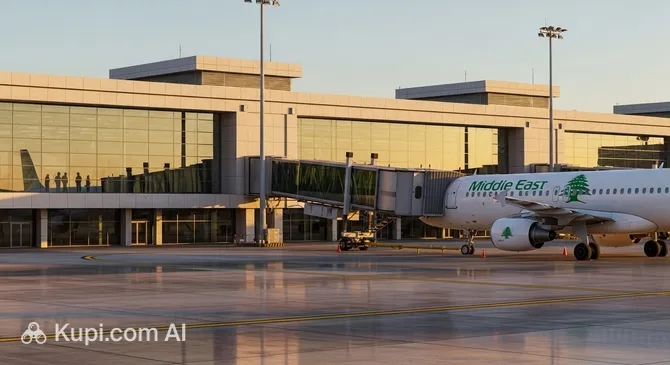
Beirut-Rafic Hariri International Airport. Source: Kupi.com Binoculars

The airport is the sole operating commercial air hub in the country, making it a strategically important facility. It serves as the base for the national carrier, Middle East Airlines. The complex consists of one main terminal, which significantly simplifies navigation for passengers.

IATA Code BEY
ICAO Code OLBA
City Beirut
Distance to centre 9 km
Status International
Passengers per year About 8 million
Popular Airlines Middle East Airlines, Turkish Airlines, Qatar Airways
Schedule online board "Beirut-Rafic Hariri International Airport"

Features and Advantages of the Airport

Rafic Hariri Airport offers passengers all necessary amenities for a comfortable journey. Spacious Duty Free zones are located on its premises, where you can purchase souvenirs, local delicacies, and global brand products. Numerous cafes and restaurants offer dishes of both Lebanese and international cuisine. For business class passengers and loyalty card holders, three comfortable business lounges with relaxation areas and showers are available. Free Wi-Fi is available throughout the terminal, allowing you to stay connected.

Transport accessibility is another advantage of the airport. A trip to the centre of Beirut by taxi or rental car takes only 15-20 minutes. The airport is equipped with modern baggage handling and check-in systems, which helps minimize waiting times. Despite having only one terminal, its thoughtful layout allows it to effectively handle large passenger traffic, which has demonstrated steady growth in recent years.

Contact Information

  • Official website: www.beirut-airport.gov.lb. Information on flights, services, and airport regulations is available on the site.
  • Information desk phone: +961 1 628 000. This is the main number for obtaining information about airport operations.
  • Address: Airport Road, Beirut, Lebanon.
  • Email: An official email address for general inquiries is not published. It is recommended to use contact forms on the website or the telephone for communication.
  • Social media: The airport has official pages on social networks where news and operational information are published.
  • Lost luggage information: If your luggage is lost, you should first contact your airline's representative at the airport. You can also contact the airport's Lost and Found service.
  • Passenger support contacts: For all questions related to service at the airport, you can contact the main information desk by phone.

How to Get to the Airport

Getting to Beirut-Rafic Hariri International Airport (BEY) from the centre of Beirut is quite simple, as it is located just 9 kilometres south of the city. The main methods are taxi, public transport, and car rental. A car journey usually takes from 15 to 45 minutes, however, it is worth considering that the famous Beirut traffic jams can significantly increase this time, especially during peak hours. We recommend leaving with plenty of time to spare.

Taxi and transfer — the most popular and convenient option. Official airport taxis are always on duty at the arrival terminal exit; they can be recognized by a special logo. It is better to discuss the fare with the driver in advance or ensure the meter is switched on. Ride-hailing apps (such as Uber and Careem) also operate in Lebanon, which can be slightly more cost-effective. For maximum peace of mind, you can pre-book a private transfer: the driver will meet you with a sign, and the price will be fixed.

Public transport — the most budget-friendly method. LCC city buses (red and white) and private minivans run directly from the airport to the city. This is a good option for economical travellers without bulky luggage. However, note that minivans do not have a strict schedule or strictly defined stops, which may create difficulties for tourists unfamiliar with the city. There are no trains or metro in Beirut.

Car rental and parking. If you plan to travel around the country on your own, you can rent a car directly at the airport, where offices of several international and local rental companies are present. Traffic in Beirut is quite dynamic, so this option is suitable for confident drivers. There are several parking zones on the airport territory — both for short-term and long-term parking, which is convenient if you arrive in your own or a rented vehicle.

Terminals and Map

Rafic Hariri International Airport Beirut (BEY) constitutes a single modern complex, which significantly eases navigation for travellers. The airport operates one main terminal, which serves all arriving and departing flights, both international and domestic. Thanks to this, passengers do not need to worry about transferring between different buildings.

The terminal has a thoughtful and intuitive structure. The building consists of several levels: the departure zone with check-in counters is located on the upper floor, and the arrival zone, including the baggage claim hall and customs control, is on the lower floor. After completing formalities, passengers enter the central area, from which two wings with boarding gates diverge. This central part is the heart of the airport, where Duty Free shops, restaurants, and relaxation areas are concentrated.

The control process is organized sequentially. Upon departure, you first check in for your flight, then pass through passport control and security screening. After that, you enter a spacious waiting hall with gates. Navigation is simple thanks to numerous signs in Arabic, French, and English. Since everything is in one building, the path from the airport entrance to the boarding gate is logical and does not take much time in the absence of large queues.

To avoid rushing, it is recommended to arrive at the airport at least 2.5–3 hours before your scheduled departure time. During periods of high load, for example, during holidays or the summer season, the time for check-in and screening may increase. Keep an eye on the information on electronic boards to find out your boarding gate number in time, as it may change.

Airport History

The history of Rafic Hariri International Airport Beirut begins in 1954, when it was inaugurated to replace the old Bir Hassan airfield. Designed as modern and functional, it quickly became one of the most important transport hubs in the Middle East, symbolizing the "golden era" of Lebanon and its capital.

In the 1960s and early 1970s, the airport flourished, serving flights of major global airlines and welcoming tourists and business people from all over the world. However, the subsequent period of civil conflict (1975-1990) became a serious test. The airport was repeatedly closed and sustained damage, but its operation resumed periodically, demonstrating amazing resilience.

After the end of the war in the early 1990s, a large-scale ten-year reconstruction programme was launched under the leadership of Prime Minister Rafic Hariri. During this project, a new western runway was built, old ones were reconstructed, a new modern terminal was erected, and all associated infrastructure was created. This effectively turned it into a new airport, ready for the challenges of the 21st century.

In 2005, the airport was named after Rafic Hariri in recognition of his immense contribution to the country's recovery. Today, it is not just the main point of arrival in Lebanon, but also an important node for transit passengers, as well as the main base for the national airline Middle East Airlines (MEA). Among the interesting facts are its runways, part of which are built on land reclaimed from the sea, creating breathtaking views for passengers during takeoff and landing over the Mediterranean Sea.

Services and Facilities

Rafic Hariri International Airport Beirut (BEY) offers passengers modern infrastructure and a full range of services to make waiting for a flight as comfortable as possible. Regardless of the purpose of your trip to Lebanon, you will find everything you need here.

For those who want a snack or to do some shopping, the airport operates numerous restaurants, cafes, and coffee shops, offering both local Lebanese cuisine dishes and international options. The spacious Duty Free zone will delight you with a selection of perfumes, cosmetics, confectionery, and tobacco products, while souvenir shops offer traditional Lebanese sweets, handicrafts, and other memorable gifts.

For comfortable rest, the airport is equipped with VIP halls and lounges of several airlines and banks, available for business class passengers or loyalty program members. Passengers can use free Wi-Fi throughout the terminal, and numerous charging stations are provided for recharging electronic devices. This allows you to stay connected and handle work matters while waiting for departure.

Financial matters are easily resolved on the spot: bank branches, currency exchange points, and ATMs are located in the terminal and available around the clock. A medical centre operates to provide emergency assistance, ready to offer qualified help at any time.

The airport cares for passengers with special needs. Mother and child rooms are provided for travellers with children. Passengers with disabilities are provided with all necessary assistance, including escort and special equipment for moving around the terminal. Business centres and conference rooms are available for business travellers. Although there are no hotels directly in the transit zone, several hotels of varying comfort levels are located in the immediate vicinity of the airport.

Where to Eat

Beirut International Airport Beirut offers passengers diverse dining opportunities, allowing for both a quick snack before departure and a leisurely full meal. Here you will find a harmonious combination of world-famous chains and establishments offering authentic dishes, providing a wonderful chance to experience the taste of Lebanon one last time before flying.

Most restaurants and cafes are concentrated in the main departure zone (airside), accessible after passing passport control and security screening. Both full-service restaurants and food courts are located here. In the public zone (landside), the choice is more modest and usually represented by a few coffee shops where you can drink coffee and have a snack while seeing off or meeting loved ones.

For those in a hurry, numerous coffee shops and fast-food outlets are ideal. Here you can order sandwiches, pastries, salads, as well as famous Lebanese snacks like manakish (flatbread with cheese or thyme) or shawarma. If you have time, we recommend visiting one of the restaurants where you can order traditional Lebanese mezze (a set of cold and hot appetizers), kebabs, or international cuisine dishes. This is a great way to relax while waiting for your flight.

Special attention is paid to dietary preferences. Practically all food here complies with Halal standards. Thanks to the features of local cuisine, vegetarians and vegans will easily find suitable dishes: hummus, tabbouleh, falafel, and baba ghanoush are present on the menus of many establishments. For gluten-free options, it is better to check with the staff. The price range varies from moderate in fast-food chains to higher in full-service restaurants, but overall prices at the airport are higher than in the city.

Many key establishments in the departure zone work around the clock or have extended operating hours to serve passengers of all flights, including night ones. Thus, you can be sure that you will find a place to refresh yourself regardless of the time of your departure or arrival.

Travel Tips

To ensure your journey from Beirut begins without unnecessary stress, we recommend arriving at Rafic Hariri International Airport at least 3 hours before an international flight. During holidays and peak morning/evening hours, queues for check-in and security control can be longer than usual. To save time, use online check-in if your airline provides such an option — this will allow you to proceed immediately to baggage drop or security screening.

When passing through security control, have your passport and boarding pass ready. Standard hand luggage rules apply here as well: liquids in containers of no more than 100 ml each must be packed in a single transparent bag. Ensure there are no prohibited items in your bag, such as sharp objects or flammable substances. This will help avoid delays and unnecessary questions.

When choosing a seat on the plane, consider your preferences. A window seat will give you beautiful views during takeoff and landing, especially if you are flying over the coast. An aisle seat ensures more freedom of movement. If extra legroom is important to you, consider choosing a seat at the emergency exit, although an additional fee is often charged for this.

For passengers with connecting flights, it is important to check with the airline in advance whether their luggage will be automatically checked through to the final destination. At the airport, follow the "Transit" signs to quickly find the necessary gate. While waiting for the next flight, you can visit Duty Free shops or relax in one of the numerous cafes, enjoying Lebanese coffee.

Upon arrival in Lebanon, you will have to pass customs and passport control. Follow the signs, keep your documents at hand, and be ready to answer standard questions about the purpose of your visit. To save on the trip from the airport to the city, study the options in advance: official taxis have fixed rates, but alternative services can also be considered. Also, do not forget to bring an empty water bottle with you, which can be filled after passing security control.

In case of flight delay or cancellation, remain calm. First of all, follow the information on the departure boards. Then contact your airline representative — they should provide up-to-date information and, depending on the length of the delay, offer vouchers for food or hotel accommodation. Be sure to keep all receipts for unforeseen expenses to request compensation later.

Reached the end of the page?

That means the route is fully explored