Support

Haifa Airport

About the Airport

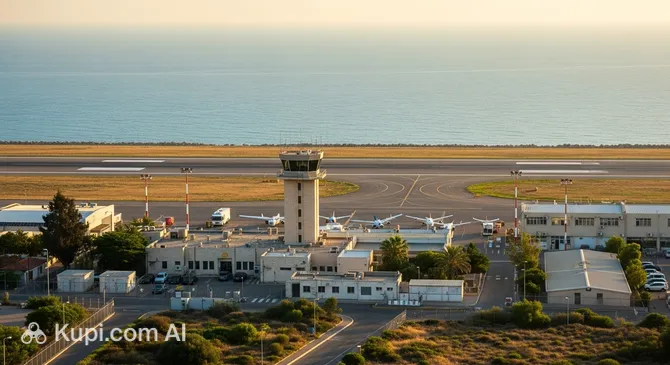
Haifa Airport. Source: Kupi.com Binoculars

Haifa Airport (HFA) is not just a transport hub, but the cozy and compact "air gateway" of northern Israel, where the journey begins without the hustle and bustle typical of metropolises. Located right by the seashore, just a few minutes' drive from the city port and key attractions, it offers a unique combination of comfort and speed. Here, passengers can enjoy breathtaking views of Haifa Bay during takeoff and landing, and thanks to the terminal's small size, complete all pre-flight procedures in record time.

IATA Code HFA
ICAO Code LLHA
City Haifa
Distance to Center About 6 km
Status International (predominantly regional flights)
Annual Passengers About 20,000 (varies depending on the season)
Schedule Seasonal and regular (check the official website)

Features and Advantages of the Airport:

The main advantage of Haifa Airport is its phenomenal compactness and speed of service. Unlike large international hubs, the path from the terminal entrance to boarding the aircraft takes minimal time here, and queues for check-in and security screening are generally non-existent. This makes it an ideal choice for business travelers and tourists who value their time.

Convenient location is another undeniable plus. The airport is located practically within the city limits, close to key transport interchanges, the railway station, and the industrial center. This allows you to reach your hotel or meeting place in a matter of minutes, bypassing long transfers.

It is also worth noting the scenic nature of the flights. The runway is positioned in such a way that passengers are treated to stunning panoramas of Mount Carmel, the Mediterranean Sea, and Haifa Bay. The airport serves as a convenient starting point for direct flights to the resort of Eilat, as well as for seasonal flights to nearby islands such as Cyprus and Rhodes, providing quick connections to popular holiday destinations.

Contact Information

  • Official Website: www.iaa.gov.il (page for Haifa airport). The most up-to-date information on flights, services, and airport rules is published here.
  • Information Service Phone: +972-4-868-3333.
  • Airport Address: Kdoshey Yassi St 2, Haifa, Israel.
  • Email: For official inquiries, it is recommended to use the feedback form on the Israel Airports Authority (IAA) website or contact via phone.
  • Social Media: The airport does not have its own active social media pages. All important updates are published on the official website.
  • Lost Luggage Information: For all issues related to lost or damaged luggage, please contact your airline's representative directly. Airport staff do not handle luggage tracing.
  • Passenger Support Contacts: For inquiries and support regarding general questions, please use the main airport information service phone number.

How to Get to the Airport

Haifa Airport (HFA), serving primarily domestic and some international flights, is located in the eastern part of the city, making it easily accessible from the center and other districts. The trip from the city center to the terminal usually takes 15 to 30 minutes, depending on the chosen transport and traffic conditions. Below are the main ways to reach the airport.

Public Transport is the most economical option. Several "Egged" city bus routes pass near the airport or have stops within walking distance. This is a convenient method for travelers without a large amount of luggage. You can also take a train to "Hutzot HaMifratz" or "Merkazit HaMifratz" stations, which are major transport hubs, and take a taxi from there for the remaining few kilometers to the airport. The cost of a bus ride is minimal, making it the most budget-friendly choice.

Taxis and Private Transfers offer the greatest comfort and speed. A car can be ordered by phone, via mobile apps (such as Gett), or simply found at designated stands in the city. This is an ideal option if you are traveling with family, have a lot of luggage, or simply value convenience. A taxi ride from the center of Haifa will cost more than public transport but will save you time. A pre-booked transfer guarantees a fixed price and a meet-and-greet service at the designated location.

For those who prefer complete freedom of movement, car rental is an excellent solution. Many rental companies operate in the city, and a rented car will allow you not only to get to the airport on time but also to explore the picturesque surroundings of Haifa and northern Israel. Directly at the airport, there is parking where you can leave your vehicle for the duration of your trip, for both short and long terms.

Important Tip: Although Haifa Airport is convenient for domestic flights, most international flights operate through the country's main airport — Ben Gurion Airport (TLV), located approximately 90 km to the south. Always check the departure and arrival airport on your ticket to avoid misunderstandings.

Terminals and Map

Haifa Airport (HFA) is a small and very compact aviation hub, characterized by a simple and clear structure. The airport operates only one passenger terminal, serving both departing and arriving passengers. It is mainly focused on domestic flights within Israel, making it particularly convenient for travel around the country.

The terminal layout is extremely simple. All key zones are located in one building on a single level and within walking distance of each other. Immediately upon entry, you will see the check-in counters, and nearby — the arrival zone with the baggage claim belt. Since there is only one terminal, there are no transfers between zones — you won't need to use shuttles or long corridors. After check-in, passengers pass through the security control point and enter a small but cozy departure hall with several boarding gates.

One of the main advantages of Haifa Airport is the speed of completing all formalities. Flight check-in and screening usually take minimal time due to the low passenger flow. As a rule, it is sufficient to arrive at the airport 1–1.5 hours before a domestic flight departure. This time is enough to check in luggage, pass control, and wait for boarding without rushing.

Navigating the terminal requires no effort — it is practically impossible to get lost here. All signs are intuitive and duplicated in English. Departure and arrival zones are clearly demarcated, and staff are always ready to help. The main recommendation is simply to follow the signs, and you will easily find everything you need, from check-in counters to the boarding gate.

Airport History

The history of Haifa Airport (HFA) begins in 1934, when it was founded by British authorities during the Mandate era. Notably, this was the first international airport on the territory of future Israel. Initially, it was used primarily for the needs of the British army and the Anglo-Iraqi oil company. Shortly after opening, civilian flights also began operating, for example, to Beirut, Cairo, and Cyprus.

After 1948 and the founding of the State of Israel, the role of the country's main international hub passed to Lod Airport (now Ben Gurion), and Haifa Airport focused on domestic transport. For decades, it was a key link connecting the north of the country with Tel Aviv and Eilat.

A new stage in the airport's development began in 1994 when it was once again granted international status. This was done to attract tourists and pilgrims to the northern regions of the country. To meet the new status, a large-scale modernization was carried out in the late 1990s: the runway was extended, and in 1998 a modern passenger terminal was opened. These improvements allowed for the accommodation of larger aircraft and the servicing of international flights, mainly to Cyprus, Greece, and other nearby countries.

Today, Haifa Airport continues to serve both domestic and international charter and seasonal flights. It plays an important role in the transport system of northern Israel and serves as a convenient "air gateway" for those who want to start their journey through Galilee and the Mediterranean coast, bypassing the busier Ben Gurion Airport.

Services and Amenities

Haifa Airport (HFA) is a small and compact aviation hub, focused mainly on domestic flights. Despite its size, it provides passengers with all basic amenities for a comfortable wait before departure.

Inside the terminal building, there is a small cafe where you can have a snack, drink coffee, and purchase soft drinks. The selection of shops is limited, but you will be able to find essential items. Free Wi-Fi is available throughout the airport, and the waiting hall has power outlets for charging electronic devices.

For passengers with special needs, the airport offers necessary assistance. It is recommended to notify the airline in advance regarding the need for accompaniment. There are also facilities for travelers with small children, including baby changing rooms. In case of need, you can contact the medical point for first aid.

Financial services are represented by ATMs where you can withdraw cash. Currency exchange points may not be present at the airport or their operation may be limited, so it is better to take care of exchanging money in the city beforehand. There are no specialized VIP lounges at the airport, however, airlines may offer individual services upon request.

There are no hotels directly on the premises of Haifa Airport, but thanks to its proximity to the city, you can easily and quickly reach numerous hotels in Haifa itself. There, in business centers and city hotels, you can find conference halls and business centers for holding meetings, as such services are not provided within the airport itself.

Where to Eat

Haifa Airport (HFA) is a small regional airport, so the choice of dining establishments here is quite modest and designed primarily for passengers waiting for their flight. Do not expect a wide variety of restaurants here, as in major international hubs, but having a snack before departure is certainly possible.

The main place to eat is a small cafe or buffet located in the general terminal hall. It is accessible to both departing and arriving passengers (in the landside zone, before passing security control). Here you will be offered a standard set for a quick bite: coffee, tea, soft drinks, sandwiches, pastries, and various snacks. This is an ideal option if you want to have a cup of coffee before your flight.

As for local cuisine, in the cafe, you can sometimes find snacks or pastries traditional to Israel, such as bourekas. However, the assortment is usually limited. There are no specialized restaurants with national cuisine at the airport. For a more substantial lunch and to experience Israeli dishes, it is better to eat at one of the numerous establishments in Haifa itself before traveling to the airport.

Passengers with special dietary needs (vegans, vegetarians, people with gluten intolerance) will find it difficult to find suitable options. The cafe's assortment is limited, and although simple salads or fruits might be available, one should not count on a wide selection. If you have strict dietary restrictions, it is recommended to bring food with you.

Prices in the airport cafe are generally slightly higher than in the city, which is standard practice for such places. The establishment's opening hours are usually tied to the flight schedule and may vary, but it is open during the airport's main operational periods. For a full lunch or dinner, it is better to choose a restaurant in the city, leaving the airport cafe for a light snack and drinks immediately before departure.

Travel Tips

To ensure your journey through the airport of Haifa goes as smoothly and comfortably as possible, take advantage of our tips. Airports in Israel are known for their high level of security, so planning in advance will help avoid unnecessary stress.

Arrival Time and Check-in: Although the airport is small, due to the thorough security checks characteristic of Israel, we recommend allocating at least 2 hours for pre-flight formalities before departure. To save time, complete online check-in for your flight if your airline provides this option. This will allow you to proceed immediately to baggage drop or, if you are traveling light, to pre-flight security screening.

Security Control Features: Be prepared for security staff to ask you several questions about the purpose of your trip, who packed your luggage, and whether anyone gave you parcels to carry. This is a standard procedure for all Israeli airports. Answer questions calmly and honestly. Have all necessary documents ready in advance: passport and boarding pass.

Hand Luggage and Seat Selection: It is prohibited to carry liquids in containers larger than 100 ml, sharp objects, and flammable substances in hand luggage. Ensure all your gadgets are charged — you may be asked to switch them on. When choosing a seat on the plane, consider this: window seats offer beautiful views during takeoff and landing, while aisle seats provide more convenience if you need to stand up. Seats in the front of the cabin allow for a quicker exit after landing.

Connecting Passengers and Customs: Haifa Airport serves mainly domestic and short international flights, so long layovers are rare here. If you have a connecting flight, check with your airline whether you need to collect and re-check your luggage. Upon entering the country, follow the "Green Channel" if you have no goods to declare, or the "Red Channel" if you do.

Savings Tips: Besides online check-in, traveling with only hand luggage helps save time and money. To avoid overpaying for water at the airport, bring an empty bottle and fill it at drinking fountains after passing security. Transport from the airport is often cheaper to book online in advance than taking a taxi on the spot.

What to Do in Case of Flight Delay: If your flight is delayed, first contact your airline representative for accurate information. Depending on the length of the delay, you may be provided with drinks, meals, or even hotel accommodation. Keep all receipts and boarding passes — they may be needed for compensation or for your insurance company.

Reached the end of the page?

That means the route is fully explored