Support

Ben Gurion International Airport

About the Airport

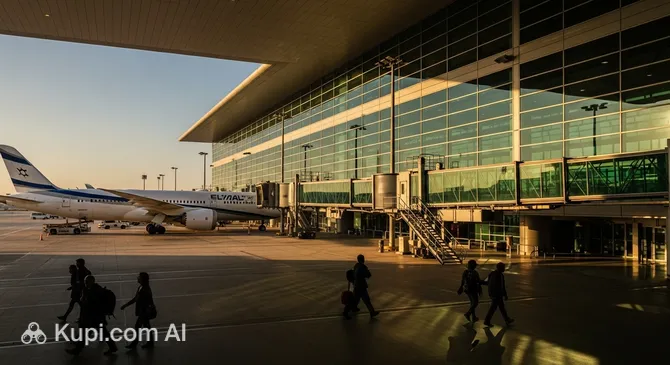
Ben Gurion International Airport. Source: Kupi.com Binoculars

Ben Gurion International Airport is not merely the primary transport hub of Israel, but a true symbol of modern travel in the Middle East. The airport is renowned for its unique architecture, particularly the magnificent Terminal 3, where spacious halls are filled with natural light, and the famous "Rotunda" area offers an impressive selection of shops and restaurants. It is a place where high-tech security blends harmoniously with comfort and hospitality, creating a sense of calm and anticipation for new discoveries for tourists even before they step out into the city.

IATA Code TLV
ICAO Code LLBG
City Lod (serves Tel Aviv and Jerusalem)
Distance to Centre ~20 km (to Tel Aviv)
Status International
Annual Passengers Over 21 million (based on 2023 data)
Schedule Online board on the official website

Features and Advantages of the Airport:

Ben Gurion Airport is deservedly considered one of the safest in the world thanks to a multi-level control system that operates efficiently and unobtrusively for most passengers. The main pride of the air harbour is Terminal 3 — a modern complex with a huge Duty Free shopping zone, where you can purchase everything from world-brand cosmetics to local souvenirs and hummus.

Transport accessibility is another strong advantage: high-speed trains depart directly from the terminal, taking you to the centre of Tel Aviv in just 15–20 minutes or allowing quick access to Jerusalem and Haifa. For comfortable waiting, there are business lounges with a high level of service, free Wi-Fi throughout the territory, and numerous cafes featuring local cuisine.

Contact Information

For your convenience, we have compiled the main contact information for Ben Gurion Airport. We recommend checking the currency of data, especially flight schedules, on the official website.

  • Official Website: The most complete and reliable source of information on flights, services, and safety regulations. You can find it at www.iaa.gov.il.
  • Inquiry Service Phone: For calls from abroad, use the number +972-3-9755555. For calls within Israel, the short number *6442 is available.
  • Address: Ben Gurion Airport, 7015001, Israel. The airport is located approximately 20 kilometres southeast of the centre of Tel Aviv.
  • Email: The airport does not provide a general email for public inquiries. It is recommended to use special contact forms on the official website for communication.
  • Social Media: Official airport accounts may be inactive. It is always better to verify the latest information on the website.
  • Lost Luggage Information: If your luggage was lost by the airline, you should contact their representative office directly. For items left in the terminal, look for the "Lost & Found" section on the airport website.
  • Passenger Support Contacts: Assistance can be obtained at information desks in the terminals or by calling the airport's general inquiry service.

Getting to the Airport

Ben Gurion Airport has excellent transport links with Tel Aviv and other key cities in Israel, allowing travellers to easily reach their destination. The choice of transport depends on your budget, time, and comfort preferences. The journey from the airport to the city centre usually takes between 25 to 45 minutes, depending on the chosen transport and traffic conditions.

Train — This is arguably the fastest and most convenient way to reach Tel Aviv, Jerusalem, Haifa, and other major cities. The railway station is located right at the exit of the Terminal 3 Arrivals Hall. Trains run 24 hours a day, except on Shabbat and public holidays. The trip to central Tel Aviv stations takes about 20-25 minutes. This is a reliable and budget-friendly option.

Buses and Shared Taxis (Sherut). Several bus routes operated by "Egged" connect the airport with various parts of the country. This is a cheaper but slower method of travel. Additionally, shared taxis known as "monit sherut" are very popular. They operate on fixed routes, for example, to Jerusalem or Haifa, and depart as they fill up. Sheruts to some cities run even on Shabbat, making them an indispensable mode of transport during this time.

Taxi and Transfers. Official taxis are always available at the terminal exits. It is recommended to use the services of licensed carriers and ensure the trip is conducted by meter or a pre-agreed fixed price. This is the most expensive but also the most comfortable option, especially if you are travelling with heavy luggage or family. You can also order a car via popular mobile apps or pre-book a private transfer.

Car Rental and Parking. If you plan to travel extensively around the country, renting a car is an excellent choice. Offices of all major international and local rental companies are present at Ben Gurion Airport. The airport territory offers both short-term and long-term parking for those arriving in private vehicles.

Important Recommendation: When planning your trip, be sure to consider Shabbat — the period from Friday evening to Saturday evening. During this time, most forms of public transport, including trains, do not operate. The main modes of transport remain taxis and some shared taxis (sherut). Always check the schedule in advance, especially if your arrival or departure falls on public holidays.

Terminals and Map

Ben Gurion Airport consists of two main passenger terminals: Terminal 3 and Terminal 1. Understanding their functions is key to a smooth start and end to your journey through Israel.

Terminal 3 is the main and largest terminal of the airport. It handles the vast majority of international flights. Its structure is well thought out: the upper level houses the departures area with numerous check-in counters, while the lower level serves arrivals. After check-in and the first stage of security screening, passengers enter the famous circular atrium "Rotunda" — the hub of the commercial Duty Free zone, restaurants, and cafes. From here, the concourses with boarding gates branch out. Navigation here is intuitive thanks to clear signage in Hebrew, Arabic, and English.

Terminal 1 was historically the main terminal, and today it primarily serves domestic flights as well as some international flights by budget airlines (low-cost carriers). Important feature for low-cost passengers: Flight check-in and baggage drop-off take place specifically in Terminal 1. After this, passengers must take a free shuttle to Terminal 3 to undergo the main pre-flight security screening and passport control, and then proceed to the same "Rotunda" departure zone and their gates.

Movement between terminals is organised via free shuttle buses, which run approximately every 15-20 minutes. The journey takes about 10 minutes. Shuttle stops are easy to find by following signs at the exits of each terminal. When planning your route, be sure to factor in this time if your flight is operated by a low-cost carrier from Terminal 1.

Check-in procedures and, in particular, security screening at Ben Gurion Airport are known for their thoroughness and can take significant time. Security staff may conduct a short interview with you even before you reach the check-in counter. It is strongly recommended to arrive at the airport in advance — at least 3-4 hours before an international flight departure, especially during peak seasons. This will allow you to complete all formalities without rushing and enjoy time in the Duty Free zone before boarding.

Airport History

The history of the main airport of Israel began long before its modern name. It was founded in 1936 during the British Mandate era and was originally called Lydda Airport. Since its opening, it has played a key role in regional aviation. After 1948, the airport gained the status of the country's main air gateway, and in 1973, it was officially renamed in honour of the first Prime Minister, David Ben-Gurion.

The development of the airport is inextricably linked with the country's history. Events occurred in the 70s that forever changed global aviation security standards. It was following incidents related to Ben Gurion that multi-level passenger and baggage screening systems were developed and implemented, which are today considered the benchmark and are used in many airports around the world. This has made it one of the safest airports on the planet.

A key stage in modernisation was the opening of Terminal 3 in 2004. This massive project transformed the airport into a modern and comfortable hub capable of serving millions of passengers annually. The old Terminal 1, which served all flights for decades, was renovated and is today used predominantly for domestic flights and low-cost carriers. The airport is constantly expanding: new concourses and waiting halls are being built to meet growing passenger traffic, especially following the signing of the "Open Skies" agreement with the European Union.

Among interesting facts is the presence of a synagogue in the airport, highlighting its cultural significance. Furthermore, Ben Gurion regularly features in rankings of the best airports in the Middle East for service quality and comfort levels for travellers heading to Tel Aviv and other cities in the country.

Services and Amenities

Ben Gurion Airport offers passengers a full range of services for a comfortable wait before their flight. Here you will find numerous restaurants, cafes, and juice bars to suit every taste — from a quick snack to a full dinner. Particular attention should be paid to the large Duty Free zone, where you can purchase cosmetics, perfumery, fine goods, souvenirs, and local delicacies at competitive prices.

For those who value enhanced comfort, several VIP lounges operate at the airport, such as the Dan Lounge. They offer guests a secluded atmosphere, complimentary snacks and beverages, fresh press, and convenient work areas. Free Wi-Fi is available throughout the terminals, and numerous charging stations for gadgets ensure you can always stay connected.

Financial matters are easily resolved at Ben Gurion Airport: bank branches, ATMs, and currency exchange points are at your service. In case of necessity, you can contact the 24-hour medical centre for first aid. For travellers with children, there are play areas and mother-and-child rooms equipped with everything necessary for baby care.

The airport is fully adapted for passengers with reduced mobility: there are ramps, special lifts, and restrooms, and an escort service is provided. If you have a long layover or an early departure, you can stay at one of the hotels located in the immediate vicinity of the terminals. For business travellers, conditions for work, including access to office equipment and meeting rooms, are created in the VIP lounges.

Where to Eat

At Ben Gurion Airport, passengers will not be bored while waiting for a flight — a wide selection of establishments for every taste and budget is presented here. Most cafes and restaurants are located in Terminal 3, which serves the majority of international flights, but you can also find places to grab a bite in Terminal 1 (for low-cost carriers and domestic flights).

For a quick snack and a cup of aromatic coffee, Israeli coffee house chains such as Aroma Espresso Bar or Arcaffe are ideal. They are located both in the public area (landside) and in the departure zone after passport control (airside). Here you can order sandwiches, fresh salads, pastries, and, of course, excellent coffee. This is a wonderful option if you are short on time.

If you wish to have a full lunch or dinner, head to the rotunda of shops and restaurants in the Terminal 3 departure zone. Establishments with menu service operate here, offering dishes of Israeli and international cuisine: from pizza and pasta to steaks and sushi. This is a great opportunity to try local specialities — for example, quality hummus with pita or fresh Mediterranean salads.

Particular attention is paid to dietary preferences at Ben Gurion Airport. The vast majority of establishments hold a Kosher certificate. This also means that vegetarians and vegans will easily find suitable dishes — local cuisine is rich in plant-based food and generally excludes pork products. Gluten-free options are also available in many cafes; simply ask the staff. regarding prices, they vary from moderate in quick-service cafes to higher in full-service restaurants. Major establishments in the Terminal 3 departure zone operate 24 hours a day to serve passengers of all flights.

Travel Tips

When planning a trip through the main airport of Israel in Tel Aviv, it is important to consider several key points that will make your journey more comfortable. The main rule for those departing from Ben Gurion Airport is to arrive early. It is recommended to arrive at least 3-4 hours before an international flight. This is due to the multi-level and very thorough security system.

A unique feature of the airport is the interview with the security service, which you undergo even before the check-in counters. You will be asked about the purpose of your trip, who packed your luggage, and whether anyone gave you parcels. Answer the questions calmly and honestly — this is a standard procedure. After this, a special sticker will be placed on your passport, and you can proceed to check-in and the main screening.

Regarding hand luggage, the rules are generally standard: liquids in containers up to 100 ml, no sharp objects. However, be prepared that you may be asked to switch on your electronics (laptops, tablets). Ensure all devices are charged. To save time, check in for your flight online and select your seat on the plane in advance. To save money, bring an empty bottle and fill it with water at drinking fountains after passing control.

Passengers flying with a connection may also need to undergo additional security checks. Customs control upon entering the country is organised according to the "green" and "red" channel system. If you have no goods subject to mandatory declaration, feel free to head to the "green" channel.

In case of a flight delay, first contact your airline representative. They will provide current information and explain your rights regarding receiving meals or hotel accommodation if the wait becomes prolonged. The airport has free Wi-Fi, numerous cafes, and shops to help pass the time while waiting for departure.

Reached the end of the page?

That means the route is fully explored